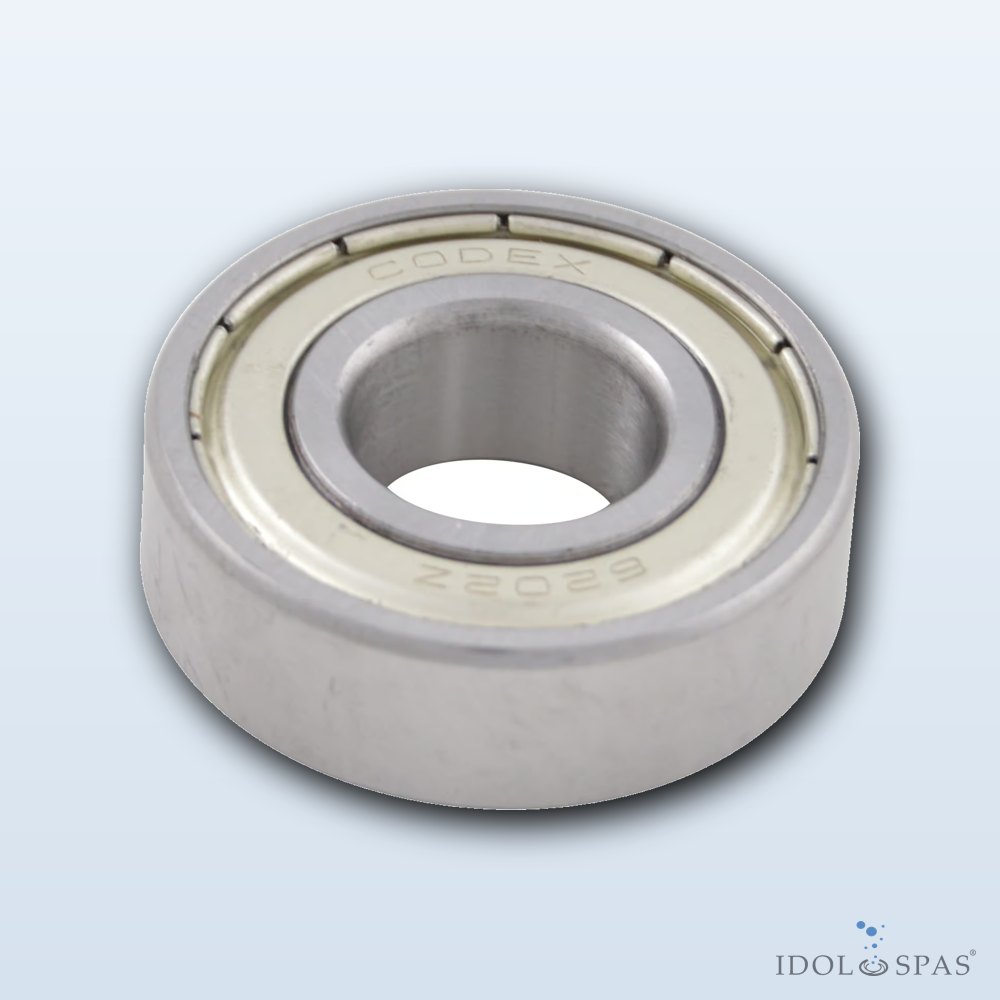
The motor bearings keep the shaft precisely aligned and absorb all radial and axial load during rotation. Unlike the mechanical seal, which fails suddenly and visibly (dripping water), bearings degrade gradually and usually announce themselves first through sound — unfortunately often only once the repair is already more expensive than it needed to be.
What worn bearings sound like
- A high-pitched whining or screeching tone that grows louder with running time — unlike the quiet humming typical of a capacitor issue.
- A rattling noise both on startup and during operation, typical of advanced wear or water having entered the bearing housing.
- Increased vibration noticeable to the touch on the motor casing.
- Motor overheating beyond the usual level, since damaged bearings create higher rotational resistance.
Why bearings fail
The most common cause is water getting in through a failed mechanical seal — water reaches the bearing grease, washes it out, or causes corrosion. That’s why, at the first unusual noise, it’s worth checking the seal’s condition too, not just ordering bearings alone. The second cause is simply reaching end of life — on pumps in continuous summer operation, bearings naturally wear out after several seasons regardless of the seal’s condition.
Is it worth replacing just the bearings, or the whole motor?
It depends on the price of parts versus a new motor or whole pump. For typical home pumps, the price gap between a bearing kit (plus labour for disassembly and press-fitting) and a new motor tends to be fairly small — in that case, replacing the whole motor or pump makes more economic sense, since you also get new windings, a new seal, and full warranty. Replacing just the bearings pays off mainly on more powerful or pricier pumps, where the motor itself is a significant cost item.
Prevention that extends bearing life
- Address a leaking seal at the first sign, not once water is visibly dripping.
- Never let the pump run dry, even briefly.
- Ensure adequate ventilation of the plant room — overheating shortens the life of the bearing grease.
FAQ
Can bearing condition be checked without disassembling the motor?
Partly — if the shaft, when off, can be turned by hand with noticeable roughness or side play, the bearings are likely worn. Only disassembly and visual inspection give certainty.
Is bearing replacement a DIY job?
It requires press-fitting bearings onto the shaft and precise tolerances — without experience and the right tools, there’s a higher risk of damaging the shaft. For most home pumps, replacing the whole motor is simpler and more reliable.
Are noisy bearings related to a drop in flow?
Not directly, but advanced wear can reduce motor speed enough to also reduce pump output — in that case, don’t just address it by replacing the impeller, address the motor too.
Replacement motors and pumps are in the pool technology category. More articles on service and maintenance are in the Guides section.