The main drain is an opening in the pool floor or wall through which the pump draws water for filtration. It’s one of the few places in a pool with a genuine suction hazard — a strong flow at a small opening can pull in hair, swimwear, or body parts strongly enough that a person can’t free themselves. The risk is rare but real and well documented, which is why it’s addressed through design, not just caution.
How entrapment happens
Risk increases with a combination of three factors: high pump flow relative to the opening’s size, a missing or damaged suction cover, and a single drain with no alternative path for the water. If the cover comes loose or is missing, the suction can become strong enough that an adult can’t overcome it by their own strength.
Design measures that eliminate the risk
- Two or more suction points connected in parallel — if one gets blocked or covered by a body, flow redistributes to the remaining points and suction force at any single point drops sharply.
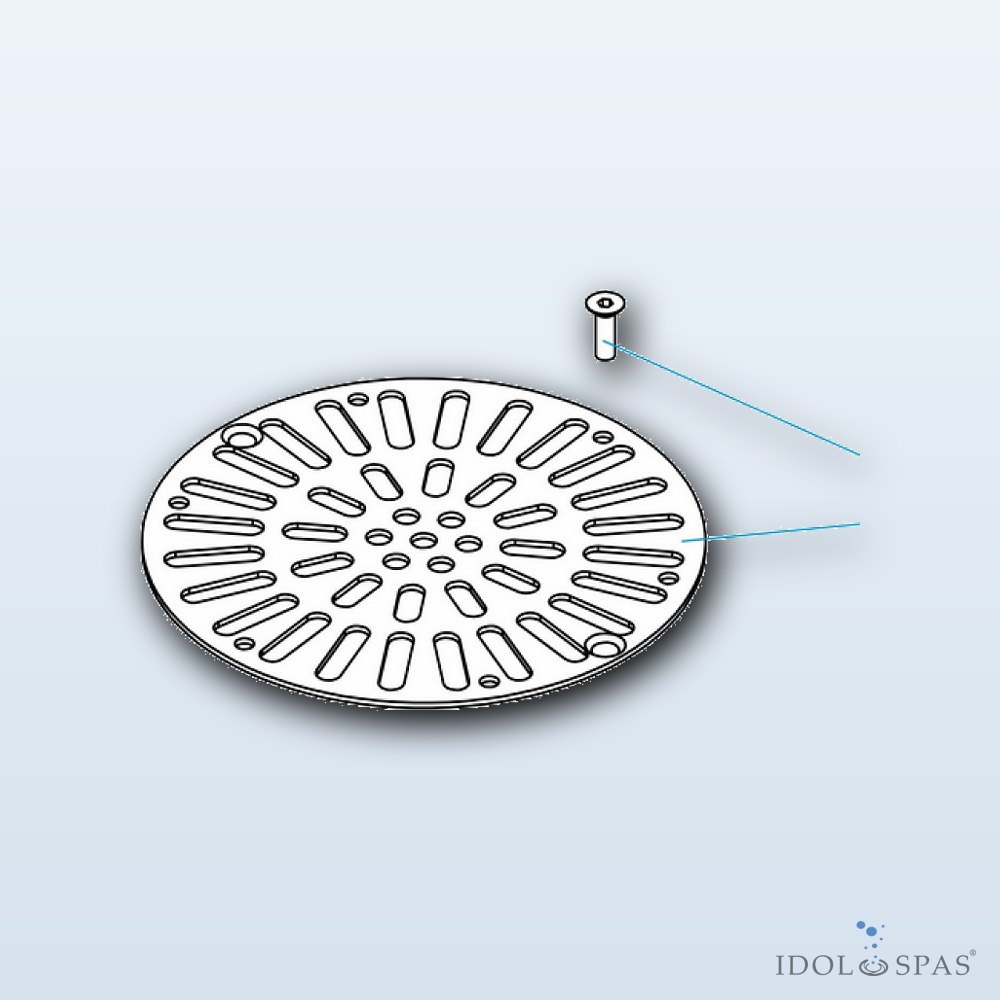
- A certified anti-entrapment cover — spreads suction over a larger area with lower flow velocity per cm², instead of one narrow throat.
- Sufficiently large drain cross-section relative to pump power — an undersized drain paired with a powerful pump is riskier than the same drain with a weaker pump.
- A safety vacuum release system (SVRS) — at higher safety tiers, the pump automatically shuts off or reverses on a sudden pressure drop that signals a blocked drain.
What to check on an existing pool
- Is the drain cover firmly and securely fastened, with no cracks or missing screws?
- Does the cover type match the pump’s flow rate, or was it replaced with a non-original part without checking compatibility?
- Does the pool have a single main drain, or are multiple suction points connected in parallel?
- Is it physically possible for a hand or a child’s foot to fit into the drain at all?
What to do if a pool has only one old drain
Adding a second suction point or installing a certified anti-entrapment cover can be retrofitted to an existing pool, usually without touching the tank’s structure — it’s a matter of replacing the cover and possibly connecting a second draw point into the piping. For pools with heavy use by children, this investment is among the cheapest safety measures relative to the severity of the risk it addresses.
FAQ
Is entrapment risk real for small home pools?
Yes, the risk relates to pump power relative to drain size, not to the pool’s size as such — even a smaller pool with a powerful pump and a single damaged drain cover can be risky.
Is it enough to just tell children not to sit on the drain?
Instructions help but don’t replace design measures — young children may not remember rules or understand them at all, and entrapment can happen unintentionally through hair or a piece of swimwear.
How do I know if a drain cover is certified?
Certified covers usually have the flow capacity and the standard they meet stamped or printed directly on the cover — if this information is missing, it’s worth replacing the cover with a verified type at the next opportunity.
Certified drain covers and circulation-circuit accessories are in the structural parts category. More articles on pool safety and technology are in the Guides section.