An automatic dosing station is only as accurate as its pH and ORP probes. Without regular calibration, a probe gradually drifts from the true value — and the station then doses chemistry based on a wrong number, leading either to wasted product or insufficient disinfection, without anything showing up as an error on the display.
Why probes gradually lose accuracy
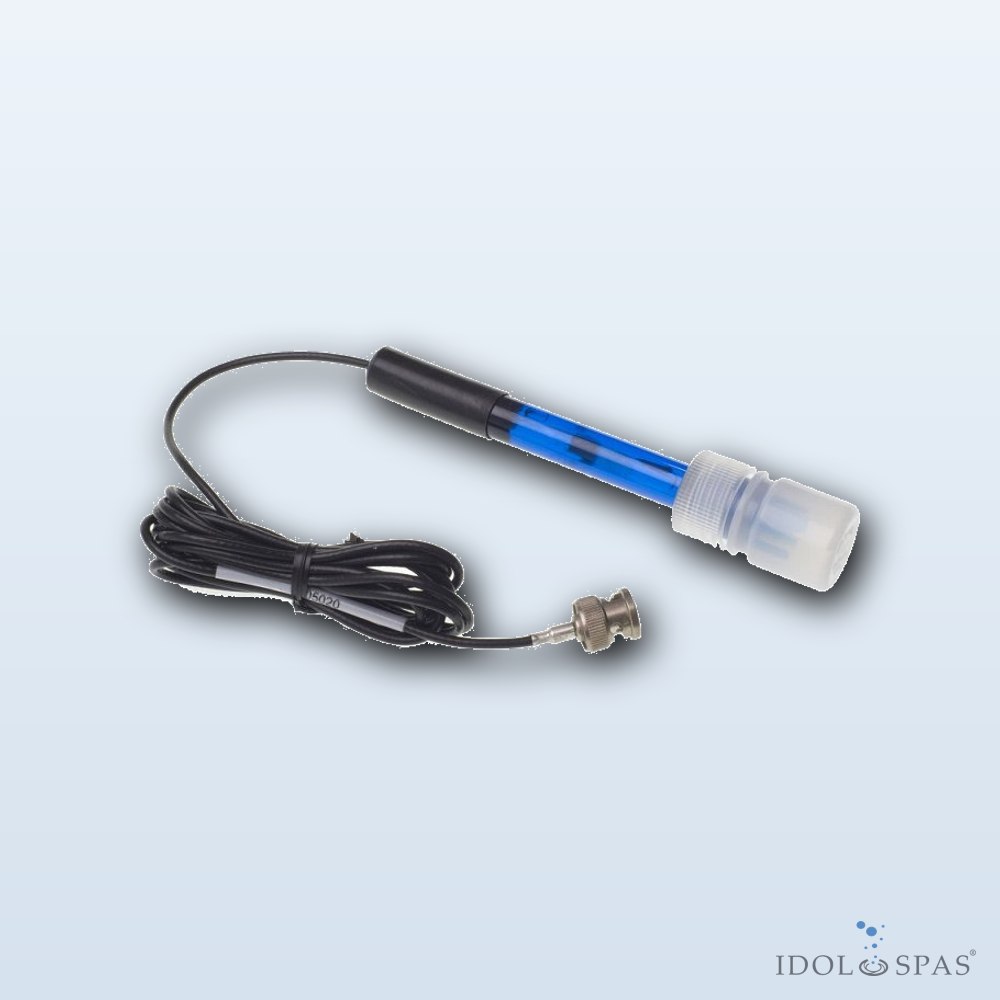
pH and ORP probes measure electrical potential through a glass or special membrane in permanent contact with water full of chemistry. The membrane ages over time, builds up a coating, and the internal electrolyte gets depleted — all of this shifts the measured value away from reality without the probe “stopping working” in a crude sense. The station’s display can therefore show a stable, trustworthy-looking number that’s actually systematically off.
How often to calibrate
- A new probe: calibrate immediately on installation, per the manufacturer’s instructions.
- Normal operation in season: roughly every 4–6 weeks, more often for heavily loaded pools.
- After an electrolyte change or a longer shutdown: always recalibrate before resuming automatic dosing.
- On suspicious system behaviour (chemistry consumed disproportionately fast or slowly) — calibration should be the first diagnostic step, not the last.
Calibration in a nutshell
Calibration uses calibration solutions with a known precise value (usually two points, e.g. pH 7.0 and pH 10.0 for a pH probe). The probe is rinsed with distilled water, dipped into the first solution, allowed to stabilise, and confirmed in the station’s control panel, then the same is repeated with the second solution. The exact procedure and intervals vary by station model — always follow the manufacturer’s instructions.
What speeds calibration up or ruins it
Always use fresh, non-oxidized calibration solutions — an old or poorly sealed solution won’t match its declared value on its own, and calibration will be inaccurate even with the correct procedure. Between solutions, always rinse the probe with distilled (not tap) water to avoid contamination.
FAQ
How do I know a probe needs calibration rather than replacement?
If, after calibration, the probe holds a stable and reasonable reading, it was just a calibration issue. If the value quickly drifts back to a nonsensical number after calibration, or calibration doesn’t succeed at all, the probe is likely at the end of its life.
How long does a probe typically last?
Roughly one to two seasons with regular calibration and care, shorter for heavily used systems.
Does calibration need a professional?
No, it’s a procedure that can be handled yourself following the instructions — the main thing is keeping the calibration solutions clean and following the exact procedure for the specific model.
Replacement probes and calibration solutions are in the water treatment category. More articles on automation and pool chemistry are in the Guides section.