Pool chlorine comes in three basic forms — granules, tablets, and liquid sodium hypochlorite. The active ingredient is fundamentally similar, but dissolving speed, dosing method, and the situations they suit differ considerably. Picking the wrong form is one of the most common reasons “chlorine isn’t working” even when the owner follows the instructions.
Granules (chlorine shocks)
These dissolve quickly and suit an immediate response — shock chlorination, fixing a green cloud, correcting things after a storm. The downside is a short-lived effect: once dissolved, chlorine levels start dropping again. So they’re not suitable as the sole method of ongoing maintenance, more as a supplement to another primary chlorine source.
Tablets (slow-dissolving)
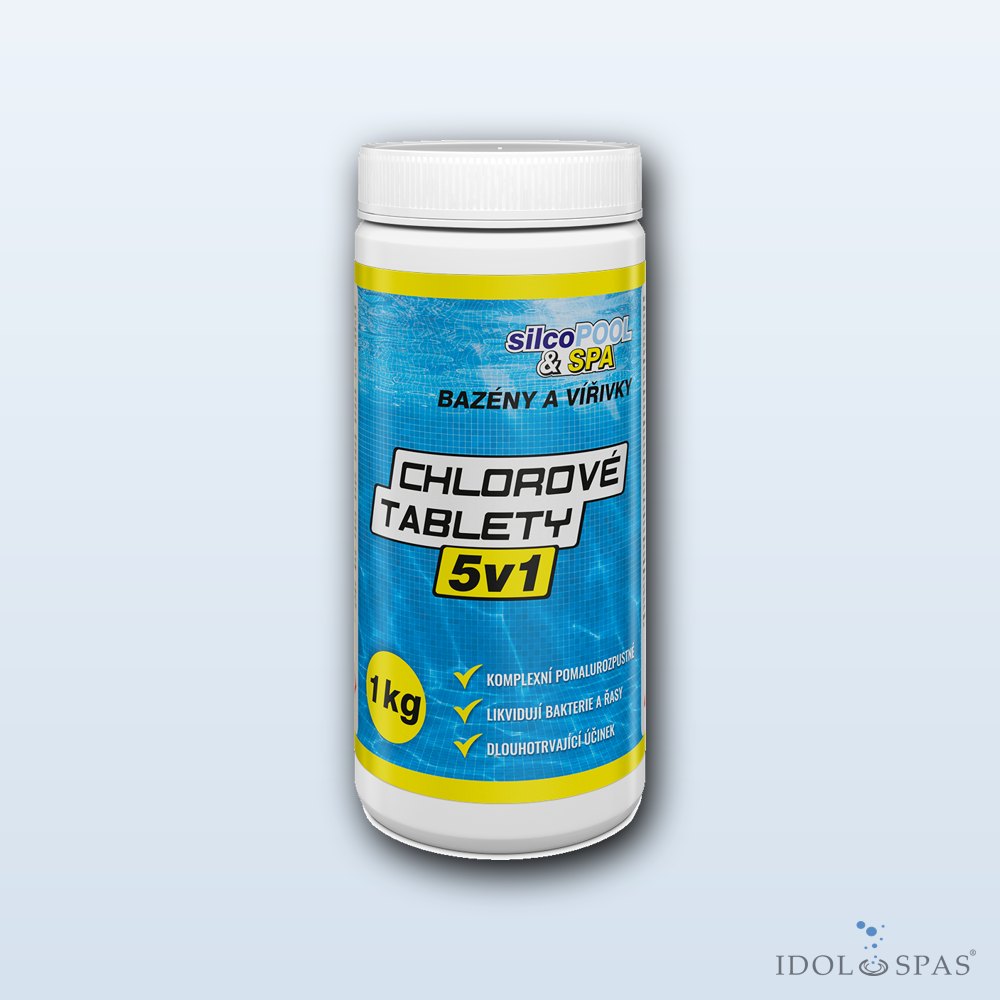
The standard choice for ongoing maintenance chlorination. Placed in a floating dispenser, skimmer, or dosing container, they dissolve gradually over days to weeks, keeping a stable chlorine level without daily intervention. Most tablets also contain cyanuric acid (a UV stabiliser), which is an advantage outdoors in the sun and a downside indoors or in a hot tub, where the stabiliser accumulates needlessly — covered in more detail in the separate article on cyanuric acid.
Liquid sodium hypochlorite
Instantly soluble, stabiliser-free, popular mainly with public and commercial pools using a dosing pump, since it can be dosed precisely and automatically based on measured levels. For home pools, its downsides are shorter shelf life in storage (it gradually loses potency, especially in light and heat) and the need for careful handling of the concentrated liquid.
How to combine forms in practice
- Base: tablets in a dispenser for a stable daily level.
- Supplement: granules for shock chlorination and quick interventions outside the regular routine.
- Stabiliser-free alternative: liquid hypochlorite, if the water already has high cyanuric acid and you need to raise chlorine without adding more stabiliser.
FAQ
Can I put a tablet and granules in the same dispenser?
No, dispensers are designed for slow-dissolving tablets. Granules go directly into the water (dissolved in a bucket first) with the filter running, not into a dispenser.
Why doesn’t a tablet “hold” chlorine the way it should?
Most often due to incorrect pH (above 7.6 chlorine loses effectiveness) or excessive cyanuric acid from the same tablets, which gradually “locks” chlorine — see the article on chlorine lock.
Is liquid chlorine suitable for a hot tub too?
Technically yes, but because dosing precision matters more in a small volume, home hot tubs more commonly use granules or smaller tablets.
Chlorine products in all forms are in the water treatment category. More articles on pool and hot tub chemistry are in the Guides section.