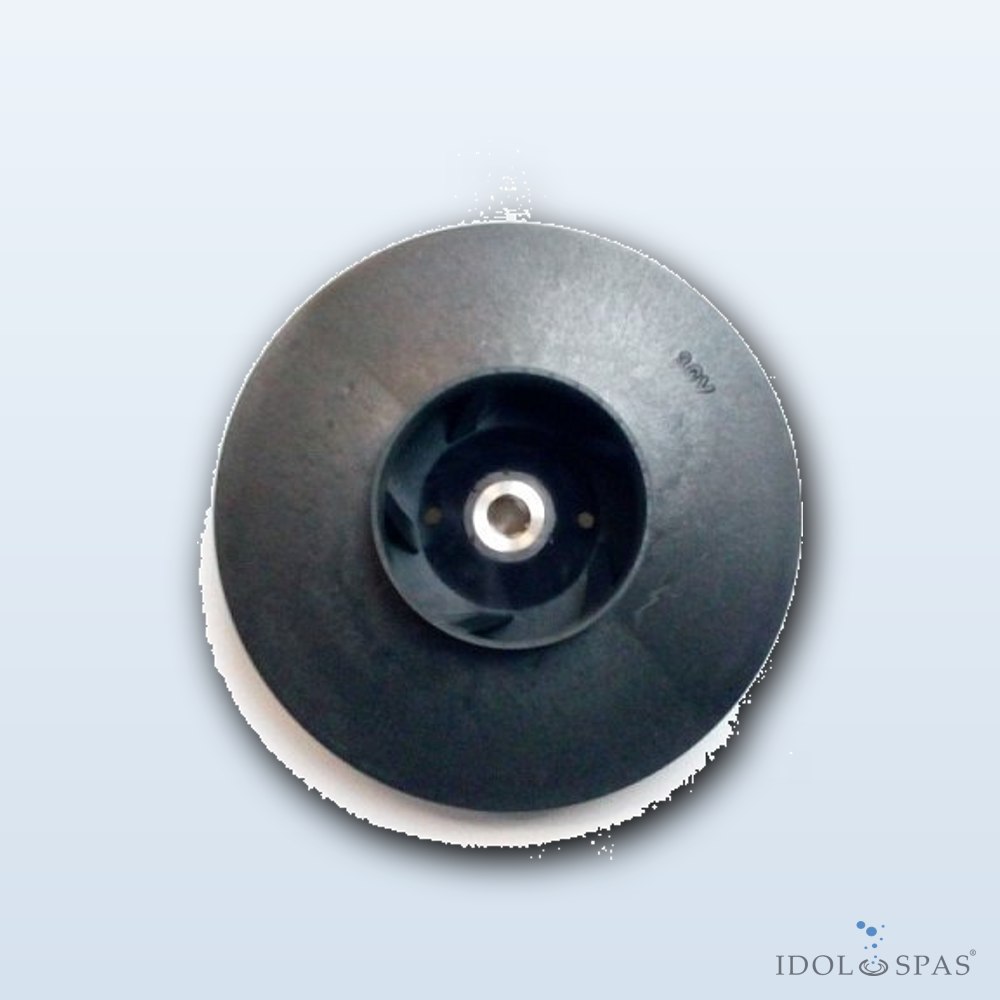
The impeller is the part that actually moves the water — a rotating vaned wheel inside the pump housing. It’s made of plastic (most commonly), and while it has no bearing or seal that “wears out” in the classic sense, it loses performance over time through abrasion, cracks, or debris buildup.
Signs of a worn impeller
- Reduced flow even with a clean filter and fully open valves — the pump runs, but water flows weaker than before.
- Louder operation, especially a high whining tone — often caused by worn vanes or sand ingested that has scored the impeller.
- Visible cracks or broken vanes on disassembly — common in pumps that ran dry at least once or sucked in a foreign object.
- Vibration caused by an unbalanced impeller after partial damage.
Common causes of wear
The most common culprit is sand or fine debris pulled in through the skimmer or main drain — it acts as an abrasive inside the pump housing. The second cause is dry running (air in the system, low water level), which overheats the impeller and deforms the plastic. The third is simply age — on heavily used pumps, the impeller’s lifespan is often shorter than the motor’s own.
Replacement: what to know beforehand
The impeller is removed after taking off the front cover and disconnecting the motor from the pump housing — on most models it’s held to the motor shaft by a screw with anti-rotation locking (you hold the shaft with a wrench from the other side). While replacing the impeller, always check the mechanical seal right behind it — if you’re disassembling the pump for the impeller anyway, it’s worth replacing both at once, since further disassembly later costs the same amount of work.
Buy the impeller matched exactly to the pump’s model and power rating (shown on the motor label) — impellers for different power tiers within the same pump family aren’t interchangeable even if they look similar.
FAQ
Can a cracked impeller be glued or repaired?
Not reliably — even minor deformation or a crack throws off the impeller’s balance and causes vibration and further bearing wear. Replacing it with a new part is the only lasting fix.
How do I prevent renewed damage from sand?
Check the tightness of the skimmer lid and the strainer basket before the pump — a missing or damaged basket is the most common route by which sand and debris reach the impeller.
Can a worn impeller be identified without opening the pump?
Indirectly, yes — if the filter’s pressure gauge shows lower pressure than usual along with reduced flow, a worn impeller is one of the main suspects, alongside a clogged suction line or dirty filter.
Replacement impellers and pump service parts are in the pool technology category. More articles on service and maintenance are in the Guides section.