Suction-side and pressure-side pool cleaners solve the same task as a robotic cleaner — cleaning the floor and walls without manual work — but they use the existing circulation’s hydraulics for it, not their own motor and electricity. The difference between them lies in where they get their power and where the captured debris goes.
Suction-side cleaners
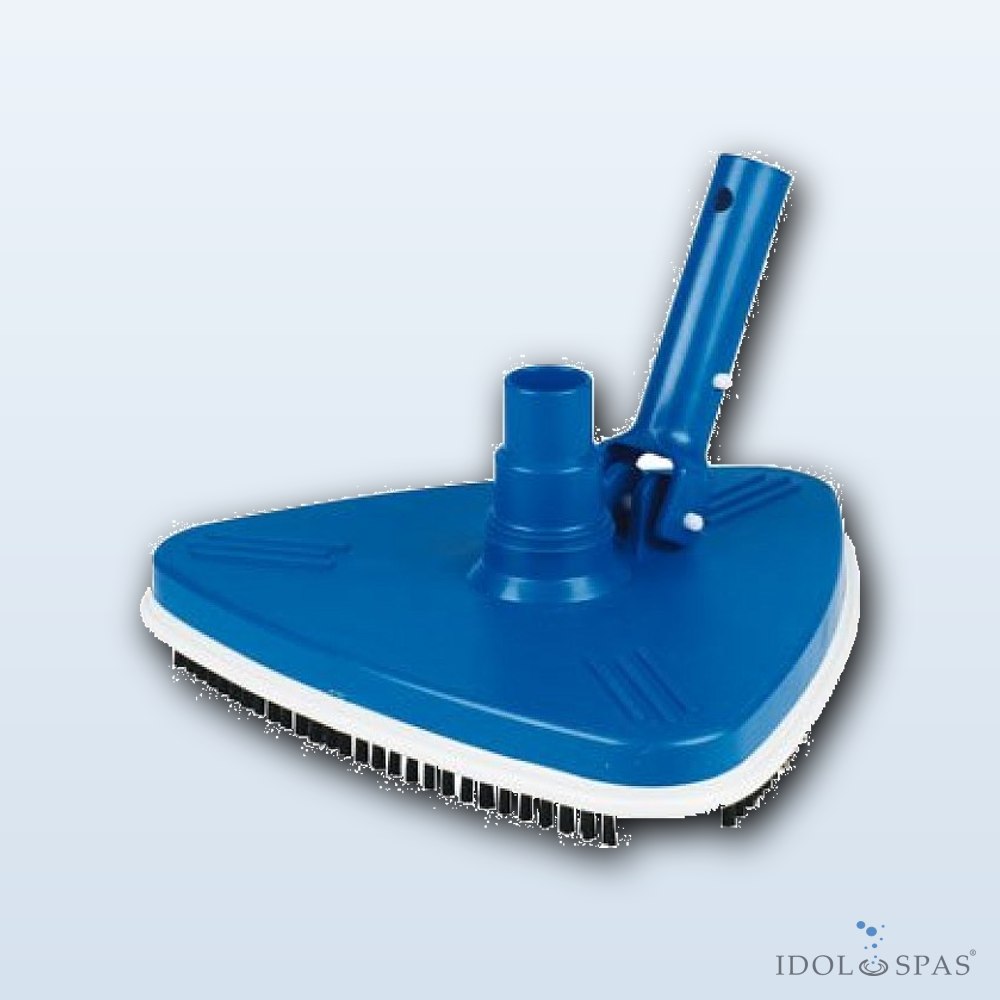
These connect to the suction side of the circuit — usually directly into the skimmer or a dedicated suction port. Suction created by the pump drives the cleaner across the floor and sucks debris straight into the filtration. The advantage is simplicity and a lower purchase price; the downside is extra load on the filter from the captured debris and a slightly lower suction power for larger fragments.
Pressure-side cleaners
These connect to the discharge (pressure) side of the circuit, often behind a dedicated booster pump. The water flow drives the cleaner across the floor and directs debris into its own collection bag, not the main filtration. The advantage is less load on the filter and better handling of larger debris (leaves, gravel); the downside is a higher purchase price and often the need for a separate booster pump.
Comparison with a robotic cleaner
A robotic cleaner has its own electric motor and filtration, is independent of the pool’s circulation circuit, and usually offers the best cleaning performance, including on walls and steps, but at a significantly higher purchase price. Suction-side and pressure-side cleaners are cheaper entry-level solutions that use technology the pool already has.
How to decide
- Limited budget, mainly fine debris (dust, sand): a suction-side cleaner is the cheapest entry point.
- Lots of leaves and larger debris, emphasis on not loading the filter: a pressure-side cleaner with its own collection bag.
- Emphasis on automation and cleaning walls/steps without touching circulation: a robotic cleaner, even at a higher price.
FAQ
Can a suction-side cleaner handle steps and walls too?
Basic models are mainly designed for the floor; more advanced ones handle gently sloped walls — for vertical walls and steps, pressure-side or robotic types are more reliable.
Does a pressure-side cleaner always need its own pump?
Most models do, because of the pressure needed at the outlet — without a booster pump, the main circulation pump might not provide enough pressure for full performance.
Does a suction-side cleaner clog the filter faster?
Yes, because all captured debris passes through the main filtration — with intensive cleaning, expect more frequent backwashing or filter media replacement.
Both suction-side and pressure-side cleaners are in the pool technology category. More articles on cleaning and maintenance are in the Guides section.