
A natural pool cleans water without chlorine — plants, a gravel substrate, and microorganisms in a separate regeneration zone take over the job that chemicals normally do. The result is soft, living water that feels like swimming in a mountain lake, though it comes with higher upfront costs and greater demands on plot size. This guide covers how biological water treatment works, how a natural pool differs from a swimming pond, what each one costs, and who chemical-free swimming is genuinely a good choice for.
How does biological water treatment work?
A classic pool keeps its water sterile: chlorine or another disinfectant kills everything living in it. A natural pool takes the opposite approach — a functioning ecosystem keeps the water clean, the same principle that purifies water in natural lakes.
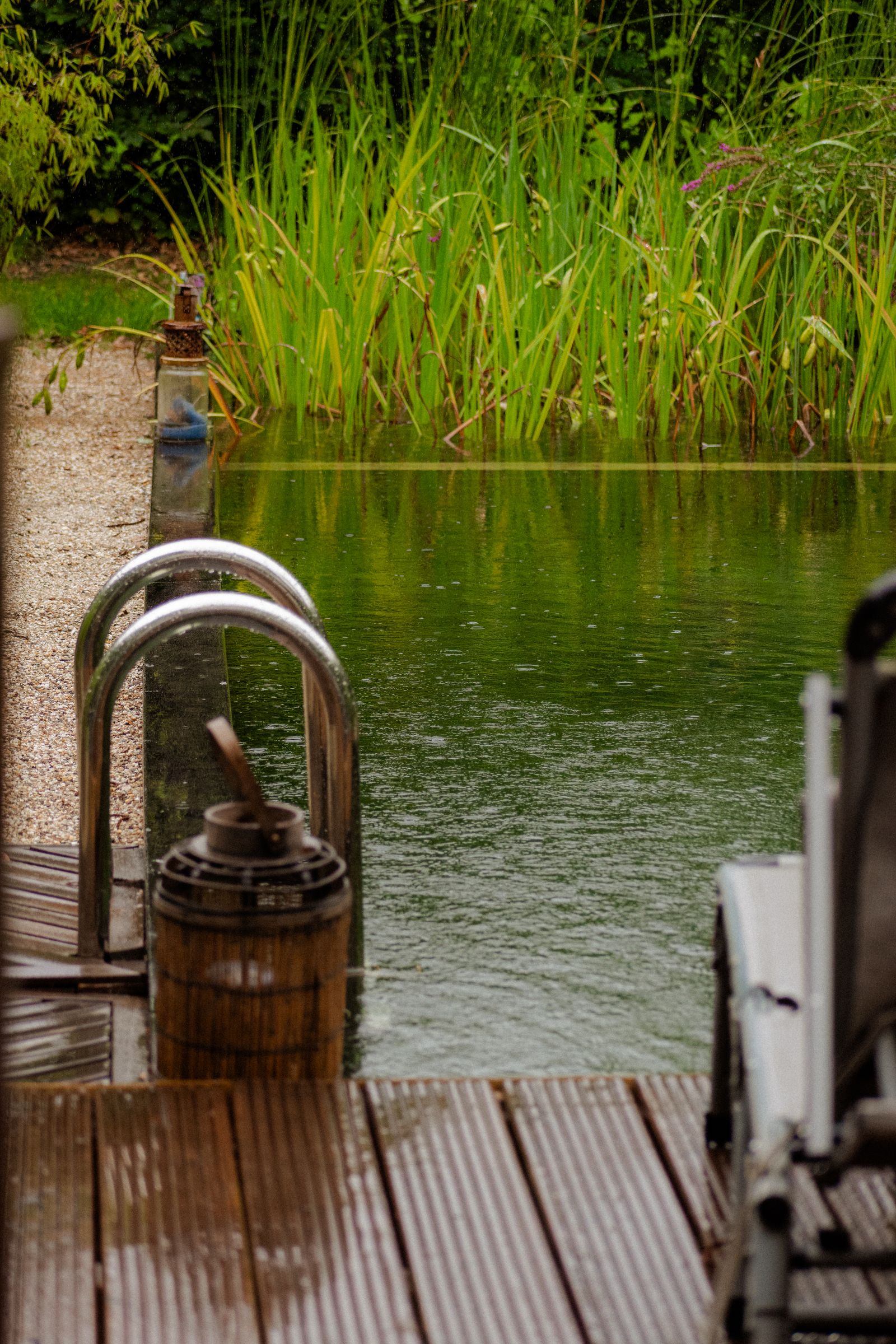
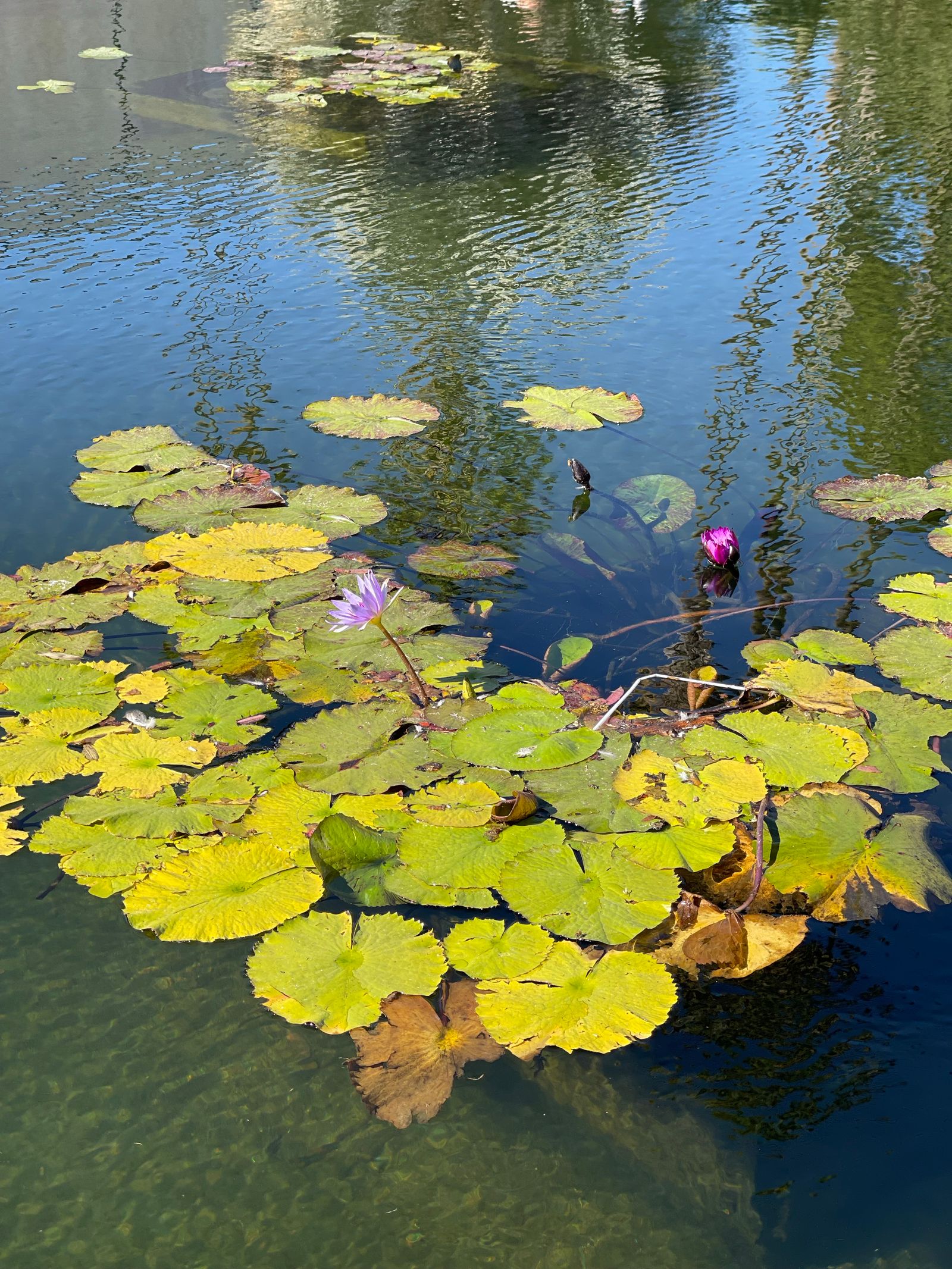
The heart of the system is the regeneration zone: a shallower section separated from the swimming zone by an underwater wall. It’s filled with washed gravel or a special mineral substrate (such as zeolite) and planted with aquatic and marsh plants — cattails, irises, pondweed, water lilies. Water circulates slowly between the swimming and regeneration zones; in natural pools, a low-energy pump drives that circulation.
The cleaning itself happens on three levels:
- Mechanically — the gravel bed and the plants’ root systems act as a slow filter that traps dirt and sediment.
- Biologically — colonies of microorganisms (biofilm) live on the substrate’s enormous surface area and break down organic matter. Zooplankton, such as water fleas, graze on free-floating algae.
- Chemically, without chemicals — plants and substrate draw nutrients, mainly phosphorus and nitrogen, out of the water. Without nutrients, algae have nothing to grow on; the water is clean because it’s “nutrient-poor,” not because it’s been poisoned.
The whole system needs time: a new natural pool takes its first one to two seasons to stabilize biologically. The reward is water with no chlorine smell that doesn’t irritate the eyes, skin, or airways.
Natural pool, swimming pond, or converting a classic pool?
The terms are often confused, but these are three distinct concepts with different price tags and different looks.
Swimming pond
The most natural variant. Irregular shape, gently sloping banks, lush planting, often entirely without technology — circulation relies just on natural flow, or perhaps a small pump. It looks like a garden pond you can swim in. The water has a soft green or brownish tint, and natural sediment forms on the bottom. It takes up the most space (the regeneration zone typically makes up half the total area or more), but it’s the cheapest to run.
Natural pool (Naturpool)
Architecturally, it looks like a classic pool: regular shape, vertical walls, clean lines, a wood or stone deck. The regeneration zone is separate, often a distinct “plant basin” next to the swimming area, backed up by technology — a pump, skimmer, and a biofilter with substrate. The water is noticeably clearer and more transparent than in a pond, and the space requirements are lower. It’s a compromise between pool aesthetics and pond philosophy — and today the most in-demand category in the DACH region.
Converting a classic pool
An existing in-ground pool can be converted: the chemical treatment is decommissioned, and a regeneration/filtration zone is built next to the pool, through which the water circulates. Conversion reuses the existing shell, so it works out cheaper than building a new natural pool, but it requires free space next to the pool and changes to the hydraulics. It makes sense where a pool already exists and the owner wants to get away from chlorine.
The European trend: why does German-speaking Europe lead?
Swimming ponds are a European, and above all an Austrian, invention — the first private and public biologically treated bathing sites appeared in Austria back in the 1980s and 1990s, and today around three dozen public natural bathing sites operate there. Austria is also home to the industry association VÖSN (Verband Österreichischer Schwimmteich- und Naturpoolbau), which certifies builders and defines water-quality standards.
Germany and Switzerland are following suit: the international association Pool for Nature brings together more than 90 landscaping and construction firms from Germany, Austria, Switzerland, Italy, and Luxembourg, which together build more than 500 swimming ponds and natural pools a year. According to market analyses (Verified Market Reports, 2023), Europe holds roughly 60% of the global natural pool market — and demand is being driven precisely by the premium residential segment. In Germany, municipalities are taking inspiration from biological treatment too: some public bathing sites there already operate as natural, chlorine-free biotopes.
The trend arrived in the Czech Republic a few years later, but it’s growing in the same direction — a natural pool is now a standard offering from garden designers and specialized construction firms.
Natural pool vs. classic pool: the big comparison
| Criterion | Natural pool / swimming pond | Classic chlorinated pool |
|---|---|---|
| Upfront cost | Higher — a turnkey build costs roughly €32,000–64,000 depending on size; a simpler DIY swimming pond starts at around €12,000 | Lower — an 8×4 m in-ground pool including equipment costs roughly €20,000–36,000 |
| Running costs | Low — no chemicals, a small pump drawing tens of watts; typically well under €150 a year | Higher — chemicals, filtration, more frequent water changes; typically €400–800 a year or more with heating |
| Maintenance | Seasonal gardening: trimming plants, desludging the bottom, cleaning the skimmer; no chlorine testing | Regular chemical dosing, pH checks, filter cleaning, winterizing |
| Appearance | A natural garden feature that blooms and changes through the year; even in winter it works as an ornamental pond | A technical blue surface; covered outside the season |
| Water temperature | Unheated, follows the weather; the shallow regeneration zone naturally warms the water in summer, with a typical maximum around 24–26°C | Can be heated to a stable 28°C or more (heat pump, solar) |
| Hygiene and clarity | Biologically clean but “living” water — naturally slightly cloudy, with small amounts of algae and microorganisms as part of the ecosystem | Sterile, crystal-clear water; chlorine can irritate the skin, eyes, and airways |
| Space requirements | High — the regeneration zone adds roughly 50% extra area | Low — just the shell itself plus a technical shaft |
The higher upfront cost of a natural pool has a simple explanation: you’re effectively building two water bodies instead of one, plus waterproofing, substrates, and planting. But the difference is gradually recouped in running costs — no chemicals, no water changes, and a pump that draws about as much power as a light bulb. Over a horizon of ten years or more, the total costs of both solutions converge.
How much space does a natural pool need?
This is the most common reason projects fall through. The regeneration zone needs enough volume for the ecosystem to keep up with cleaning the water — for swimming ponds, the rule of thumb is roughly a 1:1 ratio, meaning about the same area of plant zone for every square meter of swimming area. If you want to swim in an 8×4 m area, you’ll need a total of around 60–70 m² of water surface, plus banks and decking.
A natural pool with a technical biofilter can get by with a smaller regeneration zone — but still plan for around 50% extra area on top of the swimming section itself. Below roughly 40 m² of total area, a natural system starts to become unstable and more prone to algae overgrowth. For small plots, a classic compact pool is therefore often the more sensible choice — we covered the options for small gardens in our article on plunge pools and small pools.
Who is a natural pool the right choice for?
A natural pool or swimming pond makes sense if:
- you have a naturally styled garden and want the water feature to be part of it, not a foreign element;
- you or your children react to chlorine with irritated skin, eczema, or irritation of the eyes and airways;
- you have a plot where the regeneration zone won’t come at the expense of the rest of the garden;
- you see maintenance as gardening rather than a necessary evil — and accept that nature has its own rhythm;
- you want a water feature that’s alive all year round: a frozen pond in winter, blooming irises in spring.
Stick with a classic pool if:
- you expect crystal-clear, “hotel-style” water — a slight natural cloudiness and the occasional algae on the wall would bother you;
- you have a small plot where the regeneration zone would take up the entire garden;
- you want to heat the water to 28°C and extend the season from April to October — heating would disrupt the biological balance, and temperatures permanently above 26–28°C harm the ecosystem;
- you prefer predictability: test it, dose it, done.
Maintaining a natural pool through the year
A natural pool doesn’t need chemicals, but it isn’t maintenance-free — the maintenance just looks more like garden care.
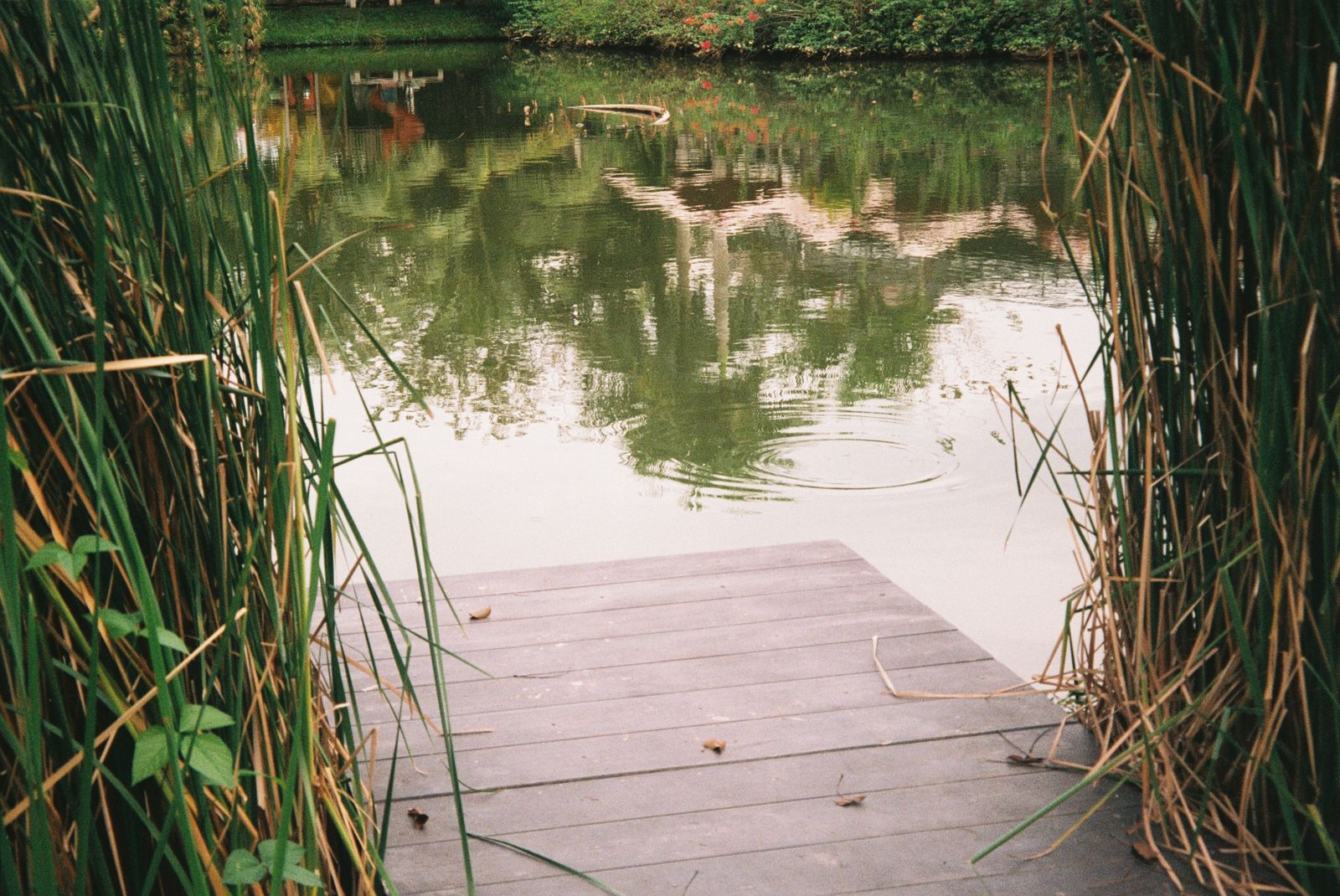
- Spring (March–April): removing fallen leaves and dead plant parts, desludging the bottom with a sludge vacuum, checking and starting up the pump. The water isn’t drained — the ecosystem continues from the previous season.
- Summer (May–September): regularly skimming out coarse debris with a net, cleaning the skimmer, and occasionally vacuuming the bottom of the swimming zone with a vacuum or pool robot. During heat waves, briefly boost circulation.
- Autumn (October–November): the crucial moment — cover the surface with a leaf net and cut back dying plants. Everything that rots in the water turns into algae food come spring.
- Winter: the system rests. The pump and equipment are winterized, and the pond can freeze over — frost doesn’t harm the ecosystem. Ice-skating on your own pond is a bonus that a chlorinated pool can’t offer.
In terms of time, expect a workload similar to a classic pool, just distributed differently: less weekly routine, more seasonal work concentrated at once. The only “chemical” occasionally used is a natural, mineral-based phosphate binder — and even that only when the balance is thrown off after an extreme summer. Anyone sticking with classic water treatment instead will find everything they need in the water treatment category.
Frequently asked questions (FAQ)
Is the water in a natural pool hygienically safe?
Yes, as long as the system is working properly. Microorganisms and plants keep the water biologically clean and low in nutrients, so pathogens don’t thrive in it either. The water isn’t sterile, though — it’s “living,” similar to a clean natural lake. Certified builders (such as members of the Austrian VÖSN association) design systems so that the water meets the requirements for natural bathing water.
Can there be fish in a swimming pond?
It’s not recommended. Fish fertilize the water with their excrement and stir up sediment, supplying algae with nutrients — exactly the opposite of what the ecosystem needs. Anyone who wants fish should set aside a separate pond for them.
Does a natural pool attract mosquitoes?
Practically not. Mosquitoes lay their eggs in standing water; in a natural pool, the water circulates, and zooplankton and other aquatic creatures reliably eliminate the larvae anyway. A properly functioning pond has fewer mosquitoes than a rain barrel.
Can a natural pool be heated?
Only to a very limited extent. Permanent temperatures above roughly 26–28°C disrupt the biological balance and encourage algae growth. If warm water is essential for you, a classic pool with a heat pump — or a combination of a pool and a hot tub — is the better option.
In conclusion: nature or technology? Both are legitimate
A natural pool is a lifestyle as much as it is a piece of construction: it rewards patient owners with soft, chemical-free water and a garden that’s alive all year round. A classic pool, meanwhile, wins on predictability, warm water, and space requirements. If you’re deciding between the two worlds, browse our range in the pools category — and you’ll find more comparisons, guides, and trends in our Guide.
