Green water in your pool is not a disaster, just a job for one weekend. If you correctly identify the cause, adjust the pH and add a sufficient dose of shock chlorine, you will have crystal-clear water again within 48 hours – without draining the pool. This guide takes you through it step by step, including specific dosages.
Step 1: Diagnosis – algae or metals?
Before you reach for the chemicals, find out what you are dealing with. A green tint is caused either by algae or by dissolved metals (iron, copper). The treatment differs for each cause, and mixing them up costs you both time and money.
Algae multiply whenever the sanitiser level drops below the effective threshold. A typical scenario: a scorching weekend, water temperature above 26 °C, UV radiation breaks down what is left of the chlorine, and the algae spores that constantly fall into the pool from the air have free rein. It takes just 24–48 hours for the water to “jump” from slightly cloudy to deep green. Pollen, leaves and phosphates from top-up water supply them with nutrients.
| Symptom | Algae | Metals (iron, copper) |
|---|---|---|
| Water clarity | Cloudy, the floor is not visible | Clear, just tinted green |
| Walls and floor | Slippery, slimy coating | Smooth, no coating |
| Typical situation | Heatwave, storm, sanitiser failure, long absence | Filling from a well, corrosion of a copper heat exchanger at low pH |
| Reaction to chlorine | Water gradually turns grey and milky (algae are dying) | The colour intensifies and may turn brown |
If the water is clear and green with no slimy walls, it is almost certainly metals – shock chlorination will only oxidise them and make the discolouration worse. In that case, use a metal remover product and flocculation, and skip the chlorine shock. The rest of this guide deals with the more common case: algae.
Step 2: Test the water and bring the pH down to 7.0–7.2
The effectiveness of chlorine stands or falls with pH. At pH 8.0, the active form of chlorine works at roughly a quarter of its capacity; at pH 7.0–7.2, it works at full capacity. Shocking water with a high pH means throwing half of the chemicals away.
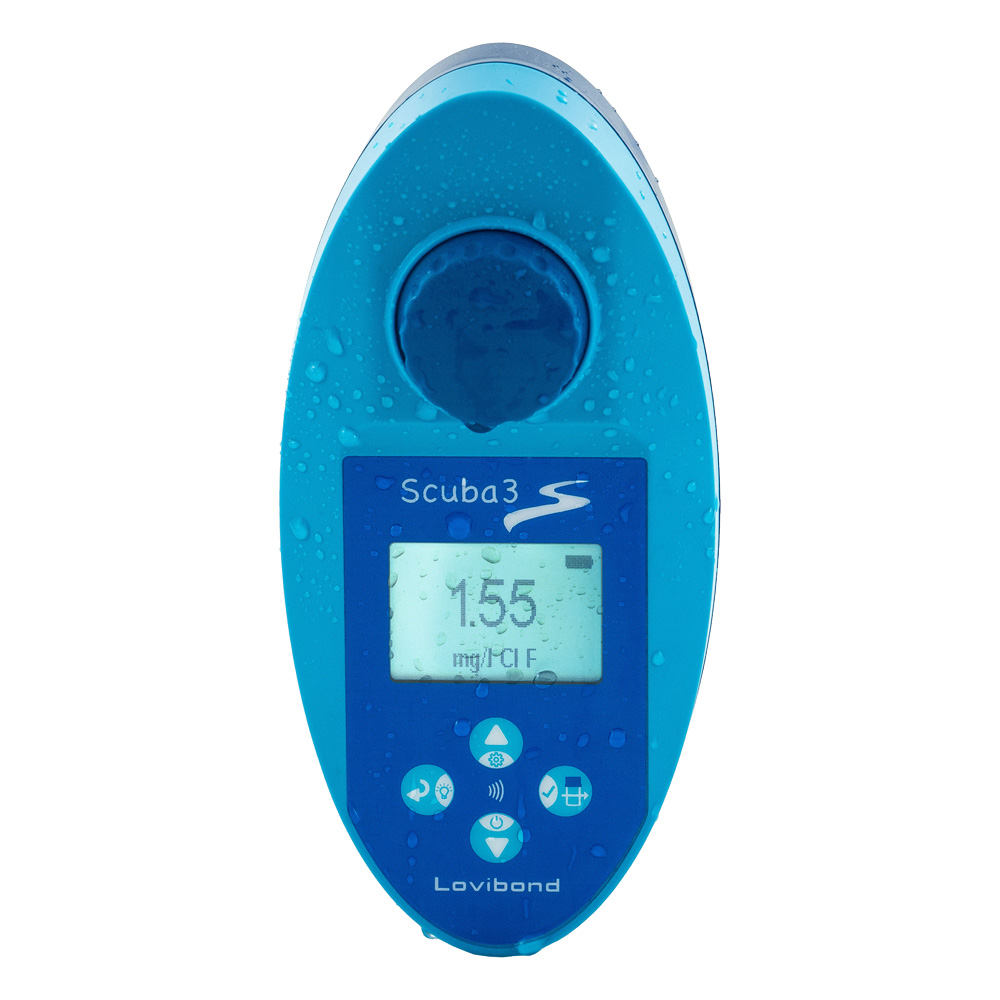
- Measure the pH, free chlorine and ideally the alkalinity as well. Drop test kits are more accurate than test strips; a convenient option is the Lovibond Scuba 3s electronic tester. You will find further testing equipment in the Measuring and testing category.
- If the pH is above 7.4, add pH minus – for example CTX 10 pH reducer granules. As a rough guide, approx. 10 g/m³ lowers the pH by 0.1; you will find the exact dosage on the label.
- Before chlorinating, brush the walls and floor thoroughly. This breaks up the algae film and lets the chlorine reach layers that would otherwise survive.
Step 3: Shock chlorination – dosage in g/m³
The aim of shock chlorination is to raise free chlorine briefly to around 10 mg/l, which reliably kills algae. The normal maintenance level is 0.3–0.6 mg/l – which is why ordinary weekly dosing is not enough for green water.
For an algae-ridden pool we recommend unstabilised granules such as inorganic Superchlor with 65–70 % active chlorine. Unstabilised chlorine breaks down quickly once it has done its job and does not raise the level of cyanuric acid, which in excess “puts chlorine to sleep”.
| Product type | Standard shock | Heavily green water |
|---|---|---|
| Unstabilised granules (calcium hypochlorite, 65–70 %) | 8–10 g/m³ | 15–20 g/m³ |
| Stabilised granules (dichlor, 55–60 %) | 10–15 g/m³ | 20–25 g/m³ |
| Liquid sodium hypochlorite (12–14 %) | 50–60 ml/m³ | 80–120 ml/m³ |
These values are indicative – the label of the specific product always takes precedence. Example: a 3.66 m round pool holding 10 m³ of water will need 150–200 g of unstabilised granules when heavily overgrown.
Rules for safe application:
- Always dissolve the granules in a bucket of water first (add the chemical to the water, never the other way round) and pour the solution over the surface. For liner pools this is essential – undissolved granules will bleach the liner.
- Never mix different chlorine products in dry form or in the same floating dispenser – this can cause a violent reaction.
- Shock in the evening after sunset. UV radiation breaks down chlorine, and overnight the sanitiser can work undisturbed.
- Do not swim during or after the shock until free chlorine has dropped below approx. 3 mg/l.
Step 4: Run the filtration non-stop until the water is clear
Once the shock has been added, switch the filtration to continuous operation – at least 24, preferably 48 hours without a break. Dead algae can only leave the water through the filter, so disable the timer for two days. Also check that the filtration has enough capacity: the pump should filter the entire pool volume within 4–6 hours. Undersized or clogged filtration is the most common reason why a pool takes a week to clear instead of two days, even after correct chlorination.
- With sand filtration, keep an eye on the pressure gauge: as soon as the pressure rises 0.2–0.3 bar above the normal value, backwash to waste. While cleaning a green pool, this is often needed 2–3 times a day.
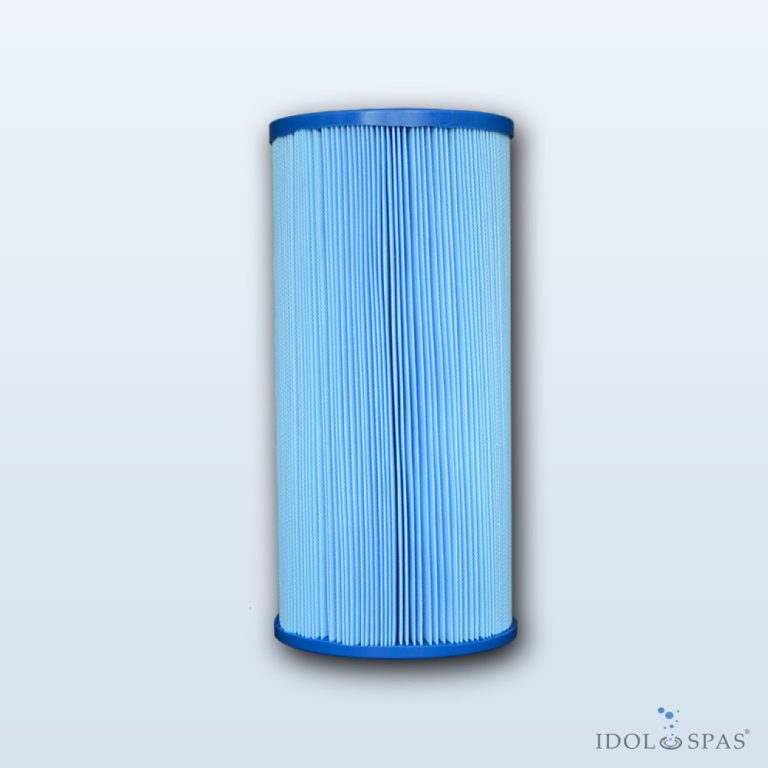
- Rinse cartridge filters several times a day; replace a heavily clogged cartridge straight away, otherwise the flow will drop to a minimum.
- Old or caked sand lets algae back through. If the filter media is more than 3–4 years old, replace it after the season – you will find filter sand and complete filter sets in the filtration category.
Safety first: before any work on the pump, switching the six-way valve or cleaning the pre-filter, always switch off the circuit breaker for the pool equipment. Never change the valve position while the pump is running – you will destroy the valve and risk injury.
Step 5: Flocculation – collect the dead algae
Around 12–24 hours after the shock, the water will change colour from green to greyish-white or milky. That is a good sign: the algae are dead, but their remains are so fine that some of them slip through the sand. This is where a flocculant comes in.
A liquid product such as H2O FLOCK flocculant binds microscopic particles into flakes that the filter can then capture, or that sink to the floor. Dose according to the label into the skimmer or directly into the water with the filtration running, then leave the water undisturbed for several hours (ideally overnight) so the flakes can settle.
Caution: flocculant is primarily intended for sand filtration. Do not use liquid flocculants with cartridge or paper filters – they will clog the filter fibres immediately. For cartridges, use at most a clarifier designed specifically for this type of filtration.
Step 6: Vacuum the sediment to waste
Vacuum the settled flakes and algae residue from the floor with a pool vacuum. A crucial detail: set the six-way valve to the waste position so that the sludge goes straight into the drain and is not returned through the filter. Work slowly so you do not stir up the sediment; then top the water up to the operating level.
For smaller pools, a manual vacuum on a telescopic pole connected to the suction line is sufficient; battery-powered and robotic models speed up the work on larger surfaces – you will find an overview in the pool vacuums category.
Timeline: green water gone in 48 hours
| Time | What to do |
|---|---|
| 0–2 h | Water test, lowering the pH to 7.0–7.2, brushing the walls and floor |
| Evening of day 1 | Shock chlorination (dose as per the table), filtration on continuous operation |
| 12–24 h | Water turns grey = algae are dying; filter backwash, adding flocculant |
| 24–40 h | Rest period for the flakes to settle, filtration according to the type of flocculant |
| 40–48 h | Vacuuming the sediment to waste, filter backwash, checking pH and chlorine |
If the water is still green after 48 hours (not grey or milky), the chlorine dose was too low, the pH too high, or the water is over-stabilised with cyanuric acid. Repeat the shock with an unstabilised product; with cyanuric acid above approx. 100 mg/l, only a partial water change will help.
Prevention: keeping green water from coming back
- Free chlorine 0.3–0.6 mg/l and pH 7.0–7.4 – test at least twice a week, daily in hot weather.
- Filtration 8–12 hours a day in the peak season; the pool volume should be filtered 2–3 times a day.
- A preventive shock every 2–3 weeks, and always after a storm, heat above 30 °C or heavy pool use.
- Algaecide in a maintenance dose as a safeguard – on its own, however, it will not rescue an overgrown pool.
- Brush the walls once a week – algae take hold first in corners and on steps, where circulation is weak.
Conclusion
Green water has a clear recipe: diagnosis, pH at 7.0–7.2, a proper shock with unstabilised chlorine, non-stop filtration, flocculant and vacuuming to waste. Everything you need – from testers and shock chlorine to flocculants – is in stock in the pool chemicals category at poolspashop.eu. We dispatch items in stock within 48 hours and shipping is free on orders over 200 €, so the chemicals can be with you before the algae have a chance to get stronger.
Frequently asked questions
How long after shock chlorination should I stay out of the pool?
Until free chlorine drops below approx. 3 mg/l, which usually takes 24–48 hours. Always check the value with a tester rather than relying on guesswork or a smell test – a strong odour indicates chloramines, not high free chlorine.
The water is green but completely clear. Will a chlorine shock help?
No. Clear green water without slimy walls points to dissolved metals (iron, copper), typically after filling from a well. Chlorine oxidises the metals and makes the discolouration even more pronounced. Use a metal remover product, then a flocculant, and vacuum the dirt to waste.
Why has the water turned green even though I chlorinate regularly?
There are three most common causes: pH above 7.6 (chlorine loses most of its effectiveness), water over-stabilised with cyanuric acid from long-term use of stabilised tablets (above approx. 100 mg/l chlorine practically stops working) and filtration times that are too short. Measure both the pH and the stabiliser and shock with unstabilised chlorine.
Do I have to drain the green water and refill the pool?
In most cases, no. Shock chlorination, flocculation and continuous filtration can deal with even a deep green pool within 48 hours. A partial water change only makes sense in cases of extreme neglect or when cyanuric acid is above approx. 100 mg/l.
Is algaecide alone enough for green water?
No. Algaecide is a preventive product that stops algae from taking hold, but it will not kill an algae bloom. For green water you need a shock dose of chlorine; only use algaecide afterwards, in a maintenance dose, to stop the problem from coming back.