
Salt water is today’s most talked-about alternative to classic chlorination — and also the topic wrapped in the most myths. The short answer: a salt-water pool isn’t a chemical-free pool, it just makes its own chlorine from salt using a salt chlorinator. The water feels gentler and maintenance is more convenient, but you pay a higher upfront price and need to think about material compatibility. In this comparison we’ll walk through the technology, the costs, and the specifics for hot tubs, so you can decide based on numbers, not marketing.
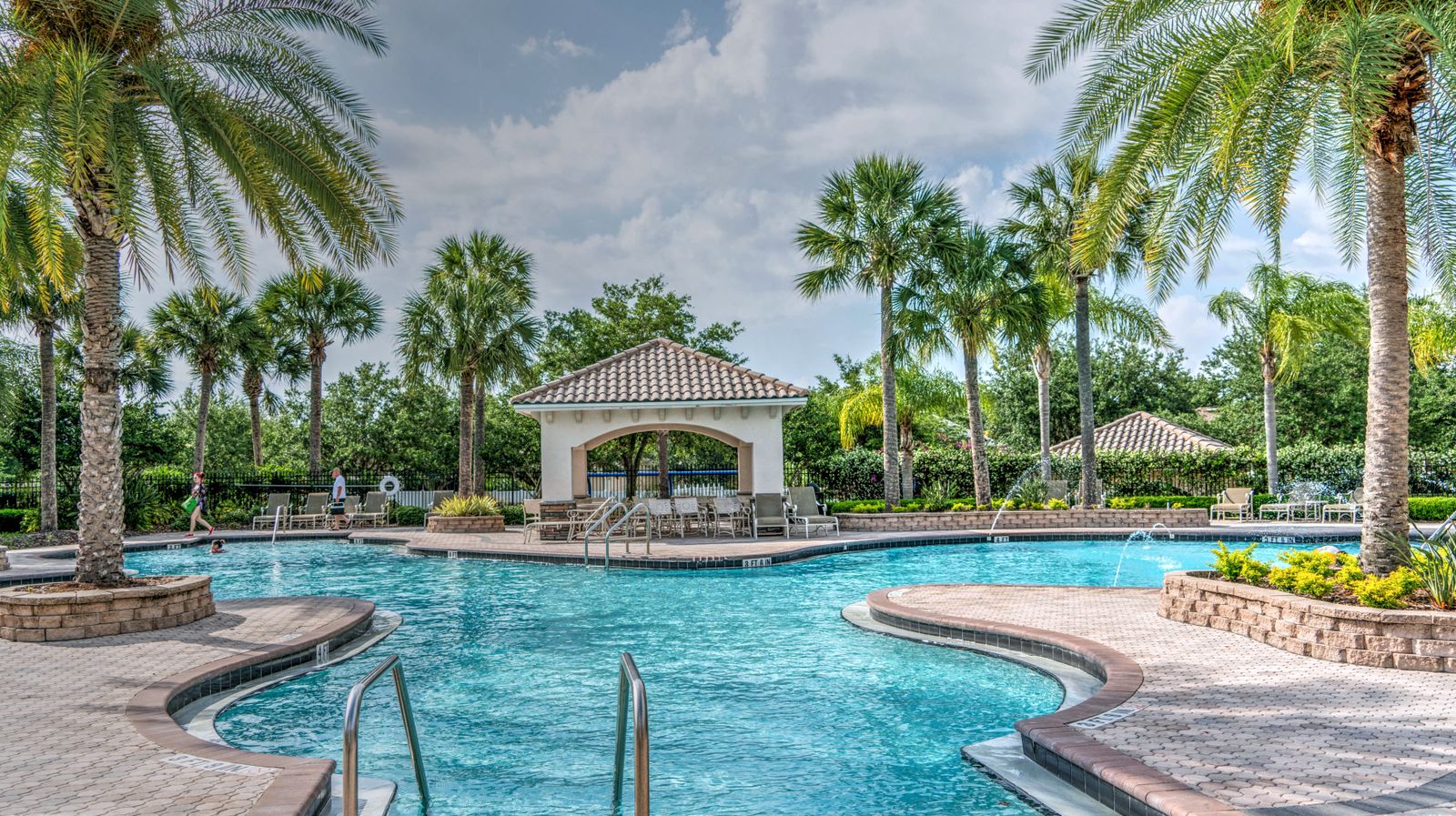
How Does a Salt Chlorinator Work? It’s Still Chlorine
A salt chlorinator (more precisely a salt cell or electrolysis unit) is a device installed in the pool’s filtration circuit. Water with dissolved salt flows through an electrolytic cell — titanium electrodes under low voltage. Electrolysis breaks down the sodium chloride, generating hypochlorous acid directly in the water — the very same disinfectant that’s active after dosing classic chlorine tablets or granules.
This is where the first and biggest myth falls apart: a salt-water pool is not a “chemical-free pool.” Disinfection is still handled by chlorine — it’s just not carried home in a bucket from the shop, but produced continuously right in the pipework. What’s more, once the chlorine compounds have done their job, they convert back into salt, so the salt in the pool practically never “disappears” — you only need to top up losses from splash-out, filtration, and water refills.
The practical difference lies in the dosing pattern. Classic chlorine is dosed in bursts — the level spikes right after dosing and then drops until the next dose. A salt chlorinator produces chlorine continuously for as long as the filtration runs, so the disinfection level stays steadier and the water is less often “over-chlorinated” or, conversely, left unprotected.
How Much Salt Is in a Salt-Water Pool? Less Than You’d Think
Typical pool salt chlorinators run at a salinity of around 3,000 to 4,000 ppm, i.e. 3 to 4 grams of salt per liter of water. Seawater sits at roughly 35,000 ppm — so a salt-water pool is about ten times less salty than the sea. The salinity of pool water is comparable to that of a human tear, which is why it doesn’t irritate the eyes or skin nearly as much.
This is where the most frequently cited advantage comes from: swimming in salt water simply feels noticeably nicer. The water feels softer, doesn’t dry out the skin as much as burst-dosed chlorinated water, and doesn’t produce that typical “pool smell.” Incidentally, that smell isn’t caused by chlorine itself but by chloramines — by-products of chlorine reacting with contaminants — and a steadily disinfected salt-water pool produces fewer of them.
Advantages of Salt Water: Comfort and Stability
- Gentler water — less irritation for eyes, skin and hair, with no sharp chloramine smell.
- Stable disinfection — chlorine is generated continuously, so the level doesn’t swing between doses. Lower risk of water quality crashes during hot spells.
- Less manual work — no more regularly tossing in tablets or storing chlorine stock. You typically top up salt only at the start of the season and after major water refills.
- Safer storage — a bag of pool salt is far less problematic to store than concentrated chlorine products.
- Adjustable output — most salt chlorinators let you set an output percentage, and better models also have a boost mode for sudden extra demand (a storm, a party, a heat wave).
Drawbacks and Risks: Corrosion, the Cell, and pH
Salt water isn’t a miracle without trade-offs. Before deciding, weigh these four main points.
Purchase price. A salt chlorinator for a family pool typically costs 12,000 to 40,000 CZK (roughly €500 to €1,600), depending on output and features. Classic chlorination starts at the price of a floating dispenser — just a few hundred crowns (around €10–20). The investment pays back through cheaper running costs, but only over several seasons.
Corrosion and material compatibility. Even low salinity puts long-term strain on metal parts: ladders, lights, heat pump heat exchangers, anchoring elements. For salt-water use, choose a higher grade of stainless steel (AISI 316), titanium heat exchangers, and accessories explicitly rated for salt water. On older pools, check exactly what metal parts are in the circuit — this is where the most expensive mistakes happen.
Replacing the electrolytic cell. The cell is a consumable part with a lifespan of roughly 3 to 7 seasons, depending on quality, water hardness, and maintenance. A replacement cell usually costs 5,000 to 15,000 CZK (roughly €200 to €600). This cost has to be factored into any long-term calculation — without it, the comparison makes salt water look unrealistically rosy.
You still have to watch the pH. Electrolysis tends to raise pH, so a salt-water pool typically uses more pH-minus than a chlorine one. Testing the water at least once a week remains mandatory — a salt chlorinator handles disinfection, not the overall water chemistry. Neglected pH also speeds up calcium scaling on the cell.
What Does It Cost? A Model Cost Comparison
The table below is an illustrative model calculation for an outdoor pool with a volume of 40 m³ (e.g. 8 × 4 m) running a May-to-September season. Assumptions: pool salt at roughly 10 CZK/kg (about €0.40/kg), initial salting of 4 kg/m³ (160 kg), annual salt top-up of about 25% of the total, a set of chlorine chemistry (tablets, shock, flocculant) for this volume costing 4,000 to 6,000 CZK per season, and cell replacement once every 5 seasons. Prices reflect approximate market levels in 2026; we convert at a rate of roughly 25 CZK/€.
| Item | Chlorine pool | Salt-water pool (salt chlorinator) |
|---|---|---|
| Equipment purchase | 0–2,000 CZK / 0–80 € (floating dispenser) | 12,000–40,000 CZK / 500–1,600 € (salt chlorinator + installation) |
| Initial salting (160 kg of salt) | — | approx. 1,600 CZK / 65 € |
| Disinfection per season | 4,000–6,000 CZK / 160–240 € (tablets, shock) | 400–800 CZK / 15–30 € (salt top-up) |
| pH correction and additional chemistry per season | 800–1,500 CZK / 30–60 € | 1,000–2,000 CZK / 40–80 € (higher pH-minus use) |
| Reserve for cell replacement (annual average) | — | 1,500–3,000 CZK / 60–120 € |
| Total annual running cost | 4,800–7,500 CZK / 190–300 € | 2,900–5,800 CZK / 115–230 € |
| Approximate cost over 5 seasons (incl. equipment) | 26,000–39,500 CZK / 1,040–1,580 € | 28,100–70,600 CZK / 1,120–2,820 € |
The takeaway from the numbers: salt water is cheaper to run day-to-day, but the overall investment pays back slowly — roughly 4 to 6 seasons for smaller pools and cheaper salt chlorinators, and pricier setups may never break even in purely financial terms. That’s why most owners don’t buy a salt chlorinator to save money, but for water comfort and easier maintenance. This matches international comparisons too: according to U.S. surveys (HomeGuide, Family Handyman, 2025–2026), the five-year running cost of both systems comes out comparable, with the price of the generator and replacement cell tipping the balance.
Salt Water in a Hot Tub: Possible, But Only With a Compatible Hot Tub
The situation with hot tubs is more specific than with pools. The small water volume (typically 1 to 1.5 m³), high temperature around 36 to 38°C, and intense aeration mean the water chemistry changes much faster — so a salt system here has to be designed directly by the manufacturer.
Premium brands offer integrated salt systems: one example is the FreshWater Salt System used in Hot Spring and Caldera hot tubs (Watkins Wellness), which operates at a low salinity of around 1,500 to 2,000 ppm with a replaceable titanium cartridge lasting roughly 4 months. There are also systems based on sodium bromide, where electrolysis produces bromine instead of chlorine — bromine being more stable at the high temperatures found in a hot tub.
Retrofitting a pool-grade salt chlorinator into a standard hot tub is not recommended. The heating element, pump seals, jets, and fittings of a standard hot tub may not be rated for permanently salty water, and hot salt water significantly speeds up corrosion. Unless the manufacturer explicitly allows salt-water operation, you risk voiding the warranty and prematurely destroying the heater. Choose a hot tub that’s salt-ready straight from the factory, or one with an officially approved upgrade kit — you’ll find compatible models in our hot tubs category.
Choose correctly and the reward in a hot tub is even more noticeable comfort than in a pool: in hot water, the difference in softness and absence of odor is very clear, and according to manufacturers, salt systems extend the interval between full water changes to as much as 9 to 12 months, compared with the usual 3 to 4 months.
Who Is Salt Water For, and Who Is Chlorine For?
Salt water (a salt chlorinator) pays off if:
- you have sensitive skin, kids, or use the pool intensively, and water comfort is a priority for you,
- you want to minimize manual dosing and handling of chlorine products,
- you have a medium-to-large pool with a long season or a cover/enclosure, where stable disinfection makes the biggest difference,
- you’re prepared for the upfront investment and a reserve for cell replacement,
- your equipment (ladder, lights, heat exchanger) is compatible with salt water, or you’re planning to replace it.
Classic chlorine makes sense if:
- you have a smaller above-ground pool or a short season, and a salt chlorinator investment wouldn’t pay back,
- you want the lowest upfront cost and the simplest possible technology without electronics,
- your circuit has older metal components whose replacement would make switching to salt too expensive,
- you don’t mind regular dosing and testing — with a dispenser and a bit of routine, it’s a matter of a few minutes a week.
Frequently Asked Questions (FAQ)
Is a salt-water pool really chlorine-free?
No. A salt chlorinator uses electrolysis to produce from salt the very same chlorine you’d otherwise dose from tablets. The difference is that it’s produced continuously right in the circuit — the disinfection level is steadier and the water contains fewer irritating chloramines, but chemically it’s still chlorine-based disinfection.
How salty is the water with a salt chlorinator?
Typically 3,000 to 4,000 ppm, i.e. 3 to 4 grams of salt per liter. That’s roughly a tenth of seawater’s salinity (about 35,000 ppm) — the water doesn’t taste salty, it just feels softer and irritates the eyes less.
How long does a salt chlorinator’s cell last, and how much does replacement cost?
Typically 3 to 7 seasons, depending on cell quality, water hardness, and pH care. A replacement cell usually costs 5,000 to 15,000 CZK (roughly €200 to €600). You can extend its lifespan by keeping the pH correct, regularly cleaning calcium off the cell, and never running the chlorinator at a low salt level.
Can I add a salt chlorinator to my existing hot tub?
Only if the manufacturer explicitly permits it. Hot salt water speeds up corrosion of the heating element and other components that may not be rated for it, and an unapproved modification usually means losing your warranty. The safe route is a hot tub with a salt system built in from the factory.
Do I still need to dose anything in a salt-water pool?
Yes. You mainly need to monitor and correct pH (electrolysis raises it), as well as alkalinity, and during peak periods a flocculant or a shock dose can help too. A salt chlorinator replaces regular chlorine dosing, not complete water care.
Whether you choose salt or classic chlorine, balanced chemistry and regular testing remain the foundation of healthy water. Everything you need — from pool salt to testers to pH adjusters — can be found in our pool chemistry category. And if the water still clouds up or turns green despite your best care, our guide on green pool water can help, along with other articles in our Guides section.
