
When a hot tub trips the RCD, it does not mean the device is “oversensitive”. It means current is escaping somewhere outside its intended path — and the RCD has just prevented that path from running through a person sitting in the water. So do not use the hot tub, leave both the circuit breaker and the RCD switched off, and call an electrician or a service engineer. There are, however, a few things you may safely establish yourself, and they will dramatically shorten the search for whoever comes out.

The one rule that governs this whole article. A residual current device (RCD, labelled FI in older installations) must never be bypassed, never replaced with a “stronger” one, never swapped for a type with a higher tripping current and never taken out of service. Only a person with electrical qualifications may work inside the consumer unit or on the fixed wiring. A layperson may only take steps that do not interfere with the installation at all: switch off, unplug an appliance from its socket, observe, dry accessible parts and call in a professional.
What an RCD is actually for
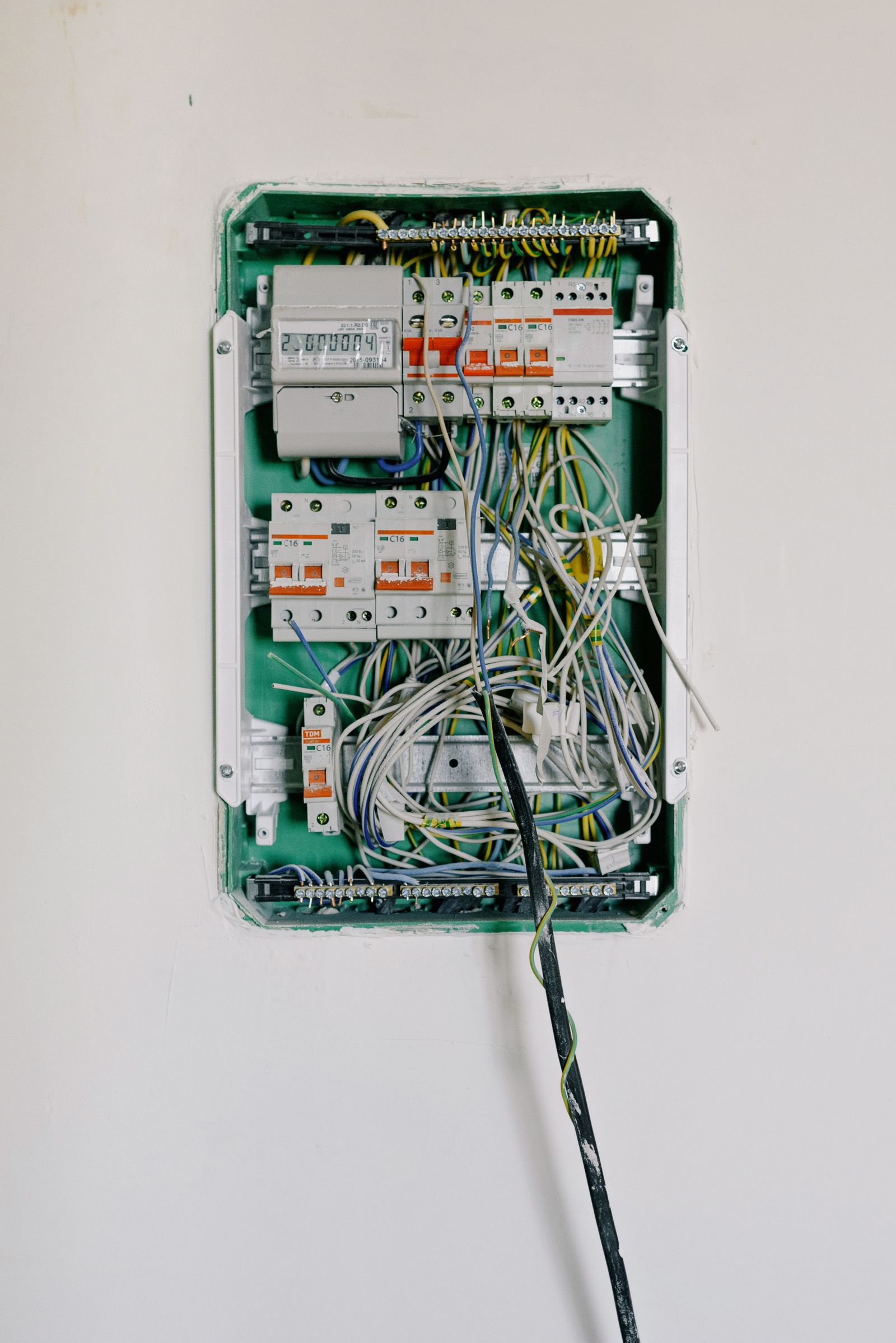
A circuit breaker watches the current flowing through the circuit — it protects the conductors against overload and short circuit. An RCD watches something else entirely: it compares the current going into the appliance with the current coming back. If part of the current does not return, it is leaving by another route — through insulation, through moisture, through the chassis of the appliance or through a human body. Once the difference exceeds the set limit, the RCD disconnects the circuit within tens of milliseconds.
For socket circuits and bathrooms, an RCD with a residual tripping current of 30 mA is the standard choice. That figure is not arbitrary: disconnection has to happen before current passing through the body can cause a fatal disturbance of the heart rhythm. So an RCD is not a fuse protecting the appliance — it is the last barrier between a person and a fatal accident.
Why this counts double with a hot tub
A hot tub brings everything together at once: a large volume of water, wet skin with reduced resistance, a body immersed almost entirely, metal parts inside the shell, a heating element sitting directly in the water flow and often an outdoor location exposed to rain, snow and condensation. That is why no compromise is acceptable in any of the three pillars of protection: a dedicated protected circuit, an RCD specified by the design, and thorough equipotential bonding of conductive parts — which we cover in our article on bonding and earthing for pools and hot tubs. The basic connection rules are summarised in our piece on hot tub electrical requirements.
What to do immediately when the RCD trips
Here the order matters more than speed. The hot tub can wait; your safety cannot.
- Do not get into the water and do not let anyone else in — not “just for a minute”, and not even if the RCD holds after being switched back on.
- Do not keep resetting the RCD. One attempt is diagnostic information; the fifth is reckless: if the RCD holds only because the moisture has dried out in the meantime, the fault has not gone away.
- Leave the circuit switched off — both the breaker and the RCD in the off position — until the fault is resolved.
- Unplug whatever you can without touching the installation: appliances plugged into sockets on the same circuit. Do not attempt to disconnect a hard-wired hot tub yourself.
- Write down exactly what happened. When it tripped, what the hot tub was doing at that moment, what the weather was like. That one sentence often saves an hour of chargeable engineer time.
- Call a service engineer or an electrician. If the hot tub is under warranty, call the authorised service first — see the warranty section below.
In winter, add the risk of freezing to the equation
A hot tub switched off in freezing weather is a race against time. Without heating and circulation, water in the pipework, pumps and heat exchanger can freeze — and a burst pipe inside the cabinet is usually a costlier repair than the original electrical fault. You are looking at hours to about a day, depending on the temperature, the insulation and how warm the water was when the power went off.
Never, however, deal with the frost by switching the circuit back on “for a little while”. Call the service engineer and stress that this is a freezing situation; until they arrive, the answer is usually to drain the water or to keep the cabinet space above freezing with a safe, separately protected heat source — but both of those must be decided by an engineer who can see the actual machine. We describe the wider context of winter operation in our article on running a hot tub in winter.
What a layperson may establish: exactly when does it trip
The most valuable piece of information is not “the RCD trips”, but “it always trips at this precise moment” — the timing points to the device causing the fault. None of the following observations requires any intervention in the electrical installation, only attention.
Immediately on switching on, before anything starts up
The RCD trips the moment you energise the circuit. That points to a permanent leakage independent of what is switched on — a flooded or condensation-soaked control pack, water in a terminal block, a damaged supply cable, a heater leaking continuously. This is the most serious variant and unambiguously a job for a professional.
Only when the heating starts
The hot tub starts up, filters away, and then the moment the heater kicks in it is all over. This is the classic picture of a flow-through heater with a compromised element: the coil is in direct contact with the water and once its sheath cracks, current starts leaking into the water. The suspicion strengthens when it always happens with the same delay after switch-on. If your hot tub simply fails to heat and reports an error rather than tripping the RCD, that is a different problem — see hot tub not heating: diagnosis.
Only when the jets or the circulation pump start
The RCD trips at the exact moment a particular pump switches on. Typically this is moisture in the motor windings, a leaking shaft seal or water in that pump’s connector. Try to work out which pump it is — if the RCD only trips with one group of jets, the service engineer has already finished the search.
At random, often at night or early morning
Trips with no obvious pattern usually have two explanations. Either a scheduled filtration or heating cycle starts overnight, so it is really one of the previous scenarios happening outside your attention. Or moisture condenses in the equipment bay as it cools and the leakage only appears at a certain temperature — which is why the fault “disappears” during the day and comes back in the evening.
After rain, after washing down the surroundings or after snowmelt
A connection with water from outside is the strongest clue of all. It points to a leaking service panel, a badly oriented cable gland, a perished seal on the enclosure or water running off the decking underneath the cabinet. The combination of a surge after a thunderstorm, wet conditions and frost is the worst of all in risk terms.
Ruling out another appliance on the same circuit
An RCD usually protects several circuits, so it is worth checking whether the hot tub is causing the fault at all. A procedure a layperson can manage without tools: switch the circuit off, unplug every appliance that can be unplugged (garden lighting, a pump, a freezer in the workshop, a charger), switch the RCD back on and plug the appliances back in one at a time with a pause of several minutes between them. If the RCD only drops out with one particular device, the culprit is obvious and the hot tub is fine.
Switching individual breakers in the consumer unit off and on already goes beyond what a layperson should do: without knowing how the circuits are labelled, it produces confusion rather than a diagnosis. If you are not sure, leave this part to an electrician.
The TEST button
Every RCD has a button marked T or TEST. Pressing it artificially creates a fault current and the RCD must trip immediately. It is the one operation inside the consumer unit that is routinely recommended to users as well, and it is done roughly twice a year. It serves solely to verify that the RCD works — it tells you nothing about where the leakage is. If the RCD does not trip when you press TEST, it is faulty, an electrician must replace it, and the circuit must not be used until then.
Common causes in hot tubs
Moisture in the control pack and connectors
The most common cause of all. A cracked door seal, a missing connector cap or a cold night after which water condenses inside the pack is enough. The leakage tends to be small and intermittent — hence those “mysterious” night-time trips.
A leaking heater or flow-through heating element
The heating element is in direct contact with the water and it ages; once the sheath of the coil is compromised, current starts leaking into the water. The risk increases with hard water and clogged filtration, when the element overheats — so filter care is not just about water clarity, it is also about how long the heater lasts (see hot tub filter cleaning).
A faulty pump or a leaking shaft seal
The shaft seal separates the wet end of the pump from the motor. Once it gives, water reaches the windings and leakage is only a matter of time. The warning signs are usually dripping under the cabinet, a damp patch beneath the pump or a change in the noise it makes.
Damaged cable and rodents
A supply cable run underground, pinched under the cabinet or gnawed through by a rodent is a classic with outdoor hot tubs. Rodents like to nest in the warmth of the equipment bay, and conductor insulation is just another material to them. One sign is a fault that appeared “out of nowhere” after the winter.
A circuit shared with another appliance
A hot tub on a circuit shared with garden lighting, a pump or a workshop is an unfortunate arrangement, even while it happens to work. The natural leakage currents of the individual appliances add up — each harmless on its own, together over the tripping threshold. That is why a hot tub belongs on its own protected circuit with its own RCD.
RCD type: AC, A and high-frequency leakage from inverters
RCDs differ in the waveforms of fault current they can detect. In simple terms: type AC responds only to sinusoidal alternating residual current, type A also to pulsating DC, type F is intended for circuits with frequency inverters, and type B also for smooth DC. Hot tubs with variable-speed pumps and switched-mode power supplies produce leakage that is not purely sinusoidal — with an unsuitably chosen RCD you then get either unexplained trips or, worse, a reduced ability to detect the fault at all.
That does not mean you get to choose the RCD type yourself. The choice of both the type and the tripping current must follow the electrical design, the hot tub’s technical data sheet and the applicable standards, and only a qualified electrician may make it. Swapping an RCD “for a different type so it stops tripping” without that assessment is every bit as dangerous as taking it out of service. The protection requirements are usually stated in the hot tub documentation — we explain how to read it in our article on how to read a hot tub spec sheet.
Table: when it trips, what it suggests, who may deal with it
| When the RCD trips | Probable cause | What a layperson may do | Who deals with it |
|---|---|---|---|
| Immediately on energising the circuit | Permanent leakage: water in the control pack, damaged supply cable, leaking heater | Switch off, do not switch back on, describe the situation | Electrician or authorised service |
| When the heating switches on | Compromised heating element, flow-through heater | Note the timing, do not use | Hot tub service (parts and labour) |
| When the jets or circulation start | Moisture in the motor windings, leaking shaft seal, wet pump connector | Identify which pump triggers it | Hot tub service |
| At random, mainly at night | Scheduled filtration or heating cycle, or condensation in the equipment bay | Check the cycle times in the controls, note the hour of the trip | Hot tub service |
| After rain, snowmelt or washing the decking | Leaking panel, bulkhead fitting, cable gland, water running under the cabinet | Visually check the seals and how water drains away from the cabinet | Service; electrician for the fixed installation |
| After a thunderstorm or a mains surge | Damaged insulation, damaged electronics | Switch off and do not use; report it to your insurer as well | Electrician and service together |
| It trips even with the hot tub off | A fault in another appliance on the shared RCD | Unplug appliances from the sockets one by one | Electrician, if the culprit is not found |
| The RCD does not trip even when TEST is pressed | Faulty RCD — the protection is not working | Do not use the circuit, call immediately | Electrician only (replacement) |
Drying out: what you may and may not do
When it is obvious that water has got into the equipment bay, drying it out makes sense — but only with the circuit switched off at both the breaker and the RCD for the entire time.
Safe: open the service panel, leave the hot tub uncovered and ventilated, remove standing water with a sponge or a wet vacuum, direct air inside from a fan powered from a different circuit and let it dry for a day or two. Not safe: dismantling the control pack, unplugging connectors, aiming a heat gun directly at the electronics and, above all, switching the circuit on “just to try”.
Even after perfect drying you have no guarantee that the fault has gone — you have merely eliminated one possible cause. That has to be verified by measurement, carried out by an electrician.
How to prevent trips like these
A dedicated circuit and an RCD to the design
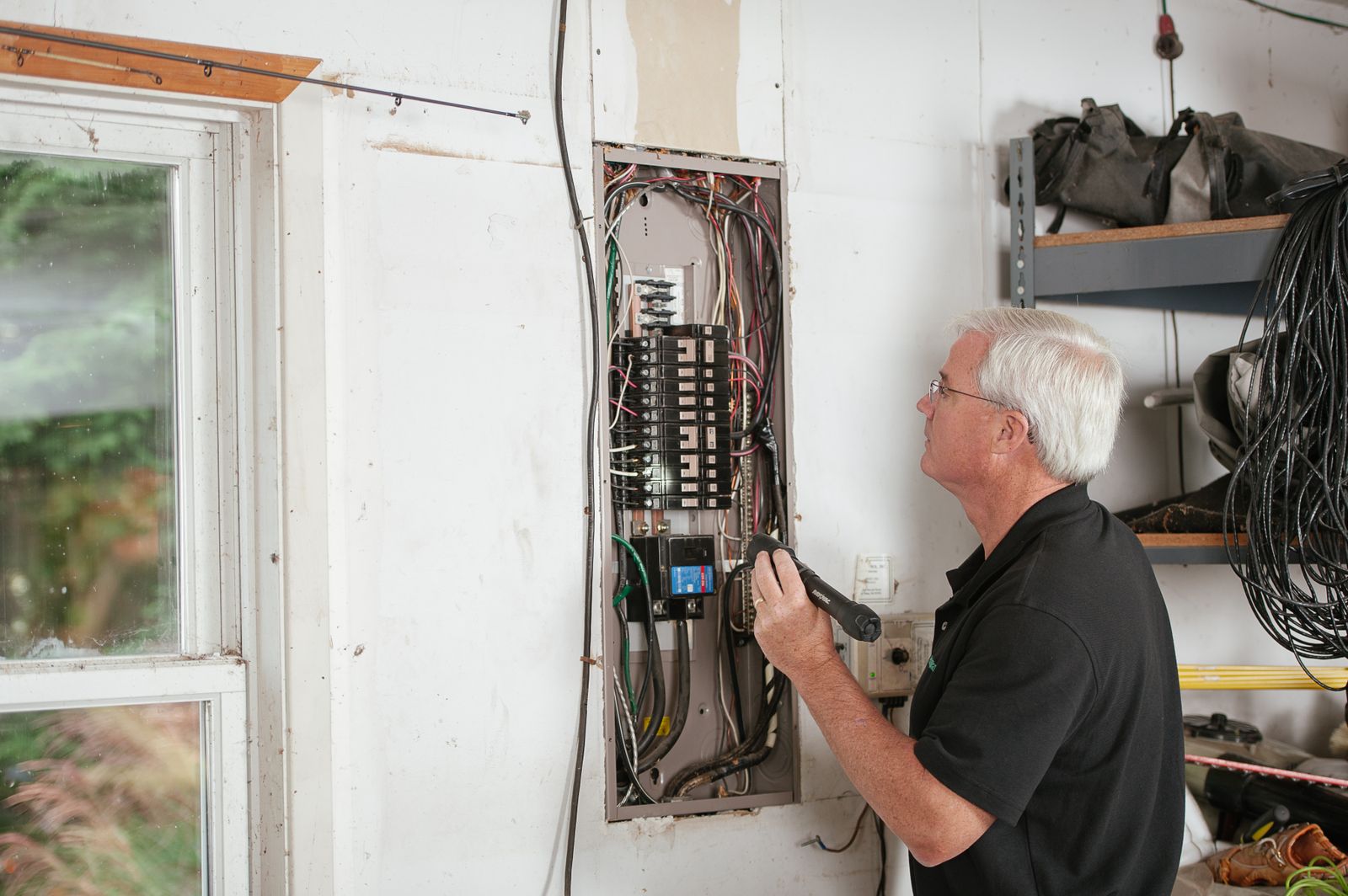
A hot tub should have its own supply, its own protection and its own RCD, whose type and tripping current are specified by an electrician from the machine’s documentation. The investment pays for itself the moment the hot tub stops taking down half the house and diagnosis narrows to a single appliance.
Good workmanship on the connection
Most problems that later look like a hot tub fault actually begin at installation: a cable without a proper gland, joints in an outdoor box without an adequate IP rating, terminals that were not tightened. Insist on components rated for outdoor use, and on the cable entering the enclosure from below — then water has no way of running inside.
Protecting the enclosure and equipment bay from water
Once a year, check the seal on the enclosure door, the condition of the caps, the fall of the decking around the hot tub and whether water from the gutter lands on the service panel. It is also worth stopping rodents from getting under the cabinet.
Regular checks and inspections
Test the RCD with the TEST button twice a year and write down the date. Have the electrical installation around your pool or hot tub inspected by a qualified inspector at the applicable intervals — for outdoor environments these tend to be shorter than for ordinary domestic wiring. An inspection report also comes in useful for insurance claims and warranty claims. The principles of safe operation around water are summarised in our article on child safety around pools and hot tubs.
When it is a warranty matter and what to demand in writing
If the hot tub is under warranty, call the authorised service first, not an electrician you happen to know: work carried out inside the machine by an unauthorised person is a common reason for a warranty claim to be rejected, however well meant the help was. The reverse also holds — a fault in the fixed wiring of the house (consumer unit, supply, RCD) is not a product fault and falls to the electrician, or rather to whoever carried out the installation.
The warranty normally covers a component that failed of its own accord: a leaking heater, a faulty pump, a connector that leaked from the factory. Flooding of the cabinet because water drains badly off the decking, damage by rodents or the consequences of a surge are handled differently — the first as an installation or usage fault, the rest typically through insurance.
After every visit, ask for a service report and make sure it states: the measured values of insulation resistance or leakage current before and after the repair, which part was replaced including its designation, whether the RCD function was verified both with the button and by measuring the tripping time, and whether the bonding was checked. The electrician should provide an inspection report for the part of the installation concerned. Without that paperwork it is hard to prove whose fault it was. We go through the claims procedure in our article on warranty claims for pools and hot tubs.
Frequently asked questions
Can I swap a 30 mA RCD for a 100 mA one if it keeps tripping?
No. An RCD with a higher tripping current no longer protects a person against electric shock the way a hot tub requires — it serves other purposes, for example as supplementary fire protection. Swapping in a “stronger” one so that the trips stop means switching off the protection of life and leaving a fault running that has not gone away. The choice of RCD type and rating belongs solely to an electrician.
The hot tub works again after drying out. Can I use it?
Only after an electrician or service engineer has measured the insulation condition and confirmed the leakage is gone. The fact that the RCD holds is not proof of safety: moisture-related leakage changes with temperature and humidity and can come back at the worst possible moment. Until then, leave the hot tub switched off.
The RCD tripped just once after a thunderstorm and has held ever since. Is that enough?
No, it is not. A surge can damage insulation or electronics in a way that only shows up weeks later — and combined with wet conditions and frost that is a risky trail. At the very least, have the insulation condition measured and the control pack checked.
In closing
A tripped RCD is not a fault to be worked around. It is a message that something in a wet environment is passing current where it should not — and that the protection did exactly what it was meant to do. Your job is not to repair the fault, but to hand it over safely to someone qualified to deal with it, and to bring them the most precise description you can of when the trips occur.
Once the installation is back in order, it pays to finish the rest of the job too: a dedicated circuit, a properly sealed enclosure, working bonding and equipment that is not running at the edge of its capability. You will find pumps, heating and filtration components in the pool and spa equipment category, and more guides in our Advice section.
