
An above-ground pool can be yours for a few hundred euros, and you could be swimming in it this very weekend. An in-ground pool is an investment starting at roughly €6,000, but it lasts for decades and adds value to your property. Which type makes sense for you depends on your budget, your plot, and how long and how intensively you plan to use the pool.
What’s the main difference between an above-ground and an in-ground pool?
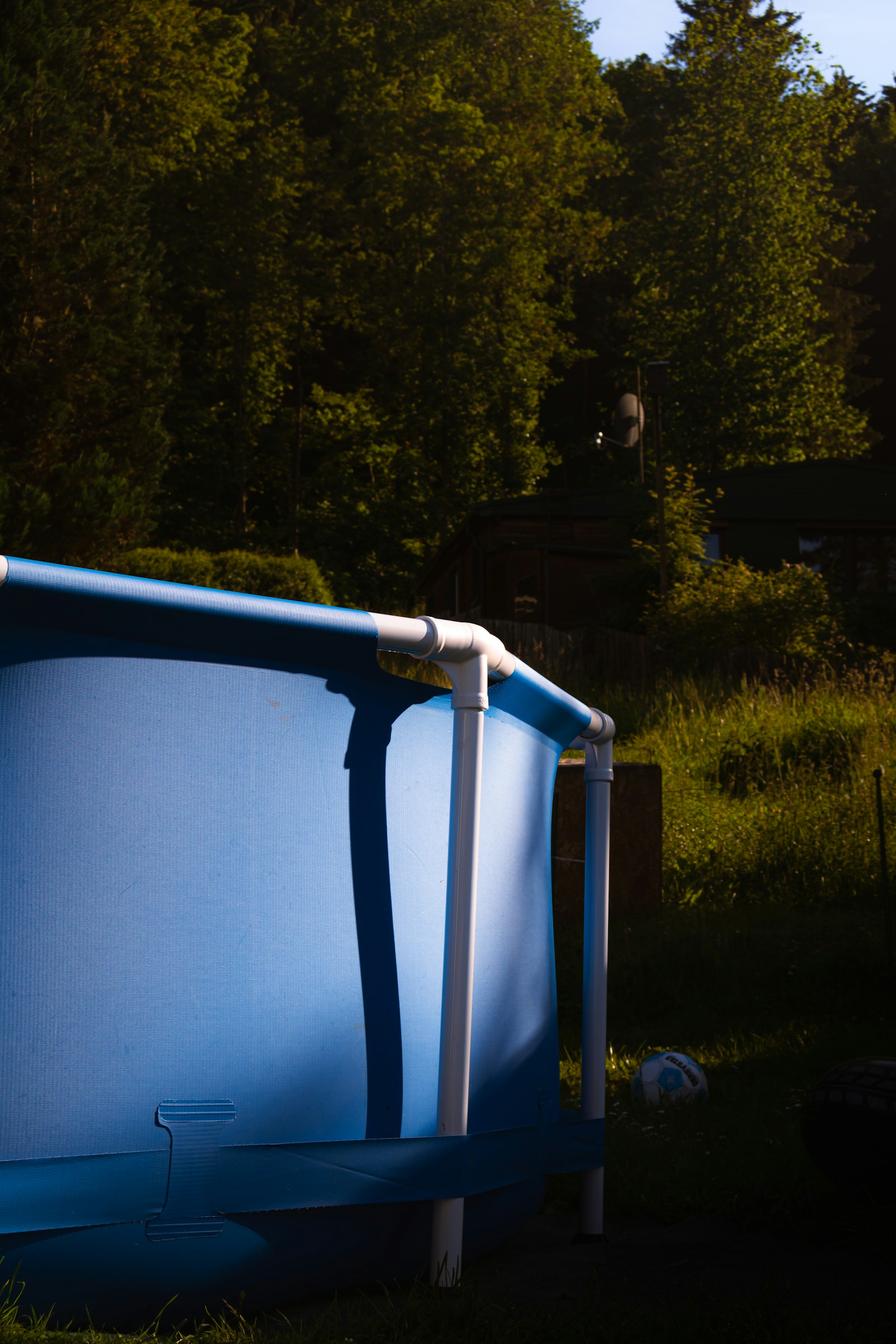
An above-ground pool stands freely on the ground. It’s most often a frame construction with a liner, an inflatable pool, or a pool with a steel wall and inner liner. It needs no excavation, is set up on a level, compacted surface, and smaller models can be disassembled and stored away in autumn.
An in-ground pool is sunk into an excavation on a concrete slab — typically a liner pool, a plastic (polypropylene) shell, a laminate (composite) shell, or a concrete pool. It’s a permanent structure with its own technical shaft, piping, and usually higher-quality filtration. Between these two worlds sits the semi-in-ground option, which we’ll cover further below.
Above-ground vs. in-ground pool: a clear comparison table
| Criterion | Above-ground pool | In-ground pool |
|---|---|---|
| Purchase price | Roughly €80–3,200 depending on type and size | Roughly €6,000–32,000+ including groundwork |
| Installation speed | Hours to a weekend, DIY | 3–10 weeks depending on type (liner pools faster, concrete pools longer) |
| Lifespan | Roughly 3–10 seasons; the liner and frame wear out, quality steel walls last longer | Decades; the liner is replaced every 10–15 years, the shell lasts a generation |
| Appearance and property value | Practical but can look temporary; doesn’t increase the value of the house | An aesthetic centerpiece of the garden, increases both appeal and property value |
| Permits in the Czech Republic | Generally no permit required (not classed as a structure) | Pools up to 40 m² at a single-family home are usually exempt from permits and notification, but this must always be confirmed with the local building authority |
| Can it be dismantled? | Yes — smaller models are taken apart for winter and can even be relocated | No — a permanent part of the property |
| Winter operation | Smaller pools are drained and stored; larger ones are winterized while still filled | Standard winterizing; with an enclosure and heating, an extended or even year-round season is possible |
The permit information is based on general practice under Czech building law: a pool with up to 40 m² of built-up area on the plot of a family home or a recreational cottage counts as a minor structure. Conditions vary by location, however (protected zones, heritage-protected areas, setback distances from plot boundaries), so always check your specific plans with the local building authority.
When does an above-ground pool win?
When budget is the deciding factor
A frame pool 3–4 meters in diameter, complete with cartridge filtration and steps, costs around €200–600. Better above-ground pools with a steel wall and inner liner run roughly €280–1,200, and large premium sets go up to about €3,200. That’s still a fraction of the price of an in-ground pool — and if after two seasons you find you’re using the pool every day, the above-ground model has served as a cheap trial run before a bigger investment.
When you rent your home or need a temporary solution
An above-ground pool isn’t a structure fixed to the ground. If you move, you can take it apart and take it with you, and on a rented plot it doesn’t require permission for building work. It works just as well on land where you’re planning a renovation and don’t want to tie up a large sum right now.
When you want to swim this very weekend
Two people can set up a frame pool in an afternoon: level the ground, lay geotextile fabric, assemble the frame, fill it, and connect the filtration. No excavator, no concrete work, no waiting for a contractor during peak season.
When does an in-ground pool pay off?
When it’s a long-term investment
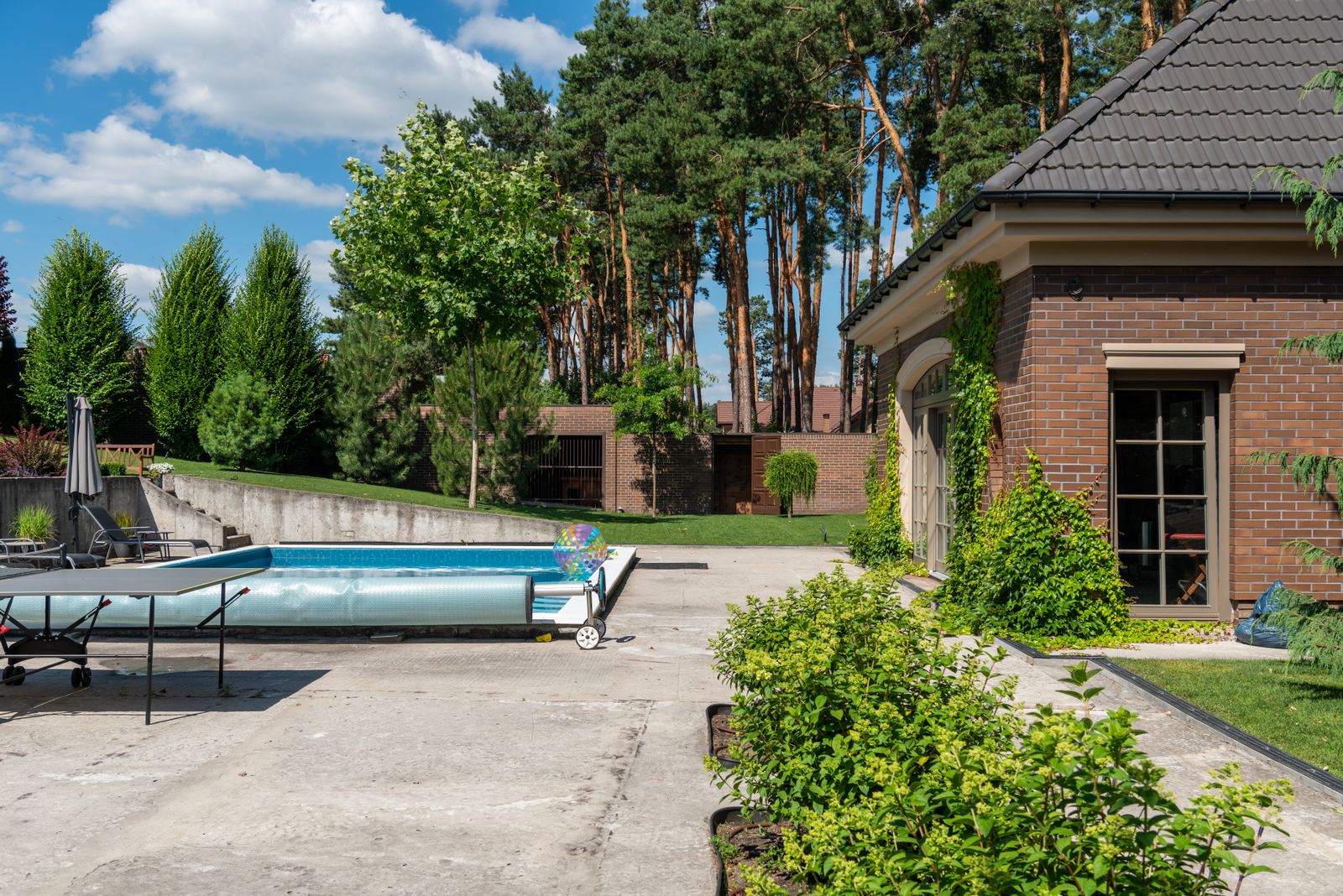
The shell of an in-ground pool lasts for decades; with liner pools, only the inner liner needs replacing after 10–15 years. Spread over its lifetime, a quality in-ground pool works out surprisingly reasonable — and unlike an above-ground model, its value doesn’t disappear but is reflected in the price of the property.
When appearance matters
An in-ground pool blends into the garden: the water surface level with the ground, stone or wood paving around the edge, evening lighting. Real estate agents agree that a well-maintained in-ground pool is one of the features that increases a home’s appeal when selling — an above-ground pool doesn’t have that effect.
When you want to extend the season with an enclosure
An in-ground pool can be fitted with a sliding enclosure, which combined with a heat pump extends the swimming season from April to October, and even longer with taller enclosures and intensive heating. An enclosure also reduces heat loss, water evaporation, and chemical consumption, and improves safety when there are children in the garden. We covered heating in detail in our article on heat pumps for pools and hot tubs.
The semi-in-ground pool: the compromise people forget about
A semi-in-ground installation means the pool — typically one with a steel wall or a plastic shell — is sunk only partially, usually to a third or half of its height. It suits sloped plots, where full excavation would require expensive retaining walls, and any site where you want a better look than a free-standing pool without the full cost of excavation.
The raised edge acts as a natural railing and bench at the same time, reducing the risk of children or pets falling into the water. Keep in mind, though, that not every above-ground pool is built for partial burial — the manufacturer must explicitly approve backfilling against the wall, otherwise the shell risks deforming. In terms of price, the semi-in-ground option sits between the two extremes: the pool itself costs about the same as better above-ground models, plus partial excavation and surface reinforcement around it — overall, it often comes in at about half the cost of a fully in-ground structure.
What should you watch out for with either option?
The base determines the lifespan
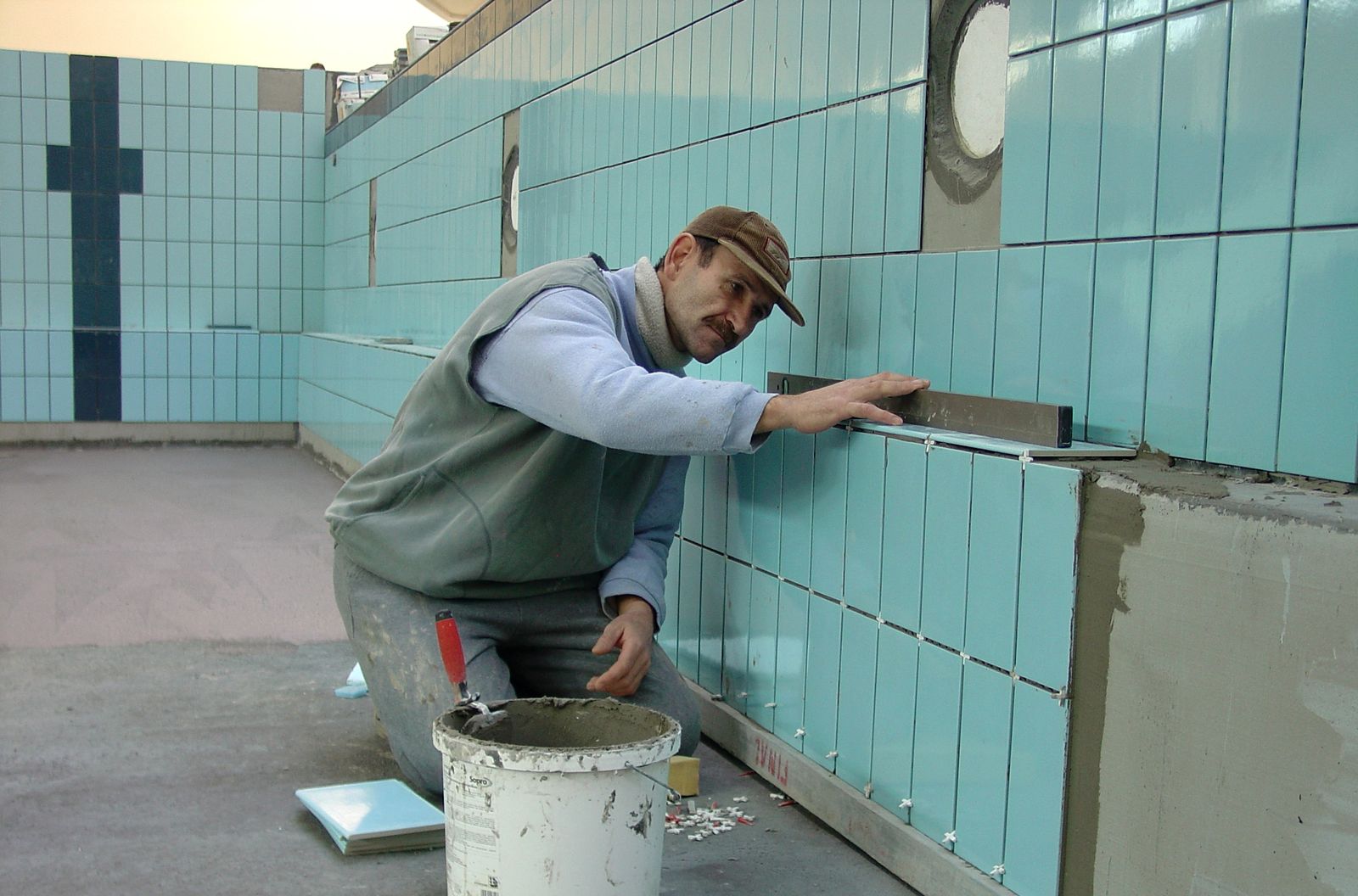
The most common mistake with an above-ground pool is setting it up on an uneven lawn. A cubic meter of water weighs a ton — a pool 3.6 meters in diameter puts over 6 tons of pressure on the ground beneath it. The base must be perfectly level and compacted: ideally a concrete or paved surface, or at minimum leveled, compacted gravel with geotextile fabric. For an in-ground pool, the foundation is a reinforced concrete slab; skimping on it risks cracks and shifting of the entire shell.
Filtration must match the water volume
Cheap sets often come with undersized cartridge filtration that can’t turn over the pool’s volume fast enough. Rule of thumb: the entire volume of water should pass through the filter every 4–6 hours, so for a pool with 10 m³ of water you need an actual flow rate of at least 2 m³/h. For a more permanent solution, sand filtration pays off — even for a larger above-ground pool. You’ll find pumps and filters in the pool technology category.
Water needs care regardless of pool type
Chemistry and water testing work the same way for both types — the only difference is volume. A smaller above-ground pool reacts to fluctuations faster (it overheats and “turns” faster too), while a larger in-ground volume is more stable but needs bigger doses. You’ll find the basic products in the water treatment category.
How much do above-ground and in-ground pools cost in 2026?
Approximate price ranges based on current guides and pricing (summer 2026):
- Inflatable pools: from around €20, typical family-size models €80–160.
- Frame pools: from around €80, best-selling sets €200–600.
- Above-ground pools with a steel wall: from around €280, premium sets around €1,200, large complete kits up to €3,200.
- In-ground liner pool, 6 × 3 m: the shell with basic technology €6,000–10,000; excavation, soil removal, slab, and concrete surround another €2,800–4,800 depending on how much you do yourself.
- Custom concrete pool: €32,000 and up.
- On top of that: an enclosure, heat pump, counter-current unit, or automatic dosing can add anywhere from thousands to tens of thousands of euros to the budget.
Also budget for items that are often overlooked: filling the pool (at a water price of around €2/m³, that adds up to tens or even low hundreds of euros for a large pool), an electrical connection for the technology, and, for an in-ground pool, also landscaping and paving around the edge. We’ve broken down the full cost list, including running costs, in a separate article: How much does a pool cost: the complete budget.
Frequently asked questions
Do I need a building permit for an in-ground pool?
For a family home, a pool with up to 40 m² of water surface can usually go ahead without a permit or notification, since it counts as a minor structure. Rules vary by specific plot, however — protected zones, setback distances, or heritage protection can change the situation. Always check your plans with the local building authority before starting work.
Do I have to drain my above-ground pool for winter?
Smaller frame and inflatable pools, yes — they’re taken apart, dried, and stored, which significantly extends the liner’s lifespan. Larger above-ground pools with a steel wall, on the other hand, are winterized while still filled: you lower the water level below the jets, add winterizing chemicals, and cover the pool. An empty steel wall with no water pressing against it would suffer more over winter.
Can an above-ground pool be sunk into the ground later on?
Only if the manufacturer explicitly approves it for that specific model — the construction must be rated for the pressure of backfill. This is typically possible with steel-wall pools designed for semi-in-ground installation. A standard frame pool doesn’t belong in an excavation; the pressure of the soil would deform the frame and liner.
Which has higher running costs — an above-ground or an in-ground pool?
It mainly comes down to water volume and heating, not how the pool is installed. In-ground pools tend to be larger, so they use more energy and chemicals, but being sunk into the ground and often enclosed also reduces heat loss. A small above-ground pool is the cheapest to run, while a large uncovered above-ground pool loses heat from every side.
Will a pool increase the value of my property?
An in-ground pool in good technical condition will — buyers see it as a finished investment, especially with an enclosure and modern technology. An above-ground pool isn’t reflected in the property’s price; when you sell, you simply take it with you, which is actually one of its advantages.
Conclusion: decide based on your time horizon, not just the price
If you want to try out life by the water first, you rent your home, or your budget runs to a few thousand euros, an above-ground pool is the clear choice — you can set it up in a weekend and nothing ties you down. If you plan to live on your property long-term and want the pool to be a full-fledged part of the garden and home, an in-ground pool is worth it from the start, ideally with an enclosure and heating in mind. And if you’re limited by a slope or by child safety, look into the semi-in-ground solution.
Whichever path you choose, you’ll find the full range of above-ground and in-ground models, including accessories, in the pools category. We keep adding more guides and comparisons to the Guide.
