
A mid-sized in-ground pool will cost roughly €10,000–28,000 in 2026, including technology and the necessary construction work, while a good above-ground pool can be had from around €800 upward. But that’s just the start: running costs add another roughly €800–1,400 a year, and over ten years of ownership, total costs easily reach 1.5 to 2 times the purchase price. In this article we break down the entire budget item by item — no sugar-coating, with numbers you can actually plan around.
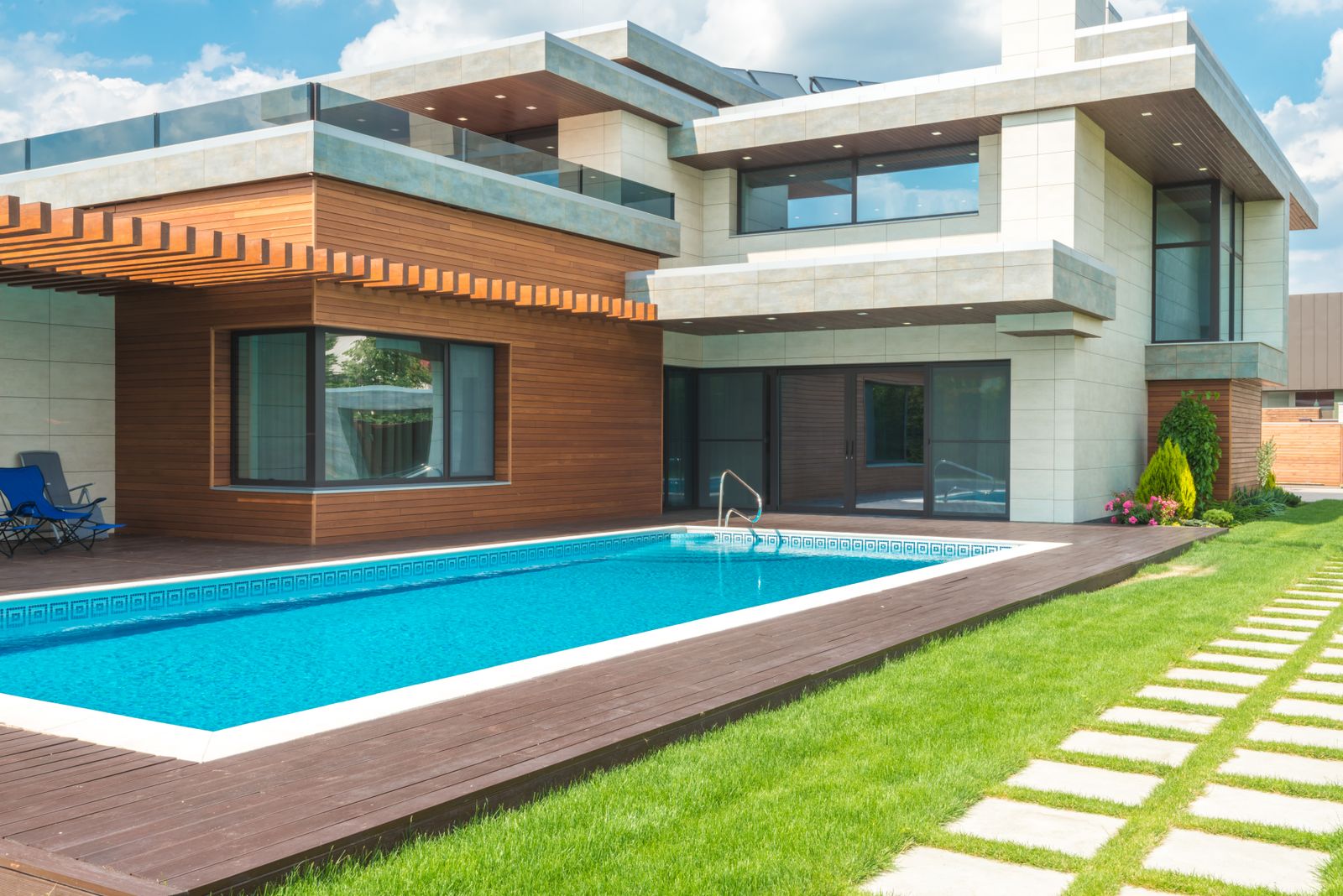
How Much Does a Pool Cost by Type?
The purchase price depends mainly on the construction. The ranges below are based on current price lists from Czech suppliers and industry overviews — take them as indicative values for 2026; the actual offer always varies by size, equipment, and location.
| Pool type | Indicative price (2026) | What’s usually included | Structure lifespan |
|---|---|---|---|
| Above-ground frame or steel pool | €600–8,000 | Pool, cartridge or sand filtration, steps | 5–15 years |
| In-ground plastic/liner pool | €6,000–16,000 | Shell or liner, basic technology | 20+ years (liner 10–15 years) |
| In-ground laminate/composite pool | €8,000–20,000 | Finished shell, technology, usually installation too | 25–30+ years |
| Concrete pool with liner or tiling | €14,000–32,000+ | Custom-built, technology per project | 40+ years (surface needs renewal) |
For the 4×8 m size, the most common in Czech gardens, plan more specifically: a liner pool €7,200–11,200, a composite one €8,800–15,200, and a concrete one €15,200–23,200. Custom concrete pools above 6×12 m start from around €24,000, and there’s practically no upper limit.
Be careful when comparing offers: a cheap price “for a pool” often means just the shell or liner itself, without filtration, piping, skimmer, and jets. Always ask for a detailed breakdown of what exactly the offer includes — only then can you honestly compare two offers.
What Do People Most Often Forget to Budget For?
It’s precisely these “invisible” items around construction that can push the original budget up by 30 to 60 percent. Plan for them from the start with an in-ground pool, not the moment the excavator is already parked in your garden.
- Excavation and soil removal — €800–3,200 depending on site access and volume. Poor access for machinery or rocky subsoil push the price up significantly.
- Foundation slab and backfill — a reinforced slab under the shell and stabilizing backfill: €1,200–3,600.
- Electrical connection and distribution board — a dedicated circuit with a residual-current breaker plus inspection; €400–1,200, more if further from the house.
- Equipment shaft or plant room — space for filtration, heating and piping; €800–2,400, more for a brick-built plant room.
- Cover/enclosure — the most commonly underestimated item: a quality retractable enclosure costs €2,000–8,000, easily as much as a smaller pool. Yet it’s precisely what saves the most on running costs.
- Landscaping and paving — walkable surface around the pool, lawn restoration; €1,200–4,000.
- Permits — a pool with up to 40 m² of water surface at a single-family home usually needs no permit or notification; between 40 and 100 m² expect to notify the building authority. The notification itself costs next to nothing, but project documentation can run from roughly a hundred to a couple of thousand euros. Always verify the specifics with your local building authority.
Adding it up: on top of the price of the pool itself (4×8 m), it’s realistic to add €6,000–16,000 for site preparation and an enclosure. That’s why turnkey budgets for in-ground pools so often land between €16,000 and €32,000.
How Much Does It Cost to Run a Pool Each Year?
Running costs for a recreational pool most often range between €600 and €2,000 a year — the spread is wide because it depends on the length of the season, the heating method, and above all whether you cover the pool. The model calculation below applies to a typical in-ground pool with a volume of around 30 m³ (e.g. 7×3.5×1.3 m).
Model assumptions: a 6-month season (April–September), a 0.55 kW filtration pump running 8 hours a day, heating via heat pump to 27–28°C with a cover or enclosure, an electricity price of €0.24/kWh, water and sewage charges of €5.20/m³, and chlorine-based chemistry. These are indicative values for 2026.
| Item | Calculation / note | Annually (indicative) |
|---|---|---|
| Electricity — filtration | 0.55 kW × 8 h × 180 days ≈ 790 kWh | €180–220 |
| Electricity — heat pump heating | 1,500–2,500 kWh depending on weather and covering | €360–600 |
| Pool chemistry | Chlorine, pH, flocculant, algicide, winterizing product | €160–320 |
| Water | Top-up plus partial spring replacement, approx. 15–20 m³ | €80–110 |
| Winterizing and minor maintenance | Plugs, test strips, replacement cartridges | €60–140 |
| Total per year | — | €840–1,400 |
Your biggest lever is heating. An uncovered pool loses most of its heat through evaporation from the surface — a solar cover or enclosure can cut heating consumption roughly in half. Conversely, heating with an electric immersion heater instead of a heat pump roughly triples heating costs, because a heat pump turns 1 kWh of electricity into 4–5 kWh of heat.
The second lever is chemistry — not buying less of it, but dosing it correctly. Unstable pH degrades chlorine and forces you to add more products. If you’re struggling with water maintenance, read our guide on what to do about green pool water — most problems start with neglected measurement.
How Much Does a Pool Cost Over 10 Years? A Look at Total Cost of Ownership
The “cost of ownership” methodology was popularized by the American manufacturer River Pools: it adds running costs and the cyclical renovations that inevitably come around to the purchase price. According to its comparison, ten years of maintaining a concrete pool in the US costs roughly seven times as much as maintaining a composite one — mainly due to surface renewal and higher chemical use. The same logic applies in Czech conditions too, just with different numbers.
| Item over 10 years | Interval | Indicative cost (2026) |
|---|---|---|
| Regular running costs (see table above) | every year | €8,400–14,000 |
| Pool liner replacement (liner pools) | once every 10–15 years | €2,400–6,000 |
| Filtration pump replacement | once every 8–12 years | €320–1,000 |
| Sand or filter media replacement | once every 3–5 years | €80–240 per replacement |
| Small parts: seals, skimmer, jets, cover | ongoing | €400–1,200 |
| Heat pump servicing, occasional repair | ongoing | €200–1,000 |
A model total for a 30 m³ liner pool: a turnkey purchase of around €18,000, plus running costs and renewal over a decade of around €12,000–20,000. Altogether, you’re looking at roughly €30,000–38,000 over ten years, or about €240–320 a month. A composite shell eliminates the liner replacement; for concrete, on the other hand, expect surface renewal that can approach a five-figure sum.
That’s exactly why it pays to look at offers through a ten-year lens, not a single season. A pool that’s €3,200 cheaper to buy but needs an earlier liner replacement and eats more electricity ends up costing more overall.
Where Does It Pay to Save — and Where Does It Cost You Dearly?
Where Saving Makes Sense
- Pool size. Every extra meter of length means more water to heat, more chemistry, and a bigger enclosure. A 6×3 m pool usually serves a family just as well as an 8×4 m one — and saves more than €4,000 over a decade.
- Covering. A solar cover for a couple hundred euros is the most cost-effective investment in the entire budget: it saves heat, water, and chemistry all at once.
- Purchase timing. Ordering outside peak season (autumn, winter) means better scheduling and often better prices on construction work too.
- DIY maintenance. Anyone can manage weekly measuring and dosing; consistency matters more than expensive “miracle” products.
Where Saving Doesn’t Pay Off
- Filtration. Undersized filtration is the most expensive saving there is: the water deteriorates, chemical use rises, and the pump runs flat out. The rule is that filtration should turn over the entire pool volume every 4–6 hours.
- Heating. A cheap immersion heater instead of a heat pump becomes more expensive within two to three seasons on electricity alone.
- Enclosure or a quality cover. A seemingly “optional” item that in reality lowers every single line of the running-cost table above.
- Electrical wiring. Wiring near water is no place for DIY — inspection and a residual-current breaker are a requirement, not an add-on.
In short: save on cubic meters of water and on what you do with your own hands. Don’t save on the technology that your entire pool flows through every single day.
Frequently Asked Questions
How much does a turnkey pool cost in 2026?
A 4×8 m in-ground liner pool including technology, excavation, slab, and basic landscaping costs roughly €14,000–22,000, a composite one €16,000–26,000, and a concrete one from about €22,000 upward. Budget for the enclosure separately (€2,000–8,000).
How much does it cost to run a pool per month?
For an in-ground pool of around 30 m³ with a heat pump and covering, plan on roughly €140–240 a month in season (electricity, chemistry, water). A smaller above-ground pool without heating comes to just a few tens of euros a month.
Do I need a building permit for a pool?
A pool with up to 40 m² of water surface on a single-family home’s lot usually needs neither a permit nor a notification. Between 40 and 100 m², notifying the building authority is generally required. Always verify the specific conditions with your locally responsible authority — protective zones and distance from the property line also play a role.
How long does pool liner last, and how much does replacement cost?
A quality liner lasts 10–15 years, depending on chemical maintenance and UV exposure. Replacement for a mid-sized pool costs roughly €2,400–6,000 including labor. A composite shell doesn’t have this item at all, which is its main long-term advantage.
Is a pricier composite pool worth it compared to a liner pool?
Over a horizon of ten-plus years, often yes: there’s no liner replacement, and the smooth, non-porous surface reduces both chemical use and filtration time. The €2,000–6,000 difference in purchase price gradually pays for itself through lower running costs.
In Conclusion: Budget for a Decade, Not a Season
An honest answer to “how much does a pool cost” has three layers: purchase, site preparation, and long-term running costs. Anyone who accounts for all three won’t be unpleasantly surprised in the second season — and can make smart decisions about where to cut back and where to spend more. You’ll find the current range of pools of every construction type in our pools category, water-care products for year-round maintenance in the pool chemistry section, and more practical guides in our Guides section.
