
Solar heating is the cheapest way to warm pool water in terms of running costs: the sun doesn’t send an invoice, and you only pay a few cents for running the circulation pump. On sunny days it typically raises the water temperature by 3–6°C and extends the swimming season by several weeks at both ends. But it has one fundamental limitation — it depends entirely on the weather. Anyone who wants 28°C water even in a rainy June needs a second heat source alongside solar.
What types of solar pool heating are there?
The term “solar heating” actually covers four quite different technologies. They differ in price, performance, and what you can realistically expect from them.
Solar cover is the cheapest entry into solar heating: a bubble film on the water surface captures solar radiation and, more importantly, prevents the nighttime evaporation losses that account for the biggest heat loss from a pool. For around €100–200 you get 2–4°C extra. We’ve covered pool covers and solar covers in a separate article, Pool Enclosure and Solar Cover, so here we’ll focus on active solar heating.
Solar absorbers (mats) are the most common solution. Black mats or panels made of EPDM rubber or polypropylene, through which pool water flows and is heated directly by solar radiation. No heat exchanger, no antifreeze fluid — a simple, cheap, and surprisingly effective system for seasonal pools.
Solar panels with a heat exchanger (flat-plate collectors or evacuated tube panels) work with a closed loop of heat-transfer fluid and pass heat to the pool water through a heat exchanger. They are more expensive and more complex, but also work at lower outdoor temperatures. They pay off especially where the collectors also heat domestic hot water in the house.
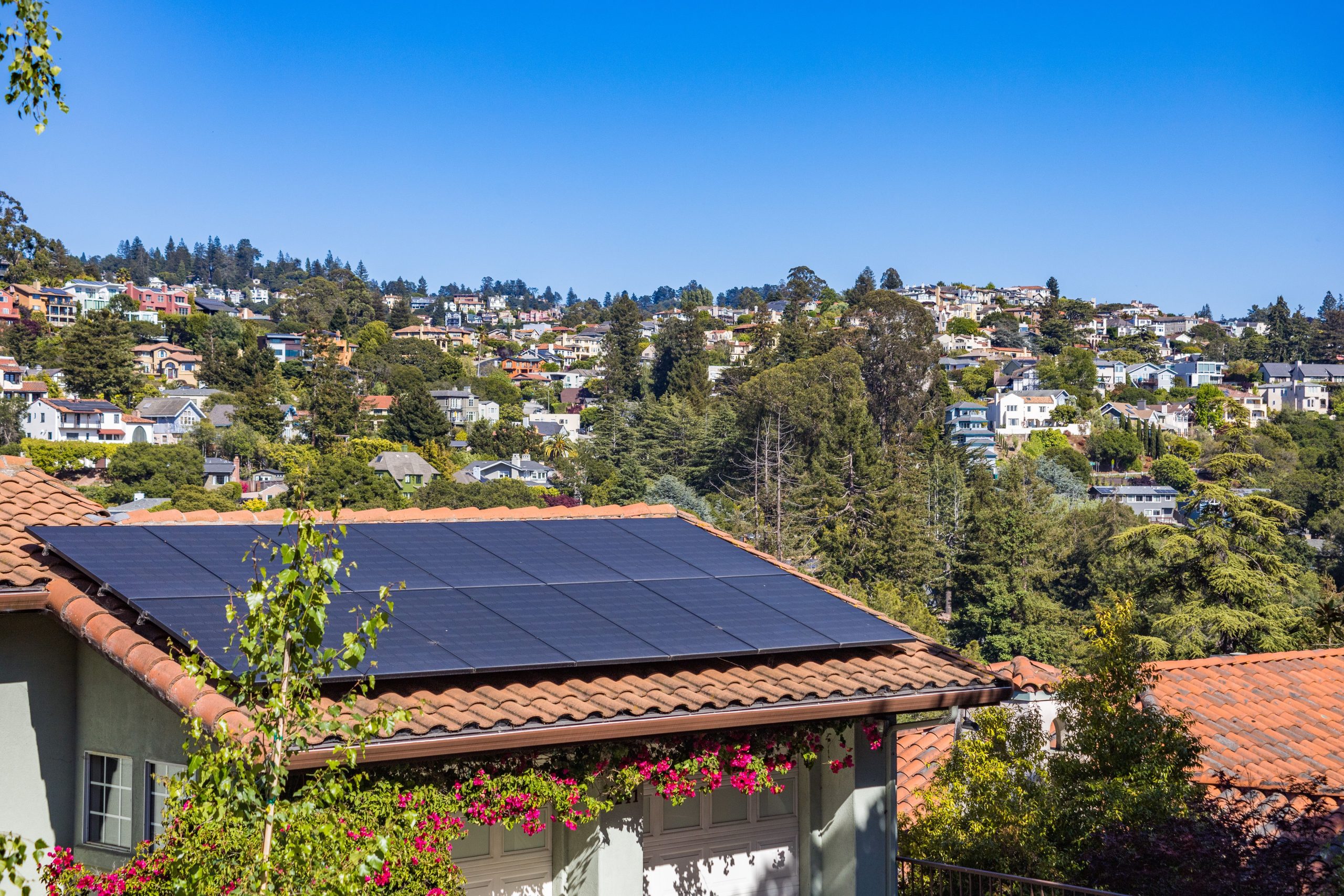
Photovoltaics + heat pump is the modern route: a rooftop PV system generates electricity that powers an inverter heat pump at the pool. The sun doesn’t heat the water directly here, but via electricity — and the heat pump turns every solar kilowatt-hour into 4–6 kWh of heat. This combination is the only one that delivers both low running costs and a guaranteed temperature.
How do solar absorbers work, and how do you size them correctly?
The principle of an absorber is simple: the pool pump (or a separate circulation pump) pushes filtered water into a black mat on the roof or pergola. The dark surface absorbs solar radiation, heats the thin layer of flowing water, and it returns to the pool. The slower the water flows and the larger the absorber’s surface, the more heat it collects.
The key factor is sizing the area. The U.S. Department of Energy recommends a solar collector area equal to 50–100% of the pool’s surface area; European absorber manufacturers cite the same rule. In practice, this means:
- 50–60% of the surface area — basic top-up heating for the summer months, a gain of around 2–4°C.
- 70–80% of the surface area — a comfortable standard for May through September, typically +3–6°C.
- 100% of the surface area or more — an extended season from April to October, faster reheating after a cold spell.
Example: an 8 × 4 m pool has a surface area of 32 m². A sensible absorber setup therefore works out to 16–32 m², depending on how long a season you want. Also factor in orientation — the ideal is south to southwest with a 20–45° tilt. An east- or west-facing area needs roughly a quarter more square metres to deliver the same amount of heat.
The second condition is flow rate. Absorbers need a slower flow than filtration, which is why they’re connected via a bypass with a control valve. And don’t forget to cover the surface: without a cover at night, you’ll lose a large share of the heat the absorber collected during the day.

What to realistically expect from solar heating — and what not to
A correctly sized absorber, under Central European conditions, can deliver:
- +3–6°C compared to an unheated pool over a run of sunny days,
- a season extension of 3–6 weeks — swimming from May to the end of September instead of from June to August,
- operating costs close to zero — you only pay for the circulation pump’s electricity, on the order of a few hundred crowns (roughly €5–15) per season.
What solar heating can’t do: heat the water on demand. Guests arriving Saturday after a whole week of overcast skies? The water will be cold, and no setting will change that. Solar heating has no thermostat that guarantees anything — it delivers exactly as much as the sun happens to provide. After a few rainy days, the temperature drops just as fast as it rose before.
So let’s be blunt about it: solar is a great supplement, but as the sole heat source it will only satisfy someone who accepts the water temperature “as it comes.” Anyone who wants certainty combines it with a heat pump — we’ve covered that in detail in the article Heat Pumps for Pools and Hot Tubs.
Comparison of pool heating methods
Indicative prices for a family pool of around 30 m³, electricity price €0.24/kWh, year 2026:
| Heating method | Purchase price | Running costs per season | Temperature reliability | Season |
|---|---|---|---|---|
| Solar cover | €80–320 | €0 | low — only reduces losses | June–August, +2–4°C |
| Solar absorbers (EPDM) | €600–1,600 | €8–20 (pump operation) | low — depends on weather | May–September, +3–6°C |
| Solar panels with heat exchanger | €1,600–3,600 | €12–32 | medium — better even in cold weather, still no guarantee | April–October |
| Inverter heat pump | €1,200–2,000 | €160–320 | high — thermostat holds the set temperature | April–October |
| Electric heating coil | €120–400 | €800 or more | high | any time, but costly |
The table shows a clear division of roles: solar wins on running costs, the heat pump on reliability. Today, the heating coil only makes sense as an emergency backup.
Installation: roof or pergola, pump, and bypass
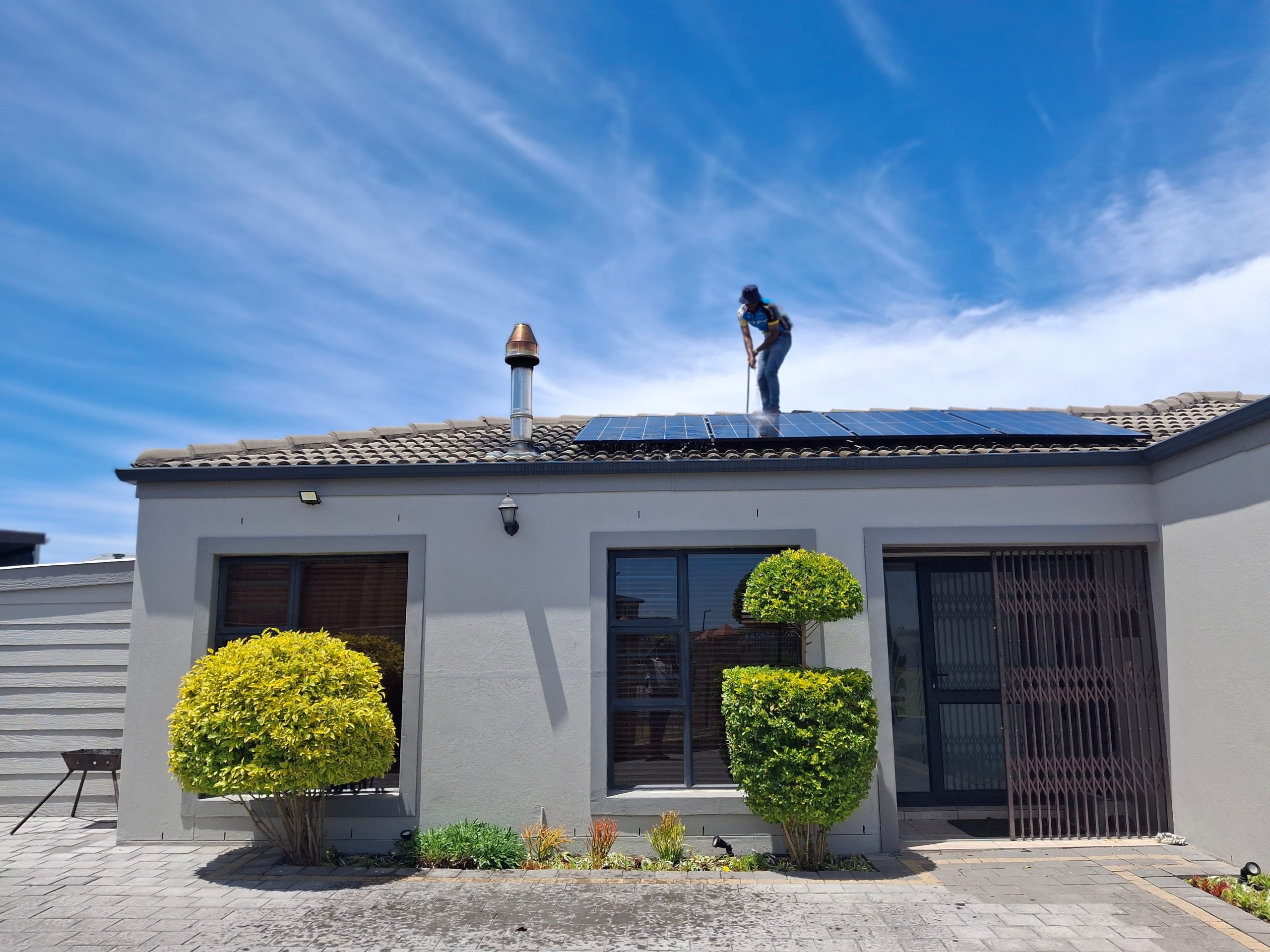
Where to put the absorbers? Most often on the roof of the house, garage, garden shed, or a pergola by the pool. EPDM mats filled with water weigh around 8–12 kg/m², which an ordinary roof can carry, but for larger areas it’s worth checking the structural load. An alternative is laying them on a slope or a frame near the pool — less attractive, but you avoid climbing onto the roof.
The connection is simple for absorbers: water is taken off after filtration, routed through pipework to the absorber, and returned to the pool. The basis is a bypass — a set of three valves that lets you regulate the flow through the absorber or shut it off completely (at night, under overcast skies, or during winterizing). More comfortable setups add a solar control unit with temperature sensors that operates the bypass automatically via a three-way valve: it only lets water into the absorber when the roof is warmer than the pool.
Pump: the existing filtration pump can handle smaller setups, but for delivery to the roof of a multi-storey house, expect higher delivery pressure — sometimes a separate circulation pump is needed. And watch out for winterizing: absorbers must be completely drained before frost sets in; EPDM rubber withstands frost, but frozen water inside the pipework does not.
Solar + heat pump: the combination that makes the most sense
The best results under Central European conditions come from the pairing of solar heating + a heat pump. The logic is simple: while the sun shines, the absorbers heat for free and the heat pump stays idle. When the weather turns, the heat pump’s thermostat automatically makes up the missing heat. Solar typically cuts the heat pump’s consumption by a third to a half, and the heat pump guarantees the temperature that solar can’t promise.
A modern variant of the same idea is photovoltaics + heat pump. Instead of mats on the roof, you have PV panels, and you send surplus production to an inverter heat pump. The advantages: the panels also generate power for the household, the system works from spring to autumn, and the thermostat holds the temperature. The downside: a higher upfront investment. If you already have PV on the roof, directing summer surpluses into the pool is essentially the cheapest temperature-guaranteed heating available today.
Is it worth it? A model payback calculation
Model scenario: an 8 × 4 m pool (32 m² surface, roughly 45 m³), covered with a cover, season May–September, electricity price €0.24/kWh. Assumptions: without solar, the same comfort would be provided by an inverter heat pump with a seasonal consumption of around 1,000 kWh (about €240 per season).
- Investment: 24 m² of absorbers (75% of the surface area), including bypass, pipework, and DIY installation — around €1,200.
- Savings: solar covers roughly 50% of the heat demand, i.e., about €120 per season; after subtracting the circulation pump’s running cost, the saving comes to around €108 a year.
- Payback: €1,200 ÷ €108 ≈ 11 seasons at today’s electricity prices; it shortens proportionally if electricity gets more expensive.
The picture changes when solar replaces a more expensive source: against an electric heating coil (consumption for the same comfort over €800 per season), the same investment pays back in 2–3 seasons. And if you install the absorbers yourself for a lower price, the numbers improve further. Quality EPDM mats last 15–20 years, so even in a conservative scenario the investment pays for itself, and it heats for free for the rest of its lifespan.
Frequently asked questions about solar pool heating
Is solar heating enough as the only heat source?
For seasonal swimming from May to September, yes — provided you accept that the water temperature fluctuates with the weather. Anyone who wants a stable 27–28°C regardless of cloud cover needs a combination with a heat pump or another controlled heat source.
How big an absorber do I need?
The rule of thumb is 50–100% of the pool’s surface area: half the area for summer top-up heating, three-quarters for a comfortable May–September season, and the full surface area for an extended season. For an east or west orientation, add roughly a quarter more area.
Does solar heating work under cloudy skies too?
Only to a limited extent. Diffuse radiation through clouds delivers a fraction of a sunny day’s output — the absorber won’t cool the water (the control unit or bypass shuts it off), but don’t expect noticeable heat gain. After several overcast days, the pool’s temperature drops just as it would without heating.
Do I need to remove the absorbers for winter?
You don’t need to remove them, but you do need to drain them completely. EPDM mats withstand frost on the roof without any problem, but frozen water inside the pipework and distribution lines would burst them. Draining is a standard part of winterizing pool equipment.
Can a DIYer handle installing the absorbers?
Laying the mats on a pergola or a lower roof and connecting the bypass is a manageable weekend job for a handy DIYer. But leave work at height, interventions in the house’s roofing, and structural assessments for large areas to a professional company.
Whether you opt for absorbers alone or a combination with a heat pump, correctly sized and reliable equipment is the foundation. You’ll find solar absorbers, bypasses, circulation pumps, and heat pumps in the pool technology category — and more practical guides in the Guides section.
