
A home pool or hot tub is a huge source of joy for children — and at the same time a place that demands clear rules. The most important one is this: no piece of technology replaces an adult’s active supervision. Everything else — fencing, certified covers, alarms, a lockable thermal cover — are additional layers of protection for the moments when attention lapses. In this guide you’ll find concrete rules, technical solutions with approximate prices, and a checklist you can hang up by the pool.
Why to take this seriously — without panicking
According to the World Health Organization’s first Global Status Report on Drowning Prevention (2024), an estimated 300,000 people died from drowning in 2021, and among children aged 1–4, drowning is the fourth leading cause of death worldwide. Children under five account for the largest share of all victims.
We’re not citing these numbers to scare anyone. We’re citing them because a small child drowning is typically a silent, fast event — no calling for help, no splashing like in the movies. A few dozen seconds of inattention is enough. The good news: it’s one of the most preventable risks there is. A combination of supervision, barriers, and a handful of habits reduces the risk to a minimum.
Rule #1: active supervision by a designated adult
The foundation isn’t any piece of equipment but a simple organizational agreement: whenever children are in or near the water, one specific adult is on duty. Not “we’re all sort of keeping an eye on it” — in practice, that means no one is watching. At garden parties, this diffused, collective attention is precisely the most common weak point.
What active supervision should look like:
- Phone away. The supervising adult doesn’t read messages, doesn’t shoot photos for stories, doesn’t grill. They watch the water.
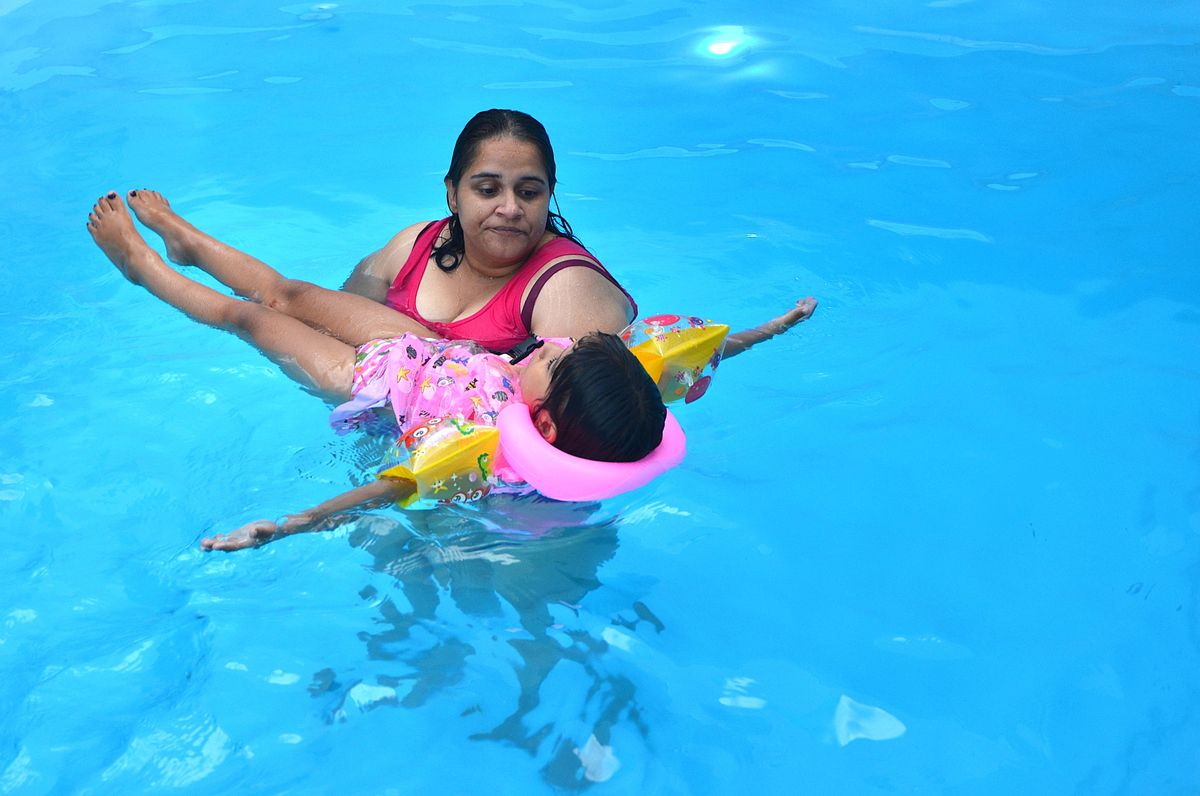
- Within arm’s reach. For children under 5 and non-swimmers, “touch supervision” applies — the adult is in the water with the child or at most an arm’s length away.
- Hand off the duty out loud. “Are you taking over?” — “I’ve got it.” Without an explicit handover, the duty doesn’t end, even if you’re just stepping away for a drink.
- No alcohol while on duty. The drink can wait until the children are out of the water and the pool is secured.
A useful trick from swimming instructors’ practice: a visible object — say, a bright bracelet or a whistle — worn by whoever is currently on duty. It’s immediately clear who’s watching, and the handover becomes a physical act rather than an assumption.
The second layer: physical barriers and alarms
Supervision is rule number one, but no one can maintain 100% attention 24 hours a day. What’s more, most tragedies at home pools don’t happen during swimming time — they happen outside of it, when a child reaches the water alone, without any adult knowing. That’s exactly why barriers exist: their job is to delay the child long enough for adults to notice they’re missing.
Pool fencing
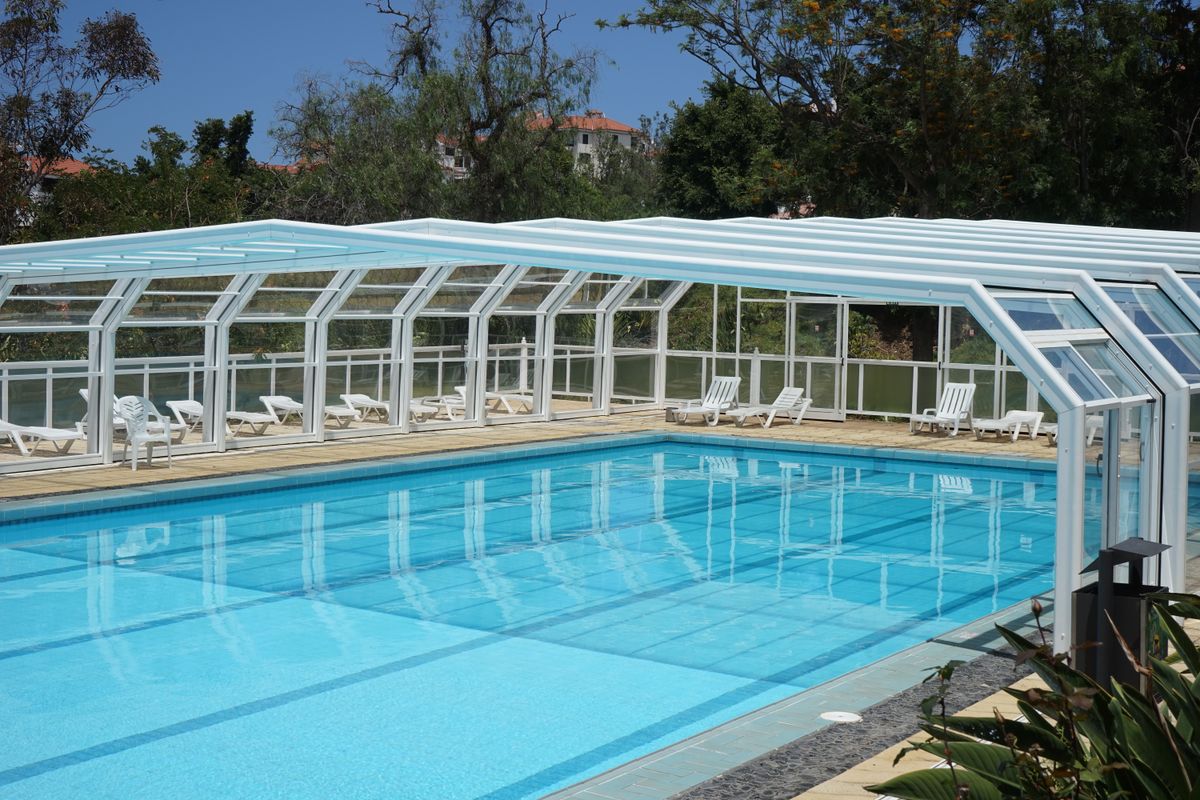
The gold standard of prevention. The fence should be at least 1.1–1.2 m high, with a self-closing, self-latching gate that opens away from the pool, and a structure without horizontal bars a child could climb. In countries where fencing private pools is mandatory (France, Australia), it has demonstrably reduced the number of young children drowning. In France, fencing is governed by standard NF P90-306.
Safety pool covers
Watch for a crucial difference: a standard solar cover is not a safety feature — a child who steps onto it gets tangled in it and sinks. Only a cover certified for walk-on load provides a genuine safety function, typically to the French standard NF P90-308 (slatted roll-up covers and safety covers that can bear an adult’s weight). We cover the differences between cover types in detail in our article on pool enclosures and solar covers. A rigid enclosure (a lockable polycarbonate cover) also serves a barrier function — provided it’s actually locked.
Lockable hot tub thermal cover
For a hot tub, the situation is simpler: a quality thermal cover with lockable buckles is standard equipment and also the cheapest effective barrier. The internationally recognized standard ASTM F1346 requires that a locked cover support a child’s weight and can’t be lifted from underneath. House rule: unsupervised hot tub = closed and locked cover, every time, no exceptions. Keys or buckle locks belong out of children’s reach.
Alarms
A third layer for when a barrier fails. Surface alarms detect water disturbance caused by a body above a certain weight falling in (standard NF P90-307), gate alarms signal when the pool access opens, and wristband alarms trigger a siren as soon as the band on a child’s wrist gets submerged. An alarm is never a substitute for a barrier — it only shortens the reaction time.
Overview of safety features: what they cost and what they protect against
| Feature | Approximate price | What it protects against | Note |
|---|---|---|---|
| Pool fencing with a gate | €800–2,400 | A child reaching the water unsupervised | Min. height 1.1 m, self-closing gate (NF P90-306) |
| Safety slatted cover / roll-up cover | €2,000–6,000 | Falling into the water when the pool isn’t in use | Only with NF P90-308 certification; a solar cover offers no protection |
| Rigid pool enclosure | From €3,200 | Both access and falls, plus heat savings | Only a barrier when locked |
| Lockable hot tub thermal cover | €240–720 | A child accessing the hot tub | ASTM F1346 standard, lock it every time |
| Surface alarm | €120–400 | An unnoticed fall into the water | NF P90-307; a supplement, not a substitute for a barrier |
| Child wristband alarm | €60–160 | A child being submerged anywhere near water | Also useful on visits to water away from home |
| Gate / door alarm | €40–120 | Pool access opening | A cheap addition to fencing or a terrace |
The layers add up: fencing + a locked cover + an alarm represent three independent obstacles a child must overcome before reaching the water. Each one buys time.
Hot tubs and children: different water, different rules
A hot tub isn’t a small pool — it’s hot water with intense jets, and stricter limits apply to a child’s body. Children overheat faster than adults because they have a larger surface-to-volume ratio and less developed thermoregulation.
- Children under 5 don’t belong in a hot tub. Leading manufacturers’ recommendations and pediatric authorities agree on this. For the youngest children, hot water is unsuitable even for a short time.
- Maximum temperature ~38°C, 35°C is preferable for children. If older children are bathing, turn down the thermostat. The standard 38–40°C is a limit for healthy adults, not for children.
- Limited time: 5–15 minutes. The warmer the water, the shorter the stay should be. A child who turns red, seems listless, or feels “off” should get out immediately and have something to drink.
- Head above water, hair away from the suction outlets. There have historically been injuries from long hair being pulled into suction openings. Modern hot tubs have safety suction covers, and standards (in the US, the VGB Act) require grilles that prevent entrapment — even so, the rule stands: tie back long hair and ban diving/submerging in the hot tub.
- Sitting, not diving. A hot tub is for sitting and chatting, not for games underwater.
A practical technical note: if you’re buying an older second-hand hot tub, check that the suction covers are intact and meet current standards. A cracked suction cover should be replaced immediately — it’s a part that costs only a few euros.
Swimming skills and flotation aids
Swimming lessons make sense — studies repeatedly show that formal swimming instruction reduces the risk of drowning in children from around one year of age. The WHO lists it among six recommended preventive measures. A realistic expectation: a child who “can swim” after a course still can’t necessarily handle panic, cold water, or falling in while clothed.
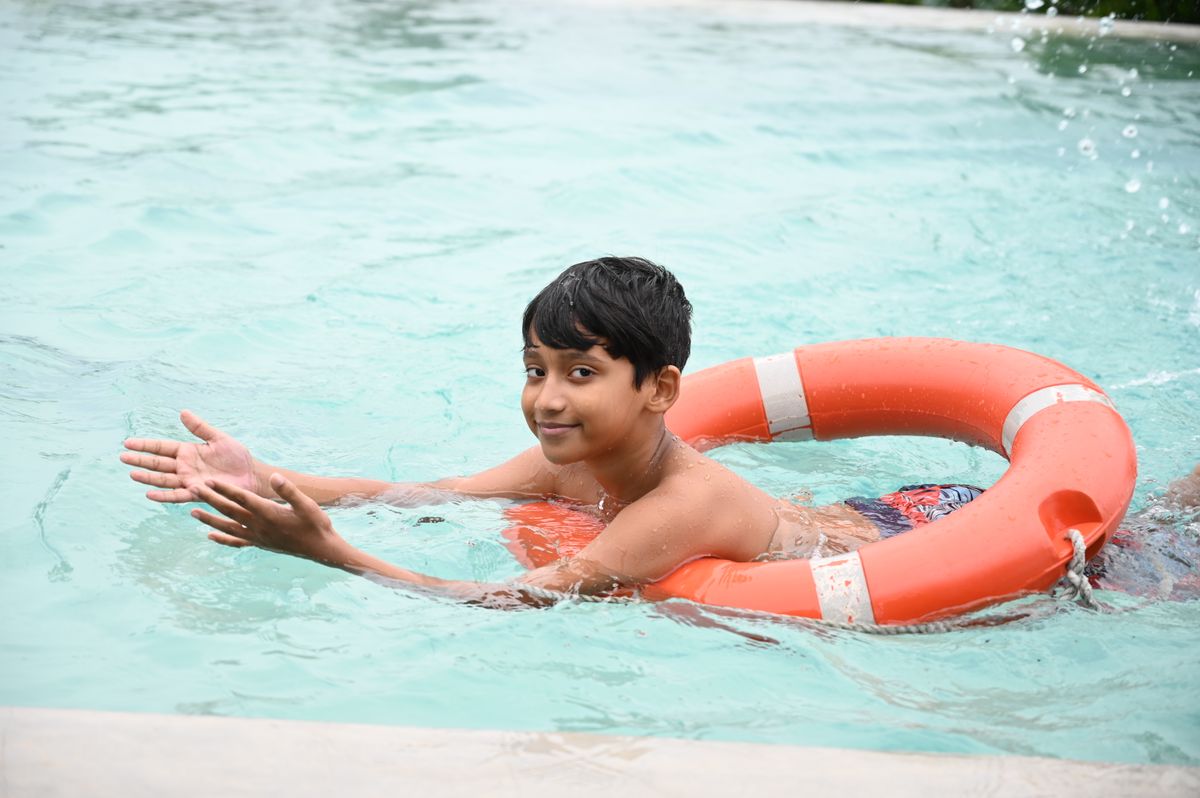
One key rule applies to flotation aids: armbands, rings, and vests are not a substitute for supervision. They’re aids for learning and play, not lifesaving devices. Inflatable armbands can slip off, a ring can flip over. If you’re choosing an aid, go for a vest certified CE to EN 13138 (swimming aids), and even with it, keep non-swimmers within arm’s reach. Watch out for a false sense of security too: a child used to armbands will happily jump into the water without them.
If something happens: first aid basics
Speed is what matters. If you find a child in the water, call for help, pull them out, and start resuscitation immediately — for drowning, it’s recommended to begin with 5 rescue breaths and continue with 30:2 CPR (a 15:2 ratio for children, if you’re trained). Emergency dispatchers can talk you through CPR by phone (112 in the EU). Don’t waste time “draining water from the lungs” — that’s a myth.
The best investment for a modest sum: a weekend first-aid course focused on children. These are offered by the Red Cross and many private training centers — there you’ll practice child resuscitation on a mannequin, which is incomparable to theory read online. Also keep a rescue ring or pole, and a phone, by the pool — not for social media, but for the emergency line.
Safe-season checklist
- Designated supervision every time children are near water — one specific adult, phone put away.
- Non-swimmers and children under 5 within arm’s reach — not in the hot tub at all.
- Pool not in use: gate locked, cover or enclosure secured.
- Hot tub not in use: thermal cover closed and locked, every time.
- Hot tub temperature for older children max 35°C, stay 5–15 minutes.
- Long hair tied back, suction covers intact, no diving/submerging in the hot tub.
- Alarms switched on, batteries checked at the start of the season.
- Toys taken out of the water after swimming — they lure children to the water’s edge.
- Ladder on an above-ground pool removed or secured after swimming.
- At least one adult in the household trained in first aid; a rescue pole or ring kept by the pool.
Frequently asked questions
At what age can a child use a hot tub?
Manufacturers and pediatricians agree that children under 5 shouldn’t use a hot tub at all. Older children can, briefly (5–15 minutes), at a reduced temperature of around 35°C, always under direct supervision, with hair tied back and no diving.
Is a solar cover enough to secure a pool?
No. A solar cover is a thermal product, not a safety one — a child who steps onto it will fall through and get tangled. Only a cover certified for walk-on load (NF P90-308), a rigid locked enclosure, or fencing with a gate serves a barrier function.
Are armbands and swim vests reliable protection?
No. They’re learning and play aids, not lifesaving devices — they can slip off or flip over. Choose aids certified CE (EN 13138), and even with them, keep non-swimmers within arm’s reach. The only reliable protection is active supervision.
Is a surface alarm worth it if we already have fencing?
Yes, as a supplement. Water safety works in layers: a gate can be left ajar, a cover can stay unlocked. An alarm for €120–400 is a safeguard that, in such a moment, cuts the reaction time from minutes to seconds. It’s not a substitute for a barrier or for supervision, though.
How long does it take for a small child to drown?
Critically little time — a child can lose consciousness within a few dozen seconds, and unlike in movies, drowning is silent, without calling out or splashing. That’s exactly why continuous active supervision and barriers that keep a child from reaching the water unnoticed are essential.
Safety is a system, not a single miracle feature
No single measure is 100% effective — real assurance comes only from the combination: active supervision, physical barriers, alarms, and first-aid readiness. You’ll buy most of this once, and it will serve you for years. You’ll find rescue poles, rings, surface alarms, lockable thermal covers, and other items in our pool equipment category; a comparison of surface cover types is in our article on enclosures and solar covers. And if you’re thinking about safety in a broader context, you’ll find more practical guides in our Guides.
