
The heat pump is running, the display shows the 28 °C you asked for, but the pool thermometer hasn’t moved all day. In the vast majority of cases this is not a fault — the most common causes are an uncovered water surface, a short filtration run time and unrealistic expectations about how quickly 30 cubic metres of water actually heat up. The following diagnostic walks you through ten causes, from the most likely to the one that genuinely warrants a service call.
Expectations first: how many degrees a day is normal?
A heat pump is not an instant water heater. It warms a pool by a few degrees per day, not per hour — and that is normal behaviour, not a defect. The physics is unforgiving: heating one cubic metre of water by one degree Celsius takes roughly 1.16 kWh of heat. In a pool holding 30 m³, a single degree therefore means around 35 kWh of heat delivered.
A heat pump with a heating output of 9 kW delivers 72 kWh over eight hours of running. Once heat losses are subtracted, what actually remains in the pool is 1.5 to 2 °C per day. Anyone expecting to switch the heating on Friday evening and swim in 30 °C water on Saturday morning will always be disappointed — regardless of the brand.
The indicative table assumes an ideal case: a covered surface, an outdoor temperature of around 20 °C and the stated filtration run time. Without a cover, expect roughly half of it.
| Pool volume | Heat pump output | Run time / day | Realistic gain per day |
|---|---|---|---|
| 20 m³ | 5 kW | 8 hours | 1.2–1.7 °C |
| 30 m³ | 5 kW | 8 hours | 0.8–1.1 °C |
| 30 m³ | 9 kW | 8 hours | 1.5–2.1 °C |
| 50 m³ | 9 kW | 10 hours | 1.0–1.5 °C |
| 50 m³ | 13 kW | 10 hours | 1.6–2.2 °C |
| 80 m³ | 17 kW | 12 hours | 1.4–2.0 °C |
The table leads to a practical rule: heating a pool from 15 to 27 °C for the first time takes five to ten days. After that the pump only maintains the temperature and consumption drops sharply. We look at the physics of heating and the difference between a pool and a hot tub in more detail in the article on how to heat a hot tub and pool faster.
Diagnostic table: where to look for the cause
Work through the table from top to bottom. It is ordered by how often each cause turns out to be the real culprit, and the first three rows explain the majority of “the pump isn’t heating” complaints.
| Symptom | Likely cause | How to verify | Solution |
|---|---|---|---|
| Water warms up during the day, cools down overnight | Uncovered surface, evaporation | In the morning the water is 2–4 °C cooler than in the evening | Solar cover or an enclosure |
| Water rises by tenths of a degree per day | Undersized heat pump output | Compare the output with the volume using the table above | Lower your ambitions, or replace the heat pump |
| Heating works in summer but not in spring and autumn | Low outdoor temperature | Heat pump output falls below 12–15 °C air temperature | Modulating heat pump, longer run time, cover |
| The heat pump runs only a few hours a day | Short filtration cycle | Check the filtration timer | Extend the filtration cycle |
| The heat pump reports a flow error, switches off cyclically | Low water flow | Filter pressure gauge, skimmer basket, pump basket | Backwash the filter, clean the baskets |
| The heat pump runs but the outlet water is only lukewarm | Clogged evaporator | Visual check of the fins from the rear | Clean the fins, remove debris |
| The heat pump ices up even in warm weather, the blown air is cold | Poor siting, air recirculation | Clearances from walls and fences | Relocate it, free up space |
| The display is on but the compressor won’t start | Settings or timer error | Heating × cooling mode, setpoint, schedule | Reconfigure the controller |
| The water level visibly drops, the temperature won’t hold | Water leak | 48-hour bucket test | Find and repair the leak |
| A boiler heat exchanger isn’t heating at all | Closed circuit, air, scale | Check the valves, bleed the system, check the pressure | Bleed the circuit, descale the heat exchanger |
1. Uncovered water surface: the biggest heat thief
This is by far the most common reason why heating “doesn’t work”. Water evaporates from an open surface and every evaporated litre carries away roughly 0.65 kWh of heat. In a 30-cubic-metre pool on a warm, windy day, evaporation can easily take 40–70 kWh — more than a nine-kilowatt heat pump delivers over the same period.
A pool without a cover and with a heat pump is a garden-heating appliance. A solar cover on the surface cuts evaporation by 90 % and in sunny weather adds 2–4 °C on its own. It is the only measure that speeds up heating and cuts consumption at the same time. You will find the details in the articles on pool enclosures and solar covers and types of pool covers and how to choose.
2. Output undersized for the volume and for your ambitions
Heat pumps are commonly sold in three sizing levels. Seasonal use (June–August, target 26 °C) gets by with a lower output. An extended season (May–September, target 28 °C) needs a third more. Year-round operation under an enclosure is another half as demanding again.
As a rule of thumb, for an extended season with a covered pool you need roughly 0.3 kW of heating output per cubic metre of water, and more like 0.5 kW for an uncovered one. For a 40 m³ pool that means 12 to 20 kW — and anyone who bought a five-kilowatt pump because “it was cheap” doesn’t have a fault, they have the wrong machine. We look at the selection criteria and payback in the article on heat pumps for pools and hot tubs.
3. Low outdoor temperature: output is not constant
The figure on the label (9 kW, for example) applies to defined conditions, typically 26 °C air and 26 °C water. At 15 °C air the real output drops by around a third, at 10 °C by as much as half. Non-modulating pumps reach the limit of usability below roughly 10 °C — they ice up and spend part of their time defrosting the evaporator instead of heating.
Inverter pumps with output modulation cope better in the cold because they run longer at lower speeds. Even so, one thing holds true: in April and October, heating without an enclosure is a borderline game. If you want to swim outside the summer months, a cover and an enclosure are cheaper than a bigger heat pump.
4. The filtration runs briefly — and so does the heating
A heat pump only heats when water is flowing through it, in other words only when the filtration pump is running. Filtration set to four hours a day means four hours of heating, whatever the thermostat display says. This is one of the most common “hidden” causes.
For the heat-up phase, set the filtration to 10–12 hours a day, ideally during the day when the air is warmest and the pump works most economically. The right cycle length for maintenance operation is covered in the article on how long to run the pool filter.
5. Low flow and the flow error
A heat pump has a flow switch at its inlet. When water flows through slowly, the pump either doesn’t start at all or switches off cyclically and reports a flow error. This is not a fault of the pump — it is the hydraulics upstream of it.
- Clogged filter media: the pressure on the gauge has risen by 0.3–0.5 bar above the value after the last backwash. The procedure and limit values are described in the article on filter pressure and what the gauge tells you.
- A full skimmer or pump pre-filter basket: leaves and grass cut the flow by tens of per cent in a single windy day — see how a skimmer works and how to maintain it.
- A throttled bypass: the valves on the heat pump bypass are often set during installation and nobody checks them afterwards.
6. Clogged heat pump evaporator
The evaporator is the finned heat exchanger on the back of the unit through which the pump takes heat from the air. Grass clippings, poplar fluff, leaves and pollen between the fins act as insulation — the air can’t get through and the output falls without any error message appearing at all.
Check the fins twice a season. Clean them gently: switch off the circuit breaker, rinse with a stream of water from the inside out, and use a soft brush if needed. Never use a pressure washer — bent fins will never give the output back.
7. Poor siting of the unit
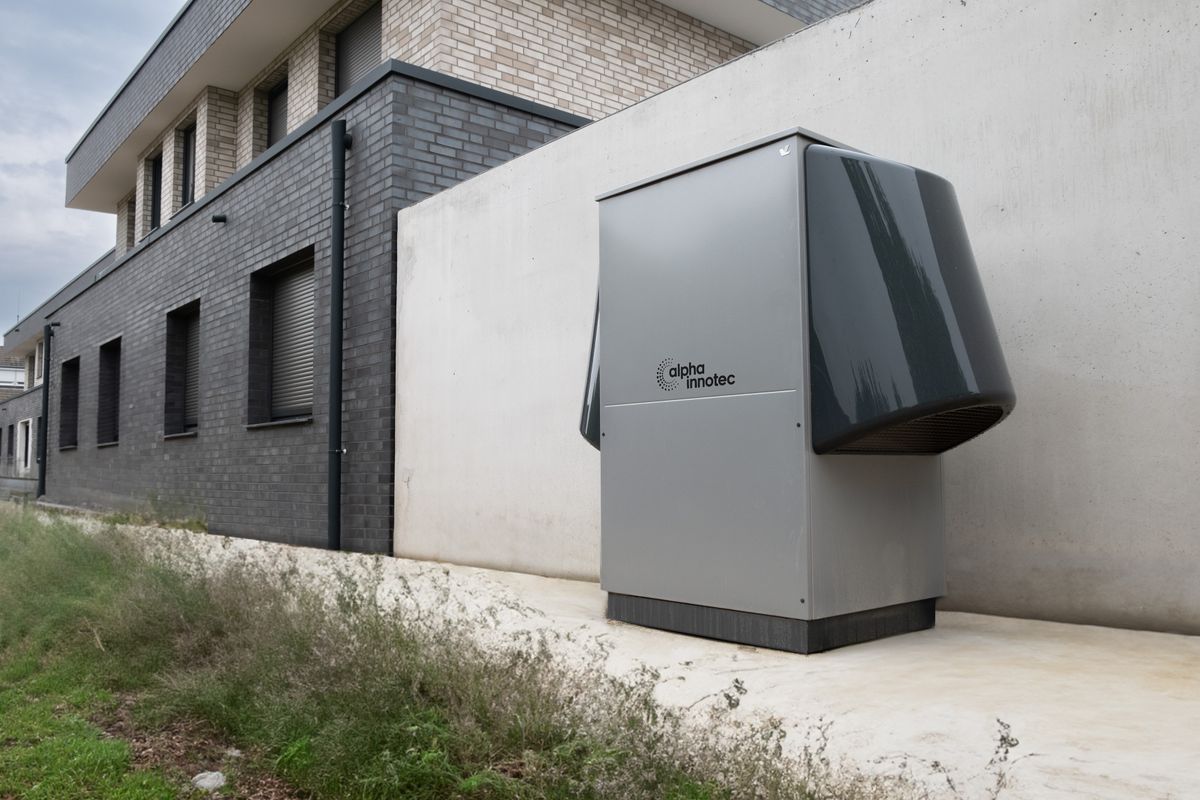
A heat pump needs a large volume of air. Placed in the corner between the house and the fence, it draws in its own chilled exhaust air (recirculation), works with an ever lower inlet temperature and loses output even on a warm day. A typical symptom is the evaporator icing up in May.
Keep to the clearances: at least 50 cm from the wall behind the unit, 2–3 metres of free space in front of the fan outlet, and nothing above the unit that would obstruct the air discharge. A unit under a low terrace roof or in an enclosed technical shaft is guaranteed trouble.
8. The settings error nobody looks for
Before you reach for the phone to call service, go through the controller. The most common culprits: cooling mode switched on instead of heating (on reversible units), a setpoint set too low, an active weekly timer left over from last season, or an active quiet night mode that halves the output.
Also check whether the control is in “auto” mode, where the unit decides from its own sensor that no heating is needed.
9. A water leak means a heat leak
A pool that is losing water is losing heat too — and the cold mains water topping it up (10–12 °C) pushes the temperature down further. If the level is dropping by more than 3–5 mm a day, this is not evaporation. The bucket test that tells the two apart and the leak-finding procedure are described in the article on a water leak or evaporation.
10. Heating via a boiler heat exchanger: different causes
Anyone heating a pool with a plate or shell-and-tube heat exchanger connected to a boiler or to the house heat pump is dealing with a different set of problems. Most often it is a closed valve on the heating branch after winterising, an air-locked circuit (the heat exchanger is the highest point of the system) or a heating water circulation pump that doesn’t switch on because the pool thermostat isn’t linked to the boiler controls.
The long-term enemy is scale on the pool water side. With hard water and temperatures above 30 °C, the heat exchanger clogs up within one or two seasons and its efficiency drops by tens of per cent. Prevention and chemical descaling are described in the article on water hardness and scale.
When it makes sense to call a service technician
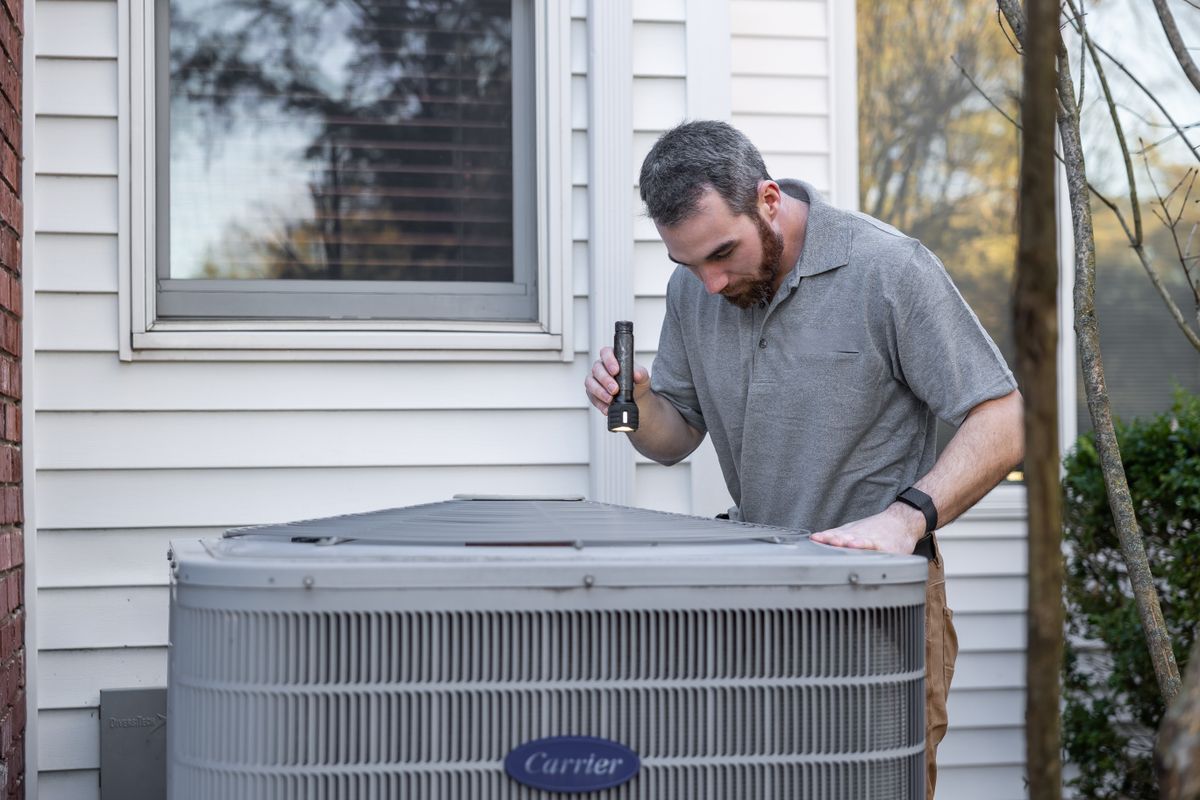
You can handle nine of the ten points above yourself. Call a professional when one of these situations arises:
- The unit repeatedly reports a high or low refrigerant pressure error even after the evaporator has been cleaned and the flow restored — work on the refrigerant circuit may only be carried out by a certified technician.
- The compressor won’t start, the circuit breaker trips, or a loud metallic rattle can be heard from the unit.
- The evaporator ices up even at temperatures above 15 °C and the defrost cycle doesn’t solve the problem.
- The outlet water is colder than the inlet water even though the unit is in heating mode.
- There is visible oil leakage around the unit — a typical symptom of a leak in the refrigerant circuit.
Have the unit model, the error code, the pool volume, the filtration run time and the pressure gauge reading ready for the technician. It will shorten both the diagnosis and the invoice.
How to make heating cheaper once it works
Once the diagnosis is done and the pool is finally heating up, the question of costs comes next. Measures in order of cost-to-benefit ratio:
- A cover on the surface whenever you are not swimming. The cheapest and most effective step, saving 50–70 % of the energy used for heating.
- Lower the target temperature by 1–2 °C. Every extra degree means roughly 10 % more consumption. Most people can’t tell the difference between 28 and 26 °C after five minutes.
- Solar pool heating as a pre-heater. The absorber complements the heat pump exactly when the sun is at its strongest.
- Running on your own electricity. A heat pump is the ideal appliance for surplus power — see photovoltaics for pools and hot tubs.
- Shift the filtration and heating into cheap hours if you have a two-tariff or spot-price tariff.
Frequently asked questions
How long does it take to heat a pool from 15 to 28 °C?
With a correctly sized heat pump and a covered surface, expect five to eight days of continuous daily operation. Without a cover the time doubles, and on cold nights the target may not be reachable at all.
Does it make sense to let the heat pump run continuously for 24 hours?
During the initial heat-up phase yes, if the filtration cycle and your tariff allow it — heating is then at its fastest. In maintenance operation it is more efficient to run during the day, when the air is warmest and the pump achieves its highest coefficient of performance.
Why does the pool warm up during the day and cool down again overnight?
A classic symptom of an uncovered surface. Overnight evaporation and radiation take away 2–4 °C, so in the morning you start from zero again. A solar cover practically eliminates this loss.
The heat pump reports a flow error but the filtration is running. What next?
Check in this order: the skimmer basket, the pump pre-filter basket, the pressure on the filter gauge, the bypass setting and finally the flow switch itself. In most cases the culprit is clogged filter media or a full basket.
Will a bigger filtration pump help the pool heat up faster?
Not directly. The speed of heating is determined by the heating output of the heat pump, not by the flow — the flow only needs to be sufficient for the unit to work. A more powerful filtration pump will bring higher consumption without any noticeable gain in temperature.
Summary
Most cases of “the pool won’t heat up” come down to three things: a missing cover, a short filtration cycle and a pump that is simply too small for the volume. Work through the diagnostic table from top to bottom, give every change two days to show its effect, and only then look for more complicated causes. You will find more guides on operation and maintenance in the Guide section, while heat pumps, filtration and heat exchangers are in the pool technology category.
