
A swim spa combines a swimming trainer with an adjustable current and a hot tub for recovery in a single tank — and that combination makes it the most versatile home gym you can build in your garden. You swim on the spot against an adjustable current, run in the water, train with resistance bands, and move straight into the massage zone after your workout. All year round, with no commute and no waiting for a free lane.
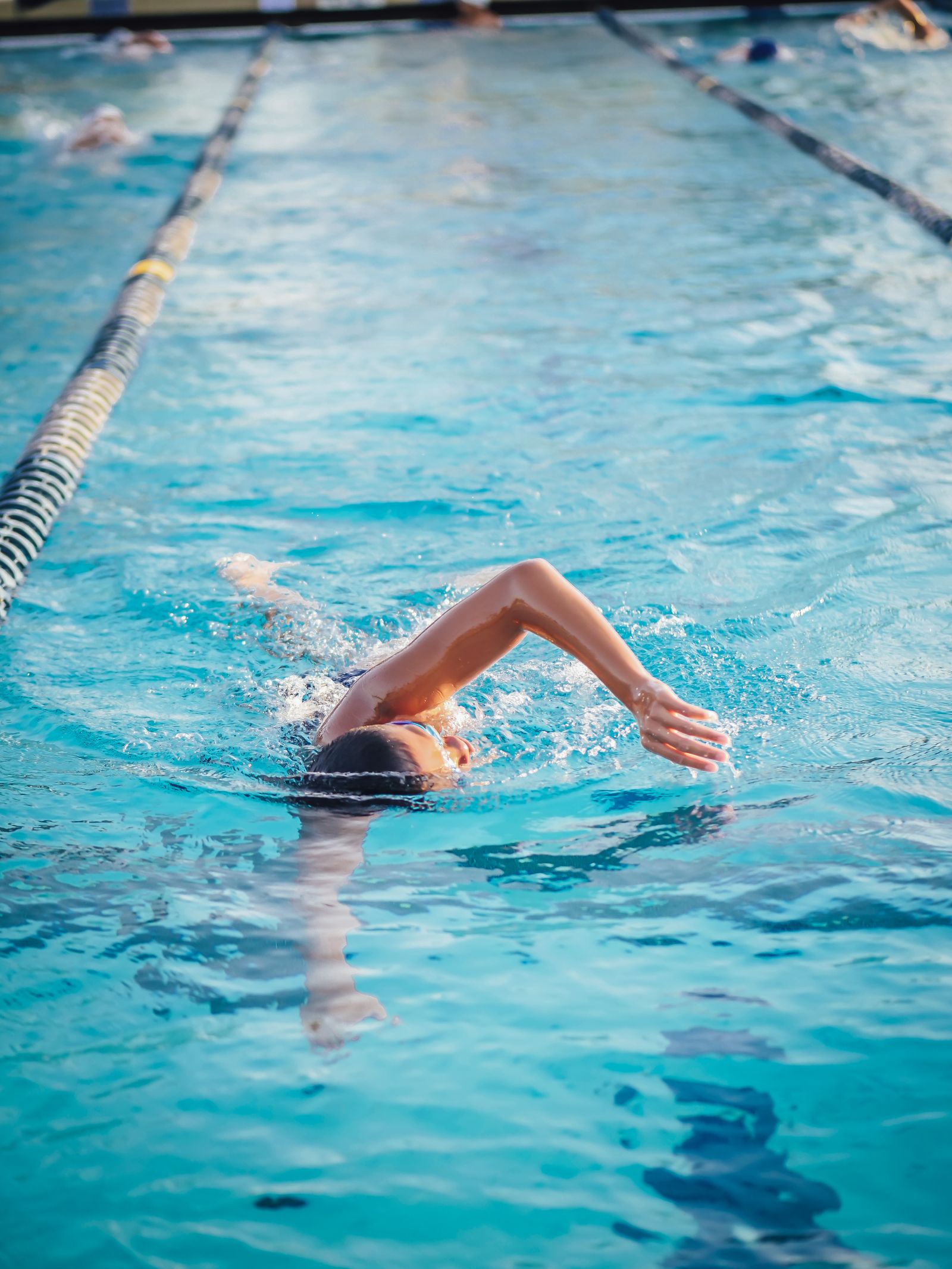
Why Is Swimming One of the Gentlest Full-Body Sports?
The reason is physics. Water’s buoyancy carries a significant part of your body weight — roughly half when immersed to the waist, and around 90% when immersed to the shoulders. Joints, the spine, and tendons therefore bear only a fraction of the load they would carry while running or jumping on solid ground.
At the same time, water is roughly 800 times denser than air. Every movement in it therefore meets resistance from all directions and engages muscles throughout the body — arms, shoulders, core, glutes, and legs. The result is a workout that combines endurance and strength training without impact or jarring.
That’s why physiotherapists commonly recommend swimming and water exercise for people with back pain, osteoarthritis, excess weight, or those recovering from injury. This isn’t true without exception — for certain neck or shoulder issues, it’s best to discuss swimming style with a doctor or physiotherapist. As a general principle, though: in water you can train hard while still being gentle on the body.
How Does a Swim Current Work, and What Is It Good For?
A swim current unit drives water against the swimmer so they keep swimming on the spot — much like a runner on a treadmill. Swim spas use two basic types. A jet-based current pushes water through one or more nozzles; it’s more common and more affordable, but the flow is narrower and more aerated. Turbine (paddle-wheel) systems produce a wide, smooth, laminar flow of water that comes closer to swimming in open water — you’ll find these in more sport-oriented models.
Adjustability is key. Current output is regulated continuously or in steps, typically across a range corresponding to swim speeds of roughly 10 seconds to 1 minute per notional 25 metres. A recreational swimmer can therefore find an easy pace for long, relaxed sets, while a trained swimmer can set a current they genuinely have to work against.
How Do You Set the Right Training Intensity?
Start at low power and find a pace at which you can swim continuously for 2–3 minutes without getting out of breath — that’s your baseline level. From there you increase intensity in two ways: a stronger current (higher resistance) or longer sets (higher volume). A proven format is intervals: for example, 5× 2 minutes of swimming with a minute of rest, gradually adding more sets.
Your position in the tank is a good indicator. If the current pushes you backward, it’s too strong; if you keep reaching the front wall, it’s too weak. A correctly set current keeps you roughly in the middle of the swim zone.
What Kinds of Workouts Does a Swim Spa Allow?
Swimming is just the start. A 4–6-metre water tank with an adjustable current works as a full-fledged gym with its own resistance medium.
Swimming Against the Current
The basic discipline: front crawl, breaststroke, and backstroke on the spot, with no turns to disrupt your rhythm as they would in a short pool. That absence of turns is actually an advantage for technique — you swim continuously and can focus on your stroke, breathing, and body position. More ambitious swimmers can use the bottom mirror or camera system that some models offer for technique checks.
Aquajogging — Running in Water
Running on the spot against the current, with or without a flotation belt, is a full cardio workout with no impact on knees or ankles. Endurance athletes use it when injured, but it also works as a standalone discipline: 20–30 minutes of running in chest-deep water gives the body a workout similar to running outdoors, just without the jarring. You control intensity again through current strength and pace.
Strength Training with Resistance Bands
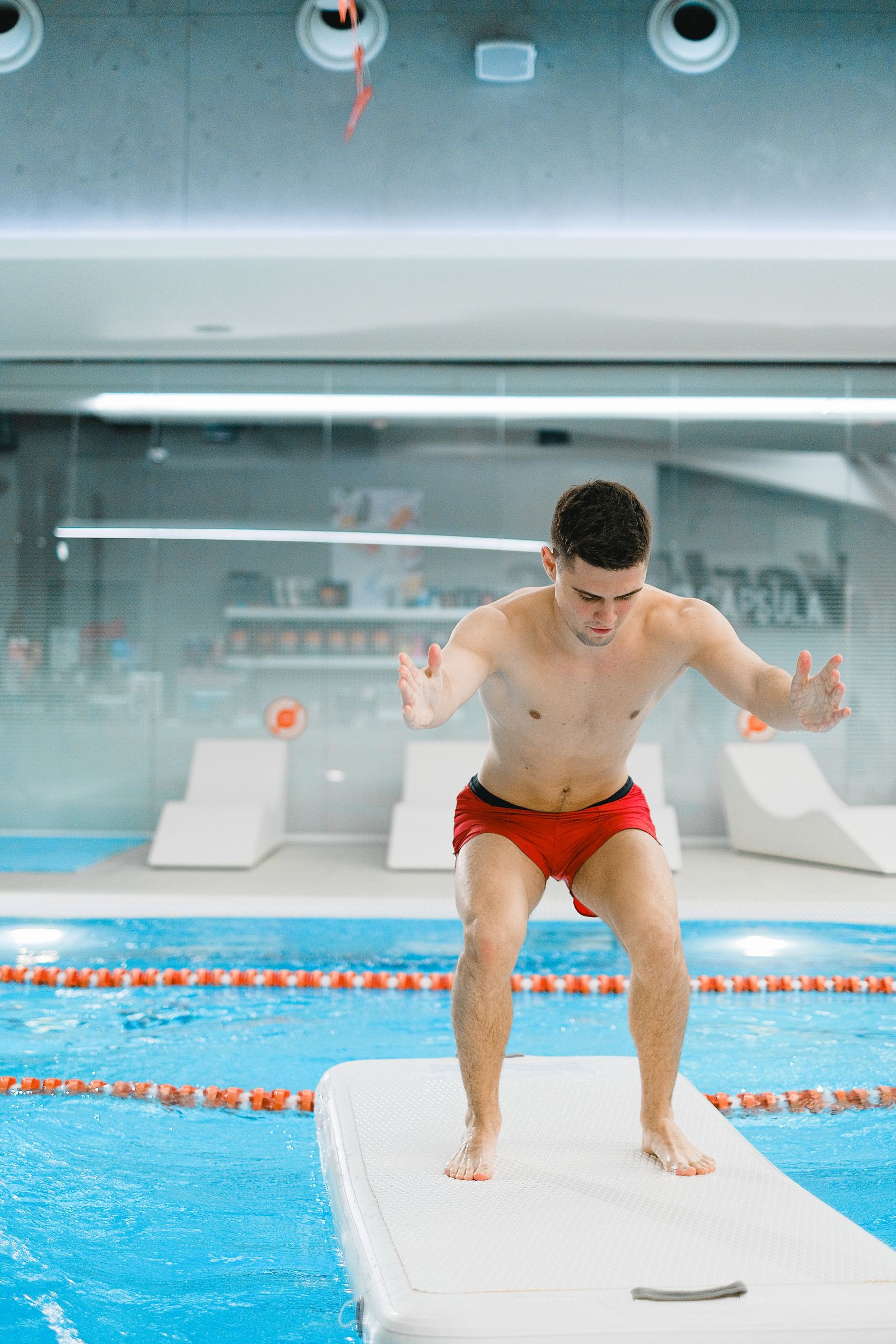
Many swim spas have anchor points for resistance bands and rowing bars. In the water you use them for rowing, chest presses, bicep curls, or torso rotations — typically in sets of around 15–20 reps. Water adds a second layer of resistance on top of the band and constantly forces the core to stabilise, so even a simple exercise engages more muscles than it would on dry land.
Rehabilitation and Compensation Exercises
Walking against a gentle current, lunges, squats, knee lifts, shoulder shrugs, or stretching against the tank wall — all in warm water that relaxes the muscles and reduces movement pain. That’s why swim spas are also used when returning to activity after joint surgery or for chronic back problems. A specific rehabilitation plan should always be in the hands of a physiotherapist; a swim spa is a tool, not a therapist.
Why Shouldn’t You Underestimate Recovery in the Hot Tub Zone After Training?
Dual-zone swim spas have a separate hot tub section next to the swimming area, with massage jets and its own water temperature — the swim zone is typically kept at 26–30°C, the hot tub zone at 34–38°C. After training, you can move from the “pool” to the “hot tub” in a matter of seconds.
Warm water and massage jets help release tension in worked muscles, and hydrostatic pressure supports blood flow to tired limbs. Many users report less muscle stiffness and better sleep after a warm soak; think of it as a pleasant complement to training, though, not a miracle therapy. Ten to fifteen minutes in the hot tub zone with some light stretching is the ideal way to finish a training session.
Can You Train in a Swim Spa All Year Round?
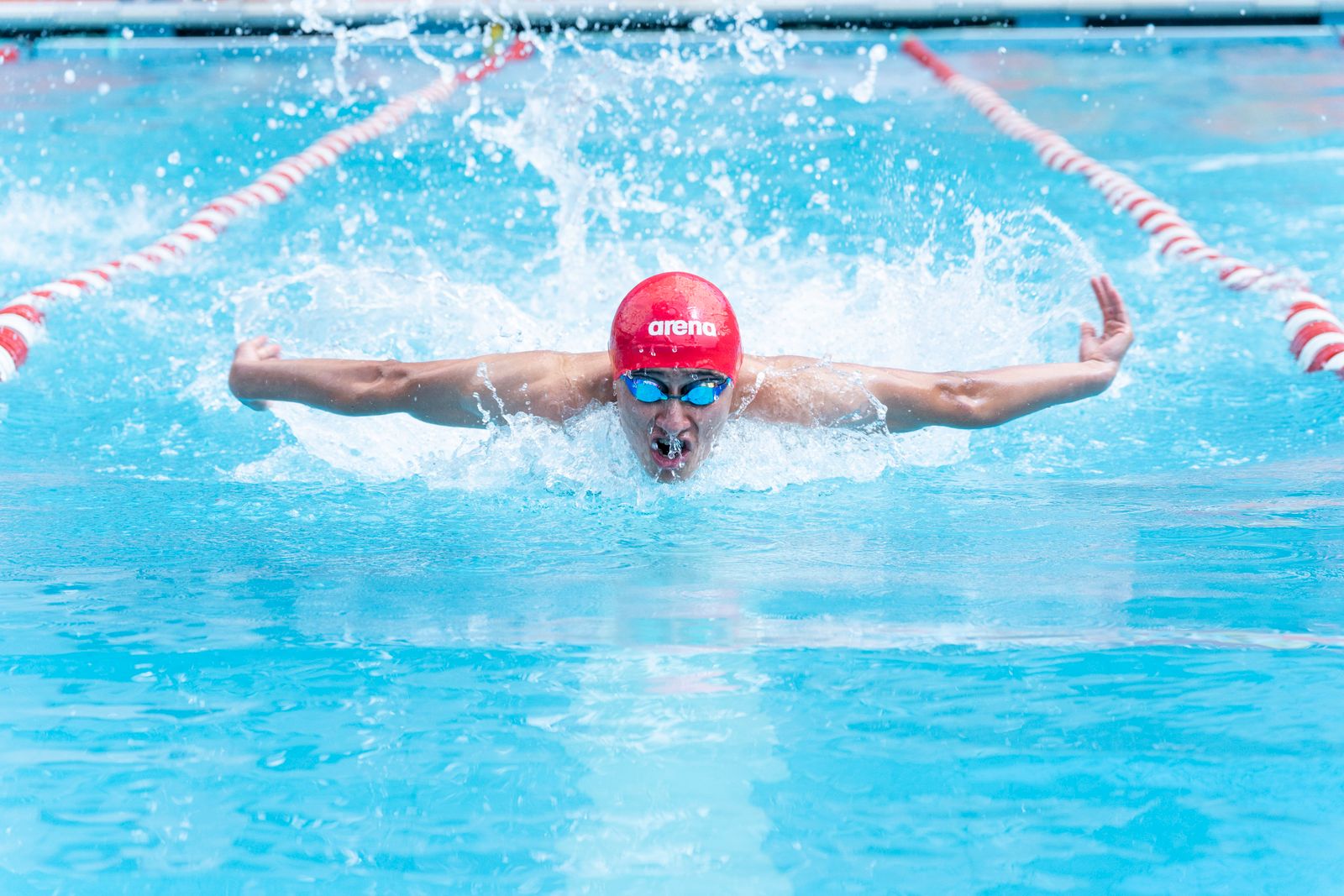
Yes — and that’s the main argument in favour of a swim spa over a seasonal pool. A quality swim spa has an insulated shell, a thermal cover, and heating that maintains the set temperature even in winter. You can train in January just as easily as in July; many owners describe winter swimming outdoors as the most enjoyable part of the year.
Running costs depend on insulation, the set temperature, covering, and electricity prices. How consistently you cover the tank makes a major difference: most heat escapes through the surface, so a quality thermal cover used consistently after every session can make a difference of hundreds of euros a year. Costs rise in winter, but you can reduce them by slightly lowering the swim zone temperature during weeks when you train less.
Swim Spa, Pool Membership, or Home Gym?
The following comparison is an illustrative model calculation, not a price quote. Assumptions: a family where two people train 3× a week; public pool admission of €6; a 20-minute round trip; a swim spa priced at around €28,000 with annual running costs of around €1,400 (electricity, chemicals, water); a home gym for around €4,000 with negligible running costs. Actual prices vary by model, region, and energy costs.
| Criterion | Swim Spa | Pool Membership (2 people) | Home Gym |
|---|---|---|---|
| Upfront cost | around €28,000 | €0 | around €4,000 |
| Annual cost (model) | around €1,400 running costs | around €1,872 (312 visits at €6) | minimal |
| Cost over 10 years (model) | around €42,000 | around €18,720 + travel | around €4,800 |
| Time per session | no commute | + around 40 minutes for travel and changing | no commute |
| Privacy | complete | shared lanes, opening hours | complete |
| Joint-friendliness | high (aquatic environment) | high (aquatic environment) | depends on exercises and technique |
| Post-workout recovery | hot tub zone included | depends on pool facilities | none |
| Added value | wellness for the whole family, property value | none | exercise only |
Purely on paper, the home gym comes out cheapest and the swim spa most expensive. But the swim spa is the only option that combines cardio, strength, rehabilitation, and recovery in a single unit that also serves the whole family as a hot tub and, in summer, as a pool. With a pool membership, don’t forget the time cost: at 312 visits a year, the couple spends more than 200 hours travelling — that’s more than 8 days.
How to Start: Tips for the First Few Weeks
- Start short. For the first 14 days, 15–20 minutes 3× a week is enough. Water is deceptive — you only feel the fatigue after training.
- Technique first, current second. Set a weak current and focus on calm breathing and a long stroke. Increase the current strength only once you can maintain 3 minutes of continuous swimming.
- Alternate disciplines. A combination of 10 minutes of swimming, 10 minutes of aquajogging, and 5 minutes of band exercises loads the body more evenly than swimming alone.
- Watch the water temperature. 26–29°C is ideal for training; in water above 32°C, don’t overdo intense exertion and keep drinking water.
- Finish with recovery. Ten minutes in the hot tub zone stretching your calves, shoulders, and lower back helps the body recover for the next session.
- Keep the water in good condition. Regular pH and disinfection checks matter more with frequent exercise than in a recreational hot tub — you sweat in the water too.
Frequently Asked Questions
How Long a Swim Spa Do I Need for Swimming?
For swimming against the current, a practical minimum is around 4 metres of swim zone length; models from 5 metres are more comfortable, giving the current room to settle so the swimmer doesn’t touch the walls. Dual-zone models with a separate hot tub typically have a total length of 5.5–8 metres.
Can the Current Challenge Even a Trained Swimmer?
Quality systems can — the most powerful turbine-based current units create a flow that competitive swimmers and triathletes train against as well. It comes down to the type and power of the system, so always test-swim at your own pace before choosing a model.
Is Aquajogging Suitable for People Who Are Overweight or Recovering from Injury?
It’s often the best option for exactly this group. Water’s buoyancy takes weight off the joints, so you can train endurance without impact. After an injury or surgery, though, discuss starting training with a doctor or physiotherapist and begin at a gentle intensity.
How Much Does It Cost to Run a Swim Spa per Year?
As a rough guide, expect a low four-figure sum in euros per year — in our model calculation, around €1,400 including electricity, chemicals, and water. The actual amount depends on the shell’s insulation, the set temperature, how consistently you cover the tank, and current electricity prices, so get an estimate calculated for your specific model and tariff.
Can I Swim in a Swim Spa in Winter Too?
Yes, a swim spa is built for year-round use. An insulated shell, thermal cover, and heating maintain the set temperature even in frost; just expect higher energy costs during the winter months.
In Conclusion: Fitness Right Outside Your Door
A swim spa doesn’t turn training into an obligation — it makes it part of home life: twenty minutes against the current in the morning, recovery in the hot tub zone in the evening, water play with the kids at the weekend. If you’re considering your own water fitness setup, take a look at our range in the hot tubs and swim spas category — and you’ll find more practical articles on operation and maintenance in our Guide.
