
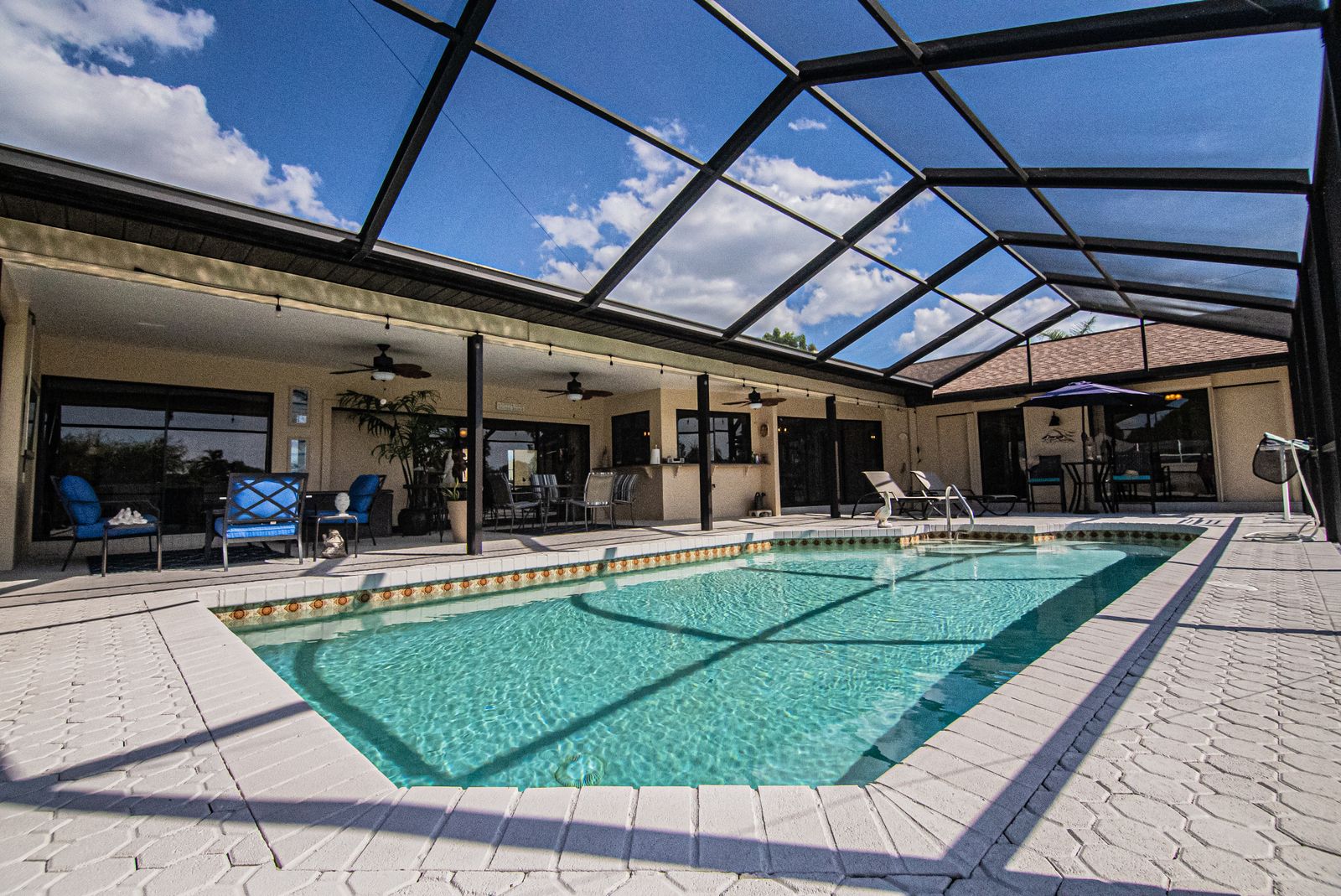
A pool enclosure is an investment of several thousand euros — yet most owners give it less attention than their filtration system. The essentials are simple: twice a year, wash the polycarbonate thoroughly with a soft sponge and a neutral detergent, vacuum the tracks and lubricate the rollers with silicone spray. Skip those two hours of work a year and you can easily halve the lifespan of both the panels and the rolling gear.
This article is about maintenance. If you are still choosing an enclosure — types, heights, structural loads and prices — start with our guide on how to choose a pool enclosure. And if you are weighing an enclosure against a cheaper alternative, see our comparison of pool enclosure vs. solar cover.
Why does polycarbonate degrade at all?
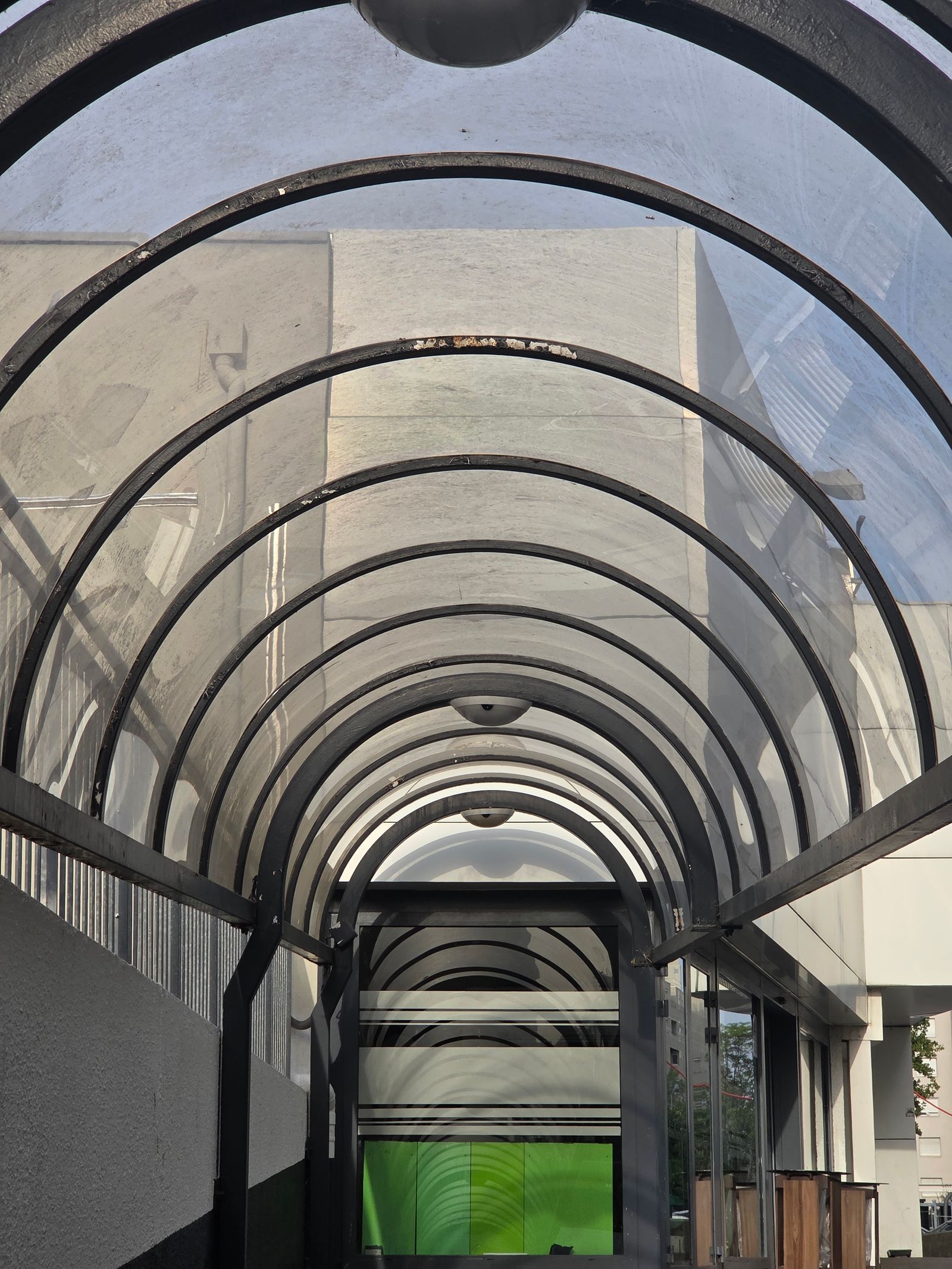
Polycarbonate is a tough material — it withstands hail and impacts that would shatter glass. Its weak point, however, is the surface. Quality panels leave the factory with a co-extruded UV layer several dozen microns thick that protects the body of the panel from ultraviolet radiation. Once you damage this layer, the panel starts to yellow, become brittle and lose transparency.
The three most common causes of degradation are:
- UV radiation — it acts constantly, and the protective layer resists it for a limited time only, typically 10–15 years. A scratched or chemically etched surface, however, can accelerate its effect.
- Micro-scratching — caused by rubbing dry dust, sand trapped in the sponge or a hard brush. Thousands of tiny scratches scatter light, the panel looks dull and dirt clings to the grooves more and more.
- The wrong cleaning chemicals — solvents, alkaline cleaners and some “universal” products chemically etch polycarbonate. The resulting micro-cracks (so-called crazing) never disappear.
The good news: all three mechanisms can be prevented with the right washing technique. That is the heart of the whole maintenance routine.
How to wash enclosure polycarbonate properly
The procedure is the same as with car paintwork — rinse first, wash second. Never start scrubbing a dry or merely dampened surface; dust particles act as an abrasive.
- Rinse the entire surface with a stream of water from a garden hose. This washes away dust, pollen and sand that would otherwise scratch.
- Prepare a neutral detergent solution (ordinary washing-up liquid at a concentration of a few drops per bucket of lukewarm water) or use a product made specifically for polycarbonate or acrylic glazing.
- Wash with a soft sponge, microfibre cloth or a mop on a telescopic pole. Work in sections from top to bottom and rinse the sponge frequently so it doesn’t hold grit.
- Rinse as you go — dried detergent leaves streaks. Plenty of water matters more than force when washing polycarbonate.
- Let it drip dry, or wipe with a soft rubber squeegee using minimal pressure.
Don’t forget the inside. Water laden with pool chemicals condenses inside the enclosure and damp dust settles on it — paradoxically, the interior tends to be dirtier than the exterior, it just isn’t obvious at first glance.
What must never touch polycarbonate
- Abrasive products — scouring powders, pastes, wire wool, the rough side of sponges. One wash and the surface is permanently dull.
- Solvents — acetone, thinners, white spirit, high-concentration alcohol. They etch polycarbonate and cause micro-cracks.
- Aggressive cleaners — products containing ammonia (many window cleaners), chlorine-based cleaners, strongly alkaline degreasers.
- A pressure washer at close range — keep the nozzle at least 50–80 cm from the panel and use only a flat fan jet at lower pressure. Up close, the pressure can damage the UV layer and joint seals, and on multiwall panels it can force water into the flutes.
- Dry rubbing — wiping dust off with a dry cloth is the most common cause of dull patches. Always water first.
How often should the enclosure be cleaned?
The minimum is two thorough washes a year, timed to the seasons:
- In late spring, after the pollen season (typically June) — pollen forms a yellow film on the panels that bakes on in the sun and is hard to remove. The sooner you wash after flowering ends, the easier it is.
- In autumn, before winter (October to November) — remove leaves, algae and deposits that would otherwise hold moisture on the profiles and in the tracks over winter.
If you live near a busy road, under trees or in a dusty area, add a third wash in midsummer. A quick rinse with the hose after a storm or a bout of Saharan dust takes five minutes and saves you a major wash. Put both main washes into your seasonal schedule — they tie in with the other tasks in our pool maintenance calendar.
Tracks and rollers: keeping the segments gliding easily
After yellowed polycarbonate, the second most common enclosure fault is a sticking segment. Almost always the culprit is dirt in the track, not a faulty wheel. The maintenance takes ten minutes:
- Vacuum or sweep the tracks along their entire length — sand, pine needles, leaves, small stones. A vacuum crevice nozzle is ideal; a narrow hand brush helps in the corners.
- Flush the grooves with water and let them dry. Check that the track drainage holes are not blocked.
- Lubricate the rollers and guide surfaces with silicone spray. Silicone isn’t greasy, doesn’t bind dust and is safe on plastics. Vaseline, oil or grease, by contrast, attract dust — they form an abrasive paste that gradually destroys both the wheels and the track.
- Run every segment back and forth several times so the lubricant spreads.
- Check the end stops and locks — the end stops must hold firmly (a loose stop means a segment blown off in the wind) and the locking pins or latches must slide in easily. Treat a stiff lock with silicone too.
If a segment still drags after cleaning, look at the wheels: a cracked or “squared-off” (worn oval) wheel is a normal consumable part and replacing it takes only a moment. Replacement wheels, end stops and other parts are in our structural and spare parts category.
Seals and joints: inspect yes, silicone no
Twice a year, visually inspect the rubber seals between the panels and the aluminium profiles and all the screw joints. You are looking for twisted or displaced sealing strips, loose screws and cracks around the fixings. Tighten a loose screw gently — overtightening will crack the polycarbonate.
What to avoid: never patch a leaking joint or a cracked panel with sanitary silicone or expanding foam. Common silicones use acetoxy curing systems that chemically damage polycarbonate, and a “patched” joint also stops expanding and contracting — the panel then cracks somewhere else with temperature changes. Leaking joints, a cracked panel or a racked segment are jobs for the manufacturer’s service team, who have the correct sealing profiles and neutral-cure sealants.
Green film on the profiles: dealing with algae and moss
On the north side of the enclosure and wherever moisture lingers, a green film of algae appears over time — first on the aluminium profiles and rubber seals, later on the panel edges. Remove it with a neutral detergent solution and a soft brush on the profiles (on the panels themselves, again only a sponge). Diluted vinegar at roughly 1:10 also helps on aluminium and rubber — but do not apply it over polycarbonate surfaces, and always rinse thoroughly.
Prevention is simple: don’t let leaves sit on the enclosure and make sure there is no permanently wet vegetation growing against the structure. Where the algae keeps coming back, shorten the washing interval.
Snow, ice and winter: when to step in
Manufacturers rate enclosure snow loads at typically 45–75 kg/m² depending on the model and arch shape (exact values are in the documentation; for structural loads and snow zones in general, see our article on choosing a pool enclosure). In practice this means:
- Powder snow up to 10–15 cm — low arches usually carry it and it often slides off by itself.
- Wet, heavy snow — start clearing from 5–10 cm; it weighs three to four times as much as powder. Use a soft snow rake with a rubber edge on a telescopic pole, never a metal edge, and always pull downwards along the curve of the arch.
- Never chip off an ice crust. Lukewarm (not hot) water helps, or simply wait for a thaw — mechanical ice removal ends in cracks.
Tracks suffer from ice in winter: water frozen in the groove blocks the rollers, and forcing a segment open tears the wheels off. So before winter, clean the tracks, lubricate them with silicone (it also works as a release agent against freezing) and check the drainage. Never lever a frozen segment free — pour lukewarm water into the groove and wait.
Small repairs: what you can do and what to leave to the service team
Scratched panels: unfortunately, fine scratches in the UV layer are not worth polishing. Polishing pastes remove the layer entirely and the panel then degrades faster than if it had stayed scratched. Treat minor dull marks as a cosmetic flaw; a heavily scratched or yellowed panel is better replaced.
Replacing a multiwall panel: in theory it’s a few screws and strips; in practice it’s a job for the service team — the panel needs the UV side facing the right way, expansion clearance in the groove, breathable tape on the lower edge of the flutes and the correct strip clamping pressure. Get any one step wrong and you’ll have fogged flutes or a crack within two seasons.
What you can handle yourself: replacing rollers, end stops, handles and locking pins, tightening joints, and swapping a displaced rubber seal for one of the same profile. You’ll find the parts among our structural parts.
How to extend your enclosure’s lifespan
- Close and lock it in wind. Open segments act like a sail; a gust above 60 km/h can lift a segment out of the track. The lock isn’t the manufacturer nagging you — it’s insurance against the most expensive failure.
- Slide segments with both hands on the handles, not by pushing on the panel — point pressure bows the polycarbonate and strains the fixings.
- Never climb on the enclosure. Not even “just for a moment to get the leaves off” — the panels cannot take point loads.
- Keep your pool chemistry in check. Permanently over-chlorinated water under a closed enclosure accelerates corrosion of the fasteners and ageing of the seals. Correct dosing is covered in our water treatment category.
- Do the full maintenance twice a year according to the plan below.
Annual enclosure maintenance plan
| Period | Task | Time | Tools |
|---|---|---|---|
| March–April | Post-winter check: seals, joints, end stops, panel condition; run the segments | 30 min | Screwdriver, your eyes |
| June (after pollen) | Major polycarbonate wash, outside and inside | 1–2 h | Hose, soft mop, neutral detergent |
| June | Vacuum and lubricate the tracks, check the locks | 15 min | Vacuum cleaner, silicone spray |
| July–August | Quick rinses after storms and dust | 5 min | Garden hose |
| October–November | Autumn wash, removing leaves and algae from the profiles | 1–1.5 h | Mop, detergent, soft brush for the profiles |
| October–November | Cleaning and lubricating the tracks before winter, checking the drainage | 20 min | Vacuum cleaner, silicone spray |
| December–February | Clearing wet snow, checking the tracks for ice | as the weather demands | Snow rake with rubber edge |
Frequently asked questions (FAQ)
Can I use a pressure washer on the enclosure?
With great caution: only a flat fan jet, lower pressure and a distance of at least 50–80 cm from the panel. Up close, the pressure damages the UV layer and the joint seals, and on multiwall panels it forces water into the flutes. A garden hose and a mop are safer.
What should I use to lubricate the enclosure tracks?
Silicone spray — it isn’t greasy, doesn’t bind dust and is gentle on plastic wheels. Do not use Vaseline, oils or greases: they attract dust and sand, and the resulting mixture acts like an abrasive paste that destroys the rolling gear.
How do I remove yellowing or dull patches from polycarbonate?
Unfortunately, in practice you can’t. Yellowing is degradation of the panel material itself, and dull patches are micro-scratches in the UV layer — polishing only removes the layer and speeds up the ageing. The only permanent fix is replacing the panel, ideally by a service technician. All the more reason to prevent it by washing correctly.
How much snow can an enclosure carry?
Typically 45–75 kg/m² depending on the model — the exact figure is in the manufacturer’s documentation. As a rule of thumb: powder snow up to 10–15 cm is usually fine; clear wet snow with a soft rubber-edged rake from 5–10 cm, because it weighs several times more. Never chip off ice.
How often should the enclosure be washed?
At least twice a year — after the pollen season (June) and before winter (October–November), always outside and inside. In a dusty area or under trees, add a third wash in summer plus quick rinses with the hose.
A well-maintained enclosure stays clear and glides smoothly for 15 years or more — and the upkeep costs a few hours and one can of silicone spray a year. When something does wear out, you’ll find rollers, end stops, seals and other spare parts in the structural parts category at poolspashop.eu, and more practical how-tos in our Guide.
