When people choose a hot tub or pool equipment, they look at the number of jets, the pump output and the price. The parameter that decides how happy you will be, however, is usually missing from the catalogue altogether: how long you will be able to get spare parts, where from, and who will fit them. The shell of a hot tub can easily survive fifteen or twenty seasons, but the control pack, the pump or the heater will be replaced at least once in that time — and if neither the part nor the service exists, an otherwise working appliance reaches the end of its life early. This article sets out how to check spare parts availability before you sign the order, what to do if the brand has ceased to exist in the meantime, and how all of this relates to the European rules supporting repair and to your statutory rights.

Why spare parts are a different question for a hot tub than for a washing machine
A hot tub is not a single product but an assembly of components with very different service lives. The acrylic shell and its frame typically last 15–20 years, and longer with good care. Pumps, the heater, the control board, the topside panel, the ozonator and the heating element, by contrast, are parts that will normally go through at least one replacement over that horizon. We looked at the service life of each group in more detail in Hot tub lifespan and servicing.
That creates an awkward asymmetry: you make your decision based on the shell, but what ends your use of the tub in its ninth season is a board costing a couple of hundred euros that cannot be sourced. It is much the same with pool equipment — the pump, the filter vessel, the multiport valve or the heat pump each have their own fate, independent of the pool structure itself.
Two things make the situation more complicated, and you will meet both routinely on the market:
- Rebadged models. A large share of entry-level and mid-range hot tubs is made in large Asian or European factories and sold under dozens of different trade names. The same shell then carries five names in five countries. That is not a defect in itself — the problem starts when the retailer does not know who the actual manufacturer is and cannot order a part.
- Brands that disappear. A trade name can end overnight while the hot tub carries on working. If it was built from common components, servicing continues without difficulty. If it had proprietary electronics, you run into the problem described below.
A practical guide is whether the appliance is built on standard components. Balboa and Gecko control systems and LX, Waterway or Aqua-Flo pumps are so widespread in the trade that parts for them exist regardless of who assembled the tub. How to identify such components from their labels and type designations is covered in our guide Identifying hot tub spare parts.
What happens when you cannot get the part
There are not just two scenarios (“I have the part” / “I don’t have the part”). In practice you move down a set of steps, each one costing more money and resembling the original state less.
- Original part. The simplest option — like for like, function unchanged. It assumes the manufacturer or importer still holds the part.
- Equivalent part from the same supplier. Makers of electronics and pumps typically offer successor models with stated replacement compatibility. Connectors or mountings usually need adapting; the function stays the same.
- Universal replacement. The pump or heater is replaced with a comparable unit from a different brand. In practice that means altering the pipework, a different position for inlet and outlet, different brackets and sometimes a different flow rate. It works, but it is an intervention in the construction and calls for an experienced technician.
- Retrofitting the whole system. When proprietary control electronics reach the end of the line, the answer is usually to replace the entire assembly with a standard system (typically Balboa or Gecko), including the panel, heater and sensors. The procedure and the rough scope of work are described in Replacing a hot tub control pack. After a retrofit a hot tub usually runs more reliably than before, but it is an investment in the order of one to two thousand euros and some original functions (specific LED control or audio, for instance) may not survive.
- End of the appliance. The extreme case: mechanically and cosmetically sound, but not economically repairable. This happens most often with cheap models, where a retrofit would cost more than half the price of a new hot tub.
The fifth step is rare but real — and it is almost always the consequence of a decision made at the point of purchase, not of the fault itself.
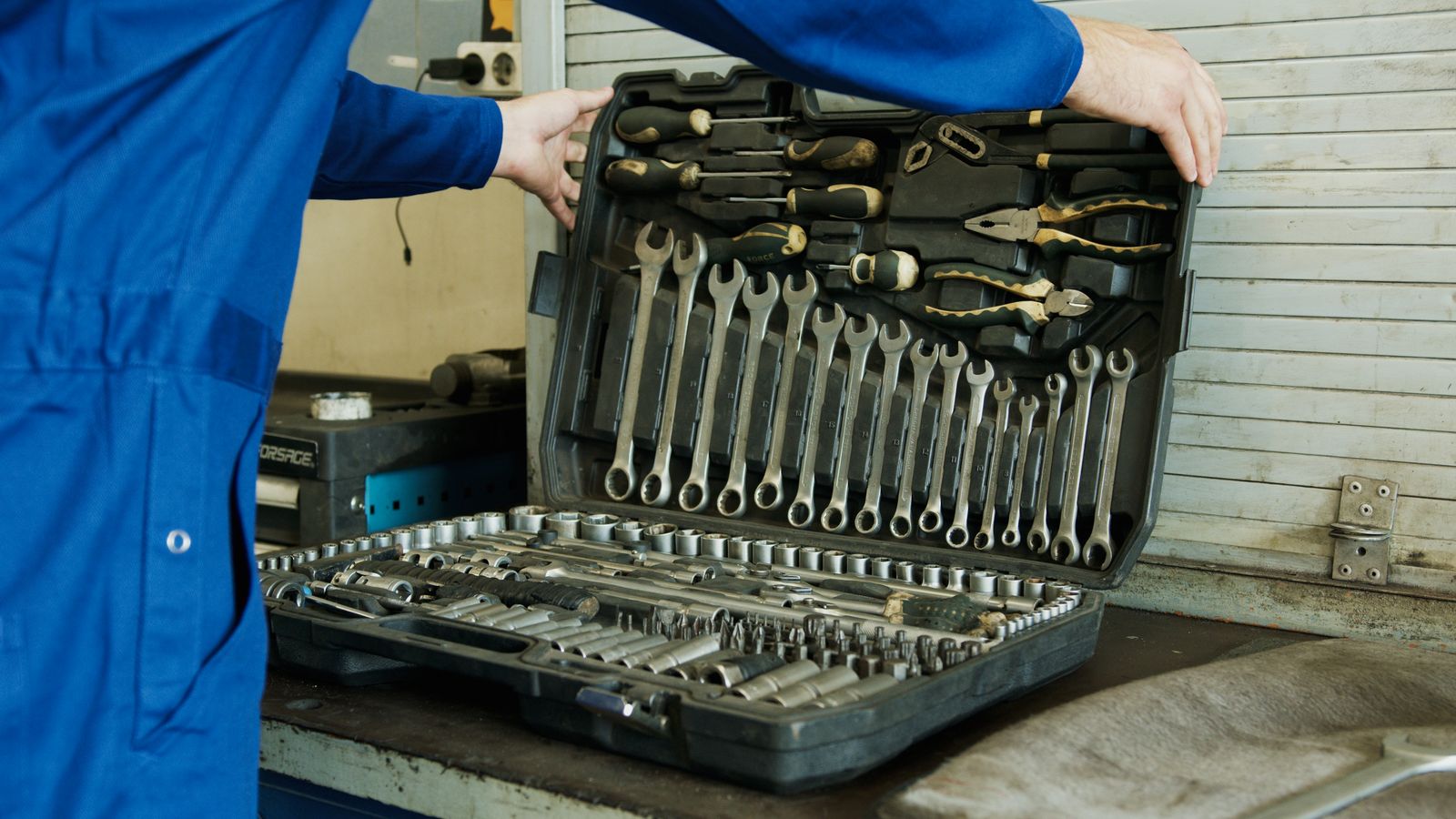
How to check spare parts availability before you buy
The following questions can be put by email in ten minutes. The speed and specificity of the answer will tell you more about the retailer than the catalogue does.
- Who is the actual manufacturer and where is the appliance made? Ask for the name of the factory, not just the trade name. “It’s our own brand”, with nothing further, is not enough.
- How long do you commit to supplying spare parts after the model is discontinued? You want a number in years, ideally in writing. This is a voluntary commitment by the retailer or manufacturer, not a legal duty — which makes having it documented all the more important.
- Is there an authorised service operation in the country, and where is it based? A specific town, not “we arrange servicing”. How far the technician has to travel will feed into the call-out charge for the whole life of the appliance.
- What is the normal lead time for a pump, a heater and a control board? In winter, the difference between “in stock locally” and “6–10 weeks from Asia” is the difference between one cold weekend and an unusable season.
- Are the components from standard suppliers, or proprietary? Specifically: which control system (Balboa, Gecko, other), which pumps (LX, Waterway, Aqua-Flo, other), which heater. Write the brands down — without them the parts cannot be traced independently.
- Will I get a technical data sheet, a wiring diagram and a service manual? A user manual is not enough. Without a diagram, diagnosis is more expensive. What to look for in that documentation is covered in How to read a hot tub spec sheet.
- What if the brand or the importer ceases trading? The honest answer is: “the components are standard, you can get parts elsewhere too”. The dishonest answer is silence, or an assurance that it will never happen.
- What do the most frequently replaced parts cost, roughly? When a retailer knows the prices, they usually deal with those parts in reality. When they do not know, they probably do not do servicing at all.
The question to ask, the good answer and the warning sign
| Question | Good answer | Warning sign |
|---|---|---|
| Who makes the hot tub? | A specific manufacturer and country of production, verifiable on the label | “Own brand”, with no manufacturer named |
| What is the control system? | Balboa / Gecko / another established system with a type designation | “Our own solution”, with no type and no documentation |
| How long will parts be available? | A specific number of years, stated in writing in the quotation | “We always have parts”, with no commitment |
| Where is the service operation? | The address of a service point in the country, plus a call-out price list | “We handle it case by case”, servicing only abroad |
| Lead time for a pump? | Days to two weeks, common parts in stock | Months, “it depends on the manufacturer” |
| Will I get a wiring diagram? | Yes, both the wiring diagram and the service manual | Only the user manual, the diagram “is internal” |
| What happens if the brand disappears? | Standard components, a third party can service it too | An evasive answer, a closed system |

The European framework for supporting repair: what is verified and what is not
European legislation contains a set of rules commonly known as the “right to repair”: Directive (EU) 2024/1799 of the European Parliament and of the Council on common rules promoting the repair of goods. Member States were to transpose it into national law and apply it from 31 July 2026 (source: the European Commission, consumer law section, and the summary on EUR-Lex). This is European Union law, so it applies to buyers in EU Member States; outside the EU, different rules apply.
The aim is to extend the life of products: to make repair easier than replacement, to make spare parts available at reasonable prices, to ban technical and contractual obstacles to repair, and to give an advantage to consumers who choose repair when making a claim.
Precision is needed here, because the media often simplify it. The manufacturer’s obligation to carry out a repair at the consumer’s request does not apply to all goods. Under the text of the directive it applies to the products listed in its Annex II, and to the extent that Union legislation sets repairability requirements for them. Annex II covers in particular washing machines and washer-dryers, dishwashers, tumble dryers, refrigerating appliances, electronic displays, welding equipment, vacuum cleaners, servers and data storage products, mobile phones, cordless phones and tablets, and goods with batteries for light means of transport (electric bikes and scooters, for example).
Hot tubs, swim spas, pool pumps, filtration and pool heat pumps are not listed there. The list is intended to grow in future as repairability requirements are adopted for further product groups — so for any specific appliance we recommend checking the current scope, ideally directly in the version of the directive in force and in the national implementing legislation.
The package also includes an advantage for repair when making a claim: if a consumer chooses repair instead of replacement, the period for exercising rights in respect of defects is to be extended by a further twelve months. The exact scope — that is, whether this applies to all consumer goods or only to goods in Annex II — differs between interpretations and between commentaries on the Czech implementing amendment. We have not verified this well enough to state it as fact; with a specific claim it is worth asking the seller and, if necessary, checking with the Czech Trade Inspection Authority (or the equivalent consumer authority in your own country).
Statutory rights and a contractual guarantee are not the same thing
Quite apart from the European rules supporting repair, you have statutory rights that are often described inaccurately. The Czech rules are set out below as an example; in other Member States the time limits and procedures differ, so check the rules that apply where you bought. Simplified, there are three separate things:
- Rights in respect of defective performance (liability for defects). A statutory institute under the Czech Civil Code. The seller is liable for the goods being free of defects on receipt; with consumer goods a defect can be notified within two years of receipt, and if the defect appears within the first year, the goods are presumed to have been defective already on receipt. This applies by law and cannot be shortened by contract.
- Guarantee of quality. A voluntary commitment by the seller or manufacturer over and above the law — “5-year guarantee on the shell”, for instance. Its content and length are set by whoever provides it.
- A commitment to supply spare parts. Also voluntary, and unrelated to the two points above. A retailer can give a five-year guarantee and still have no obligation whatsoever to supply parts in the sixth year.
This is only the framework — the time limits, the claims procedure and the difference between repair, replacement and withdrawal are covered in more detail in Warranty claims for pools and hot tubs. For the purposes of choosing an appliance, one thing is enough: a marketing-sounding “guarantee” tells you nothing about whether you will be able to get a pump in eight years’ time.
You own the appliance and the brand has since disappeared. What now?
The importer going under does not mean the end of the hot tub. Work from the bottom up — from the components, not from the brand.
- Open the service hatch and photograph the labels. The pump, the heater and the control board all carry the component manufacturer’s type designation. That is information you can work with, even when the name on the shell means nothing to anyone any more.
- Identify the control system. If it is Balboa or Gecko, you are in the clear — boards, panels, sensors and heater assemblies are readily available and diagnosis is well documented, with the fault code shown on the topside panel as a starting point.
- With pumps, work from the specification, not the brand. Output, number of speeds, supply voltage, port diameter and orientation, and the distance between the flanges. Those are what a universal replacement is chosen from.
- Approach an independent service company. Firms specialising in hot tubs routinely work on models they have never sold. Send them photos of the labels and the fault code in advance — you will save one call-out.
- Consider a retrofit instead of more patching. When two or three electronic faults land in the same season, replacing the whole system is usually cheaper than repairing piecemeal.
Why the cheapest hot tub tends to be the most expensive in its fifth season
Models with no traceable manufacturer, sold as one-offs under changing names, typically have three characteristics at once: proprietary or unmarked electronics, missing service documentation, and a retailer with no service operation of their own. As long as the appliance works, none of this is visible.
The bill arrives with the first fault after the guarantee ends. Diagnosis takes longer because there is no diagram. The part is on order for months, or not available at all. And the only workable solution tends to be a retrofit, which makes no economic sense on a cheap appliance. The difference in purchase price that drove the decision is thus wiped out in the fifth or sixth season — and sometimes reversed. The same logic applies to buying second-hand, where the additional risks are described in Buying a used hot tub.
Frequently asked questions
How long must a manufacturer supply spare parts?
No general legal duty to supply parts for a given period follows from the European repair rules for hot tubs and pool equipment — those rules apply to the product groups listed in Annex II to Directive (EU) 2024/1799, where these appliances are not listed. The period of parts availability is therefore a matter of a voluntary commitment by the manufacturer or retailer, and it is right to have it confirmed in writing.
Can I tell from the price whether parts will be available?
Not reliably, but there is a correlation. What matters more is whether the appliance is built on standard components from established suppliers, and whether the retailer runs their own service operation. Ask about the components, not about the price bracket.
Can I use a non-original spare part?
Yes, if it matches the specification and is intended for that use. With electrical work in a wet environment, however, insist that the replacement is carried out by someone suitably qualified — this is mains-powered equipment in immediate contact with water. A non-original part may also affect a claim under a voluntary guarantee, so check that in advance with whoever provides it.
What if, after a claim, the retailer only offers a swap for a new model?
Choosing between repair and replacement is in the first place your right, limited by what would be disproportionately costly. There is also a reason to prefer repair: under the new European rules, choosing repair is to be made more advantageous for the consumer by extending the period for exercising rights in respect of defects — though we recommend verifying the specific scope under Czech law with the seller or with the Czech Trade Inspection Authority (or with the corresponding authority in your own country).
Is a control pack retrofit worth it on an older hot tub?
It depends on the state of the rest of the appliance. If the shell is free of cracks, the insulation is sound and the pumps work, replacing the electronics with a standard system is usually a sensible investment that adds years to the appliance’s life. On a hot tub with leaks and waterlogged insulation it generally does not pay off.
Spare parts availability is the one parameter on the spec sheet that shows up in neither the first, second nor third season — and then suddenly decides everything. It is worth asking about as persistently as about power consumption and the number of jets, and worth having the answers in writing. If you are renewing the equipment on an existing pool, or looking for pumps, filtration and heating from established manufacturers with traceable parts, you will find an overview in the pool equipment category; components and structural items are in the structural parts section. Further reading on maintenance and servicing is collected in the Guide section.