
A quality acrylic hot tub from a reputable manufacturer will last 15–20 years or more with good care, budget models from online clearance sales more like 5–10 years, and an inflatable hot tub 2–5 seasons. Individual components, however, age at very different rates: you replace the thermal cover after 5–7 years, while the pump and heating element typically go between year five and year ten. In this guide you will find the lifespan of all the key parts, indicative repair prices and a simple decision framework for when to keep repairing and when to buy new.
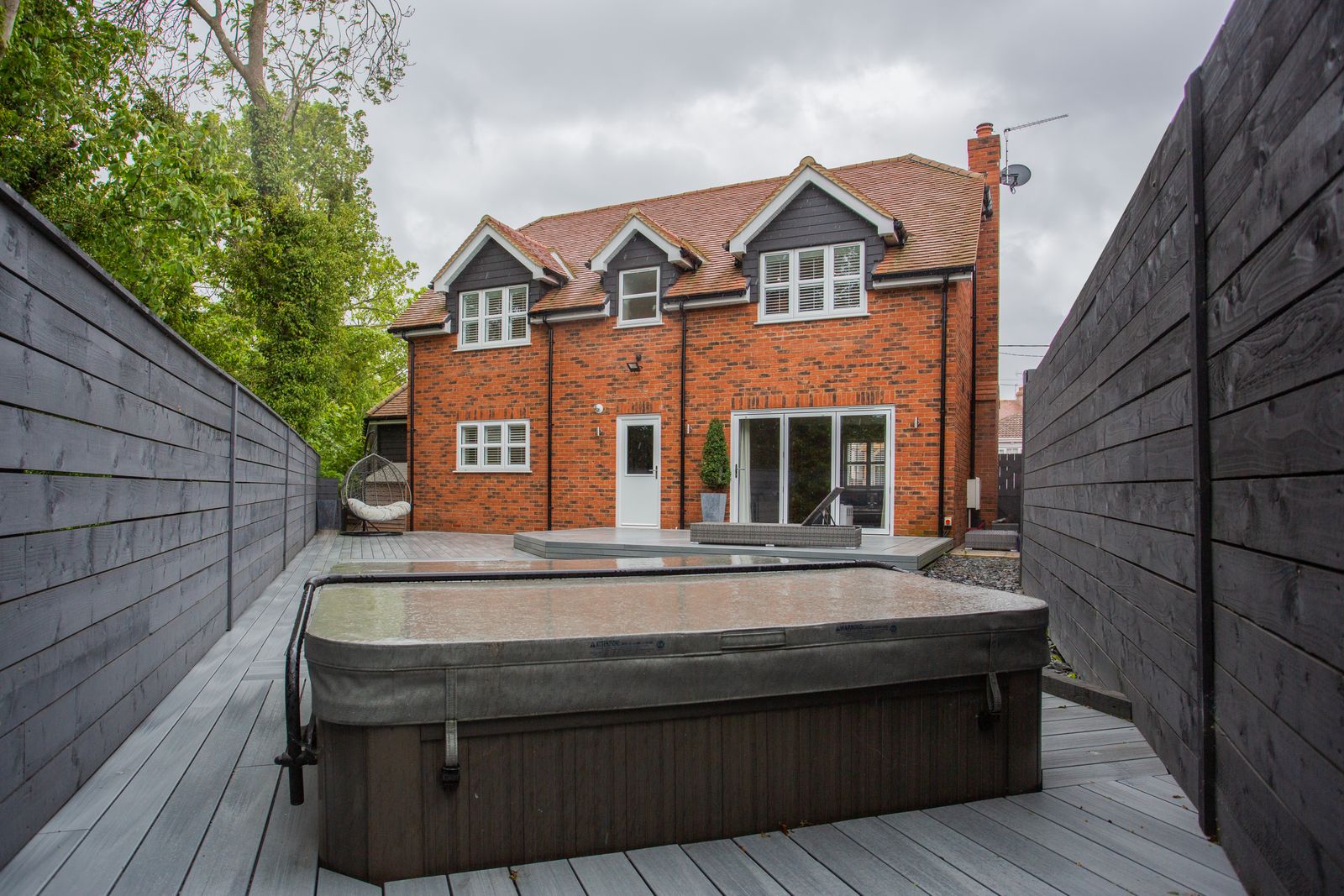
How long does a hot tub last by type and quality?
The question “how long does a hot tub last” has no single answer — the spread between the cheapest and the most expensive category is more than tenfold. What decides it is the shell material, the quality of the insulation, the brand of the technology (pumps, control unit) and, of course, the owner’s care.
Inflatable hot tubs (2–5 years). The PVC skin degrades under UV radiation, chemicals and mechanical stress. The weak point tends to be the built-in unit with heating and air blower, which is usually not worth repairing on models costing 400–800 €. You will find a detailed comparison of both designs in our article on inflatable vs. acrylic hot tubs.
Budget acrylic hot tubs (approx. 5–10 years). Models in the 4,000–8,000 € range tend to have thinner acrylic, weaker insulation and no-name components for which spare parts become harder to find over the years. They run reliably until the first major failure — and then it often turns out that the repair costs a disproportionate amount compared to the residual value.
Quality acrylic hot tubs (15–20+ years). Premium shells made of cast acrylic with fibreglass reinforcement, branded technology (Balboa, Gecko, LX) and full-foam insulation mean the hot tub will outlive two generations of thermal covers and one pump replacement. On a twenty-year-old quality hot tub the shell is usually still fine — only the technology around it gets replaced.
What fails first? The lifespan of individual components
A hot tub is not a single product but an assembly of components with very different lifespans. The following table shows typical values under normal year-round operation and reasonable maintenance.
| Component | Typical lifespan | What shortens it |
|---|---|---|
| Thermal cover | 5–7 years | UV radiation, waterlogged core, chemical vapours |
| Massage pumps | 5–10 years | Running dry, airlocks, worn bearings and shaft seal |
| Circulation pump | 5–10 years | Continuous running, clogged filter, limescale |
| Heating element | 5–8 years | Hard water and limescale, poor pH, running without flow |
| Control unit | 10–15 years | Moisture, mains surges, corroded contacts |
| Ozonator / UV lamp | 2–5 years | Natural burnout of the lamp or electrode |
| Jets and plumbing | 10–15 years | Limescale, brittle plastics, aggressive chemicals |
| Acrylic shell | 20+ years | Practically only mechanical damage and long-term UV exposure without a cover |
The thermal cover is consumable part number one: as soon as the core soaks up water and the cover gets heavy, it stops insulating and your electricity bill rises by tens of euros a month. When to replace it and how to choose a new one is covered in detail in our article on the hot tub thermal cover.
The heating element is the most frequent victim of hard water — a layer of limescale on the heating coil acts as an insulator, the element overheats and sooner or later burns out. If you have hard water, read up on how to deal with water hardness and limescale. Jets, by contrast, tend to clog up and their locking tabs snap; replacing them is an easy DIY job, as we describe in our guide on how to replace a hot tub jet.

What extends a hot tub’s lifespan?
The difference between a hot tub that dies at eight years and one that serves for twenty is 80 % down to the owner. Four habits have the biggest effect.
- Balanced water chemistry. The single most important factor. Low pH corrodes the heating element, pump seals and metal parts; high pH precipitates limescale. Keep the pH at 7.0–7.4 and the sanitiser in the recommended range — you will find the complete routine in our guide to hot tub chemistry step by step.
- Regular water changes. Old water full of dissolved solids forces you to dose more and more chemicals, which then stress the seals and plastics. As a rule of thumb, the water is changed every 1–3 months depending on usage — we give the exact calculation in our article on how often to change hot tub water.
- A cover against UV radiation. The sun degrades the acrylic, the cabinet and the thermal cover. A hot tub should never stand uncovered longer than necessary, and a drained hot tub sitting in the sun without a cover is the fastest route to brittle acrylic.
- The right winter regime. Frozen water in the pipework means burst plumbing and damage running into thousands of euros. In winter a hot tub is either kept running or professionally winterised — we discuss both options in our article on the hot tub in winter.
Service inspection: what does the technician do and how often to book one?
For a hot tub operated year-round, one professional inspection a year is worthwhile, ideally in spring or autumn. For heavily used hot tubs (rentals, wellness facilities), better twice a year. An inspection costs around 80–160 € plus travel.
During an inspection the service technician typically:
- checks the pumps, connections and heater housing for leaks (the first drips at a pump shaft seal are visible long before any damage occurs),
- measures the current draw of the pumps and heating element — an elevated draw reveals wear before the part fails,
- checks the control unit, connectors, the residual current device and the state of the sensors,
- tests the ozonator or UV lamp, which fade unnoticeably,
- cleans the filtration or recommends replacing it, and assesses the condition of the thermal cover.
An inspection costing a couple of hundred euros regularly catches developing faults whose late resolution costs ten times as much — typically a leaking pump shaft seal that would eventually flood the equipment compartment and destroy the electronics.
Typical repairs and indicative prices
Prices vary by technology brand and service company, but the following ranges reflect common practice (part + labour, excluding travel).
| Repair | Indicative price | Note |
|---|---|---|
| Heating element replacement | 160–360 € | The most common repair; a quick job on Balboa systems |
| Massage pump replacement | 320–720 € | Sometimes replacing just the motor or the shaft seal is enough |
| Circulation pump replacement | 240–480 € | Cheaper than a massage pump, but it runs non-stop |
| Ozonator replacement | 120–280 € | A consumable part — plan for it every few years |
| New control unit | 600–1,400 € | The most expensive repair; on older hot tubs the decision point |
| New thermal cover | 400–1,000 € | Pays for itself in energy savings within 1–3 seasons |
A handy owner can manage many smaller repairs themselves — spare parts such as heating elements, pumps, jets and seals can be found in our construction and spare parts category. On hot tubs with a Balboa control unit, the display itself will tell you where the problem lies — we have compiled the meanings of the messages in our overview of Balboa error codes.
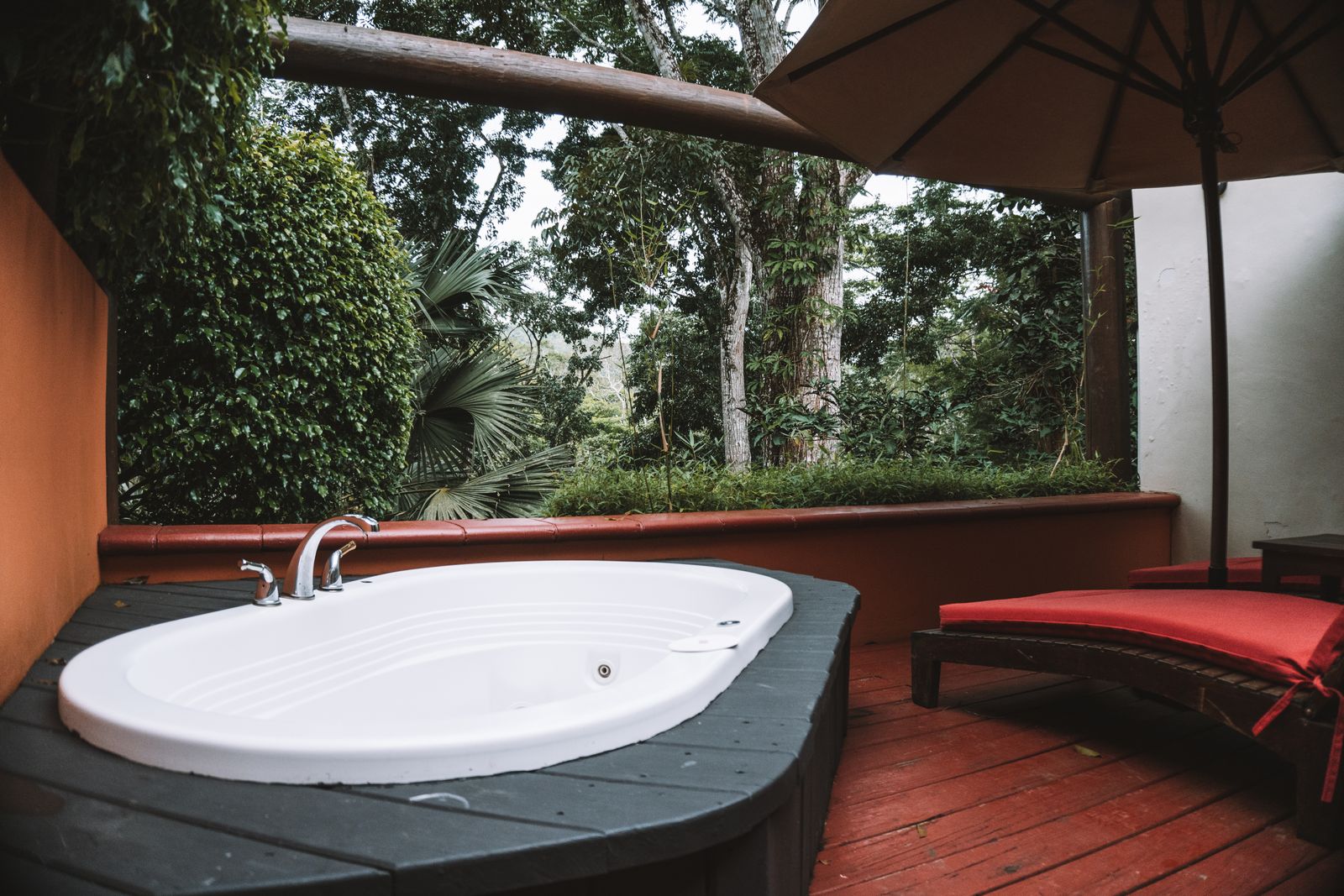
Repair, or a new hot tub? A decision framework
The golden rule among service technicians goes: if the repair exceeds roughly 50 % of the hot tub’s current value, it is no longer worth repairing. Current value means the price at which you could buy a comparable hot tub of the same age second-hand — not the original purchase price.
In practice this means: replacing a heating element for 240 € is almost always worth it. A 1,200 € control unit on a twelve-year-old lower-tier hot tub with a residual value of 1,600 € is borderline — and if a failing pump and a waterlogged thermal cover are added to the mix, the decision is clear.
A second factor also comes into play: energy savings. Hot tubs from recent years have significantly better full-foam insulation, tighter-fitting thermal covers and more efficient circulation pumps. If an old hot tub uses 150–250 kWh more per month in winter than a modern model, at around 0.24 €/kWh that makes a difference of 36–60 € per month in electricity alone. Over ten years of operation, the savings cover a substantial part of the price of a new mid-range hot tub.
Summed up in three questions: How much does the repair cost relative to the residual value? What other parts are nearing the end of their life within the next two years? And how much are you losing each month to poorer insulation? When two of the three answers speak against repairing, invest in a new one.
A second-hand hot tub: what to watch out for?
A used hot tub can be an excellent buy — a quality five-year-old unit at a third of the original price — or an expensive trap. Before buying, insist on an inspection with the tub filled and switched on. Check:
- The age and brand of the technology. On a hot tub over 10 years old with no-name electronics, expect that spare parts may no longer exist.
- The shell and cabinet. Cracks, blisters in the acrylic and a rotten frame are a reason to walk away — repairing them is uneconomical.
- All functions live. Run both pumps, the heating, the lighting and the air blower. Listen to the pump bearings (whining = imminent replacement).
- The equipment compartment. Open the service panel: water marks, corrosion and improvised repairs with insulation foam reveal the history better than the seller will.
- The thermal cover. A waterlogged cover means an immediate extra investment of 400+ € — factor it into the price.
Also budget for transport costs (often a crane) and for the fact that a second-hand hot tub comes without a warranty. The difference between a good second-hand buy and a new lower-mid-range hot tub with a full warranty is often smaller than it first appears.
Frequently asked questions
How long does an inflatable hot tub last?
Usually 2–5 seasons. The PVC skin ages under UV and chemicals, and the integrated heating unit has a limited lifespan. Repairs are usually not worthwhile on inflatable models, because the cost of a service call-out approaches the price of a new unit.
When should I replace the hot tub thermal cover?
As soon as it gets noticeably heavy, starts sagging or drips water when lifted — usually after 5–7 years. A waterlogged cover loses its insulating ability and adds tens of euros a month to your heating costs, so a new thermal cover quickly pays for itself.
Is it worth repairing a 10-year-old hot tub?
It depends on the quality and the extent of the fault. On a quality branded hot tub with available parts, yes — the shell has another ten years ahead of it. On a budget hot tub with a failed control unit or pump, the repair often exceeds 50 % of the residual value and buying new is the wiser choice.
How often should a service technician see the hot tub?
For normal domestic use, one inspection a year is enough; for heavily used hot tubs (rentals, wellness facilities), two. An inspection costing 80–160 € regularly catches minor faults before they turn into repairs costing thousands.
What shortens a hot tub’s lifespan the most?
Neglected water chemistry — above all chronically poor pH — and untreated hard water. Then come running without a functional thermal cover, poor winterising and clogged filters that suffocate the pumps.
Conclusion: a hot tub’s long life starts with the purchase
A hot tub’s lifespan is determined half by the quality you buy and half by the care you give it. A quality shell with branded technology, balanced chemistry and one service inspection a year mean 15–20 years of carefree operation — and when a major failure does one day arrive, the 50 % rule will reliably tell you whether to repair or replace. If you are facing that replacement decision right now, browse the current range in our hot tubs category — modern insulation and efficient technology will return part of the investment on your energy bills.
