
A warranty on a pool or a hot tub is not a single number — it is a set of different periods for different parts. Shells and acrylic usually carry the longest cover, the equipment a shorter one, and consumables such as filter cartridges, seals or bulbs are typically not covered at all. Yet most rejected claims do not come down to an argument about the period, but about the cause: water outside the recommended range, freezing, a DIY repair. What follows is a practical guide, not legal advice — in a genuine dispute it always pays to consult a professional.

Why does one hot tub come with several different warranties?
A hot tub and a pool are both composite products. They consist of structural parts designed to last decades, of equipment with a considerably shorter service life, and of consumables that wear out by their very nature. That is why a manufacturer does not quote a single warranty period, but a breakdown by group — and that breakdown is where the first misunderstanding usually arises.
Put simply: the more a part moves or the more chemical stress it takes, the shorter the cover. A hot tub shell or a laminate pool body does not move and contains no electronics, so manufacturers routinely quote the longest periods for them. The pump, the heater and the control unit, by contrast, are electromechanical parts with a limited service life.
A typical warranty breakdown
Exact figures vary from one manufacturer to another, so treat the table below as an indicative map of what to ask about — not as universally valid numbers. The warranty document for the specific model is always what counts.
| Group of parts | What belongs here | Usual approach of the manufacturer |
|---|---|---|
| Structure and surface | Acrylic shell, frame, pool laminate, liner | Longest cover; often stated separately for the structure and separately (shorter) for the surface |
| Equipment | Pumps, control unit, heating element, control panel | Shorter period than for the shell; often conditional on professional installation |
| Cabinet and accessories | Side panels, thermal cover, steps, lighting | Shortest periods; the thermal cover is usually handled separately |
| Consumables | Filter cartridges, seals, O-rings, bulbs, cleaning brushes | As a rule outside the warranty — this is wear, not a defect |
| Labour and transport | Engineer call-out, dismantling, shipping of the part | Sometimes covered only for part of the period, then charged separately |
Watch out for two phrases in the warranty terms. “Parts warranty” means you will receive a replacement component, but labour and transport may be down to you. “Full warranty” or “parts and labour” is the better deal, and on more expensive hot tubs it is often one of the real differences between manufacturers.
Warranty on goods versus warranty on the work — what is the difference?
If you buy a hot tub or an above-ground pool and install it yourself, you are dealing with a warranty on goods. If you have an in-ground pool built including excavation, equipment and surrounds, a warranty on the work — that is, on the job carried out — arises alongside it, and it is provided separately, usually by the company that did the building.
The distinction is a practical one: a leaking pump is a defect of the goods, a leaking pipe joint down in the excavation is typically a defect of the work. With a turnkey supply, one contractor handles both; with a split solution (materials from one party, installation from another) responsibility is divided and you need to know who to turn to. That decision is covered in more detail in the article on a turnkey pool versus doing it yourself.
So with a turnkey build, have the contract state clearly what forms part of the work, what its warranty period is and who takes responsibility for equipment supplied by someone else. A few extra sentences in the contract save months of wrangling.
Statutory consumer rights versus the manufacturer’s warranty
In European Union countries, a consumer has statutory rights in respect of defective goods that apply against the seller regardless of what warranty the manufacturer promises. These are two separate levels: statutory rights set the minimum protection, while the manufacturer’s warranty is a voluntary commitment on top of it.
From that follows a simple rule: a manufacturer’s warranty cannot take your statutory rights away, it can only extend them — for example with a longer period or better service. Buying as a business, on the other hand (a hot tub for a guesthouse, say), is assessed differently from a consumer purchase. The details are a legal matter and vary by country and by the individual case, so in a dispute it is appropriate to consult a professional or the relevant consumer authority.
What most often leads to a claim being rejected?
When making a diagnosis, a service engineer is not only looking for the failed part but also for the cause of the failure. And in many cases that cause points to how the unit was run, not to how it was made. These are the four most common scenarios.
1. Water outside the recommended range
The most common cause, and also the easiest to prove. Persistently low pH dissolves metals and attacks rubber parts — it can damage jet seals, pump impellers and the sheath of the heating element alike. Heavy doses of disinfectant without checking the readings have a similar effect on the acrylic and the joints.
An engineer will recognise aggressive water by its characteristic corrosion marks even years later. Prevention is trivial: measure regularly and keep the readings within the recommended range. The procedure, and what each number means, is explained in the article on how to test pool and hot tub water properly.
2. Freezing
A classic with hot tubs that the owner switches off for the winter “just to be safe” but leaves full of water. Ice in the pipework and in the pump housing can crack components that would otherwise last for years. Frost damage is almost never accepted as a manufacturing defect, because the cause is obvious from the location of the damage.
In freezing conditions a hot tub therefore has to be either left running in winter mode or drained professionally and completely, pipework included. The difference between the two approaches is described in the piece on running a hot tub in winter.
3. Improper electrical connection
A hot tub connected via an extension lead, to a socket without adequate protection or without a residual current device, is a risk to the electronics and usually grounds enough for a warranty claim to be rejected. A control unit damaged by a voltage surge is unfortunately an expensive item. The requirements for the supply are summarised in the article on connecting a hot tub to the electrical supply — keep the electrical inspection certificate, it is one of the documents that comes in handy with a claim.
4. DIY repairs and neglected maintenance
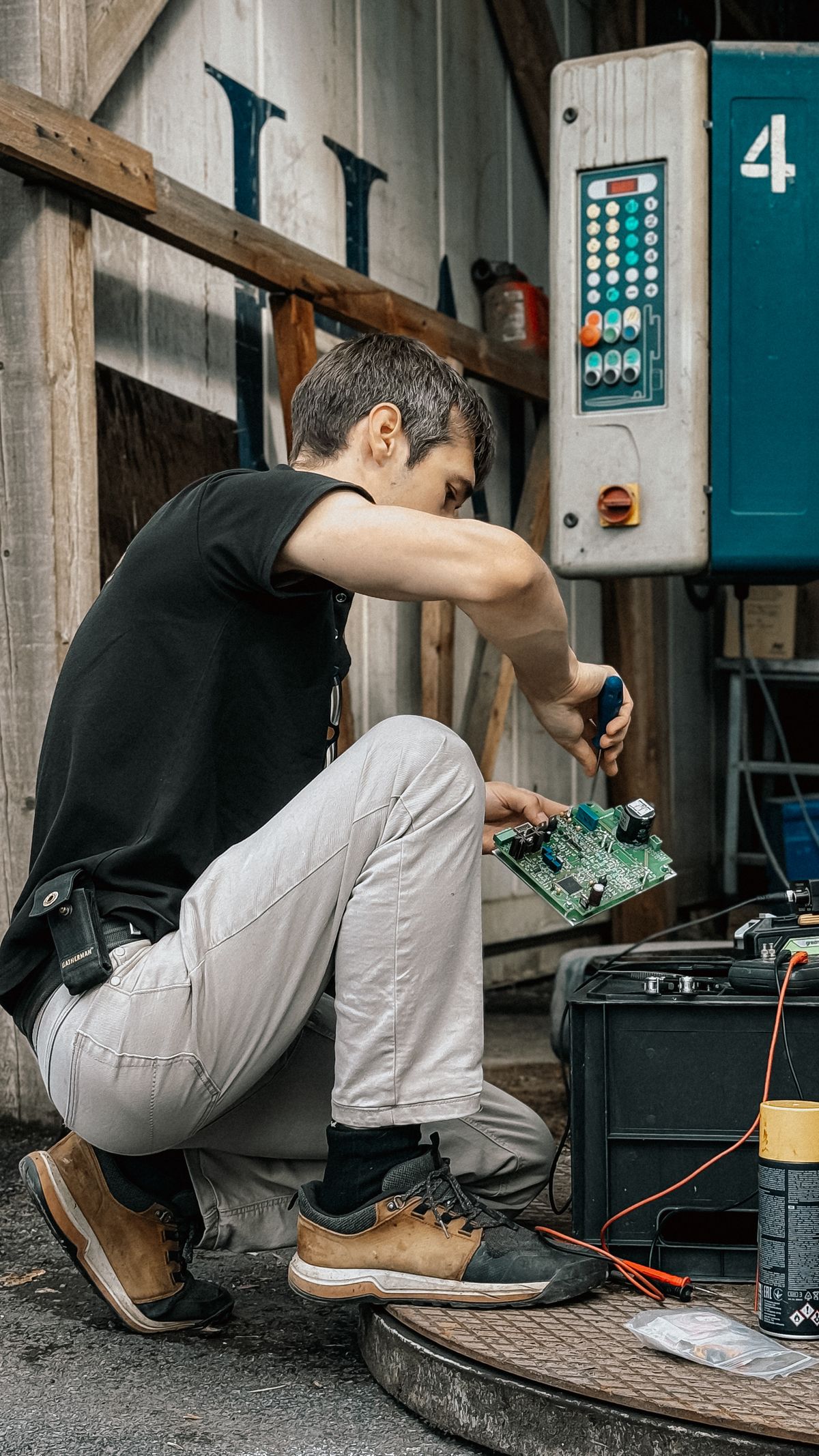
A dismantled control unit, a pump swapped for one from a different manufacturer or a jet “sealed” with silicone — every such intervention complicates the assessment and is often the reason a manufacturer declines responsibility. A neglected filter has much the same effect: a clogged cartridge restricts the flow, the pump and the heater work under strain, and the failure that follows is not a material defect. How often and how to clean the filter is covered in the guide to cleaning a hot tub filter.
| Situation | How it shows up | How to keep your claim valid |
|---|---|---|
| Persistently low pH | Corrosion of the heating element, hardening and cracking of seals | Measure twice a week, record the readings |
| Freezing | Cracked pipework, pump housing, leaks | Winter mode, or professional draining |
| Weak or improvised electrical supply | Dropouts, burnt-out control board | Supply and inspection by an electrician |
| Clogged filter | Flow errors, overheating, noise | Rinse every 1–2 weeks, replace as per the manual |
| DIY intervention | The original cause can no longer be determined | Call a service engineer for anything technical |
How to keep your claim valid: the documentation that decides it
Claims are not won by eloquence but by paperwork. Fortunately five things are enough, and they take a few minutes a year.
- Proof of purchase and the warranty document. Photograph them and store them digitally as well — receipts fade.
- Handover protocol. With a supply that includes installation, insist on a written protocol with the date, the engineer’s name and the condition at handover.
- Photographs at handover. Ten shots of the shell, the panels and the equipment right after installation settle any future argument about when a scratch appeared.
- Maintenance log. A notebook or a note on your phone will do: date, measured pH and disinfectant level, water change, filter cleaning. It is the strongest possible answer to a claim that you neglected the water.
- Service records. Invoices for servicing and for spare parts used show that you followed the manual.
The log has one more advantage. When a problem appears, the entries usually show you when something changed — and that helps the engineer too.

Filing a claim step by step
- Stop using it if worse damage is likely. With a water leak or a burning smell, switch off the power supply and do not try to “ride out” the problem.
- Describe the defect specifically. Not “it doesn’t work”, but “two minutes after the massage is switched on the pump shuts down and a code appears on the display”. On hot tubs with Balboa control units it also helps to know your way around the error codes.
- Add photos and a short video. The sound of a noisy pump or a flashing display says more than a paragraph of text.
- State when the defect appeared. The date it was first noticed and whether it occurs constantly or only occasionally.
- Communicate in writing. An email is evidence, a phone call is not. After a call, send a summary by email.
- Allow room for assessment. The seller or manufacturer needs to verify the defect, with hot tubs typically through an on-site diagnosis by an engineer. Until then, take nothing apart.
- Keep the outcome. A service report describing the repair and the parts replaced will be useful if the problem recurs.
If you disagree with the assessment, the right move is to seek professional help — an expert witness, a consumer advice service or a lawyer. Improvising at this stage usually only makes things worse.
Typical disputes and how they are judged
Cloudiness and algae. Green or milky water is almost always a question of maintenance, dosing and filtration, not a defect of the equipment. The exception is when the filtration demonstrably fails to reach its stated performance — that is measurable.
Scale on the heating element. In hard water it builds up quickly, reduces heating efficiency and eventually destroys the element. It is a consequence of the water’s properties and of maintenance, so it tends to fall outside the warranty. Prevention is described in the article on water hardness and scale.
Minor cosmetic flaws in the acrylic. Microscopic unevenness, faint streaks or a slight variation in shade are to a certain degree normal in moulded acrylic. What matters is whether they are visible from a normal distance in daylight and whether they were already apparent at handover — hence the photographs.
Pump noise. A contentious category, because “noisy” is subjective. What tends to be accepted is a change from the original state — a new squeal, rattle or vibration. Ordinary operating noise is not a defect. What is normal and what is not is discussed in the piece on noise from pool equipment.
Handover checklist for a new hot tub or pool
- Check the packaging and the shell before you sign — record any transport damage on the delivery note.
- Go over the surface in daylight: scratches, cracks, variations in shade.
- Photograph the whole unit and the details, ideally with a visible date in the file.
- Verify that the delivery is complete against the delivery note (thermal cover, filters, steps, documentation).
- Have the engineer demonstrate a test run: heating, filtration, every massage pump, the lighting, the control panel.
- Check the joints for leaks after the first fill and again a few days later.
- Ask for the electrical inspection certificate and the handover protocol.
- Keep the manual, the warranty document and the service contact in one place — ideally on your phone as well.
Ten minutes at handover is incomparably cheaper than two months of arguing about whether the cracks in a panel appeared during the move or later.
Frequently asked questions
Does the warranty end if I repair the hot tub myself?
For consumables that the manual expects you to change routinely (filter cartridge, bulb), as a rule no. For any intervention in the equipment, the electronics or the plumbing, yes — and after the fact there is no way to prove what the condition was beforehand. For anything more complicated, call a service engineer.
Does the warranty also apply to a hot tub in a guesthouse or a rental?
Commercial use is assessed differently from domestic use, and many manufacturers have special, usually shorter terms for it. If you are planning to rent out, check this before you buy — sorting it out afterwards is difficult.
Do I have to take the hot tub somewhere to make a claim?
With large hot tubs and swim spas it is practically always handled by on-site service. That is exactly why the availability of service in your region is one of the criteria worth weighing up when you choose a brand.
What if the seller rejects the defect and I disagree?
Insist on written reasons and keep all the correspondence. The next step belongs to a professional — a consumer advice service, an expert witness or a lawyer, depending on the value of the dispute and the country where you bought.
Is the warranty extended by the time spent on the repair?
The rules differ by country and according to whether statutory rights or the manufacturer’s warranty are involved. Always ask for a service report with the dates of receipt and completion — without it, negotiating anything is hard.
Conclusion: the warranty rewards good order
The summary is dull but effective. Keep the water readings within the recommended range, do not underestimate winter or the electrical installation, leave servicing to the service engineers, and write down what you did and when. With that routine, a warranty claim becomes an administrative task instead of a conflict.
And if it does come to replacing a part, it pays to know what is readily available. Seals, jets, lids and other components can be found in the structural parts and spares category; further practical guides to running a pool and a hot tub are in the Guide section.
