
The Finnish sauna delivers the most intense experience and the best-documented health benefits, but it needs a heavy-duty 400 V power supply and more space. An infrared sauna runs on a standard socket, heats more gently, and costs less. A combi cabin can do both — at a higher price. Which type makes sense for your home depends on space, your electrical setup, and how you like to sauna.
What types of home saunas are there?
Three basic concepts have become established on the market. They differ in how they heat the body — and it’s this heating mechanism that determines temperature, experience, power draw, and installation requirements.
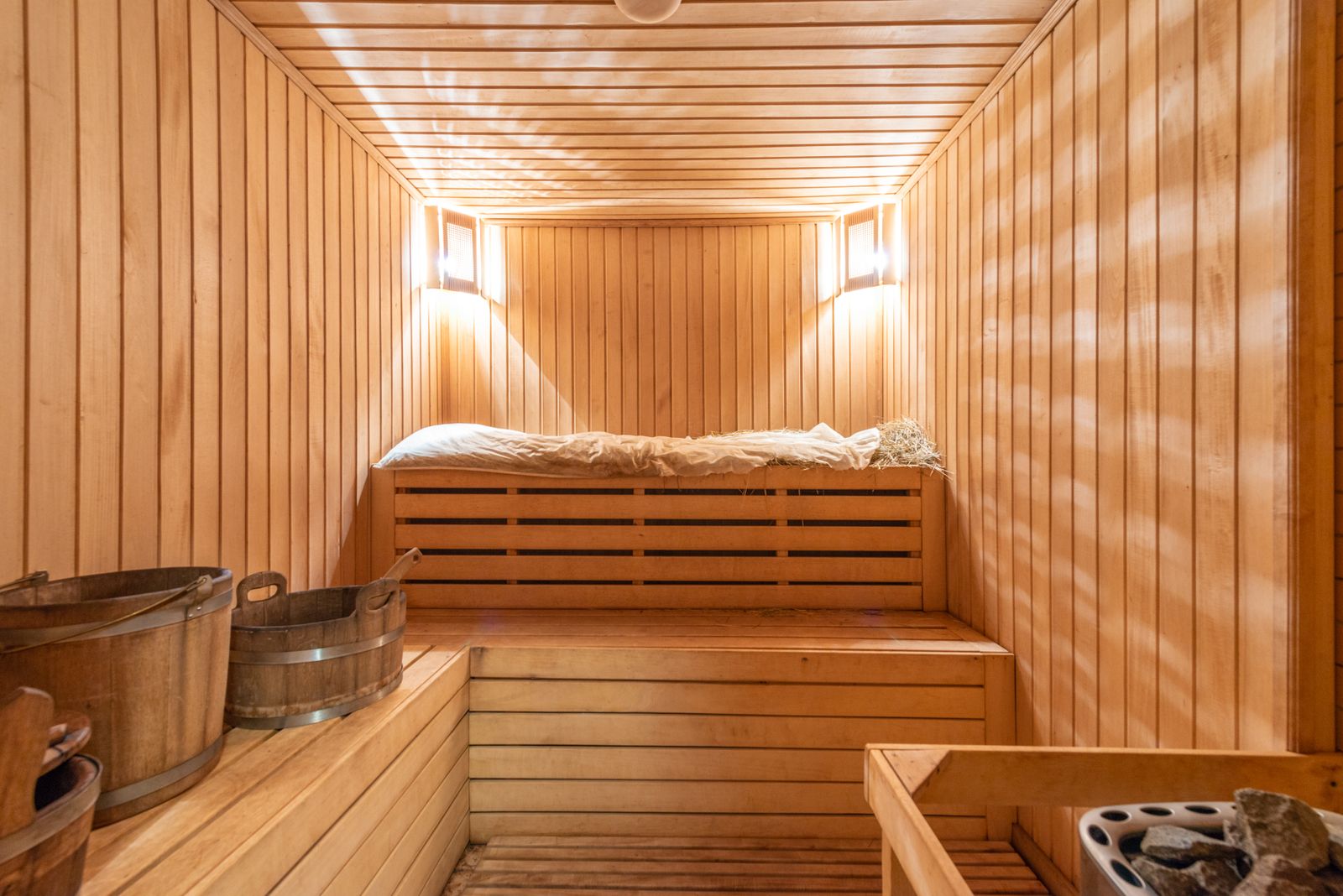
The Finnish sauna uses a heater that warms the air in the cabin to 80–100 °C at low humidity of around 10–15%. The body is warmed by hot air and radiant heat from the stones; pouring water over the stones (the so-called löyly) briefly raises the humidity and creates the characteristic burst of steam. It’s the most intense form of sauna bathing — short 8–15 minute sessions alternated with cooling down.
The infrared sauna doesn’t primarily heat the air but the body directly. Infrared emitters (carbon, ceramic, or full-spectrum) radiate heat that penetrates the skin and muscles, while the air in the cabin stays at just 40–60 °C. Sessions are longer, typically 20–40 minutes, and are tolerated even by people who find a classic sauna too hot.
The combi sauna combines a Finnish heater and infrared emitters in a single cabin, sometimes adding a steam mode (the so-called bio sauna: 50–65 °C at 40–65% humidity thanks to a heater with an evaporator). One investment, several modes — a logical choice for households where every member has different preferences.
Comparison: Finnish sauna vs. infrared sauna vs. combi
| Parameter | Finnish sauna | Infrared sauna | Combi / bio |
|---|---|---|---|
| Cabin temperature | 80–100 °C | 40–60 °C | 50–100 °C depending on mode |
| Heating principle | hot, dry air, stone heater | radiant infrared heat | heater + emitters, optionally steam |
| Warm-up time | 30–60 minutes | 5–15 minutes | depends on selected mode |
| Session length | 8–15 min, several rounds | 20–40 min continuous | depends on mode |
| Power rating | 4.5–9 kW | 1.7–2.7 kW | usually 6–9 kW |
| Electrical supply | 400 V (above 4.5 kW) | 230 V, standard socket | 400 V |
| Consumption per session | approx. 5–8 kWh | approx. 1.5–2.5 kWh | 3–8 kWh depending on mode |
| Approximate 2026 price | CZK 60,000–250,000 (€2,400–10,000) | CZK 25,000–90,000 (€1,000–3,600) | CZK 120,000–400,000 (€4,800–16,000) |
Treat consumption figures as approximate: they depend on cabin size, insulation, and outdoor temperature. At an electricity price of around CZK 7/kWh (€0.28/kWh), one Finnish sauna session costs roughly CZK 35–55 (€1.40–2.20), and an infrared session CZK 10–18 (€0.40–0.72). Anyone sauna bathing three times a week will pay on the order of CZK 450–700 (€18–28) a month for a Finnish sauna.
Indoors or in the garden?
An indoor sauna is most often built into a bathroom, wellness room, or basement. Plan for a footprint starting at 1.2 × 1 m for a small single-person infrared sauna up to 2.5 × 2 m for a four-person Finnish sauna, plus space for cooling down — a shower, and ideally a cold plunge tub. Ventilation is key: a sauna needs a fresh air supply and extraction, otherwise humidity will build up in the room over time.
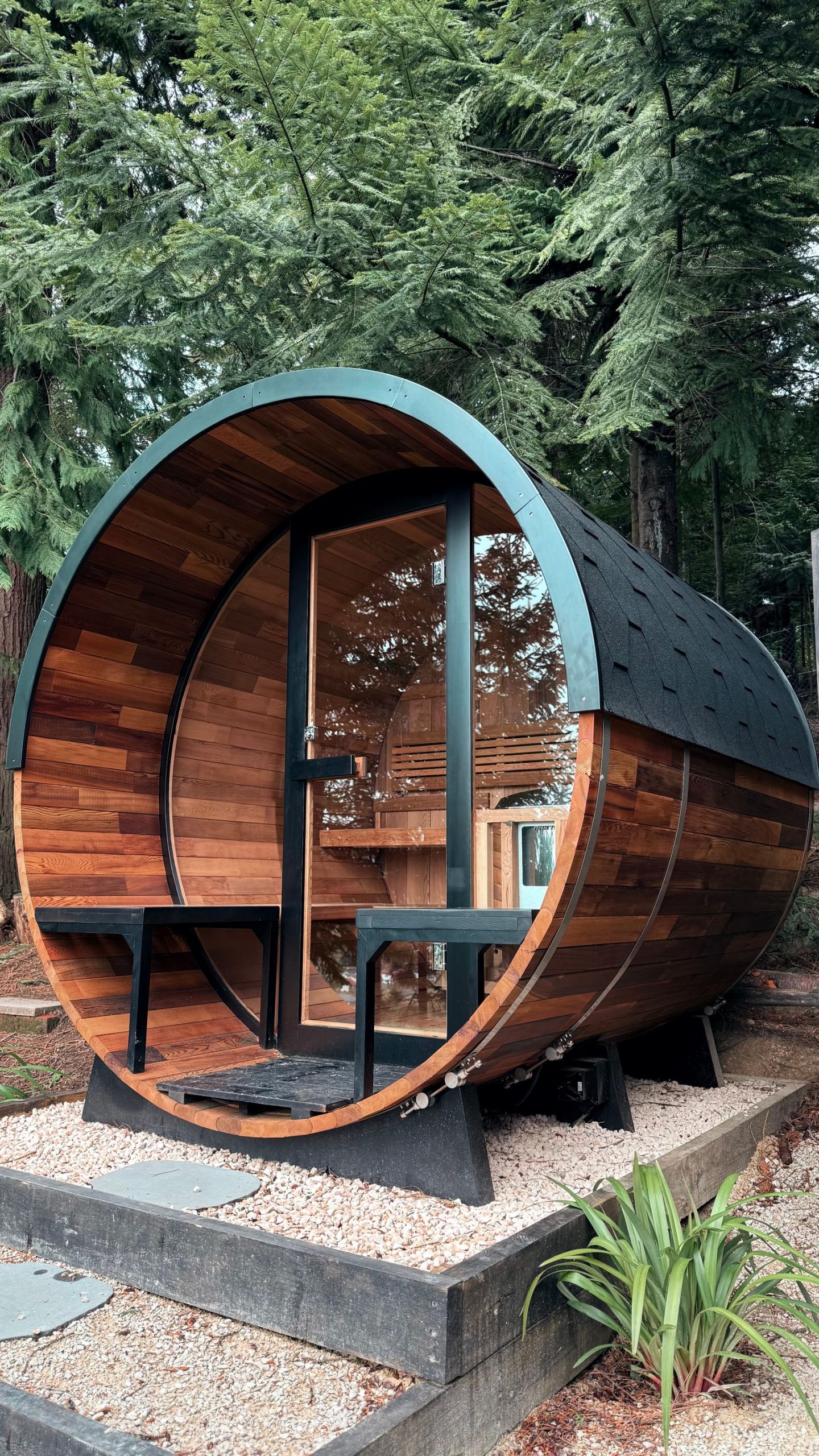
A garden sauna is a growing trend — from barrel saunas to panoramic cabins with a glass wall facing the garden. The barrel shape has a smaller interior volume, so it heats up faster, and an outdoor location solves cooling down naturally: just step outside, ideally into a cold tub or pool in winter. A structure up to 25 m² of footprint and 5 m in height usually doesn’t require a building permit, just a notification — check the specific conditions with your local building authority. An outdoor power supply with an appropriate protection rating is a must.
What to focus on when choosing?
Wood and construction
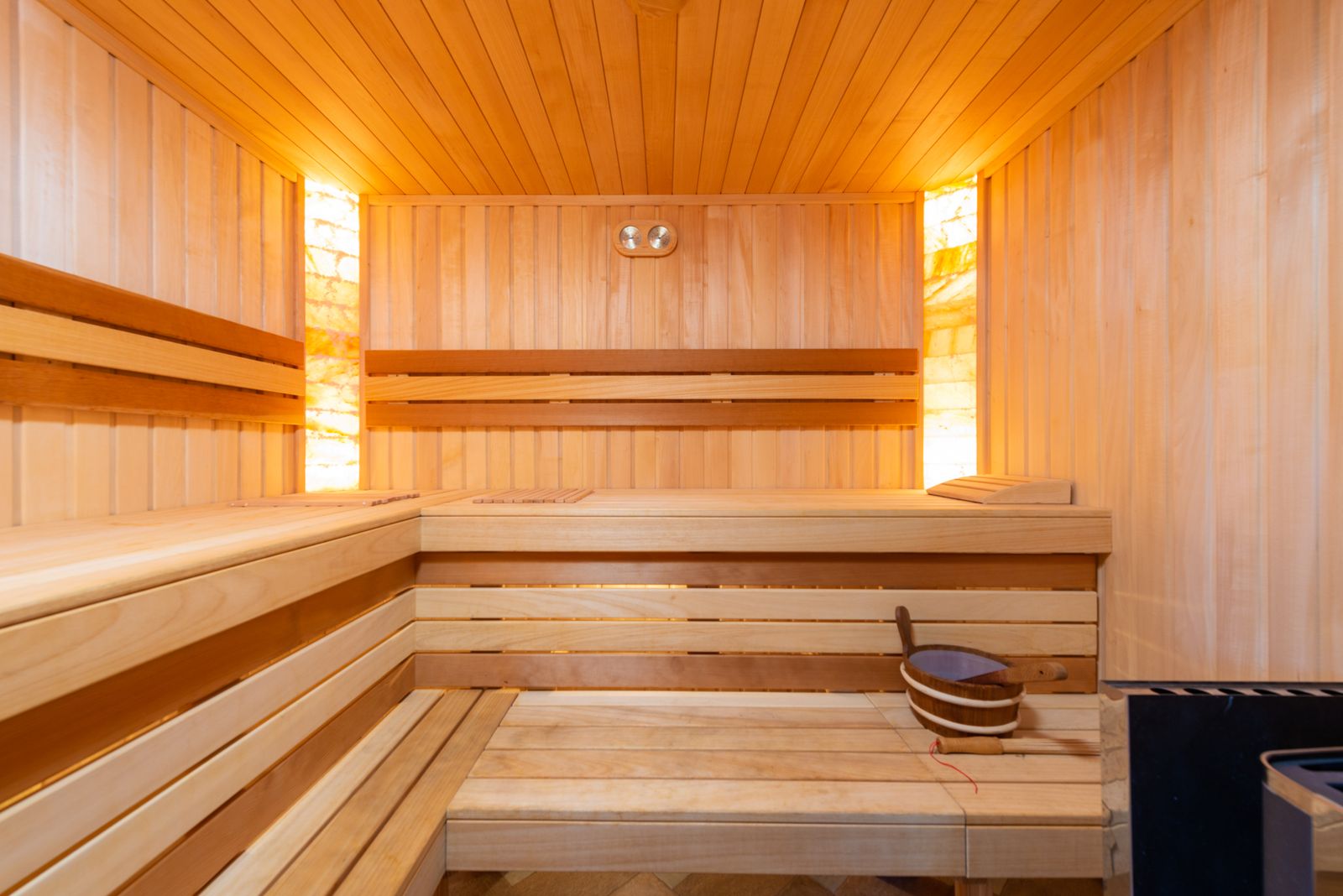
The standard for indoor cabins is Nordic spruce; Finnish aspen or alder is softer and nearly knot-free — they don’t radiate as much heat and don’t release resin, which is why they’re used for benches. Premium cabins rely on Canadian hemlock or thermally modified Thermowood, which withstands moisture better and is also suitable for outdoor use. For garden saunas, check the wall thickness: solid wood from 40 mm up retains heat noticeably better than thin-walled constructions.
Heater or emitters?
For a Finnish sauna, choose a heater output of roughly 1 kW per 1–1.5 m³ of cabin volume; an undersized heater struggles and extends warm-up time. Electric heaters are standard; wood-burning heaters also exist for garden saunas without a heavy-duty power supply. For an infrared sauna, the emitter type is crucial: carbon panels radiate broadly and gently, ceramic ones more intensely and locally, and full-spectrum emitters combine IR-A, IR-B, and IR-C wavelengths — they penetrate deepest and are now standard in higher-quality cabins.
Insulation and controls
Good wall and ceiling insulation (mineral wool with an aluminum vapor barrier in built-in cabins) shortens warm-up time and can easily cut consumption by a third. Modern control units let you set temperature, humidity, and start time; Wi-Fi models let you switch the sauna on from your phone on the way home from work, so it’s warmed up exactly when you arrive. Families with children will appreciate a child lock and automatic shut-off.
Operation and maintenance: what does owning a sauna actually involve?
After every session, let the cabin air out and dry — open doors and running extraction for 30–60 minutes is enough. Protect the benches with a towel and wash them every few weeks with lukewarm water and a mild cleaner made for saunas; harsh chemicals and wood varnish have no place in a sauna.
Once or twice a year, check the sauna stones (replace any cracked ones in the heater), tighten joints, and check the condition of the door hinges. After some years, the bench wood can be sanded down with fine sandpaper to restore its original look. An infrared sauna needs even less maintenance — the emitters are maintenance-free, and only occasional interior cleaning is needed. Overall, a home sauna is one of the lowest-maintenance wellness installations you can get for your home.
What does the science say: sauna and health, soberly
The most widely cited data comes from the Finnish KIHD cohort study (Kuopio Ischaemic Heart Disease Risk Factor Study) led by Jari Laukkanen’s team at the University of Eastern Finland. It followed more than 2,300 men for over 20 years: those who used a Finnish sauna 4–7 times a week showed markedly lower incidence of sudden cardiac death and overall cardiovascular mortality compared with men sauna bathing once a week (JAMA Internal Medicine, 2015). A follow-up analysis from 2018 (BMC Medicine) confirmed the association in women as well.
An important caveat: these are observational studies — they demonstrate association, not direct causation. Physiologically, though, the mechanism makes sense: time spent in heat raises the heart rate to the level of mild physical exertion and improves vascular elasticity. For infrared saunas, the scientific evidence is thinner so far; smaller studies suggest a benefit for muscle recovery and back pain relief, but long-term cardiovascular data on the scale of the Finnish cohorts are missing. We covered the health effects in detail in our article hot tub vs. sauna for health.
Sober rules apply too: alcohol has no place in a sauna, anyone with an acute illness or uncontrolled high blood pressure should consult a doctor before sauna bathing, and you should always replenish fluids.
Sauna + hot tub: home wellness that complements itself
A sauna and a hot tub aren’t competitors — they’re an ideal pair. The sauna offers short, intense heat stress and a heat-then-cool ritual, while the hot tub offers long relaxation in water with jet massage. In practice, the order sauna → cooling down → rest → hot tub works well; a hot soak right after the sauna puts unnecessary strain on the body.
Space-wise, the combination is surprisingly accessible: a barrel garden sauna and a hot tub fit onto a terrace of around 15 m². For the electrical installation, plan on two separately fused circuits: the hot tub typically needs 230 V/32 A or 400 V, the Finnish sauna 400 V. Having an electrician set up both supplies in one visit is cheaper than dealing with each separately.
How much does a home sauna cost in 2026?
Entry-level infrared saunas for 1–2 people start around CZK 25,000–40,000 (€1,000–1,600), while quality cabins with full-spectrum emitters run CZK 50,000–90,000 (€2,000–3,600). A built-in Finnish sauna for 2–4 people, including heater and installation, ranges between CZK 60,000 and 250,000 (€2,400–10,000) depending on material and size. Barrel garden saunas start around CZK 100,000 (€4,000), while panoramic cabins with glazing and good insulation can climb to CZK 300,000 (€12,000) or more. Custom combi and bio saunas start from around CZK 120,000 (€4,800).
Add the cost of the electrical installation (a 400 V heavy-duty supply typically runs CZK 5,000–20,000, or €200–800, depending on distance from the distribution board), and for garden saunas, a reinforced base or foundation pads.
Frequently asked questions
Is an infrared sauna a “real” sauna?
It’s a full-fledged heat wellness treatment, but a different experience from a Finnish sauna — there’s no hot air, no steam from the stones, and no ritual of alternating heat and cold. If you’re mainly after warming your muscles and relaxing at a lower temperature, an infrared sauna is a great choice. If you want classic sauna bathing, it won’t replace it.
Can a home electrical installation handle a sauna?
An infrared sauna with up to 2.7 kW power draw plugs into a standard 230 V socket on a separately fused circuit. Finnish heaters above 4.5 kW require a three-phase 400 V supply — usually available in new-build homes, while older apartments need a consultation with an electrician. Always have the supply’s inspection confirmed by a professional.
How often is it worth sauna bathing at home?
Finnish data links the greatest benefit to a frequency of 4–7 times a week, but even 2–3 sessions a week showed a measurable difference over one session in the studies. In practice: start with twice a week, 2–3 rounds each time, and go by how you feel.
Do I need a building permit for a garden sauna?
Small structures up to 25 m² and 5 m in height usually don’t require a permit — a notification is enough; distance from the property boundary and local regulations also play a role. Check the conditions with your local building authority before buying.
What is a bio sauna and who is it suited for?
The bio sauna (the steam mode of a combi cabin) works at 50–65 °C and higher humidity of 40–65%. It’s gentler on the circulatory system and pleasant for beginners, seniors, and children under supervision — and it’s usually included in combi cabins as a third mode alongside Finnish and infrared.
In conclusion: which sauna is right for you?
If you have a heavy-duty power supply and want an authentic experience with the best-documented benefits, choose a Finnish sauna. If you’re after low-fuss warming for an apartment at a lower price, the infrared sauna wins. And if your household can’t agree, a combi cabin settles the argument with a single control panel. You’ll find saunas, cold plunge tubs, and other equipment for home relaxation in our wellness category — and more buying guides in our Guides section.
