
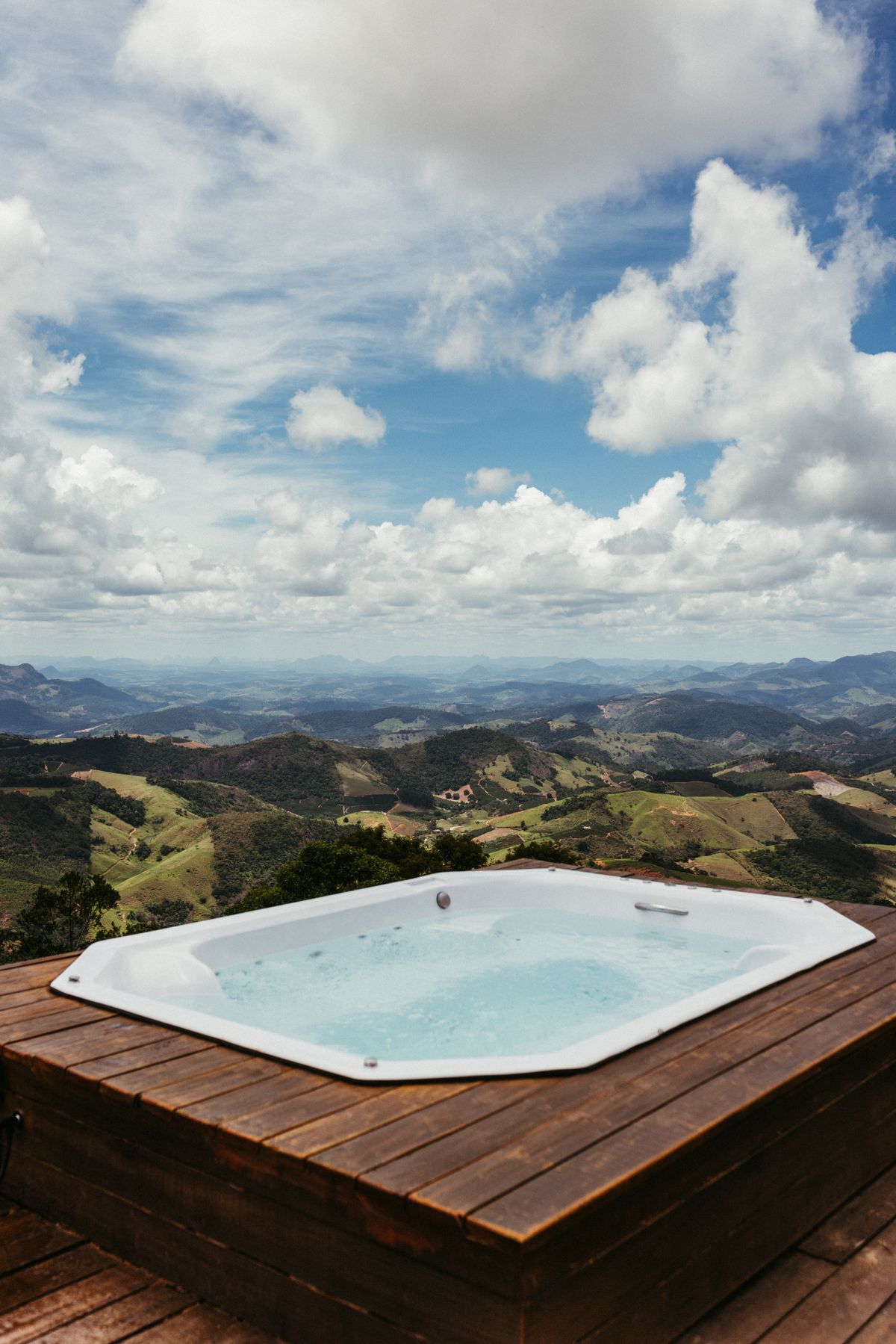
A hot tub on a terrace or roof looks great, but filled and occupied it can easily weigh two tonnes on less than five square metres. On natural ground with a concrete slab that’s no problem, but on a raised terrace, balcony or roof structure, a structural assessment is a necessity, not a formality. In this guide we’ll calculate the real weight of a hot tub, go through suitable bases, the access route for moving it in, the electrical installation, and vibration protection — and at the end you’ll find a checklist to run through before you order.
How much does a hot tub actually weigh?
The weight a structure needs to account for is not the weight listed in the hot tub’s catalogue. That figure refers to the empty shell. The actual load is the sum of three components: empty hot tub + water + people.
Take a typical 5-seat hot tub with a footprint of 2.2 × 2.2 m (just under 5 m²): empty it weighs roughly 300–400 kg, the water volume is usually 1,100–1,300 litres (i.e. 1,100–1,300 kg), and five adults add roughly another 400 kg. In total that comes to 1,800–2,100 kg — around 2 tonnes on less than 5 m², which corresponds to a surface load of about 400–450 kg/m².
| Hot tub type | Footprint (approx.) | Empty | Water | People | Total (approx.) |
|---|---|---|---|---|---|
| 2–3 seat | 1.9 × 1.6 m | 200–250 kg | 700–800 kg | 240 kg | 1.1–1.3 t |
| 4–5 seat | 2.0 × 2.0 m | 280–350 kg | 900–1,100 kg | 320–400 kg | 1.5–1.9 t |
| 5–6 seat | 2.2 × 2.2 m | 300–400 kg | 1,100–1,300 kg | 400–480 kg | 1.8–2.2 t |
| 7-seat | 2.3 × 2.3 m | 400–500 kg | 1,400–1,600 kg | 560 kg | 2.4–2.7 t |
| Swim spa | 4.0–6.0 × 2.3 m | 1,000–1,500 kg | 5,000–8,000 kg | 320–480 kg | 6.5–10 t |
The figures in the table are indicative — exact values can always be found in the datasheet of the specific model. If you’re still choosing and want a sense of sizes and categories, our guide on how to choose a hot tub can help.
When do you need a structural engineer — and why it’s not a formality
On natural ground (a garden, a paved yard, a terrace laid directly on the soil), the weight of the hot tub is carried by the subsoil, and a good-quality base is enough. But as soon as there’s no ground beneath the hot tub — only a structure — a raised terrace on posts, a balcony, a garage ceiling, a flat roof — the load-bearing elements of the building have to carry the load. And those were usually not designed for two tonnes concentrated on a few square metres.
The load-bearing capacity of balconies and floor structures is designed for standard live loads, which are significantly lower than the surface load of a filled hot tub. However, you can’t read the specific capacity of your structure off a table — it depends on the age of the building, the material, the span, the condition of the reinforcement, and exactly where the hot tub will stand. So a simple rule applies: for any terrace above a room, balcony or roof, have an assessment done by an authorised structural engineer before you order. The assessment typically costs a few thousand crowns (usually CZK 3,000–8,000, roughly €120–320) — a fraction of the price of the hot tub or of any potential damage.
What the structural engineer assesses
- The load-bearing capacity of the structure at the planned location (kg/m²) and the reserve for snow, furniture and people around the hot tub.
- The optimal position — capacity is usually higher near a load-bearing wall or above a beam than in the middle of a floor span.
- Possible load distribution (a distribution grid, steel profiles) or reinforcement of the structure.
- For roofs, additionally the waterproofing, the slope, and whether anchoring would damage the roof build-up.
Rooftop terraces: the best view, the most questions
A hot tub on a roof is architecturally the most attractive option but technically the most demanding. Besides the structural aspect, you need to deal with protecting the waterproofing (the hot tub must not stand directly on the membrane), wind loading on the thermal cover, railings, and — for apartment buildings — the consent of the owners’ association. For new builds, the simplest approach is to tell the architect about the hot tub already at the design stage — designing the structure for it up front is cheap, reinforcing it later is expensive.
What base is suitable for a hot tub?
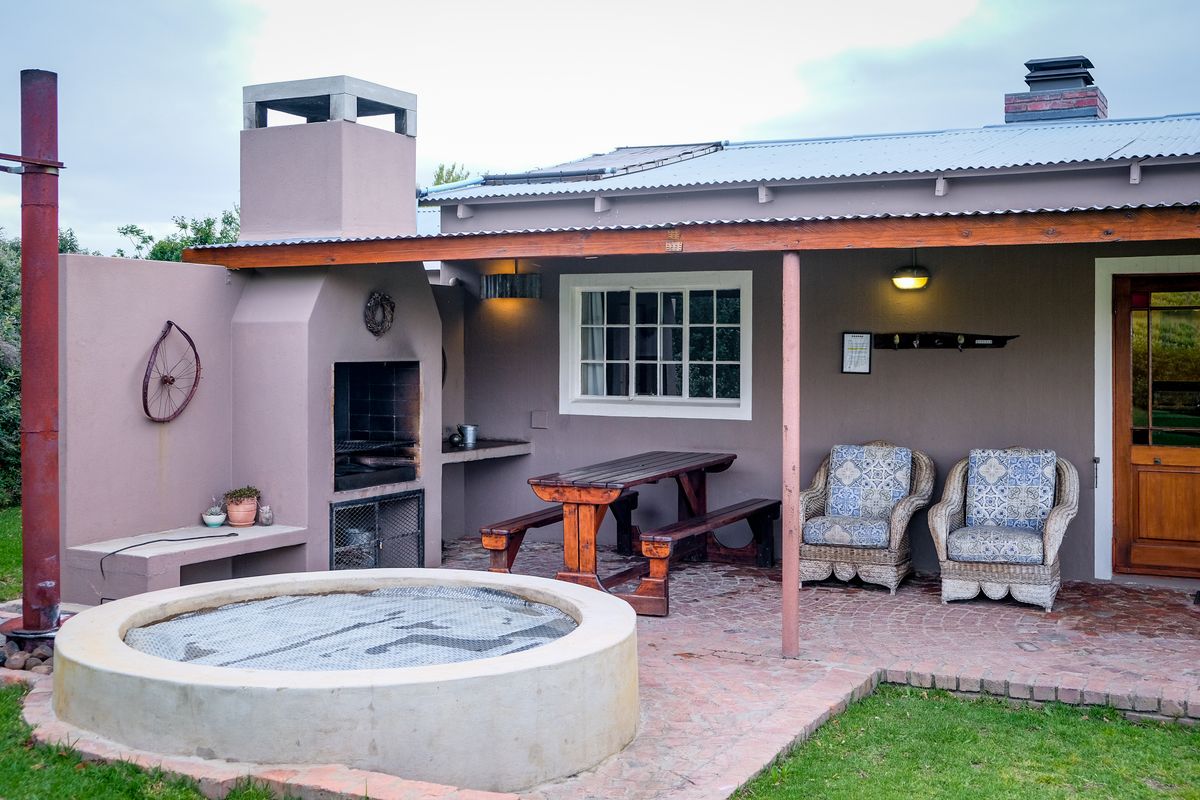
Wherever the hot tub stands, the base has to meet three conditions: flatness, load-bearing capacity and long-term stability. An uneven or settling base puts strain on the shell, can twist the cabinet, and in extreme cases leads to cracks — and such damage is usually not covered by the warranty.
- Concrete slab — the ideal. A reinforced slab 10–15 cm thick on a compacted gravel base, levelled flat (tolerance of about 5 mm over the length of the tub).
- Interlocking pavers — fine, provided the subbase is properly compacted and doesn’t settle. Have older paving laid only in sand assessed, or relaid if needed.
- Reinforced decking — wooden and WPC decks only when the joists and substructure can demonstrably bear the load; a standard walkable deck isn’t built for this and needs local reinforcement.
- Unsuitable — grass, unconsolidated gravel, individual concrete stepping pads. A hot tub settles unevenly on these.
Access route: will the hot tub even get to the site?
Hot tubs are mostly transported upright, on edge. So the decisive factor is the narrowest point of the route from the road to the final spot: a gate, a passage between buildings, doors, stairs, corners. Measure the whole route in advance and compare it with the hot tub’s height on its side (i.e. its footprint dimension) plus a 10–15 cm allowance for handling and a transport trolley.
- Passageway: you need a width roughly 15 cm greater than the height of the hot tub standing on edge (for typical models, a passage of about 100–110 cm; always check the exact figure in the datasheet).
- Clearance height: pergolas, balconies, branches, wires.
- Route surface: soft, rain-soaked lawn supports a trolley worse than paving — plan for boards to spread the load.
- Stairs and steep slopes: possible, but only with enough people and equipment; always consult the carrier in advance.
If the route doesn’t work — typically for inner courtyards, roof terraces and balconies — a crane or hydraulic arm comes into play. It’s a routine solution: the hot tub is lifted in slings over the building or onto the roof within minutes. Budget for costs of roughly CZK 5,000 to 20,000 (about €200–800) depending on the crane size and time on site, more for taller buildings. The crane needs space to be set up and sometimes a temporary road closure — arrange that well in advance.
Electrical installation: you can’t do without an electrician
Full-featured hot tubs need a fixed connection — smaller models a 230 V supply with a 16 A breaker, most 5–7 seat hot tubs a 400 V supply with breakers typically rated 3× 16 A to 3× 25 A. The supply must be protected by a residual current device (RCD) with a 30 mA trip current and terminated according to the manufacturer’s requirements, usually in a sub-distribution board next to the hot tub.
Have the installation done by a licensed electrician and get a revision report — the manufacturer requires it for warranty claims, and so does the insurer in the event of an incident. For a terrace or roof, also think about the cable route (conduit, penetrations through the waterproofing) and make sure the distribution board is accessible but sheltered from rain.
Where does the water go when you drain it?
A hot tub is fully drained typically 3–4 times a year, and each time it involves more than a thousand litres of water. On a terrace above a living space or on a roof, the water must not run freely over the structure — plan for draining through a hose into the sewer or a downpipe and check that the terrace has working drainage falls and a drain for splashed water or rain. Water treated with chlorine or bromine doesn’t belong on the lawn or on ornamental plants; residual disinfectant must break down before you use it to water anything. We cover water maintenance in detail in our article on hot tub chemistry step by step.
Noise and vibration: think of your neighbours as well as yourself
Pumps and the massage system generate vibrations that a hard surface — and especially a balcony or ceiling structure — transmits into the building as a dull thud. The solution is simple and cheap: anti-vibration pads (rubber mats or discs) between the hot tub and the base. On a terrace above a bedroom or in an apartment building, treat them as mandatory equipment. It also helps to position the hot tub further from the façade and to use a night-time quiet filtration mode if the control unit allows it.
Privacy and screens
A hot tub on a terrace or roof tends to be visible — to neighbours, from the street, from higher floors. Privacy can be solved with a pergola with side walls, a wooden or aluminium louvre screen, frosted glass, or tall greenery in planters. A screen also has practical functions: it shields the hot tub from wind (lower heat losses and less debris in the water) and from direct sunlight, which strains the thermal cover over time. For rooftop installations, always anchor the screen with wind loads and waterproofing in mind — ideally again after consulting a structural engineer.
Checklist before ordering a hot tub for a terrace, balcony or roof
- Calculate the total weight of the chosen model: empty hot tub + water + people (datasheet).
- For a terrace above a room, a balcony or a roof, order an assessment from an authorised structural engineer.
- Prepare the base: a flat concrete slab, load-bearing paving, or a reinforced deck as specified in the assessment.
- Measure the entire access route (narrowest passage, clearance height, stairs) and compare it with the hot tub’s dimensions.
- For inaccessible locations, request a crane quote and check the space needed to set it up, including any road closure.
- Arrange the electrical supply per the manufacturer’s specs (typically 400 V, 30 mA RCD) and a revision report from the electrician.
- Sort out draining the water into the sewer and check the terrace’s drainage falls.
- Get anti-vibration pads and plan a screen or pergola.
- In an apartment building, secure the consent of the owners’ association or landlord in advance.
Frequently asked questions (FAQ)
Can a standard balcony support a hot tub?
You can’t say without an assessment — which is exactly why one is necessary. A filled hot tub creates a surface load an order of magnitude higher than what standard balconies are designed for. Smaller 2–3 seat models have a chance on newer, robust structures, but the decision must always be made by a structural engineer based on the project documentation and the condition of the specific building.
How much does a structural assessment cost and how long does it take?
Roughly CZK 3,000–8,000 (about €120–320) depending on the scope; more for more complex structures requiring reinforcement calculations. Timewise, allow 1–4 weeks including a site visit. Prepare the building’s project documentation and the hot tub’s datasheet with weights and dimensions for the structural engineer.
Can I put a hot tub on a wooden deck?
Only if the substructure can demonstrably bear the load — a standard walkable deck isn’t built for it. The solution is local reinforcement: a dedicated foundation or footings under the hot tub’s location and a load-distributing structure, designed by a carpenter or structural engineer. Always use anti-vibration pads — wood transmits vibration readily.
Do I need a building permit for a hot tub on a terrace?
A mobile hot tub on its own is usually treated as a product, not a structure. But if you reinforce the building because of it, build a pergola or screen, or make changes to the roof, a permit notification may be required. Check the specific situation with your local building authority; in an apartment building, also factor in the consent of the owners’ association.
What if I want to move the hot tub later?
Plan for it already at installation: the hot tub must be fully drained, disconnected from the electrical supply, and moved out the same way it came in — including a crane if one was used. That’s why it pays to leave handling space around the hot tub and not seal it permanently into a surround unless the placement is final.
In conclusion: two tonnes deserve proper preparation
A hot tub on a terrace, balcony or roof is an achievable dream — it just requires a few extra careful steps compared to a garden installation: a structural assessment, a load-bearing, level base, a well-thought-out moving route, professional electrics, and a drainage solution. Everything else is pure enjoyment. Once you have the technical groundwork sorted, browse the range in our hot tubs category, and our guide on how to choose a hot tub will help you pick the specific model. You’ll find more practical articles in our Guides section.
