
Proper sauna bathing isn’t just “sitting in the heat until you can’t take it anymore”. The classic Finnish ritual consists of three rounds, each with three phases: 8–15 minutes of heating up, thorough cooling down and 10–20 minutes of rest. Those who follow this rhythm leave the sauna relaxed and sleep soundly — those who skip it leave exhausted. In this guide we walk through the entire ritual step by step, including preparation, proper cooling, working with steam and the most common mistakes.
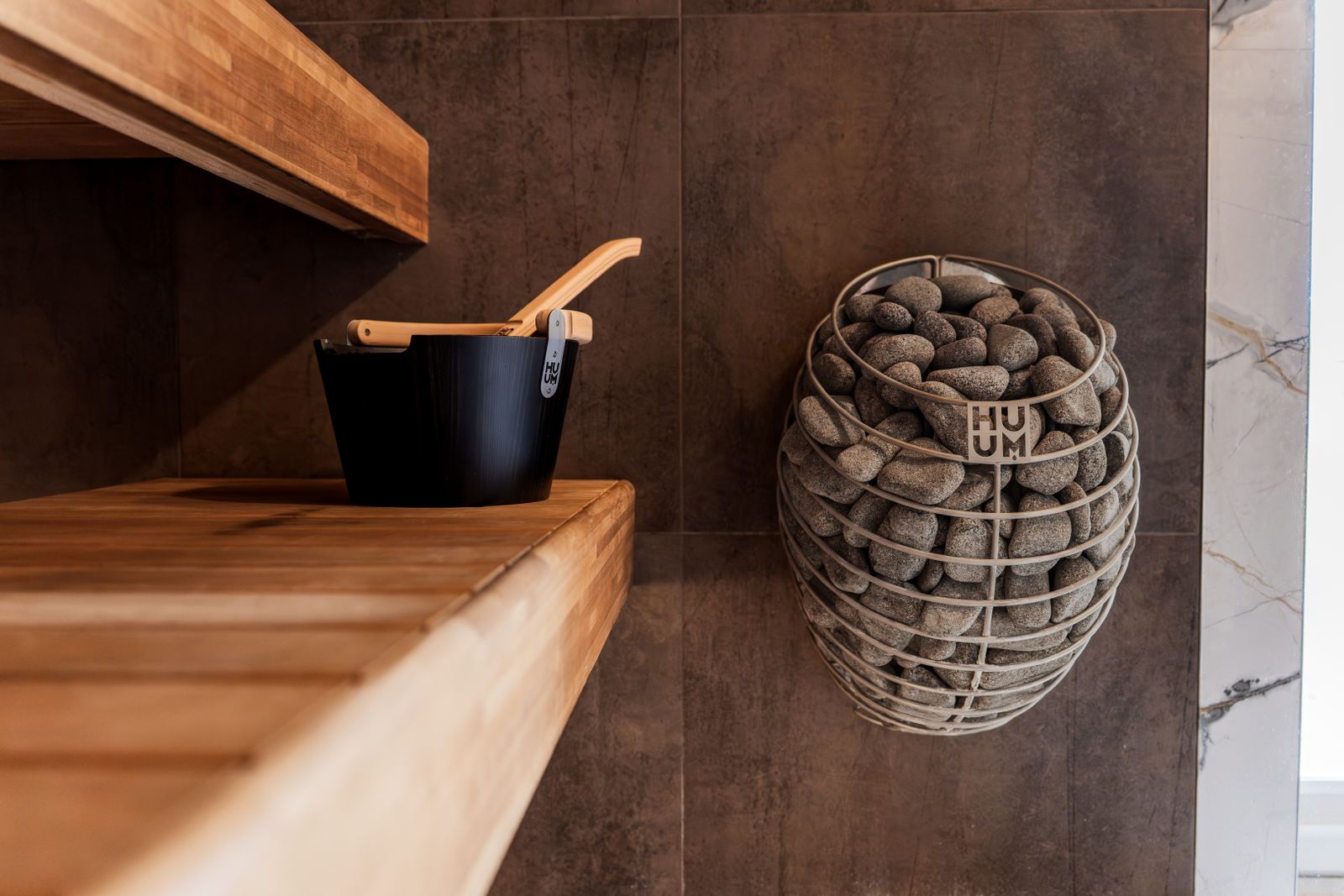
This article is a guide to the sauna session itself. If you’re still choosing a sauna — Finnish vs. infrared, heater output, electrical connection — read our guide on how to choose a home sauna first. And if you’re curious what studies say about the sauna’s effect on the heart and blood vessels, we have a dedicated comparison of hot tub vs. sauna from a health perspective.
How to prepare for the sauna?
A good sauna session starts an hour before you step in. Three principles determine how well you’ll handle the heat: hydration, an empty (but not hungry) stomach and clean, dry skin.
Hydration. Over the course of one sauna evening you typically lose 0.5–1 litre of fluids through sweat. So drink 300–500 ml of water before your session and top up in small amounts between rounds. Water or unsweetened tea are ideal; alcohol has no place in the sauna at all — it dilates blood vessels, strains the circulation and dulls your perception of overheating.
Food. Have your last larger meal 1.5–2 hours before the sauna. With a full stomach the body is busy digesting and copes with heat worse, while being completely hungry increases the risk of weakness and dizziness. A light snack an hour beforehand is ideal.
Shower and drying off. Before entering, shower with warm water and soap — this is about hygiene as well as removing cosmetics and skin oils that inhibit sweating. A crucial step that often gets forgotten: dry yourself thoroughly. Dry skin starts sweating noticeably sooner than wet skin, because water on the skin acts as an insulating layer.
When to sauna — evening or morning? The evening suits most people: 1.5–2 hours after the sauna your body temperature drops, and this drop induces drowsiness, so the sauna works as a natural preparation for sleep. A morning sauna makes more sense as a shorter, milder version — one or two rounds to wake up, not a full three-phase ritual before heading to work.
The classic Finnish ritual: 3 rounds step by step
The basic unit of sauna bathing is the round: heating up → cooling down → rest. A complete ritual consists of two to three rounds and takes 1.5–2 hours. It’s not a race — treat the durations as ranges, not as a standard you have to meet.
| Phase | Duration | What to do |
|---|---|---|
| Preparation | 10–15 min | Drink 300–500 ml of water, warm shower with soap, dry off thoroughly |
| Round 1 — heating up | 8–12 min | Lower or middle bench, calm breathing, sit upright for the last 1–2 minutes |
| Cooling down | 2–5 min | Fresh air first, then a shower from the feet towards the heart, or a plunge tub |
| Rest | 10–20 min | Wrap up, lie or sit quietly, replenish fluids |
| Round 2 — heating up | 10–15 min | Higher bench, optionally pour water over the stones (aufguss) |
| Cooling down + rest | 15–25 min | Same as after the first round, feel free to rest longer |
| Round 3 (optional) | 8–12 min | Shorter, by feel — if you don’t feel refreshed, skip it |
| Final rest | 20–30 min | Lukewarm shower, fluids, calm — no physical exertion |
Position on the bench. Simple physics applies in the sauna: it’s 20–30 °C hotter at the ceiling than at the floor. Beginners and the first round belong on the lower or middle bench; save the top bench for the second round, once your body has adjusted. The ideal position is lying down — your whole body is in a single temperature layer. If you sit, pull your feet up onto the bench so you don’t have your head in 90 °C and your feet in 50 °C. One important rule: sit up for the last 1–2 minutes before leaving and let your circulation adjust to an upright position — standing up abruptly from lying down is the most common cause of dizziness in the sauna.
Breathing. Breathe calmly through your nose, freely and without haste. The hot air may be irritating at first — tilting your head down slightly helps, as the air is cooler there. Don’t talk in the sauna more than necessary, and let both body and mind switch off; ten minutes of silence is part of the ritual, not wasted time.
When to leave. It’s not the clock that should send you out, but your body: intense sweating, a noticeably faster pulse and the feeling that “this is just right now”. Never stay beyond the point of discomfort just because “it hasn’t been 15 minutes yet”.

How to cool down properly?
Cooling down is a fully-fledged phase of the ritual, not a quick formality. It’s precisely the alternation of heat and cold that trains the blood vessels and the autonomic nervous system — and it’s precisely here that most mistakes are made.
Go from mild to intense. After leaving the sauna, first breathe in fresh air for 1–2 minutes — the lungs cool down first and the body gets time to settle its pulse. Only then comes water: shower with cold water from the feet and hands towards the heart, never straight onto the chest. This way you cool the body gradually and the circulatory system doesn’t get a sudden shock.
Plunge tub and cold plunge. For the more hardened, the peak of cooling down is immersion in a tub or a small plunge pool with water at 8–15 °C. The rule is: enter cold water only after showering, exhale as you go in, and stay for 30–90 seconds, not minutes. We cover the combination of heat and controlled cold, including what the research says about it, in detail in our article on contrast therapy.
Don’t forget your feet. After cold immersion, a short warm foot bath (2–3 minutes) helps. It rounds off the circulation, prevents cold feet during the rest phase, and lets the body sweat out more comfortably afterwards.
Why is rest just as important as sweating?
From a physiological point of view, the rest phase is the main event: only in the calm after cooling down does the pulse drop, the blood vessels return to normal and the relaxation set in that you have the sauna for in the first place. Anyone who rests between rounds for two minutes standing up with a phone in hand has deprived themselves of half the effect.
Rest for 10–20 minutes lying down or in a comfortable chair, wrapped in a towel or bathrobe so your body doesn’t get chilled. Replenish water, close your eyes, stay off the screen. The signal for the next round is simple: you feel refreshed and have an appetite for the heat again. If not, the ritual is over for today — two rounds with proper rest are better than three rushed ones.
Pouring water on the stones, essences and other accessories
Aufguss (pouring water over the stones). Pouring water over the hot stones sharply raises the humidity and perceived temperature — the wave of steam sweeping through the sauna is the climax of the heating phase. Pour in small doses (a ladle, not half a bucket), ideally in the second round, and always with consideration for others in the sauna. Use a sauna ladle with a long handle and a wooden bucket; the steam coming off the stones is over 100 °C.
Sauna essences. Only a few drops of an essence made expressly for saunas belong in the pouring water — eucalyptus, pine, citrus, mint. An essential warning: never pour sauna essences into a hot tub, or vice versa — they are completely different products with different formulations. What belongs in hot tub water is covered in our article on aromatherapy for hot tubs.
Towel and hygiene. The same rule applies in a private sauna as in a public one: no part of the body touches the wood directly. A large towel or sauna kilt under the entire body, including the feet, protects the benches from sweat — wood absorbs sweat and is hard to clean. Swimwear doesn’t belong in a Finnish sauna (synthetics get steamed up in the heat and can release substances); in a shared sauna, opt for a kilt.
Thermometer, hygrometer and hourglass. The basic equipment of every home sauna: a combined thermometer and hygrometer tells you what conditions you’re bathing in (the Finnish classic is 80–100 °C at 10–20 % humidity), and a 15-minute hourglass keeps time without a phone. A headrest for comfortable lying down completes the set.
How does bathing in an infrared sauna differ?
An infrared sauna doesn’t work with hot air but with emitters that heat the body directly. The cabin temperature is only 40–60 °C, and the ritual adapts to that: one session typically lasts 20–40 minutes and usually isn’t divided into three rounds — one longer sitting is enough.
Sweating sets in more gradually but tends to be plentiful, so hydration matters just as much as in a Finnish sauna. Choose milder cooling after an infrared sauna — a lukewarm to cool shower; an ice-cold plunge after 50 °C doesn’t make the same sense as after 90 °C. There is no aufguss in an infrared sauna — there’s no heater with stones. The advantages are quick readiness (the cabin heats up in 10–15 minutes) and tolerability for those who find Finnish heat too much.
The most common sauna mistakes
- Too long and too hot. Sauna bathing is not an endurance contest. Staying longer than 15–20 minutes brings no bonus, just dehydration and exhaustion. The quality of the ritual is measured by how you feel afterwards, not by how many minutes you “clocked”.
- Alcohol before and during the sauna. The combination of alcohol and heat is the riskiest mistake of all — it increases the strain on the circulation and the risk of collapse. Save the beer for after the final rest, and even then expect it to deepen dehydration rather than relieve it.
- Jumping into ice-cold water without acclimatisation. A heated body and a sudden plunge into water below 10 °C is a shock for an untrained system. Work your way up to the cold tub gradually: first weeks of cold showers, then short immersions.
- Sauna bathing while ill. Don’t go into the sauna with a fever, an oncoming flu or an acute inflammation — you won’t “sweat out” the illness, you’ll only burden a body that’s fighting an infection. The sauna works as prevention, not as a treatment for an acute condition.
- Wet skin and wet hair. A body that hasn’t been dried off sweats later and less well. Wet hair, moreover, forms a hot compress around the head in the heat — a sauna hat or a dry towel on the head helps.
- Skipping the rest. Three rounds without breaks aren’t a more intense sauna, they’re a route to a headache. Rest is part of the dose, not an optional extra.
When not to go into the sauna: contraindications
Properly conducted sauna bathing benefits a healthy person, but there are conditions that call for caution. Consult your doctor if you have untreated high blood pressure, serious heart disease, have recently had a heart attack or stroke, suffer from epilepsy or are pregnant — pregnant women accustomed to the sauna can usually continue more gently, but the decision belongs to a doctor. An acute febrile illness or inflammation is an absolute stop sign. For children, shorter times apply (3–5 minutes), lower benches and always adult supervision. None of this is cause for panic — just a reason to discuss sauna bathing with a doctor before you buy a cabin for your home.
Sauna and hot tub in one evening: how to combine them?
Home wellness often combines a sauna with a hot tub, and it works brilliantly — provided you keep the right order and stay hydrated. The proven approach: first the complete sauna ritual (two to three rounds including cooling down and rest), and only at the end 15–20 minutes in the hot tub at 36–38 °C as the finishing touch. The reverse order is worse: you enter the sauna from the hot tub with a pre-heated body and the ritual gets cut short.
Always shower between the sauna and the hot tub — sweat doesn’t belong in hot tub water and needlessly burdens the chemistry and filtration. And since these are two “sweating” activities back to back, double your fluid intake: a litre and a half over the evening is perfectly fine. End the evening combination with a lukewarm shower and half an hour of calm before bed.
Frequently asked questions (FAQ)
How long and how often should you sauna?
One round of 8–15 minutes, two to three rounds in total with cooling down and 10–20 minutes of rest between them. For a regular effect, bathing 1–3 times a week is enough; a daily sauna isn’t necessary and isn’t advisable for beginners.
What is the right temperature in a Finnish sauna?
The classic is 80–100 °C at 10–20 % humidity. Beginners are fine with 70–80 °C on a lower bench. An infrared sauna works with 40–60 °C and one longer session of 20–40 minutes. A higher temperature doesn’t mean a better sauna — the overall ritual is what counts.
Can I go into the sauna with a cold?
Not with an acute illness, fever or inflammation — the heat puts additional strain on a body fighting an infection. The sauna works preventively for a healthy person; skip it at the first symptoms of illness and return once you’ve fully recovered.
What should I take with me to the sauna?
Two large towels (one to sit on, one for drying off), a bathrobe for resting, sauna slippers (not inside the cabin), water to keep topping up and, if you like, a sauna hat. In a Finnish sauna you bathe without swimwear; in a shared cabin a sauna kilt does the job.
When is it better to sauna — morning or evening?
For most people the evening, 1.5–2 hours before bedtime: the drop in body temperature after the sauna makes falling asleep easier. In the morning, opt for a shorter, milder version — one or two shorter rounds, not the full ritual.
Proper sauna bathing is a craft you’ll learn in a few evenings — and with it, your home sauna transforms from a hot cabinet into the best hour and a half of your week. Everything you need for the ritual — from sauna heaters and a bucket with ladle to thermometers, essences and a plunge tub — can be found in the wellness category at poolspashop.eu, and further home wellness guides in our Advisor.
