
Most home hot tubs connect either to a standard 230 V socket (plug & play) or via a hardwired three-phase 400 V supply. The 230 V option is simpler to install, but it limits performance — the hot tub often cannot heat and run the massage jets at full power at the same time. A 400 V connection delivers full comfort, but it requires a dedicated circuit, a residual current device (RCD) and the work of a qualified electrician. And that is the key message of this entire article: electricity around water is never a DIY job — it belongs to an electrician and a qualified inspector.

Why does the type of connection matter so much?
A hot tub is one of the most power-hungry appliances in a household — it combines a heating element, one to three pumps, an ozonator, lighting and control electronics. The type of connection determines how much of that can run at once. It is therefore not just a technical detail, but a decision that directly affects your everyday comfort.
At the same time, it is a combination of electricity and water — an environment where an installation error can have fatal consequences. That is why stricter rules apply to hot tubs than to ordinary appliances: a dedicated circuit, an RCD and an initial electrical inspection before first use. All of this is designed and carried out by a qualified electrician — your job is to know what to ask for.
Plug & play 230 V: what it can do and where it hits its limits
Plug & play hot tubs come with a cable and a plug — once filled, you “just plug them in”. Even here, though, an important caveat applies: the socket must be on a separately protected circuit with an RCD, and its suitability should be assessed by an electrician, especially in older installations. A standard socket protected by a 16 A breaker can handle a continuous load of roughly up to 3.6 kW, but in practice a safety margin is always factored in.
The limitation is obvious: when all the power has to fit within a single phase, the control system usually alternates between heating and the massage pumps. Turn the jets on full — and the heater temporarily switches off. In practice this means slower heating and, in winter, noticeably more planning. How long heating really takes and what speeds it up is covered in our article How to heat a hot tub and pool faster.
Plug & play makes sense for smaller and inflatable hot tubs, for rental properties where you do not want to modify the wiring, or as a temporary solution until an electrician prepares a permanent supply. Many acrylic models support both options — you start on 230 V and switch to 400 V later.
Hardwired 400 V: full power without compromise
A hardwired three-phase connection spreads the load across three phases, so the hot tub can heat and drive all the pumps at the same time. Heating is faster, winter operation more reliable, and the control system never has to shed loads. For larger 5–7 person hot tubs and virtually all swim spas, a hardwired connection is a necessity, not a choice.
A hardwired connection means a cable run from the house distribution board through a dedicated breaker and an RCD directly to the hot tub’s terminal block — no socket, no plug. The exact wiring diagram, conductor cross-section and protection ratings are specified by the manufacturer in the installation manual; your electrician designs and carries out the installation accordingly. So have the manual at hand from the very first meeting.
How much power does a hot tub actually draw?
As a rough guide: the heating element is typically 0.9–3 kW (usually 1.5–2 kW on plug & play models, 3 kW on three-phase ones), each massage pump 1–2.2 kW and the circulation pump 0.2–0.4 kW. The total peak power draw of a larger hot tub can easily reach 6–9 kW — and that is the figure your electrician must work with when sizing the supply and assessing the headroom on your main breaker.
Careful: peak power draw is not the same as energy consumption. A hot tub does not run flat out around the clock — real monthly consumption and costs are covered in our article Hot tub running costs. For the electrician, however, the peak is what matters: the installation must safely handle the state where the heater and all pumps run simultaneously.
Comparison: 230 V vs 400 V
| Criterion | Plug & play 230 V | Hardwired 400 V |
|---|---|---|
| Installation | Plugs into a suitable socket; circuit suitability assessed by an electrician | Carried out entirely by an electrician (cable, protection, wiring) |
| Heating + massage simultaneously | Usually not — the system alternates heater and pumps | Yes, without restriction |
| Heating speed | Slower (heater typically 1.5–2 kW) | Faster (heater up to 3 kW, running continuously) |
| Suitable for | Inflatable and smaller hot tubs, temporary placement | Larger hot tubs, year-round use, swim spas |
| 30 mA RCD | Required (in the socket circuit or in the supply) | Required, on a dedicated circuit |
| Dedicated circuit | Strongly recommended | Always |
| Winter operation | Riskier — slow reheating in freezing weather | Reliable |
| Preparation costs | Minimal to low | Higher (trench, cable, electrician’s work, inspection) |
The RCD: why it is a lifesaver around water
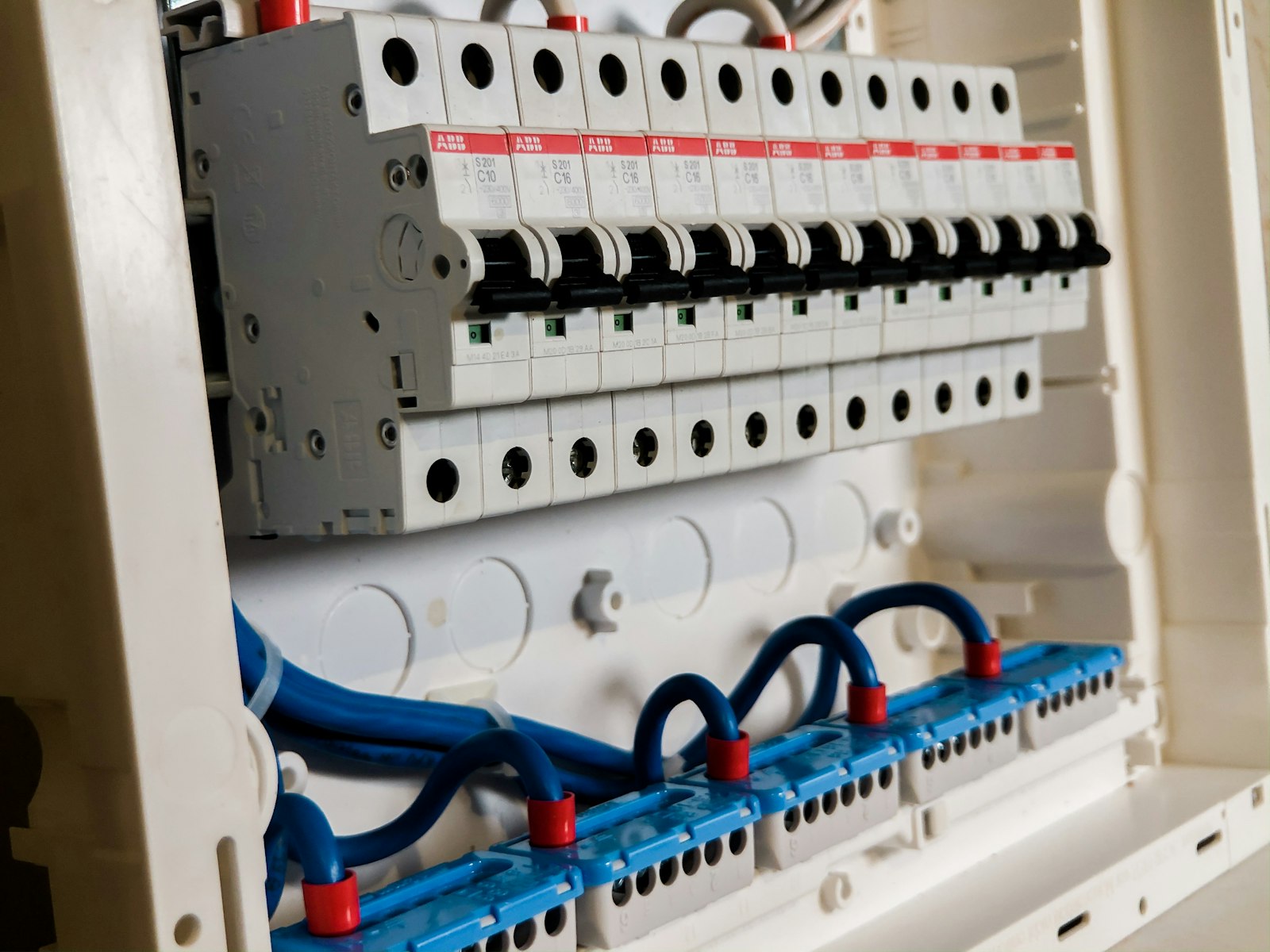
A residual current device (RCD) with a 30 mA trip rating is an absolute must for any hot tub. It compares the current flowing into the appliance and back — the moment part of the current “leaks” elsewhere, for example through a human body, it disconnects the circuit in a fraction of a second. In the combination of water and electricity, this is the device that decides between life and death in the event of a fault.
A circuit breaker alone does not provide this protection: it protects the wiring against overload and short circuit, but it does not react to the small leakage currents dangerous to people. That is why you need both — a breaker and an RCD, or a combined device. Which RCD type is right for a specific hot tub (some variable-speed pump drives require specific types) is determined by the electrician based on the manufacturer’s documentation.
Dedicated circuit, breaker and cable: what will the electrician deal with?
A hot tub belongs on its own circuit — it does not share a breaker with the garden socket, the lawnmower or the lighting. The reason is both practical and safety-related: a shared circuit leads to nuisance tripping and makes proper sizing impossible. The breaker rating (commonly 16–32 A depending on the model) and its characteristic are specified by the hot tub manufacturer; the electrician matches them to the cable cross-section and the length of the run.
The outdoor section of the supply is run in a cable rated for direct burial, in a protective conduit, at a depth set by the applicable standard for the surface above — one depth under a walkway, another under a flower bed. The exact depth, sand bedding and warning tape are the electrician’s responsibility; you just need to plan for the fact that the installation involves digging a trench. On longer runs, the electrician will also assess voltage drop and increase the conductor cross-section if needed.
The good news: by agreement with your electrician, you can dig the trench and lay the conduit yourself to their specification. The wiring itself, the measurements and the connection to the distribution board, however, belong exclusively in their hands.
Zones around water: how close may a socket or switch be?
Electrical standards for baths, showers and hot tubs work with the concept of zones — the space immediately at and above the water has the strictest restrictions, and the requirements relax with distance. In practice this means that sockets, switches and light fittings without an adequate ingress protection rating must not be in the immediate vicinity of the hot tub, and switching devices are placed further away, out of reach of a person in the water.
The specific distances and IP ratings for your situation — terrace, pergola, indoors, recessed into decking — are assessed by the electrician and confirmed by the inspection. If you are placing the hot tub indoors or under a roof, ventilation and humidity become additional topics; more in our articles Indoor hot tub and Pergola over a hot tub.
Electrical inspection: formality or insurance?
Before the first fill and start-up, an initial inspection of the electrical installation should take place — a qualified inspector measures insulation resistance, verifies the RCD’s operation, checks the continuity of the protective bonding and confirms that the installation matches the documentation. The result is an inspection report you should keep safe: you will need it for warranty claims, insurance events and when selling the property.
Inspection is not a one-off matter. For outdoor installations, periodic inspections every few years are recommended (the exact interval, per local regulations, is set by the inspector based on the environment), and you can regularly verify the RCD yourself using its test button — RCD manufacturers recommend roughly once a month. That is the one “electrician’s task” that rightfully belongs to you.

Common real-life situations
An old cottage with a weak main breaker
A typical scenario: a cottage with a 1×25 A or 3×16 A main breaker, old aluminium wiring and the dream of a hot tub for guests. Before you order a hot tub, have an electrician establish three things: the rating and number of phases of the main breaker (also stated in your electricity supply contract), the condition of the distribution board, and the power headroom during normal use of the cottage. The solution is often an upgrade of the main breaker with your electricity provider — allow for an administrative lead time and a higher standing charge. The specifics of hot tubs in rental properties are covered in our article Hot tub for a vacation rental.
An extension cord? Never
An extension cord has no place with a hot tub — not a “quality reel type”, not “just for the weekend”. Extension cords are not rated for a sustained high load, outdoor connections get damp, a coiled cable on a reel overheats, and the whole arrangement bypasses the protection the manufacturer designed for. The result is a melted plug at best, a fire at worst. If the socket is not where you need it, that is a job for an electrician, not an extension cord.
Swim spa: demands a league higher
A swim spa combines a large volume of water, a powerful counter-current pump (over 3 kW) and often two heating elements — peak power draw commonly ranges between 9 and 15 kW. A hardwired three-phase connection is a matter of course here, and the electrical preparation must be coordinated with the placement project from the start. Everything the installation involves is described in our article Swim spa installation.
Checklist: what to ask your electrician
- Can our main breaker handle a hot tub with the peak power draw stated in the manual, including headroom for the household?
- Do you recommend a 230 V or 400 V connection — and why, considering the model and year-round use?
- What breaker, RCD type and cable cross-section does the manufacturer specify, and how will you match them to the length of the run?
- Where will the cable run, how deep, and who handles the trench and conduit?
- Where will the switch/isolator be located, and does its position comply with the zones around water?
- Will you arrange the initial inspection, or should I contact a qualified inspector separately?
- Does the installation allow for future expansion (swim spa, heat pump, sauna)?
- Will I receive as-built documentation and the inspection report?
When to sort out the electrics? Ideally before you buy
The most expensive mistakes come from doing things in the wrong order: first the hot tub on the terrace, then discovering the supply cannot reasonably be brought to it. The correct sequence is the reverse — choose a model, take its installation manual and invite an electrician over before you place the order. Together with the load-bearing capacity of the terrace (see Hot tub on a terrace and structural load), the electrical connection is one of the two things that determine where you can place a hot tub at all.
FAQ: common questions about connecting a hot tub
Can I plug a plug & play hot tub into a regular socket on the terrace?
Only if the socket is on a separately protected circuit with a 30 mA RCD and its condition has been assessed by an electrician. Older installations and shared circuits risk nuisance tripping and overheating. And never, under any circumstances, use an extension cord.
How much does preparing the electrical connection for a hot tub cost?
As a rough guide, from a couple of hundred euros for assessing and upgrading a socket circuit, up to €600–1,600 for a complete three-phase supply including trench, cable, protection and inspection — depending on the length of the run and the state of the distribution board. An electrician will give you an exact price after a site visit.
Do I need an inspection when the hot tub is “just plugged into a socket”?
An initial inspection is required for every new part of an installation — including a new circuit or socket installed for the hot tub. For a purely plug-in connection to an existing compliant circuit, at least have an electrician verify the RCD and the condition of the socket. The inspection report is also crucial for your insurer.
Can a hot tub be converted from 230 V to 400 V later?
On many acrylic models, yes — the manufacturer’s manual includes both wiring diagrams and an electrician makes the change at the control box terminal block. If you are planning to switch later, have the cable and protection sized for the three-phase option from the start.
What should I do when the hot tub keeps “tripping” the RCD?
Never ignore repeated RCD tripping and never bypass the RCD — it signals a leakage current, typically from the heating element or a damp terminal block. Disconnect the hot tub and call a service technician or electrician. The link to control system error messages is described in our article Balboa error codes.
The electrical connection is not an obstacle but the foundation on which safe and comfortable operation rests for years to come. When you start choosing a specific model — and with it the requirements for the supply — our guide How to choose a hot tub will help, along with the current range in the hot tubs category at poolspashop.eu, where you will also find power supply and consumption data for each model.
