
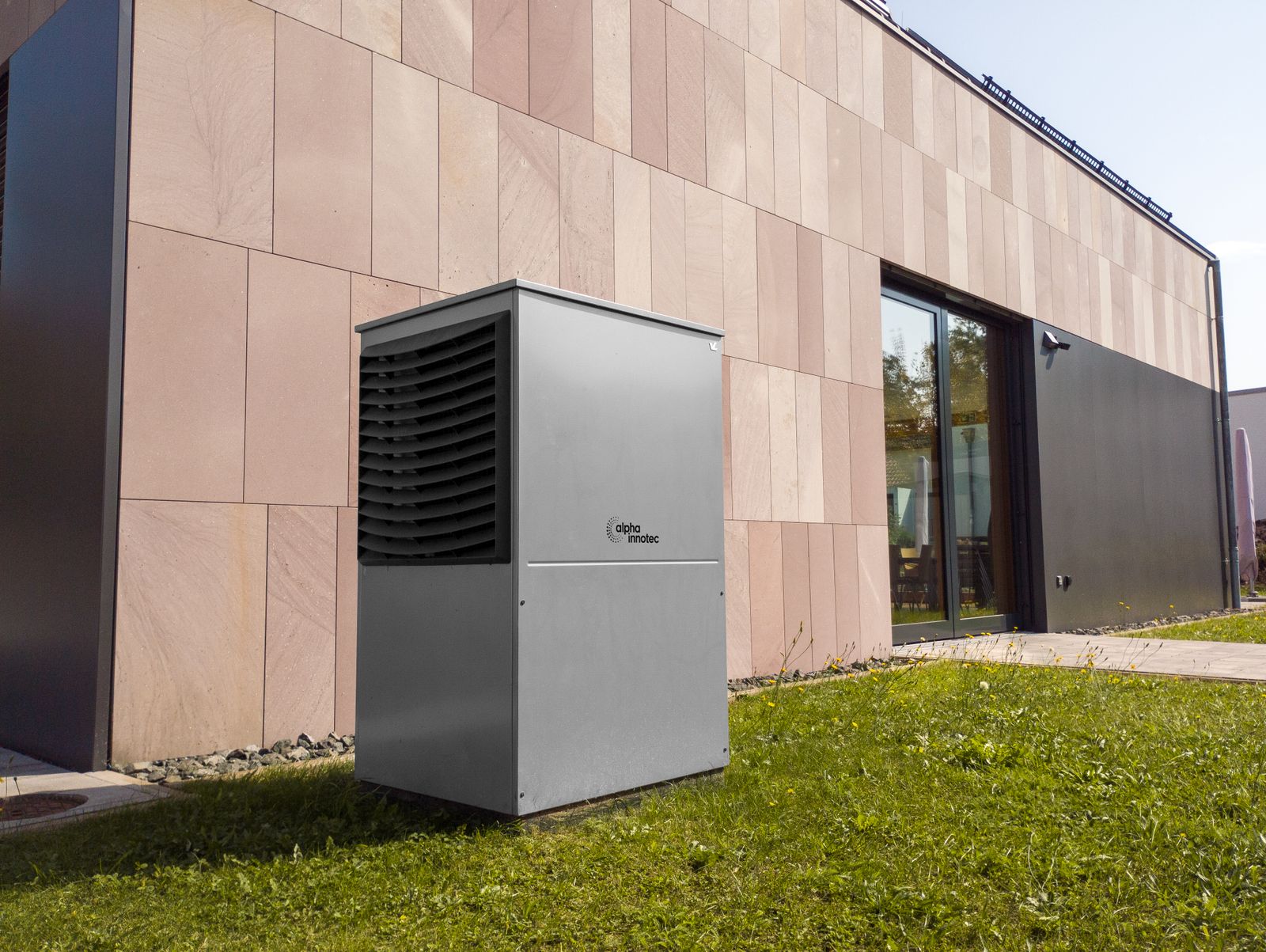
The European heat pump market is moving towards propane (R290). The reason is Regulation (EU) 2024/573 on fluorinated greenhouse gases — a European Union law that applies across the EU, so readers outside the EU will be governed by different rules — which progressively bans placing on the market units using refrigerants with a high global warming potential. For self-contained (monobloc) heat pumps rated up to and including 12 kW, Annex IV sets a GWP limit of 150 from 1 January 2027. For a buyer this means one thing: if you are buying a pool heat pump now, take as much interest in the refrigerant as you do in output and noise.
What a refrigerant actually is and why it suddenly matters
A heat pump does not warm the water with a heating element — it moves heat from the outdoor air into the pool water. The working substance that carries the heat is the refrigerant circulating in a closed circuit between the evaporator, the compressor and the condenser. Its properties directly determine how efficient the pump is and at what outdoor temperature it still delivers sensible output.
The problem is climatic. Most refrigerants used so far are fluorinated greenhouse gases (F-gases) with a high GWP — global warming potential. GWP is a multiple relative to carbon dioxide: a refrigerant with a GWP of 2088 has, if it leaks into the atmosphere, roughly 2088 times the greenhouse effect of the same mass of CO₂. And circuits are not always perfectly tight — which is exactly why leaks are dealt with in legislation.
The commonly quoted GWP values are 2088 for R410A, 675 for R32 and 3 for R290 (propane). The difference between 2088 and 3 is so large that it is a change of category, not a cosmetic improvement.
What exactly EU Regulation 2024/573 changes, and from when
Regulation (EU) 2024/573 on fluorinated greenhouse gases entered into force on 11 March 2024 and replaced the earlier Regulation 517/2014. It combines two things: a gradual reduction of the quantity of F-gases that may be placed on the EU market (the so-called phase-down), and specific bans on placing selected products on the market set out in Annex IV.
The following dates matter for heat pumps (according to Annex IV of the Regulation; for a specific purchase we recommend checking the current wording, as implementing rules and exemptions are still being added):
| From | What it covers | Limit |
|---|---|---|
| 1 Jan 2027 | Self-contained (monobloc) air conditioners and heat pumps with a rated capacity up to and including 12 kW | Ban on F-gases with a GWP of 150 or more (exemption where required by safety requirements) |
| 1 Jan 2030 | Other self-contained (monobloc) heat pumps and air conditioners — that is, above 12 kW | Ban on F-gases with a GWP of 150 or more |
| 1 Jan 2032 | Monobloc units up to and including 12 kW | Ban on any F-gases |
| 1 Jan 2029 / 2033 | Split systems above 12 kW | Ban on F-gases with a GWP of 750 or more (2029), and 150 or more (2033) |
| 1 Jan 2035 | Split systems up to and including 12 kW | Ban on any F-gases |
Pool heat pumps are technically monoblocs — the entire refrigerant circuit sits in a single outdoor unit and nothing but water and a cable runs into the house. They therefore fall into the “self-contained” category. Models up to 12 kW (typically pools of roughly up to 30–40 m³) will hit the GWP 150 limit as soon as 2027; more powerful units above 12 kW will do so from 2030 by the same logic.
The second thing the Regulation addresses is servicing. According to the available interpretations, from 1 January 2026 it is prohibited to use F-gases with a GWP of 2500 or more for the maintenance or servicing of air conditioning equipment and heat pumps. The practical impact on pool equipment is limited for now — R410A with a GWP of 2088 sits below that threshold, and R32 with a GWP of 675 all the more so. Do bear in mind, though, that the availability and price of F-gases are also driven by the overall quota phase-down, which advances independently of the individual bans.
What this means for someone buying a pool heat pump
The regulation does not ban operating what you already have. It bans placing on the market new units. The difference is fundamental, and four practical consequences follow from it.
The product range is shifting. Manufacturers do not switch production lines the day before a deadline — the move to R290 has been under way in pool heat pumps for several seasons and the choice of propane models keeps widening. Step by step, R32 models will become run-out stock and R290 the standard.
Prices behave illogically during the transition. Run-out stock of older refrigerants tends to be cheap, new ranges more expensive. That does not mean a cheaper run-out unit is always a bad buy — it means the price difference has to be weighed against the length of time you plan to run the pump.
Servicing older units is not ending, but it is getting more expensive. Topping up the refrigerant in an existing pump will remain possible as long as that refrigerant is not banned for servicing. As quotas fall, however, the price per kilogram rises, and with older circuits the switch to reclaimed refrigerants comes sooner or later. With a unit that repeatedly loses refrigerant, repairing the leak makes more sense than topping up regularly — and to tell whether the pump is failing to heat because of the refrigerant rather than something else, the procedure in the article on a pool that is not heating up — diagnosis is a good place to start.
Residual value. Within a few years, a second-hand unit with a refrigerant no longer being placed on the market will be harder to sell. That is not a reason to rush a purchase, but it is a line in the budget for pumps with a service life of 12–15 years.
R290 in practice: what propane can do and what it asks in return
Propane is not a stopgap substitute but a thermodynamically very good refrigerant. In practice that means two things a pool installation will appreciate.
First, higher efficiency across the usual temperature range, meaning lower consumption for the same amount of heating. Second, better behaviour at low outdoor temperatures — propane makes it possible to reach higher output temperatures without a drop in capacity, which is useful for the spring start-up and an extended season in autumn. Always read the specific figures in the technical data sheet for the model at the temperatures you care about, though, rather than from general marketing about the refrigerant.
The price for this is flammability. Propane is classified in safety class A3, that is, highly flammable with low toxicity. This does not make it dangerous equipment — modern pool units work with a small charge, have a hermetically sealed circuit and safety features. It does mean different rules for siting and installation.
How installing an R290 unit differs
- Clearance distances. In the manual, the manufacturer defines a safety zone around the unit in which there must be no ignition source and no opening through which propane (heavier than air) could sink into an enclosed space. Typically that means windows, doors, ventilation grilles, basement light wells, sunken areas, sumps and drains.
- Never in a hollow. Placing the unit in an unventilated shaft or pit, or right next to a basement window, is exactly what you avoid with an A3 refrigerant. If you are planning underground equipment housing, think the layout through using the article on designing a pool equipment pit — a heat pump typically does not belong there, it belongs outside.
- Free space for airflow. This applies to all heat pumps, and to R290 all the more: the unit must stand in an open, well-ventilated spot, not in a corner surrounded by walls.
- Who may install it. A qualified technician can handle the connection to the pool circuit and the electrical installation; work on the refrigerant circuit (charging, recovery, repairs) is a restricted activity requiring certification. A monobloc has the advantage that the circuit is finished at the factory and is not opened during a normal installation — which is precisely why propane took hold faster in monoblocs than in split systems.
Incidentally, deal with siting and noise together — the quietest spot is often not the same as the safest and the best one for airflow. The practical compromises are covered in the article on noise from pool equipment.
Refrigerant → GWP → impact on your purchase
| Refrigerant | GWP (commonly quoted) | Safety class | What it means when buying |
|---|---|---|---|
| R410A | 2088 | A1 (non-flammable) | Already on the way out in new pool units. Older pumps can be operated and serviced, but the refrigerant is the most expensive and residual value the lowest. |
| R32 | 675 | A2L (mildly flammable) | Still common today. For monoblocs up to 12 kW, however, it does not meet the GWP 150 limit that applies from 1 January 2027 — so it is a solution with a limited horizon. |
| R290 (propane) | 3 | A3 (flammable) | Meets the GWP 150 limit now and in the future. Higher efficiency and better output in cold weather, in exchange for stricter siting and clearance rules. |
Buying advice for your situation
I am buying a heat pump this year
Go for R290 if you have a sensible place for it — that is, an open, ventilated spot away from hollows and at a distance from windows, doors and light wells as set out in the manufacturer’s manual. You will get higher efficiency, better spring and autumn operation and a unit that will still be “current” in five years. If you do not have a suitable location, a quality R32 monobloc from an established manufacturer is not a mistake — just expect lower residual value. How to choose on output, COP and payback is covered in detail in the article on a heat pump for a pool and hot tub.
I have an older heat pump with R410A or R32
Do not replace it because of the regulation. The Regulation concerns the sale of new units, not the operation of existing ones. It makes sense to wait for the natural end of its service life or for the first major repair (compressor, repeated circuit leak) and only then compare the cost of the repair with the cost of a new unit, including the saving on electricity.
I am planning to buy in two years
By then the choice of R290 models will be wider and prices will have levelled out. Invest the time in preparation: the base under the unit, an electricity supply of adequate cross-section, the pipe run to the filtration and a well-thought-out location taking noise and safety clearances into account. That part will decide your satisfaction more than the type of refrigerant itself.
The link with solar PV and the price of electricity
A heat pump is the biggest consumer in a pool installation and at the same time a very flexible one — pool water is a heat store that does not mind whether it is warmed in the morning or the afternoon. That makes it an ideal partner for solar PV: surplus power that would otherwise go to the grid at a low feed-in price can be “stored” in the water. The higher efficiency of R290 amplifies this effect further, because you get more heat out of every kilowatt-hour of surplus. Connecting the pool to a home power plant is covered in the article on solar PV for a pool and hot tub.
A spot tariff works in much the same way: the pump runs during cheap hours and stands idle during expensive ones. The combination of smart control, spot prices and an efficient pump can shift heating costs considerably more than changing the refrigerant alone — the practical settings are described in the article on a hot tub and pool on spot-priced electricity.
Frequently asked questions
Do I have to replace a heat pump with R410A?
No. Regulation (EU) 2024/573 restricts the placing of new equipment on the market, not the operation of units already installed. You can carry on operating and servicing them; gradually, though, the price of the refrigerant will rise and the residual value of the unit will fall.
Is propane in a heat pump dangerous?
Propane is flammable (class A3) and therefore has stricter installation rules. Pool monoblocs have a hermetically sealed circuit with a small charge, and the unit stands outdoors. The risk is managed through siting — by observing the clearances from windows, doors, light wells and any hollows into which escaping gas could sink.
How much refrigerant does a pool heat pump actually contain?
You will find the specific charge on the rating plate and in the technical data sheet for the model; in propane units it is deliberately low. Always work with the figure for the specific product, not with a general estimate — it is precisely the charge that determines the clearances and installation conditions the manual prescribes.
Is it worth waiting until 2027 to buy?
Not because of the regulation itself. R290 models are on the market already and by waiting you lose a heating season. Postponing only makes sense if you are planning other building work around the pool anyway and want to sort out the siting of the equipment in one go.
Can I identify the refrigerant without taking the unit apart?
Yes. Both the type and the mass of the charge are stated on the rating plate of the outdoor unit and in the technical documentation. Units with a flammable refrigerant usually also carry a flame warning symbol.
Summary
The move to R290 is not a passing fashion but a consequence of European regulation in force — and, as it happens, also a technically better solution for seasonal pool heating. If you are buying this year, ask about the refrigerant and the required clearances before you choose a spot for the unit. If you have an older pump, feel free to run it to the end of its life.
You will find the full range of heating, filtration and pumps in the pool technology category, and further comparisons and guides in the Guide section.
