
A heat pump is today the cheapest way to keep a pool at a pleasant 26–28°C throughout the season. From 1 kWh of electricity it generates 4–6 kWh of heat, cutting heating costs to roughly a fifth compared with a classic electric heating coil. For a pool of around 30 m³, that adds up to savings of a few thousand euros over just a couple of seasons — which is exactly why an investment of €1,200–2,000 typically pays for itself within two to three years.

How a Heat Pump Heats Water, and What COP Means
A heat pump doesn’t generate heat directly from electricity. It works like a refrigerator in reverse: it draws heat from the surrounding air, uses a compressor and refrigerant to “compress” it to a higher temperature, and transfers it to the pool water flowing through a titanium heat exchanger. It only uses electricity to power the compressor and fan — the heat itself is taken from the air for free.
Efficiency is described by the COP (Coefficient of Performance, or heating factor). A COP of 5 simply means: from 1 kWh of electricity you get 5 kWh of heat in the water. An electric heating coil has a COP of 1 by design — you pay the full price of electricity for every kilowatt-hour of heat.
An important detail: COP is not a constant. Manufacturers state it under ideal conditions (typically 26–27°C air, 26°C water). At an air temperature of 15°C, the real-world COP tends to be lower, and it keeps dropping as the temperature falls further. When comparing models, always compare COP measured under the same conditions, ideally A15/W26.
On/off or Inverter Heat Pump?
A classic on/off heat pump works like a thermostat: it runs at full power until the water reaches the set temperature, then switches off. Frequent starts put strain on the compressor, water temperature fluctuates, and average efficiency is lower, typically COP 4–5.
An inverter heat pump smoothly regulates both compressor and fan speed. After the initial heat-up, it switches to an economy mode at 20–50% output, where it’s most efficient — this is where the COP 6+ figures quoted by manufacturers come from. Sellers of inverter models commonly claim 30–50% electricity savings over on/off technology; add to that quieter operation and a longer compressor lifespan thanks to fewer starts.
The price gap between on/off and inverter models has shrunk to just a few hundred euros in recent years. Unless you’re buying a heat pump purely for occasional top-up heating, an inverter is now the clear choice.
Comparing Pool Heating Methods: What Does 1 kWh of Heat Cost
The table assumes an electricity price of €0.24/kWh and natural gas at €0.09/kWh including distribution — indicative prices for Czech households in 2026. If your prices differ, the results are easy to recalculate: cost of heat = energy price ÷ efficiency (COP).
| Heating method | Efficiency / COP | Cost per 1 kWh of heat | Purchase price | Note |
|---|---|---|---|---|
| Electric heating coil | COP 1 | €0.24 | €120–400 | Cheap to buy, most expensive to run. Suitable only as backup or for small volumes. |
| On/off heat pump | COP 4–5 | €0.05–0.06 | €800–1,400 | Good efficiency, noisier and less economical than an inverter. |
| Inverter heat pump | seasonal COP 5–6 | €0.04–0.05 | €1,200–2,000 | Lowest running costs with full temperature control. |
| Solar heating (absorbers) | only circulation pump running | up to €0.01 | €600–1,600 | Practically free, but depends on sunshine — doesn’t guarantee temperature. |
| Gas boiler heat exchanger | efficiency approx. 90% | €0.10 | €320–800 + installation | Fast heating; worthwhile mainly where a boiler is already in place. |
The table’s conclusion is clear: if you want water temperature under control (which solar can’t offer), a heat pump is the cheapest option to run. A heating coil costs four to six times more for the same amount of heat.
What Heat Pump Output Do You Need for Your Pool Volume?
The basic rule of thumb for seasonal operation (May–September) of a covered outdoor pool is roughly 1 kW of heating output per 3–4 m³ of water. More specifically:
| Pool volume | Recommended output (covered pool, season) | Uncovered or extended season |
|---|---|---|
| up to 20 m³ | 5–7 kW | 7–9 kW |
| 20–30 m³ | 7–10 kW | 10–13 kW |
| 30–40 m³ | 10–13 kW | 13–17 kW |
| 40–60 m³ | 13–17 kW | 17–24 kW |
The rule is: better to slightly oversize than undersize. A stronger inverter heat pump heats the water faster, then runs in economy mode at partial output — quiet, and at its highest COP. A weak heat pump, on the other hand, keeps running at full power and won’t hold the temperature on cold days.
Don’t forget the practical installation conditions: the heat pump needs free air flow (at least 2–3 m of clear space in front of the fan), it connects into the filtration circuit after filtration and before chemical dosing, and it appreciates a drain for condensate, of which it can produce tens of litres a day.
Sample Calculation: a 30 m³ Pool, May–September Season
Let’s take a typical family pool of 30 m³ covered with a solar cover, target temperature 27°C, 150-day season. The physics is simple: heating 1 m³ of water by 1°C requires 1.16 kWh of heat.
- Spring heat-up: heating from 15 to 27°C = 30 × 12 × 1.16 ≈ 420 kWh of heat.
- Making up for losses: for a covered pool, count on an average of 20 kWh of heat per day (cooler May and September more, summer less) ≈ 3,000 kWh per season.
- Total: roughly 3,400 kWh of heat per season. For an uncovered pool, easily double that.
Now the costs, with electricity at €0.24/kWh:
- Electric heating coil (COP 1): 3,400 kWh × €0.24 = about €820 per season.
- Inverter heat pump (seasonal COP 5): 680 kWh of electricity × €0.24 = about €165 per season.
Annual savings compared with the heating coil: roughly €650. With an inverter heat pump costing around €1,600 to buy, that works out to a payback period of 2–3 seasons; for the rest of its service life, which typically exceeds 10 years, the heat pump is pure savings. Even compared with gas heating, you’ll save more than half on running costs.
There’s only one scenario where the numbers don’t add up: if you only heat the pool occasionally, say for one weekend a month. Then the low running costs don’t have time to offset the purchase price, and a cheaper heating coil may make more sense.
Heat Pump for a Hot Tub: When It Makes Sense
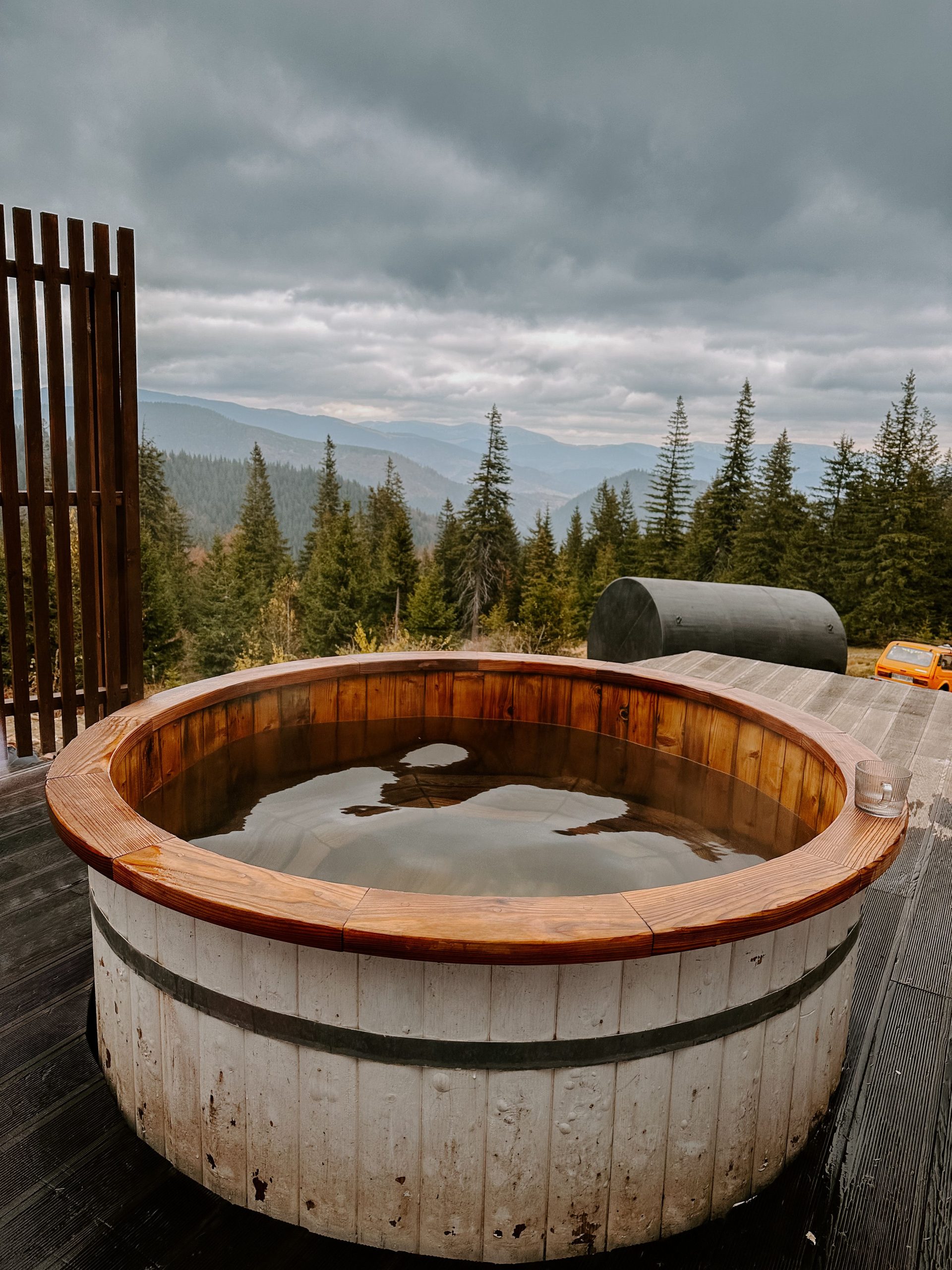
A hot tub is a different game from a pool: it holds just 1–1.5 m³ of water, but keeps it at 36–38°C continuously, often all year round. A built-in electric heater with 2–3 kW output works at COP 1 — and for a hot tub used outdoors year-round, heating consumption can amount to 2,000–3,500 kWh a year, or €480–840 at €0.24/kWh.
A heat pump can make sense here, but not always. It pays off mainly for intensive year-round use, large hot tubs, and especially swim spas, where the water volume reaches 5–10 m³ and the annual heating bill is many times higher. For a small, well-insulated hot tub used a few evenings a week, the savings are smaller and payback stretches to 4–6 years.
A key condition that even hot tub specialists agree on: a heat pump is no substitute for good insulation. If a hot tub is losing heat through a flimsy thermal cover or an uninsulated shell, the heat pump just ends up paying more to cover the losses. Insulation and a quality thermal cover come first — investing in heating comes second.
The connection is handled either by small heat pumps designed specifically for hot tubs (usually 3–6 kW, connected into the circuit between the filtration and the hot tub via a bypass), or, for swim spas, by a standard pool heat pump. Also think about placement: the unit needs airflow, a short pipe run to the equipment, and a reasonable distance because of noise — though modern inverters run in economy mode below 45 dB.
Covering the Pool: Without a Cover, You’re Heating the Great Outdoors
The biggest heat guzzler isn’t the pool wall or the pipework, but the water surface. Evaporation accounts for most of an outdoor pool’s heat losses — the water acts like a giant radiator, especially in wind and on cold nights. Every litre of evaporated water carries away roughly 0.63 kWh of heat.
A solar cover is therefore the most worthwhile companion to a heat pump: for a few hundred euros it cuts nighttime evaporation losses, and during the day it also passively warms the water. A pool enclosure goes even further — it protects against dirt, extends the season by weeks at both ends, and combined with a heat pump allows swimming from April to October.
The rule is simple: cover first, then heat. A heat pump sized for a covered pool can be a size smaller and cheaper, yet still maintain a higher temperature than a stronger unit on an uncovered surface.
Operation at Low Temperatures: What a Heat Pump Can Handle in Spring and Autumn

Standard seasonal heat pumps operate reliably from an outdoor temperature of roughly 8–10°C upward. As the air temperature drops, so does the COP — at 10°C, expect a figure closer to 3–4 rather than the catalogue numbers. Heating is still significantly cheaper than a heating coil, just slower and more expensive than in summer.
For operation in spring, autumn, or year-round installations (hot tubs, swim spas, covered pools), choose models with R32 refrigerant and automatic defrost, which work down to −7 to −15°C. Their evaporator ices up in the cold, and the heat pump periodically defrosts it by running in reverse — this is normal, not a fault.
At the end of the season, don’t forget winterising: for seasonal operation, disconnect the heat pump and completely drain the water from the heat exchanger. Leftover water would crack the titanium coil in freezing temperatures — the most common, and needlessly expensive, winter failure. If your equipment is giving you trouble after winter, check out our advice section first, for example the guide for when a pool pump hums but won’t start.
Frequently Asked Questions (FAQ)
How Long Does It Take a Heat Pump to Heat a Pool?
As a guide: a 10 kW heat pump raises the temperature of a 30 m³ pool by approximately 0.29°C per hour of continuous operation. So heating up from 15 to 27°C in spring takes roughly 40 hours of operation, in practice 3–5 days depending on weather and covering. After that, it only needs to make up small losses.
How Much Electricity Does a Heat Pump Use per Season?
For a covered 30 m³ pool over a May–September season, expect around 600–800 kWh of electricity, or roughly €144–192 at €0.24/kWh. An uncovered pool can easily double that consumption.
Is a Heat Pump Worth It for a Small Above-Ground Hot Tub?
For a mobile inflatable hot tub, usually not — the heat pump’s purchase price would exceed the value of the hot tub itself, and the savings are small. It makes sense for quality acrylic hot tubs used year-round, and especially for swim spas, where the investment pays back fastest.
Is an Inverter Heat Pump Noisy?
In economy mode, modern inverters run at around 38–45 dB at 1 m, comparable to a quiet conversation. At full power (during heat-up) they’re noticeably louder, so place the unit away from the terrace and neighbours, and on rubber mounting pads.
Can a Heat Pump Run at the Same Time as Chemical Dosing?
Yes, but at the right point in the circuit: water should flow from the filtration into the heat pump, and only after that to chlorine or salt dosing. The titanium heat exchanger is resistant to pool chemicals, but you shouldn’t needlessly expose it to a constantly high disinfectant concentration.
Planning to extend your season and cut heating costs? Browse our range of pools and pool equipment, including heat pumps, and if you’re looking for hot water in your hot tub, you’ll find inspiration in the hot tubs and swim spas category. We’re happy to help you choose the right output for your pool.
