
The scent of lavender rising from hot water, dimmed lighting, a jet massage — aromatherapy can turn an ordinary hot tub soak into a full wellness ritual. There’s one essential condition, though: only aromatherapy products developed specifically for spas belong in a hot tub — fragrances without an oil base and without foaming agents. Regular essential oils, bubble baths, or sauna scents can clog the filtration system, throw off your water chemistry, and in the worst case void your warranty, all in a single evening.

Why Regular Essential Oils Never Belong in a Hot Tub
A hot tub is not a bathtub. You drain and rinse a bathtub after every use; in a hot tub, the same water circulates for weeks through the filter, pumps, heater, and dozens of jets. Whatever you pour in stays in the system — and oil is one of the worst substances you can introduce.
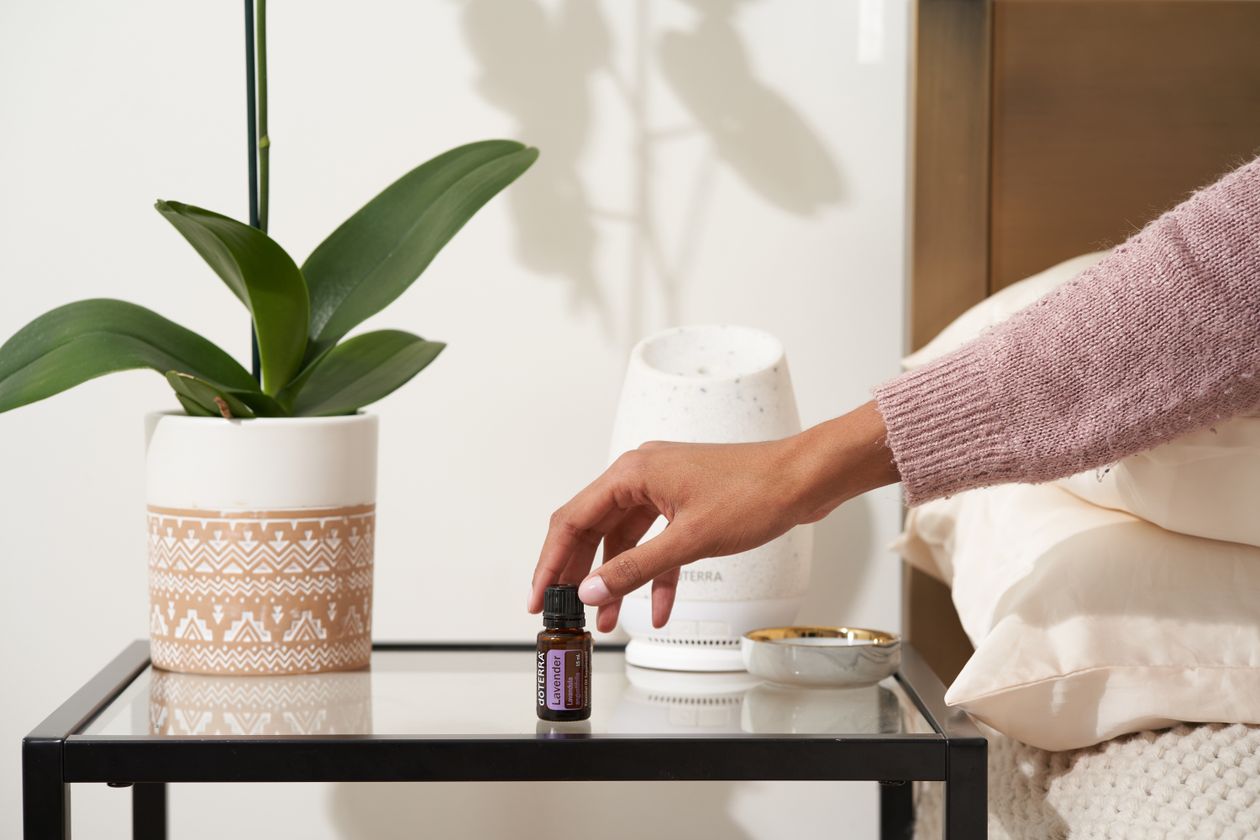
Classic essential oils (lavender, eucalyptus, tea tree from a drugstore or pharmacy) are 100% oil-based. They don’t dissolve in water — they just disperse into microscopic droplets. Here’s what happens to them in a hot tub:
- An oily film and buildup. Oil clings to the shell walls, forms a greasy ring at the waterline, and leaves a sticky coating inside the plumbing that attracts more dirt and bacteria (a so-called biofilm).
- Clogged filtration. A cartridge filter soaks up oil like a sponge. A greasy cartridge loses its flow rate, the pump has to work harder, and a simple rinse won’t save it — a full replacement, often costing tens of euros, is usually needed.
- Extra load on the water chemistry. Instead of sanitizing the water, your disinfectant (chlorine or bromine) gets used up oxidizing the organic load from the oil. Sanitizer levels drop, and cloudiness and odor develop more easily.
- Foam from the jets. Combined with the air system and jets, oil foams intensely. We cover how to deal with it in our article on foam and odor in hot tubs — but the best approach is never to cause it in the first place.
- Risk of voiding your warranty. Hot tub manufacturers’ manuals explicitly prohibit oils, foaming products, and anything not intended for spa use. If a technician finds oil residue in the pump or heater, the manufacturer can reject a warranty claim as damage caused by misuse.
The same goes for bubble bath, bath oils, fizzing bath bombs, and massage oils. All of them contain oils, foaming agents, or both — and all of them spell trouble for a hot tub.
What Does Work: Aromatherapy Made Specifically for Hot Tubs
The good news: your hot tub can smell wonderful — you just need products formulated specifically for spas. They’re designed to dissolve completely, avoid foaming, and place minimal extra load on filtration and sanitizer levels. There are three main types on the market:
Oil-Free Aromatherapy Crystals and Salts
The most common form. The base is magnesium sulfate (Epsom salt in a spa-safe formulation) or other mineral salts, with fragrance bound to them without an oil carrier. The crystals dissolve completely within a few minutes, leave no film, and some varieties even give the water a pleasant “silky” feel thanks to the minerals. Watch out: regular pharmacy Epsom salt meant for bathtubs doesn’t belong here — look for products explicitly labeled for hot tubs/spas.
Liquid Spa Fragrances
Concentrated, water-dilutable fragrances. The scent is bound to a water-miscible solvent, so no greasy film forms. They’re dosed by capfuls (typically 1–2 capfuls per hot tub), and one bottle at around €12–20 lasts for dozens of soaks.
Aromatherapy Sachets and Capsules
Fragrance sealed inside a permeable sachet or capsule that you place in the water or near the filter, releasing scent gradually. The advantage is easy dosing with no risk of overdoing it.
What to Look for on the Label
- An explicit “for hot tubs/spas” label. This is the first and most important filter. A product simply labeled “for the bath” isn’t enough.
- “Oil-free.” The formula must not contain an oil base or use mineral or vegetable oils as a carrier.
- “Non-foaming.” No surfactants or foaming agents.
- Sanitizer compatibility. Quality spa fragrances state their compatibility with chlorine, bromine, and active oxygen.
- No dyes, or only certified ones. Cheap dyes can stain the shell and the filter cartridge.
Which Scent Should You Choose? An Effects Overview
Everyone experiences scents differently, and this isn’t a medical treatment — the overview below summarizes the traditional aromatherapy uses that spa fragrance makers also draw on. Choose based on what you want from your soak: evening calm or a morning boost.
| Scent | Traditional use | When to choose it |
|---|---|---|
| Lavender | Calming, promotes relaxation and sleep | Evening soak, 1–2 hours before bed |
| Eucalyptus | A feeling of freer breathing, refreshes the airways | Autumn and winter, after exercise, when feeling congested |
| Citrus (orange, lemon, bergamot) | Uplifting, energizing, mood-boosting | Morning or afternoon soak, social gatherings |
| Mint | Freshness, a cooling sensation, mental clarity | Summer evenings, recovery after physical exertion |
| Sandalwood, vanilla | A warm, soothing impression | Romantic or winter atmosphere |
| Pine, fir needles | A sense of fresh air, a “forest bath” feel | Outdoor hot tubs, winter use |
We take a closer look at how a hot tub genuinely helps with sleep and recovery — even without fragrance — and what the research says, in our article hot tubs, health, and sleep. Aromatherapy is a nice bonus, not a requirement.
How to Dose and How Often to Use Fragrance
The golden rule: less is more. Spa fragrances are concentrates, and overdosing won’t create a more intense experience — just extra strain on the water.
- Crystals and salts: typically 1–2 tablespoons (roughly 15–30 g) per hot tub with a volume of 1,000–1,500 liters. Add them directly to the water with the jets running.
- Liquid fragrances: 1–2 capfuls, following the specific manufacturer’s instructions. Always start at the lower end.
- Frequency: 2–3 scented soaks per week is a reasonable maximum. Treat aromatherapy as a ritual for special evenings, not a standard for every soak.
- Timing: add fragrance right before your soak, not “in advance.” After bathing, let the filtration run for at least one extra cycle.
If several people share the hot tub or you soak daily, lean toward lower doses — organic load from bathers and fragrance adds up.
What Do Spa Fragrances Do to the Water? Even “Safe” Means Some Load
Even the best spa-safe fragrance isn’t neutral for your water. Every fragrance is an organic substance that your sanitizer has to gradually break down. In practice, that means:
- Faster chlorine or bromine depletion. After a fragrant weekend, expect a slightly lower sanitizer level than usual.
- More frequent testing. If you use fragrance regularly, test the water 2–3 times a week instead of the usual minimum. We cover test strips, drop testers, and digital meters in our guide how to test pool and hot tub water.
- A shorter water-change interval. Intensive aromatherapy can shorten the usual 3–4 month replacement cycle by a few weeks. Watch for cloudiness, weakening sanitizer performance, and a tendency to foam as your cues.
- Regular cartridge cleaning. Even non-foaming fragrances add slightly to filter fouling — rinsing it weekly should be standard practice.
If foam or an unusual odor appears anyway, follow our article foam and odor in hot tubs — from a defoamer as first aid all the way to a full water change with pipe flushing.
Aromatherapy + Chromotherapy: A Wellness Ritual at Home
Most modern hot tubs have LED lighting with selectable colors — so-called chromotherapy. Combined with fragrance, you can create in two minutes the kind of atmosphere hotel spas charge a premium for. Tried-and-tested combinations:
- Evening wind-down: lavender + dimmed blue or purple, jets on low power only, 20 minutes, then straight to bed.
- Morning start: citrus + warm orange/yellow, a shorter 10–15 minute soak with jets at full power.
- Post-workout recovery: eucalyptus or mint + green, with massage jets targeted at sore muscles.
A little discipline helps the ritual, too: leave your phone indoors, have some drinking water ready, and set the temperature to match your purpose — around 36–37°C for sleep, 34–35°C is enough for an energy boost.
Sauna Essences in a Hot Tub? Never
A common mistake among home wellness owners is thinking “an essence is an essence.” But sauna essences are concentrates meant for evaporation — diluted and poured onto hot stones, not into the water you sit in. They contain oil bases and often alcohol; in a hot tub they’ll create a film and foam, and can irritate skin because they aren’t formulated for prolonged skin contact in water. The reverse holds true too: spa fragrances don’t belong on sauna stones. If you’re still considering a home sauna, read how to choose a home sauna — aromatherapy works beautifully there too, just with different products.
Common Mistakes at a Glance
| Mistake | Consequence | Do this instead |
|---|---|---|
| Pharmacy essential oil in the water | Oily film, saturated filter cartridge, foam | Only spa-safe, oil-free fragrances |
| Bubble bath or bath bomb | Heavy foaming, sanitizer consumed | Non-foaming crystals or liquid spa fragrance |
| Large amounts of regular Epsom salt | Higher dissolved-solids levels, corrosion risk | Salts explicitly made for hot tubs, dosed as directed |
| Sauna essence in the water | Film, foam, skin irritation | Sauna essences only on sauna stones |
| Double dose “for a stronger scent” | Cloudiness, rapid chlorine loss | Dose according to the label, start with the minimum |
Frequently Asked Questions (FAQ)
Can I just add a few drops of essential oil to my hot tub?
No. Even a few drops of pure oil won’t dissolve in water — they’ll settle on the surface, the shell, and the filter cartridge. A single small dose might not cause a visible problem, but the residue builds up over time and eventually shows up as foam, cloudiness, and clogged filtration. You also risk having a warranty claim denied.
Are spa fragrances safe for skin and swimwear?
Quality spa fragrances are formulated for prolonged skin contact in warm water and won’t harm swimwear. More sensitive users should start with half the dose and stop using the fragrance at the first sign of irritation. For colored products, check that they use certified dyes that don’t leave stains.
How do I know if there’s “too much” fragrance in the water?
Warning signs include cloudiness that doesn’t clear after a filter cycle, a rapid drop in chlorine or bromine between tests, foam that stays on the surface, and a sickly-sweet, “heavy” water odor. If that happens, stop using fragrance, shock the water, and run filtration continuously; if the problem persists, change the water.
Does aromatherapy work in an inflatable hot tub too?
Yes, you can use spa-safe fragrances in inflatable hot tubs too. Just be more conservative with dosing — they tend to have a smaller water volume and simpler cartridge filtration, so any extra load shows up faster.
Do I need to change my water chemistry routine because of fragrance?
No, your regular sanitizing routine stays the same. Just expect slightly higher chlorine or bromine consumption, test more often, and keep a defoamer on hand just in case. Your basic maintenance routine doesn’t change.
The Bottom Line: Yes to Fragrance, But Only the Right Kind
Aromatherapy does belong in a hot tub — when you do it right. The rule is simple: no oils, no foam, no sauna essences, only products explicitly made for spas. Your reward is a wellness ritual you can tailor to your mood, from a lavender evening to a citrus morning, without risking your filtration, water chemistry, or warranty. You’ll find aromatherapy crystals, spa fragrances, and other home relaxation accessories in our wellness category, and for more guides and how-tos, head over to our Guides section.
