
A pool and a hot tub are among the best loads for absorbing surplus solar power: a large volume of water acts as a cheap “battery” that stores solar energy in the form of heat. Instead of selling your surplus to the grid for a few cents, you send it to a heat pump or heating element and soak in water heated practically for free in the evening. In this article we cover the typical combinations, surplus management, a worked example and the pitfalls to watch out for.
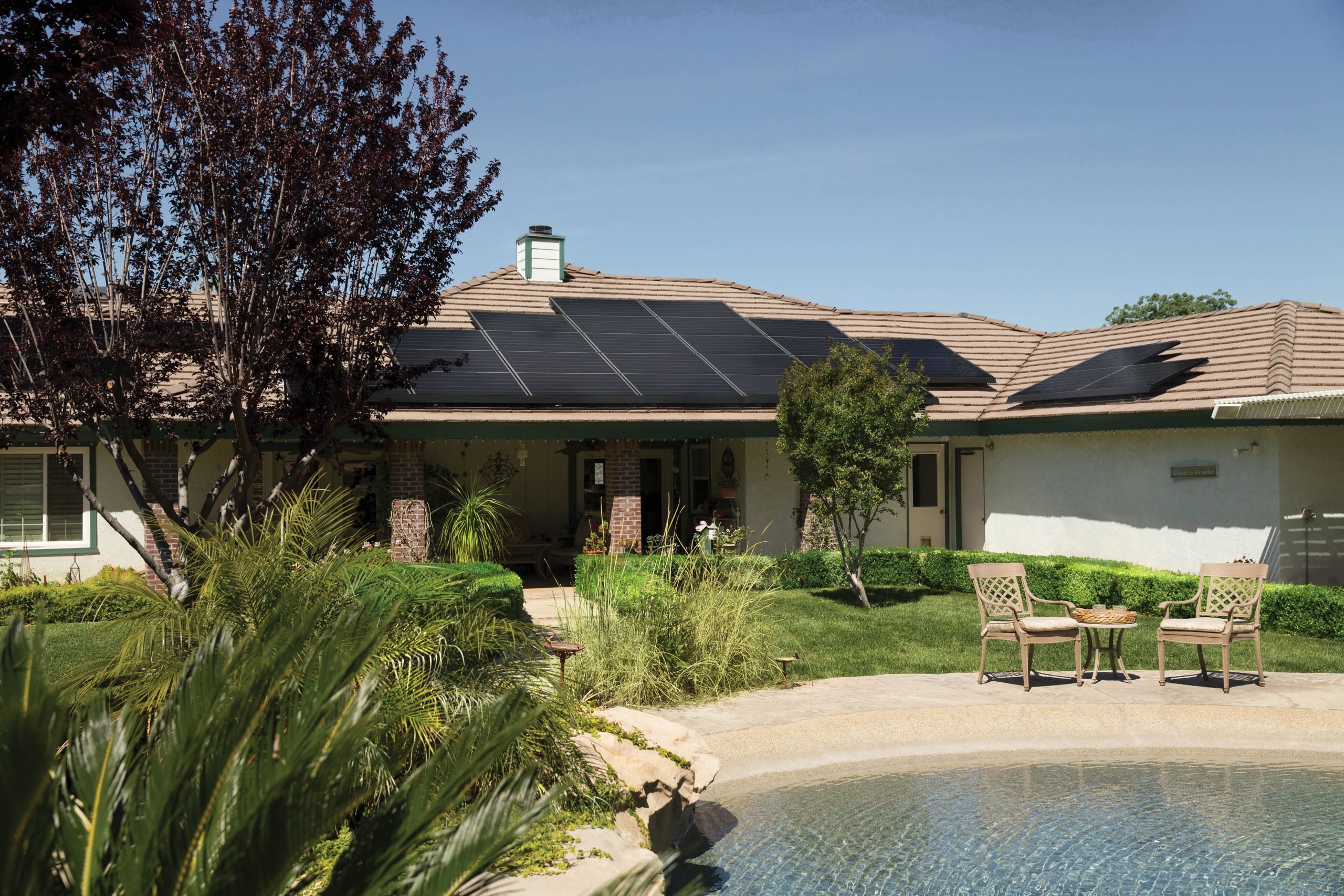
Why are a pool and hot tub the ideal load for PV surplus?
The typical problem with residential solar: it produces the most between 10 a.m. and 4 p.m., when most households are at work and consumption is minimal. The surplus then flows into the grid at a feed-in price that is usually far lower than the price you pay for electricity. A battery storage system solves this imbalance, but costs thousands of euros.
A pool or hot tub offers a cheaper route. Water has a high thermal capacity — 30 m³ of pool water holds roughly 35 kWh of heat for every degree of warming. The heat you “charge” into the water around midday lasts into the evening and even the next day, especially under a solar cover or enclosure. Your pool is, in effect, a thermal storage tank you already have in the garden.
The second advantage: pool consumption can be time-shifted almost at will. Filtration doesn’t have to run at night, heating doesn’t have to run in the morning. Shift both into the sunny hours and you cover, with your own production, an appliance that would otherwise be one of the biggest energy consumers in the home — you’ll find a detailed cost breakdown in our article on hot tub running costs.
How does this differ from solar heating with absorbers?
Beware of mixing up the terms. Solar pool heating using thermal absorbers warms the water directly with solar radiation — the water flows through black mats on the roof or beside the pool. This article is about something different: electricity from photovoltaic panels powering a heat pump, a heating element or the filtration. Photovoltaics is more versatile (you can use the electricity anywhere), while absorbers are cheaper to buy. The two systems are not mutually exclusive and can be combined.
Which combinations of PV and heating make sense?
PV + heat pump: the most efficient route
A pool heat pump turns 1 kWh of electricity into 4 to 6 kWh of heat (depending on the COP, which varies with air and water temperature). Every kilowatt-hour of rooftop surplus therefore has a four- to sixfold effect. For seasonal pool heating this is clearly the most efficient combination: the relatively small power draw (1–2 kW for common models) fits comfortably into the midday surplus of even a smaller PV system.
PV + heating element or cartridge: simpler, but thirstier
An electric heating element (inline heater, heating cartridge in an exchanger) is cheap to buy, has no compressor and tolerates frequent switching. The downside: 1 kWh of electricity = 1 kWh of heat. For the heating to be worthwhile you need 3–12 kW of power, which only a larger PV system on a sunny day can supply. A heating element makes sense as an add-on to soak up surplus that would otherwise overflow into the grid, or for small volumes — hot tubs and plunge pools.
A hot tub tempered during the day
A hot tub has a smaller volume (1–1.5 m³) but a higher target temperature, usually 36–38 °C. By default it maintains its temperature via thermostat whenever it drops — including at night on expensive electricity. The smarter strategy: allow a wider hysteresis and steer the reheating into the sunny hours. During the day you heat the hot tub to, say, 38 °C, in the evening you soak at 37 °C, and overnight top-up heating is kept to a minimum. A quality thermal cover is absolutely essential for this strategy.
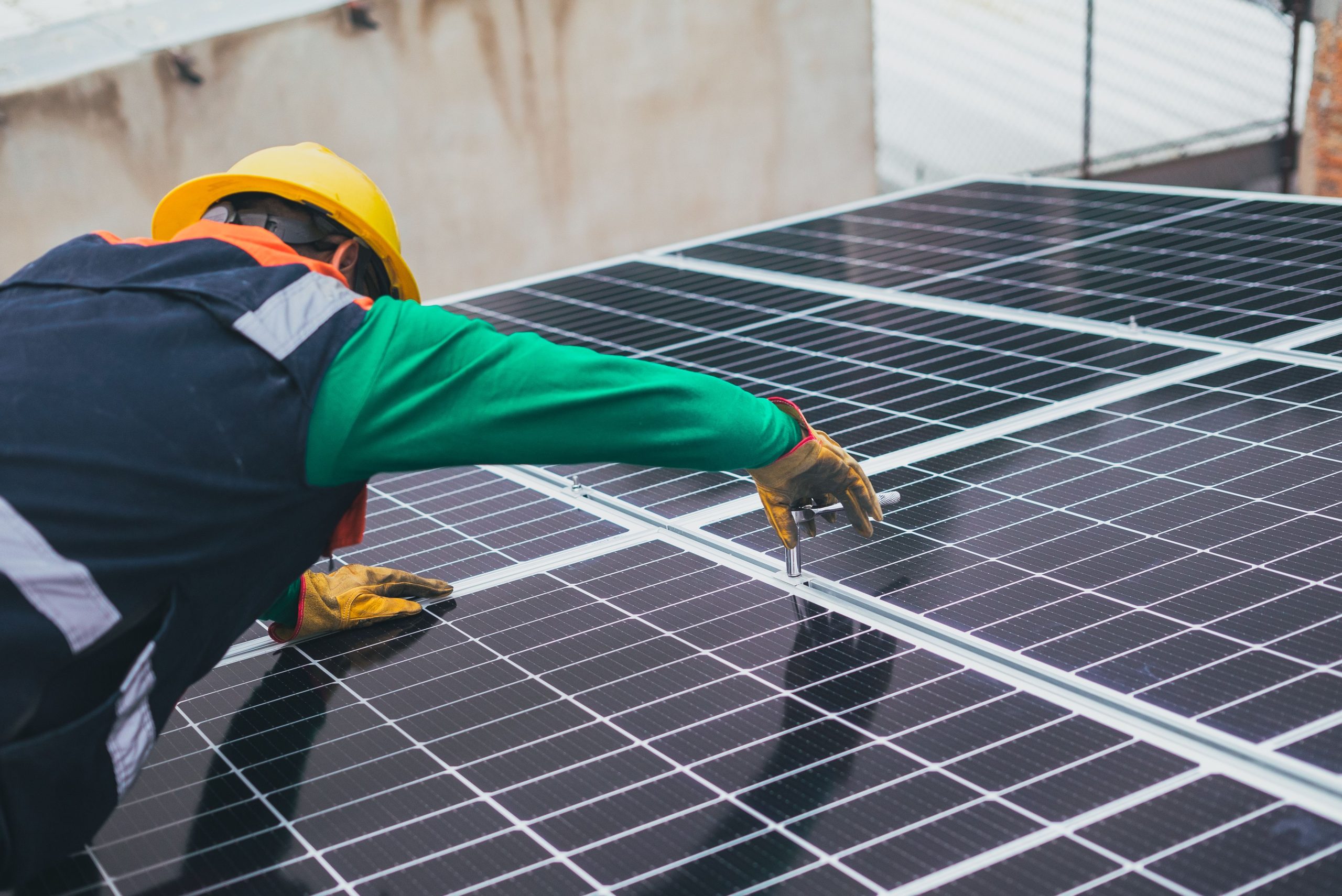
How to manage the surplus: surplus routers, relays and automation
To make the heating run exactly when the roof is producing, you need some form of control. The options, from simplest to smartest:
- Timer switch: filtration and heating run, say, 10:00–16:00. Zero cost, but no reaction to the weather — on an overcast day the heating runs from the grid.
- Smart relay / metering socket: switches the load based on the current export to the grid, read from the meter or inverter. A cheap solution for a heating element or a smaller heat pump.
- Surplus router (wattrouter): a dedicated controller that continuously measures the export and distributes it among loads by priority (water heater → pool → hot tub). With resistive loads it can even modulate power continuously, consuming exactly as much as is surplus.
- Inverter with load control: many modern inverters have their own outputs or integrations (Modbus, apps) to switch external loads at a defined surplus level.
Take care with heat pumps: the compressor doesn’t like frequent cycling. Set a minimum run time (e.g. 20–30 minutes) and switch based on a rolling average of the surplus, not the instantaneous value. Inverter heat pumps are ideal for PV — they can smoothly reduce output instead of shutting down.
Off-peak tariff, or PV priority?
Households on a dual-rate tariff have traditionally switched their heating to cheap off-peak night electricity via the utility’s ripple-control signal. With photovoltaics the logic reverses: your own daytime production takes priority, and the low tariff serves only as a backup for overcast days. Well-configured automation handles both situations: it heats primarily from surplus, and if the water doesn’t reach its minimum temperature, it tops up on the low tariff. How to tie such scenarios together with filtration, dosing and monitoring is covered in our article on the smart pool and automation.
Control also ties in with filtration: if you shift it into the sunny hours, it runs practically for free — and at the very time when the pool is under the greatest load from UV and bathing. Recommended run times are in our article on how long to run the pool filter.
A worked example: how much heating does a sunny day provide?
Let’s run a concrete example. Assumptions (stated clearly — yours will differ): a 30 m³ pool, a heat pump drawing 1.2 kW with a COP of 5 (summer conditions, air around 25 °C), a 6 kWp PV system, a sunny June day with roughly 15 kWh of surplus between 9 a.m. and 5 p.m., and an electricity price including distribution of about €0.28/kWh.
- The heat pump runs for 8 hours: it consumes 8 × 1.2 = 9.6 kWh — this fits within the surplus, with some left over for the grid.
- It delivers 9.6 × 5 = 48 kWh of heat into the water.
- Heating 30 m³ of water by 1 °C takes about 35 kWh, so the pool warms by roughly 1.4 °C per day (before heat losses — hence the cover).
- Savings versus grid heating: 9.6 kWh × €0.28 = about €2.70 per day; over a 120-day season with similar weather, in the order of €200–320.
The same logic applies to a hot tub: its summer maintenance consumption of 3–6 kWh per day can be shifted almost entirely into the sunny hours. In the shoulder months the surplus covers part of the consumption; in winter only a fraction — more on that just below.

What to watch out for?
Winter: you heat the most when the roof produces the least
A fundamental expectation that is fair to state up front: a hot tub in winter, run year-round, consumes the most energy in precisely the months when photovoltaics produces the least. December output of a Central European PV system is typically around a tenth of its June output, and surplus is practically non-existent — the house consumes the electricity. Photovoltaics is therefore a great helper for the April-to-October season; budget your hot tub’s winter operation at the regular electricity price and address it above all with quality insulation and a thermal cover.
Sizing and technical limits
The inverter and circuit protection must handle the added load — especially with heating elements drawing several kW, consider whether you are switching per phase and whether the surplus on that phase is even sufficient (it also depends on whether your metering is net-balanced across phases). Position and connect the heat pump according to the manufacturer’s instructions; discuss any surplus-router integration with your supplier so you don’t void the warranty.
Regulations and grid connection of the PV system
The rules for installing, registering and connecting photovoltaics to the grid keep changing and go beyond the scope of this article. Leave the system sizing, the grid-connection agreement and any subsidies to a certified PV installer — here we stick to the pool side of the equation.
Is it worth it? Payback in a nutshell
If you already have photovoltaics, the answer is simple: every kilowatt-hour redirected from grid sales (typically €0.02–0.06) into your own heating (replacing electricity at €0.24–0.32) earns you the difference between those prices. A surplus router or smart relay costing a few hundred euros then usually pays for itself within one to two seasons. Buying a PV system solely for the pool doesn’t make sense — always size it for the whole house and treat the pool as a bonus consumer of surplus that raises the self-consumption percentage on which PV economics rests. The actual payback depends on the size of your system, your electricity price and your bathing habits, so treat the figures above as an illustration with the stated assumptions, not a promise.
Table: three strategies for using the surplus
| Strategy | What you need | Effect per 1 kWh of surplus | Who it’s for |
|---|---|---|---|
| Daytime filtration only | Timer switch (every pool has one) | 1 kWh of electricity saved, no heating | Minimalists; a free first step for every PV owner |
| Heat pump during the day | Heat pump + timing or smart switching, ideally an inverter model | 4–6 kWh of heat into the water (COP 4–6) | Pools from about 15 m³, season extension, best effect per kWh |
| Heating element on surplus | Element/cartridge + surplus router with continuous modulation | 1 kWh of heat, but soaks up even small exports completely | Hot tubs, small pools, owners of larger PV systems with constant exports |
The strategies can be layered: daytime filtration is a given, the heat pump handles the main heating, and the element “mops up” the residual exports that would otherwise go to the grid.
Frequently asked questions (FAQ)
Do I need a battery for PV plus a pool to pay off?
No. The pool acts as a thermal battery in its own right — you store the energy in warm water instead of lithium cells. A battery and a pool are not mutually exclusive, but it is precisely the pool’s large, shiftable load that often raises self-consumption enough to make an expensive battery less necessary.
Is a small balcony or off-grid PV system enough to heat a hot tub?
Not for direct heating — maintaining 37 °C in the shoulder seasons takes several kWh per day, and hot tub heating elements draw 2–3 kW. A small system will, however, cover the circulation pump and part of the maintenance consumption, making operation cheaper; just don’t expect a “free hot tub” from it.
Will frequent switching by a surplus router damage my heat pump?
Short compressor cycles are not good for its lifespan. The solution is a minimum run time of 20–30 minutes, switching based on the average surplus and, ideally, an inverter heat pump that smoothly modulates its output instead of shutting off. Resistive heating elements, by contrast, are untroubled by frequent switching or continuous modulation.
Which is better: photovoltaics with a heat pump, or solar absorbers?
Absorbers are cheaper and simpler, but they only heat the pool and only when the sun shines. PV with a heat pump costs more, but you can use the electricity throughout the house and the heat pump heats even under an overcast sky. For new builds with PV already planned, the PV + heat pump combination usually comes out ahead; for an existing pool without photovoltaics, absorbers can be a sensible first step.
Will surplus power heat my hot tub in December too?
Practically no. Winter PV output is a fraction of summer output and the household consumes it first. In winter, rely on insulation, a thermal cover and your regular tariff; think of photovoltaics as a seasonal boost from spring to autumn.
Whether you choose a heat pump, a heating element, or for now just smartly timed filtration, the equipment determines how much solar energy actually ends up in the water. You’ll find heat pumps, pumps, filtration and heating accessories in our pool technology category — and we’ll be happy to help you choose the right setup for your photovoltaic system.
