You can get a cold plunge for under a hundred euros or for ten thousand — the difference is not marketing, but how reliably and effortlessly it keeps the water cold. A plain tub is fine for trying things out; for regular year-round cold exposure, an actively cooled plunge bath with a chiller is worth the investment, holding 5–10 °C in summer and winter alike. In this guide we walk through all four options, the key specs of chilled baths, placement, water care and indicative 2026 prices.
If you want to know how alternating cold and heat affects the body and which protocols to follow, read our separate article on contrast therapy with a hot tub and cold plunge. Here we focus purely on choosing the equipment.
What types of cold plunge are there?
The market has settled on four ways to get into cold water at home. They differ in price, convenience and, above all, in the water temperature you can realistically reach in July.
| Option | Water temperature | Purchase price | Best for |
|---|---|---|---|
| Plain barrel / tub of water | follows outdoor temperature (18–24 °C in summer) | €80–600 | beginners, winter season |
| Tub topped up with ice | 5–10 °C, but only temporarily | €200–1,200 + ice | occasional ice baths |
| Actively cooled bath with a chiller | stable 3–10 °C year-round | €2,400–10,000 | regular year-round cold exposure |
| Converted chest freezer (DIY) | depends on setup, hard to regulate | €400–1,000 | not recommended — risk of electric shock |
A plain barrel or tub: the cheapest way to start
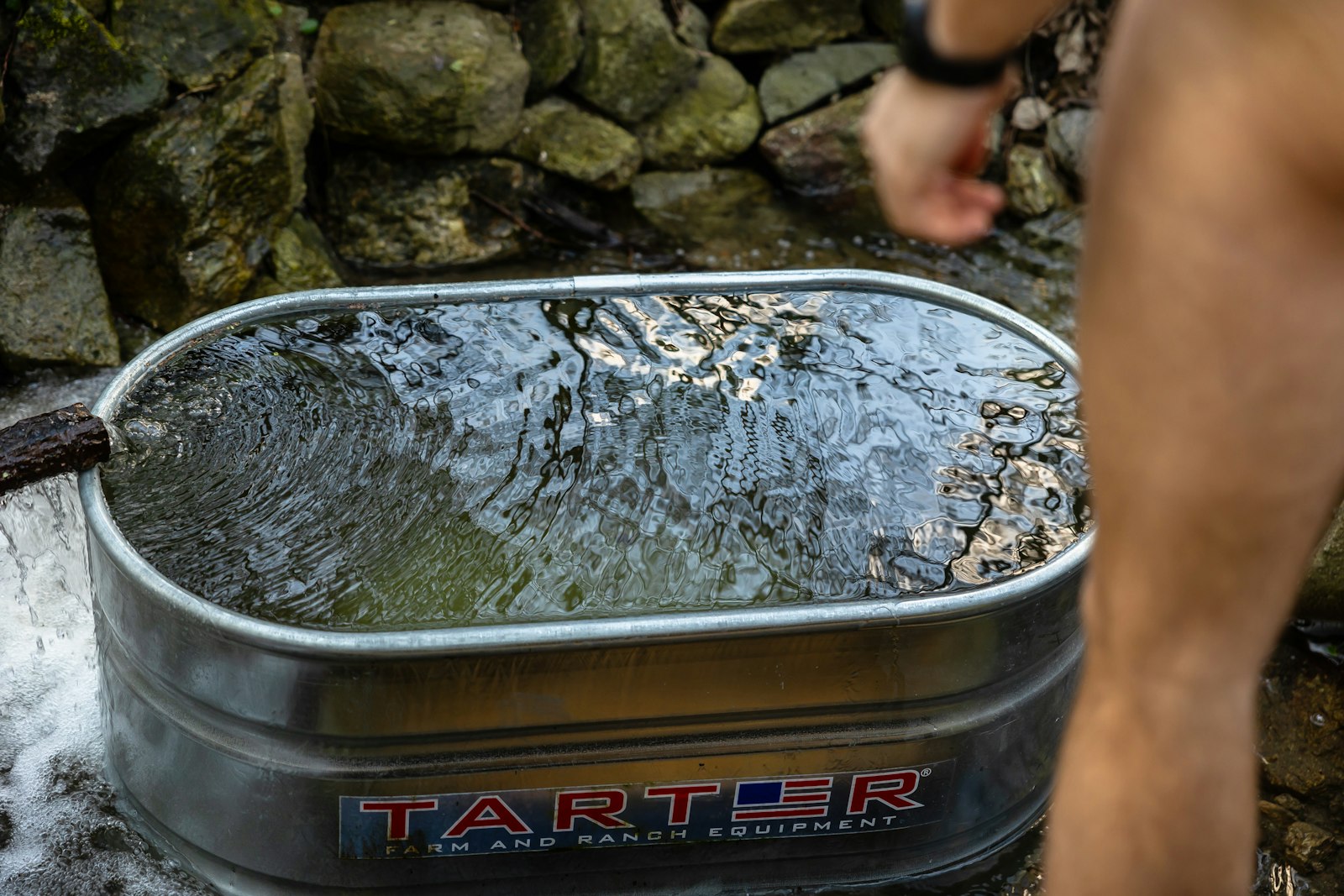
A plastic or inflatable tub, a wooden barrel or a galvanized stock tank. Fill it from the garden tap and get in. From autumn to spring it works brilliantly — outdoor water naturally stays in the single digits.
The catch comes in summer. Water in a tub sitting in the sun can easily reach 22–24 °C, which is no longer cold exposure but a lukewarm soak. If you want to train year-round, a plain tub will not get you through May to September.
A tub with ice top-ups: cold water at the cost of convenience
The same tub — you just pour in ice before each session. To bring 300 litres of water down from 20 to 8 °C you need roughly 40–50 kg of ice — four to five large bags from the petrol station, at €1.50–2.50 each. At three sessions a week, the ice alone adds up to a noticeable monthly cost, and the logistics get old fast.
It makes sense as an intermediate step: you find out whether cold exposure will stick before investing in a chilled bath.
An actively cooled plunge bath with a chiller: the year-round solution
A bath with its own cooling unit (chiller), circulation pump and filtration. You set the temperature on the display — typically between 3 and 10 °C — and the system holds it day and night, in January and in August. No ice, no waiting, the water is ready whenever you are.
It is the only option that turns cold plunging into a low-maintenance habit rather than a project. That is exactly why we devote the entire next section to its specifications.
A converted chest freezer: why to steer clear
A DIY solution popular on social media: a chest freezer filled with water, sealed and switched via a thermostat. We strongly advise against it. A freezer is not built for permanent contact with water — the casing can rust through, refrigerant can leak and, above all, there is a risk of electric shock, because you are sitting in a conductive vessel with an appliance that was never certified for operation with a person immersed in it.
Add to that the lack of filtration, no fine temperature control and zero warranty. Saving a thousand euros or two is not worth the risk you take where water meets electricity.

What to look for in an actively cooled plunge bath
Chilled bath prices span a wide range, and five parameters make the difference. Go through them before you buy — in shop listings they tend to hide behind marketing names.
Chiller power
Stated in horsepower (HP) or watts of cooling output. Units around 0.5 HP cool 300 litres of water from 20 to 5 °C in 8–12 hours and suit indoor or shaded spots. For a bath in full summer sun or a volume over 400 litres, look for 0.8–1 HP — otherwise the chiller will run non-stop on hot days and still fail to hold the temperature.
Ask about the lower limit too: cheaper units bottom out at 5–7 °C, more powerful ones manage 3 °C. For most users, 5 °C is more than enough.
Filtration and ozone or UV disinfection
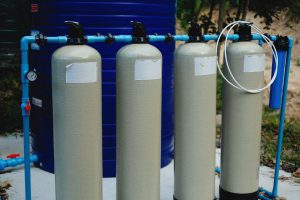
The chiller pushes water through a filter — usually a cartridge type — that captures debris from the skin. Better models add an ozone generator or a UV lamp, which kill bacteria without chemicals. In practice, that means changing the water every 3–6 weeks instead of every week and using minimal treatment products. How both technologies work and how they differ is covered in our article on UV lamps and ozone.
Insulation and cover
Every degree the water gains from its surroundings has to be pumped back out by the chiller — and that costs electricity. A good bath has insulated walls and base (foam, double wall) and a solid thermal cover you put on between sessions. On inflatable models the air chamber does the insulating; it works surprisingly well, but a cover is a must there too — otherwise consumption rises noticeably and leaves and insects end up in the water.
Temperature range and heating
Some units can not only cool the water but also heat it, typically up to 40 °C. Your plunge bath then doubles as a small warm soak for contrast sessions in a single device. If you plan to combine cold with heat and have neither a hot tub nor a sauna, pay extra for a reversible unit — buying heating separately would cost you more.
Noise level
A chiller is essentially a small heat-pump unit with a compressor and a fan. Decent models quote 45–55 dB at one metre — the sound of a running fridge up to a quiet air conditioner. On a terrace below a bedroom or by a shared fence, that is the difference between peace and conflict. How to read decibel figures and how to dampen equipment noise is covered in our article on pool equipment noise.
Where to put a cold plunge: outdoors or indoors?
Outdoors is the simplest option: spilled water does no harm, the chiller has somewhere to exhaust warm air, and stepping into ice-cold water under the open sky has a magic of its own. Plan for a firm, level base and an outdoor socket protected by an RCD. A filled bath is heavy — 400 litres of water plus the structure means over 450 kg. For wooden decks and balconies, the same load rules apply as we discuss for a hot tub on a terrace.
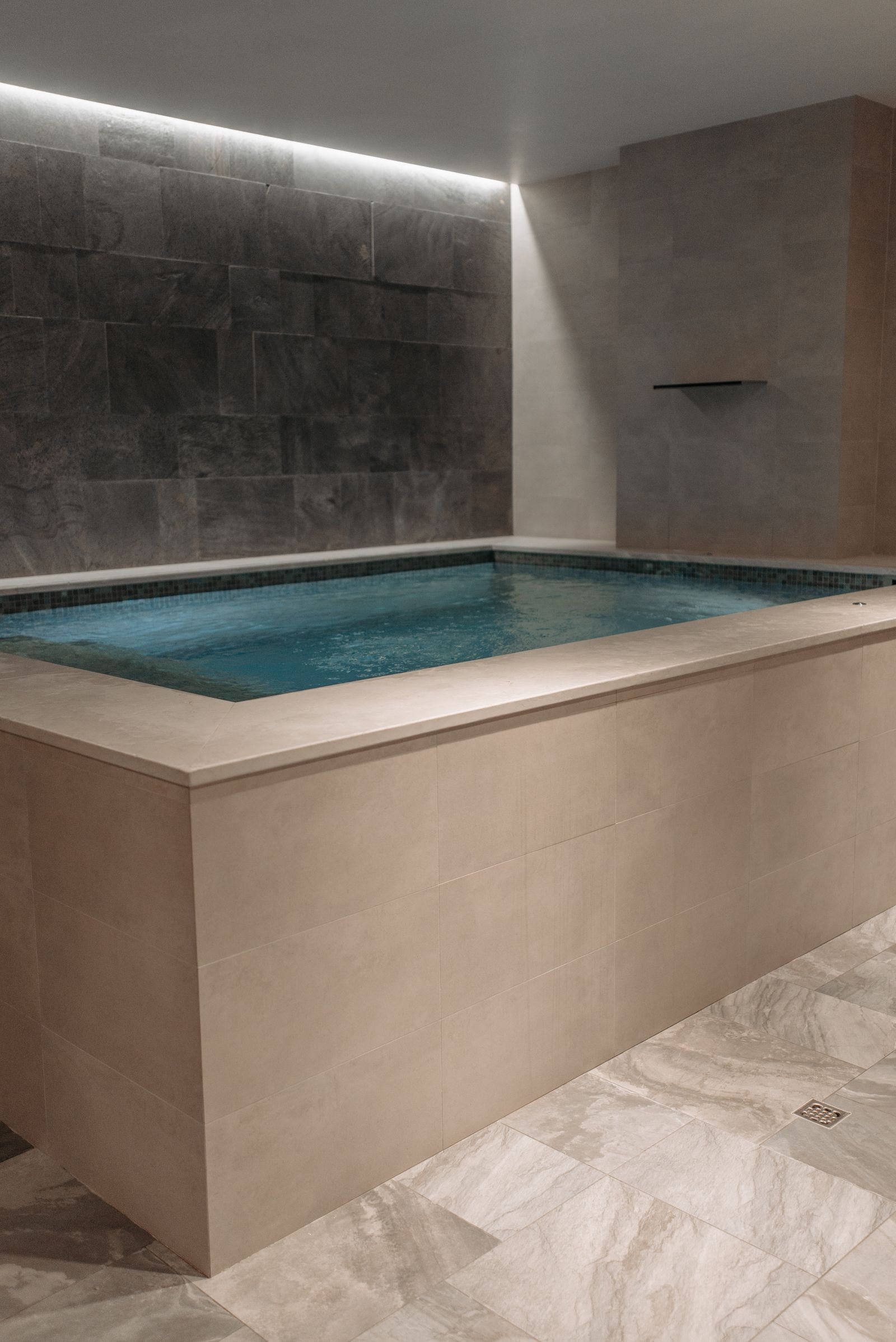
Indoors — in a bathroom, garage or home wellness area — you will appreciate the comfort in winter. Three things need solving: removing the heat from the chiller (the unit warms the room), a floor that tolerates splashed water, and a route for draining the bath at water changes. A small pump with a hose to the drain solves that reliably.
How to care for the water in a cold tub
The good news: cold water is forgiving to maintain. Bacteria and algae multiply orders of magnitude more slowly at 5–10 °C than in a 37 °C hot tub, so you get by with a fraction of the chemicals.
The bad news: “almost nothing” is not “nothing”. Even in cold water, skin oils, sweat and organic debris build up. The basic routine looks like this:
- Shower before each session — the one habit that doubles the life of your water.
- Once a week, measure the pH (ideally 7.0–7.4) and adjust it; test strips or a drop tester are enough. You will find the procedure in our guide on how to test your water.
- Keep a mild level of disinfection — a small dose of chlorine or active oxygen, or let ozone/UV do the work if your bath has it.
- Change the water based on cloudiness and smell: after 1–2 weeks in a tub without filtration, after 3–6 weeks in a chilled bath with filtration and ozone.
How much does a cold plunge cost in 2026?
Indicative prices on the European market in summer 2026. The ranges are wide because the market is young and brands differ significantly in what they include.
| Solution | Indicative price | Note |
|---|---|---|
| Inflatable / foldable tub | €80–480 | with a thermal lid, no cooling |
| Wooden barrel / designer tub | €400–1,400 | nicer, more durable, still no cooling |
| Standalone chiller for your own tub | €1,000–2,800 | depending on 0.4–1 HP output |
| Complete chilled plunge bath | €2,400–10,000 | chiller, filtration, often ozone/UV and heating |
| Premium branded setups | from €10,000 | design, app control, built-in installations |
On top of the purchase price, add running costs: a well-insulated chilled bath with a cover uses roughly 1–3 kWh a day depending on the weather and the set temperature — around €8–25 a month at typical electricity rates. An uninsulated tub with a chiller sitting in the sun can use several times that.
Cold plunge, sauna and hot tub: a setup that makes sense
A cold tub only truly shines next to a source of heat. The classic Finnish ritual — heat up, plunge, rest — fits into a few square metres with a sauna and a cold plunge; we describe the right sauna routine in our article on how to sauna properly. If you have a hot tub, it serves as the warm half of contrast therapy, and a plunge bath complements it better than a cold shower ever could.
When planning the setup, think about distances: you should be able to walk between the sauna and the tub barefoot and wet, ideally within five metres. And do not hang the sauna heater and the chiller on one electrical circuit — each needs its own breaker.
Frequently asked questions
Is a plain tub without cooling enough for cold exposure?
From October to April, yes — outdoor water naturally stays below 10 °C. In summer, however, it warms up to 18–24 °C, so for year-round training you need ice or an actively cooled bath with a chiller.
What temperature should the water in a cold plunge be?
We recommend 10–15 °C and shorter immersions for beginners; experienced users sit between 5 and 10 °C. Leave temperatures below 5 °C to seasoned cold-water veterans. You will find protocol details in our article on contrast therapy.
How often does the water in a cold tub need changing?
In a tub without filtration, roughly every week or two. A chilled bath with filtration and ozone or a UV lamp lasts 3–6 weeks on one fill — provided you shower before each session and keep an eye on the pH.
Is a converted chest freezer a safe budget alternative?
No. A freezer is not certified for contact with water or for a person inside it — there is a risk of corrosion, refrigerant leaks and electric shock. The safe budget alternative is a tub with ice.
How much electricity does a chilled plunge bath use?
An insulated bath with a cover uses roughly 1–3 kWh a day, i.e. a modest monthly amount. Consumption is influenced most by insulation, a shaded location and whether you actually use the cover.
Whether you start with a galvanized tub for under a hundred euros or go straight for a chilled bath, the important thing is simply to start — you can upgrade the equipment at any time. You will find our complete range for home recovery, from saunas to cold plunge tubs, in our wellness category, and if you are putting together a full contrast zone, we are happy to advise on both equipment and water care.