
For the vast majority of family pools, filling from the mains water supply is the most sensible choice — it is the simplest option, the water is hygienically safe and chemically predictable. A tanker delivery makes sense for large volumes or a weak connection, rainwater only for topping up, and well water calls for a laboratory analysis. And keep an eye on the wastewater charge: in many countries and regions you can ask your water utility for a deduction on water that never reaches the sewer — usually via a sub-meter.
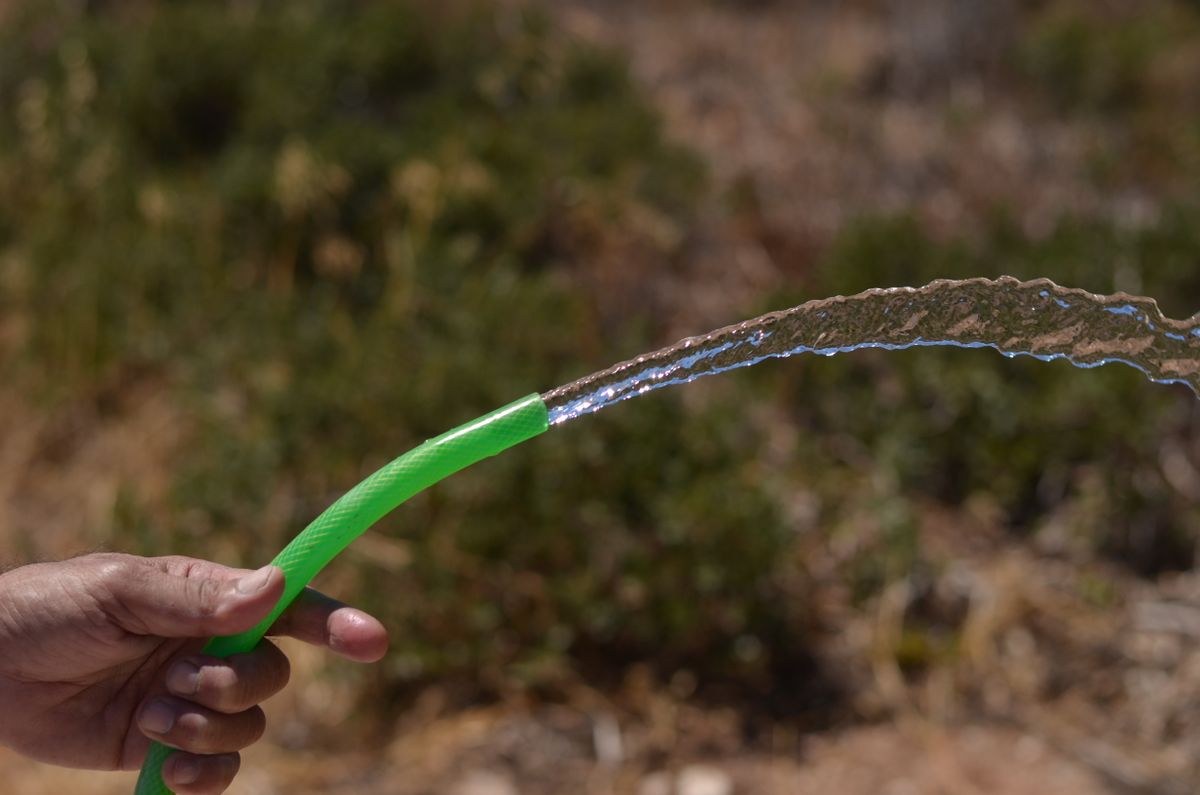
Four ways to get water into your pool
The difference between the options is not just the price per cubic metre. They differ in speed, water quality and in how much work is left for you once the pool is full. The overview below is based on a typical family pool with a volume of 30 m³.
| Water source | Indicative price per m³ | Time for a 30 m³ pool | Quality and demands | When to choose it |
|---|---|---|---|---|
| Mains supply | around €5 (water plus wastewater, indicative European average 2026); roughly half that if a wastewater deduction is granted | 15–30 hours depending on the flow rate of your connection | Drinking water, known parameters, usually just pH and hardness to fine-tune | The standard for the vast majority of pools |
| Tanker delivery | roughly €10–25 including transport (heavily dependent on distance and tanker size) | 1–4 hours depending on the number of trips | Usually mains-quality drinking water, but confirm this with the haulier | Large volumes, a weak connection, tight deadlines, holiday areas with no mains |
| Well | only the electricity for the pump, effectively cents | Depends on the yield of the well, often several days | Analysis essential: iron, manganese, hardness, nitrates | When you have a high-yield well and water tested in advance |
| Rainwater | €0 for the water; the cost sits in the tank and filtration | Depends on your storage capacity; unrealistic in one go for 30 m³ | Soft, but microbiologically risky and full of organic matter | Only for topping up evaporation, through filtration |
Mains water: the simplest option, but watch the flow rate
Mains water has one fundamental advantage — it is hygienically safe and you know its parameters in advance. Water utilities publish average hardness and pH values for every area they supply, so you know whether you will be dealing with limescale or aggressive soft water once the pool is full.
The limiting factor is usually the flow rate of your connection. A standard domestic DN 25 connection with the tap fully open delivers roughly 1–2 m³ per hour, so a 30 m³ pool takes between 15 and 30 hours to fill. Through a 1/2″ garden hose, expect the lower end of that range. It is therefore sensible to fill using two hoses at once if you have two outlets.
Before you let the water into the pool, run it off to waste for a few minutes — this flushes out settled sediment from the pipework and any rust from the internal plumbing. In new builds this matters twice over.
One thing to check with your utility: a heavy draw over a few hours can cause a pressure drop for your neighbours at the edge of the network and stir up deposits in the main. Some utilities therefore recommend filling at night or outside peak demand. A call to the customer line takes five minutes.
Tanker delivery: when it genuinely pays off
A tanker costs more per cubic metre, but what you are buying is time and independence from your connection. It makes sense in three situations:
- Large volume. With a pool over 50 m³, filling from a standard connection would take two days or more and mean round-the-clock supervision.
- A weak connection or none at all. Cabins, holiday properties, plots with a limited supply, or places where the water main is sized for a household only.
- A deadline. When the pool has to be up and running for a particular weekend and you do not want to gamble on it filling in time.
The price is made up of the water, the transport and the vehicle’s time, so it is calculated per trip rather than per cubic metre. A typical tanker carries 8–12 m³, so a 30 m³ pool means three trips. Always ask for confirmation that this is drinking-quality water from the mains — tankers are also used for non-potable water, and you will only spot the difference once the water turns cloudy and the chemicals start disappearing.
A practical note: the haulier needs vehicle access right up to the pool, or at least within hose reach. Find out the delivery hose length and the load-bearing capacity of the access route in advance, especially with freshly laid paving or a new lawn.
Well water: cheap water that has to be checked
In terms of cost, well water is the cheapest — you are effectively paying only for the electricity to run the pump. You pay elsewhere, though: for the analysis, pre-filtration and chemicals if the water contains iron or manganese. Once oxidised, these show up as a brown to rusty cloudiness that settles on the walls and the liner. We covered the detailed procedure, including which analysis to have done and how to treat the water, in a separate article, Well water in your pool.
The second pitfall is yield. A well that supplies a household without any trouble can easily run dry when you draw 30 m³ over two days. Draw the water slowly and in stages so the level has time to recover.
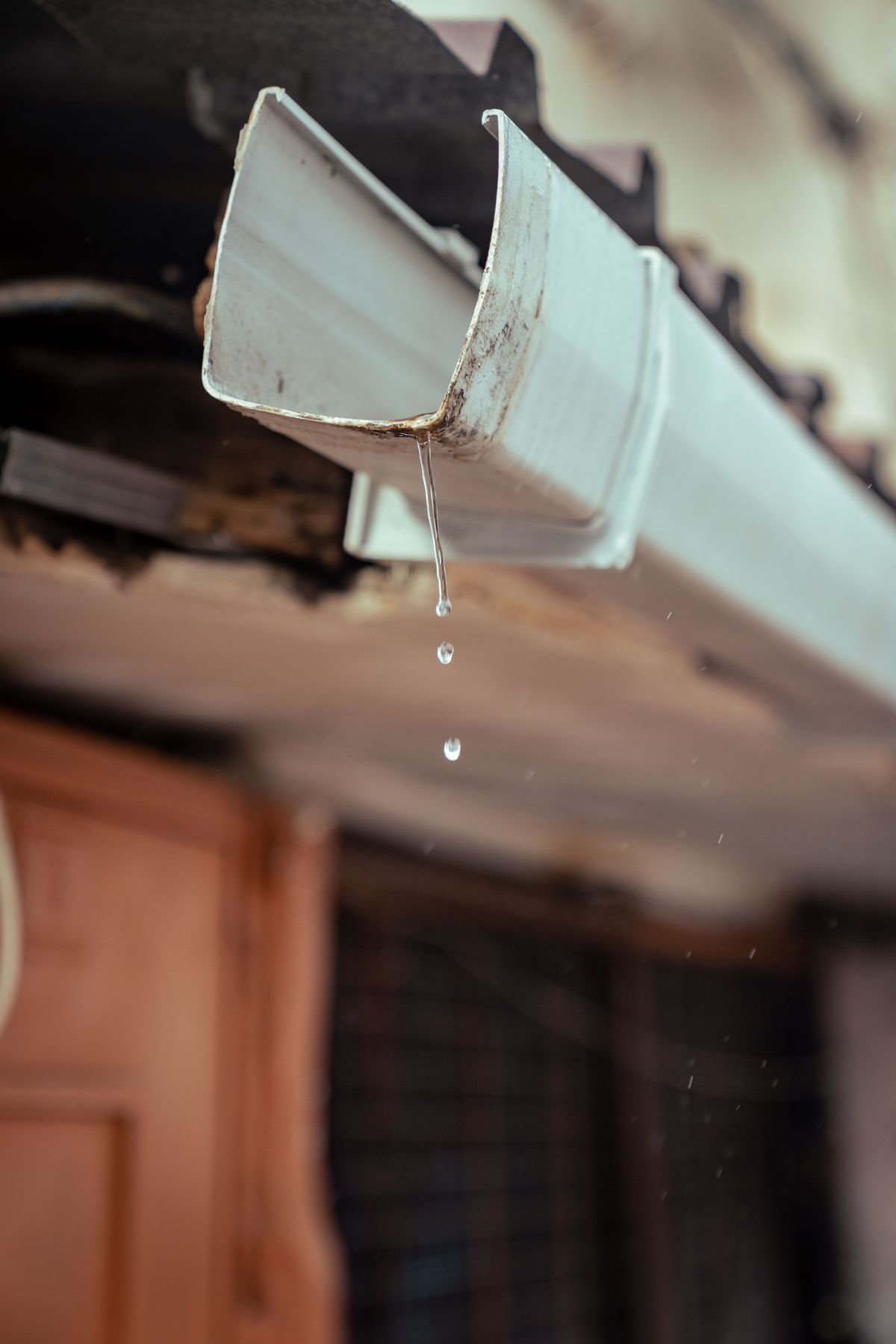
Rainwater in a pool: when yes and when definitely not
Rainwater is free and it is soft, which at first sight sounds ideal. The reality is more complicated. On its way across the roof and through the gutter it picks up dust, pollen, bird droppings, particles of roofing material and organic debris. All of that is fuel for algae and bacteria in a pool, and at the same time a load that will consume your disinfectant before it even starts to work.
When rainwater makes sense: as a source for topping up evaporation, in the order of hundreds of litres a week, and only when it passes through mechanical filtration (a gutter filter plus a fine filter before it enters the pool) and the tank is covered and clean. A small dose of soft water also helps to dilute rising hardness, which we write about in the article Water hardness and scale build-up.
When not to use rainwater: for the first fill of an entire pool, when it is stored in open barrels, with roofs that have copper or bitumen elements, and anywhere you have no way of filtering the water before it goes in. Bear in mind, too, that rainwater typically has low alkalinity, so the pH will be unstable after topping up and will “bounce” around.
Rule of thumb: rainwater is a supplement, not a main source. A share of up to roughly 10 % of the pool volume per season is manageable; any more means noticeably higher chemical consumption.
Wastewater charges for filling a pool: can you save?
This is the item most pool owners pay unnecessarily. As standard, the wastewater charge is billed according to the volume of drinking water drawn — the utility assumes that whatever comes in through the water main goes out through the sewer. But the water in your pool does not go into the sewer, at least not straight away and often not at all.
In many countries and regions you can therefore ask your water utility for a deduction on water that demonstrably does not enter the sewer. Conditions vary from supplier to supplier, so always check with your own provider. In practice this means:
- Find out the conditions from your utility. The rules, the forms and even whether a deduction is offered at all differ from one operator to the next. Start with a query to the customer centre or a look at their terms and conditions online.
- Install a sub-meter on the branch you use to fill the pool. Utilities usually require a meter with valid certification, installed so that it can be sealed and read.
- Have the meter registered and agree how it will be read. Without registration before you fill, nobody will grant you a retrospective deduction.
- Submit the reading once the pool is full, typically as a photograph of the meter or a written record.
The saving is not trivial. At an indicative European water price of around €5 per m³, the wastewater component makes up roughly half of the total, so on a 30 m³ pool that comes to something like €70–80 with every full fill. If you fill the pool once every few years, the sub-meter pays for itself on a single filling.
Two closing cautions: the deduction applies to water that genuinely does not end up in the sewer. If you drain the pool into the sewer connection at the end of the season, the situation is different and it is only fair to discuss it with your utility. And second — never tamper with your own main meter or its seals; that road leads to a fine, not a saving.

How to fill a pool properly: the technique step by step
Filling itself looks like an activity you cannot get wrong. Yet this is precisely where most liner damage and the most expensive “water” bills originate.
- Never leave the pool filling unattended, least of all overnight. This is the most common and most expensive mistake. Keep an eye on the hose and check the level at least once an hour.
- Fill to the correct height. The target is roughly half to two thirds of the way up the skimmer, or the manufacturer’s instructions in the case of overflow pools. A pool filled “to the brim” has no capacity left to absorb bathers or rain.
- With liner pools, fill slowly. The first 5–10 cm of water are crucial: keep smoothing the liner out as you go, pull out the creases and push air pockets towards the walls. Once the water presses the liner down, you will not shift it. You will find details on materials in the article How to choose a pool liner.
- Do not run the filtration dry. Only switch the pump on once the water level is above the skimmer and the suction line is primed.
- Watch the water temperature according to the season. Even in summer, mains water is only 10–14 °C, and well water is colder still. On a 30 m³ pool that means several days of heating. In spring, fill well in advance rather than the day before you plan to swim.
- Route the hose so that it cannot jump out. Secure the end so the water does not start pouring outside the pool — with in-ground pools that means waterlogged surroundings and damaged paving.
The first chemistry after filling: the order that matters
Freshly filled water looks perfect, but chemically it is “unset”. The order of the steps is not arbitrary — each one builds on the last.
- Measure hardness and alkalinity. Total alkalinity is the buffer that keeps the pH stable. The target range is roughly 80–120 mg/l, with calcium hardness at 150–300 mg/l. Without the right alkalinity, your pH will swing after every dose of chemicals.
- Set the pH. Target 7.0–7.4. Only within this range does chlorine work efficiently; at a pH of 8.0 it loses most of its effect. With hard water, add an anti-scale product.
- Carry out a start-up disinfection. A shock dose of hypochlorite or rapid-dissolving chlorine ensures the water starts out microbiologically clean. Then set continuous dosing to 0.3–0.6 mg/l of free chlorine.
- Let the filtration run continuously. For the first 24–48 hours after filling, filter without a break so that the chemicals mix in and any precipitated impurities are captured.
We use the same “alkalinity → pH → disinfection” logic with hot tubs too; the article Hot tub chemistry step by step covers it in detail. How to measure reliably, and with what, is summed up in How to test pool and hot tub water.
Fill the whole pool, or just top up evaporation?
A full fill is not an annual obligation. Well-maintained water lasts several seasons and is left in the pool over winter (it protects the structure against soil pressure and frost). Replacing the entire volume makes sense when the water reaches a high concentration of dissolved solids or chlorine stabiliser, or when you have been unable to stabilise the chemistry for a long period.
Normal operation is therefore about topping up evaporation — with an uncovered pool that means 3–5 mm of water level per day, which for a surface area of 32 m² works out at roughly 100–160 litres a day. You will find specific figures, an annual balance and tips on how to cut consumption in the article How much water a pool uses in a year.
Five mistakes that come up again and again when filling
- The forgotten hose. An overfilled pool, a waterlogged garden and a bill for dozens of extra cubic metres. Set an alarm, not an estimate.
- Filling “to the brim”. The water has to finish at skimmer level, otherwise the filtration has nowhere to draw surface debris from and the pool overflows when it rains.
- Filling through a clogged filter. Old sand or a fouled cartridge can release accumulated dirt straight back into your fresh water. Clean or backwash the filter before you start filling.
- Chemicals straight into the stream of water. Dose products only into a filled, circulating pool, never into an empty shell or into the flow from the hose — concentrated product can damage the liner.
- An unreported draw without a sub-meter. A wastewater charge paid on water that never went into the sewer is a pure loss.
Frequently asked questions
How long does it take to fill a 30 m³ pool from the mains?
At a typical domestic connection flow rate of 1–2 m³ per hour, allow 15 to 30 hours. Through a single 1/2″ garden hose, expect 24 hours or more. Two hoses at once roughly halve the time, provided your connection can cope.
Can I fill my pool from a tanker carrying non-potable water?
We would not recommend it. Non-potable water can contain high levels of iron, organic matter and bacteria, and the cost of chemicals and the time spent clarifying it easily outweigh the saving. Always ask the haulier for information on the origin and quality of the water.
Will the utility refund the wastewater charge retrospectively if I install the meter only after filling?
As a rule, no. The usual condition is a meter installed and registered before the water is drawn. If you are planning to fill in spring, arrange the sub-meter well in advance and check the specific conditions with your own operator — they differ from region to region.
Is rainwater harmful to a pool?
Not in itself; the problem is what it picks up on its way off the roof, and its low alkalinity. For topping up smaller volumes through filtration it is usable, but it is not suitable for filling an entire pool.
Do I have to replace the water after filling if the readings were “odd”?
Usually it is enough to treat the water. First measure alkalinity and hardness, then set the pH, and only then deal with disinfection. Replacing the whole volume is the last resort, when the values cannot be stabilised even after several days of filtration.
In conclusion
Filling a pool is a one-off operation, but it sets up the entire season. Choose your source according to the pool volume and the capabilities of your connection, check the conditions for a wastewater deduction with your utility, fill under supervision and balance the water chemically in the right order as soon as it is full. You will find a starter set of products for alkalinity, pH and disinfection in the water treatment category, and further practical guides in the Guide section.
