
When a puddle appears under the hot tub and the water level starts dropping faster than it used to, the most common culprit is the pump’s mechanical seal — a small seal on the shaft between the wet end and the dry motor. The part itself usually costs only a few tens of euros, but put the job off and water gets into the motor, turning a cheap repair into a new pump costing hundreds. That is exactly why this is the textbook case of “cheap part, expensive service” — and why it pays to recognise it in time.

What a mechanical seal is and why the pump needs one
A hot tub pump has two distinct halves. In the wet end an impeller spins in water; in the dry end sits the electric motor, which must be kept well away from it. Only one thing connects them: the shaft, which passes through the pump wall. And that is precisely where a rotating shaft has to be sealed so that water cannot escape and reach the motor windings.
An ordinary rubber seal could not do this job — the shaft turns at thousands of revolutions per minute and a static ring would wear through in moments. The answer is a mechanical seal, sometimes also called a shaft seal.
Two sealing faces: ceramic and carbon
A mechanical seal comes in two parts, and the two halves belong together as a pair:
- The stationary half — a ceramic (or silicon carbide) ring pressed into a rubber cup, which sits firmly in the pump housing and does not rotate.
- The rotating half — a carbon (graphite) ring with a spring, fitted on the shaft and turning with it.
The spring keeps pressing the two faces together constantly. They are lapped to a mirror flatness and a microscopically thin film of water remains between them — that film is both the seal and the lubricant. So the seal never runs dry: without water the faces would overheat and be damaged within tens of seconds.
That also explains the typical course of a failure. A seal does not fail overnight — first the faces begin to suffer minute damage and the water film stops being continuous. At first it drips, later it runs in a trickle.
Why a seal wears out
On a domestic hot tub the life of a seal is normally counted in years, but a few things can cut that down to months:
- Running dry. By far the most common cause. It is enough to start the pump after a water change without bleeding the air out, with a low water level, or with the gate valves closed. The seal may not leak straight away, but it is doomed to an early end.
- Hard water and deposits. Scale builds up on the shaft and around the seal too; hard particles get between the sealing faces and act as an abrasive. We look at water hardness in detail in the article on water hardness and scale buildup.
- Aggressive chemistry and low pH. Water with a pH below 7.0, overdosed chlorine or shock treatment tipped straight into the skimmer attack the rubber parts of the seal. How to keep chemistry within limits is covered in hot tub chemistry step by step.
- Age and running hours. Carbon simply wears away. On a hot tub that filters for eight hours a day, after five to eight years the seal is a consumable part at the end of its life — even with exemplary care.
- Vibration and misalignment. A pump forced into place in strained pipework destroys the seal faster.
Symptoms: from the first drop to a breakdown
A seal failure follows a surprisingly readable script. The sooner you step in, the cheaper it is.
| Stage | What you will see or hear | What to do |
|---|---|---|
| 1. Damp | A dark patch or damp base under the pump, no visible drop. The level falls only slightly. | Monitor. Dry it off and note the date. |
| 2. Dripping while running | It only drips when the pump is running — often from the opening between the pump housing and the motor. | Order the part. The repair is still cheap. |
| 3. White traces | A white coating of scale or salt on the motor foot, rust on the fixings. | Replace without delay — water has been leaking for a long time. |
| 4. Squealing and grinding | A high-pitched noise on start-up or while running — damaged faces rubbing dry. | Shut it down and deal with it now. |
| 5. Electrical fault | The hot tub trips the breaker or the RCD, the motor will not start, there is a smell of burnt windings. | Do not switch it on. This normally means a new pump. |
The last stage also works in reverse: if the hot tub keeps tripping the RCD, a wet pump is one of the first suspects. Moisture in the terminal box or in the windings creates a leakage current, and the RCD reacts to it exactly as it should. The electrical side is summed up in the article on hot tubs and electrical connection.
Why it cannot be put off
A seeping seal does not send water out of the cabinet at random — it runs straight along the shaft into the space between the wet end and the motor, where the weep hole is. While the leak is small, the hole drains the water away. Once the flow outgrows it, the water wicks further: into the shaft bearing, into the terminal box and finally into the windings.
That is what flips the economics of the repair. While it is still the seal, you are looking at a part costing tens of euros and an hour’s work. Once the bearing or the windings go, a whole new pump is on the table — usually the single most expensive component in the entire system.
The second reason is structural. On insulated hot tubs the water drips into the foam or onto the cabinet floor and from there under the shell, where nobody sees it. Permanently wet insulation loses its thermal resistance and the frames suffer. We look at the difference between a genuine leak and normal evaporation in the article on water loss versus evaporation.
How to find out where it is really leaking from
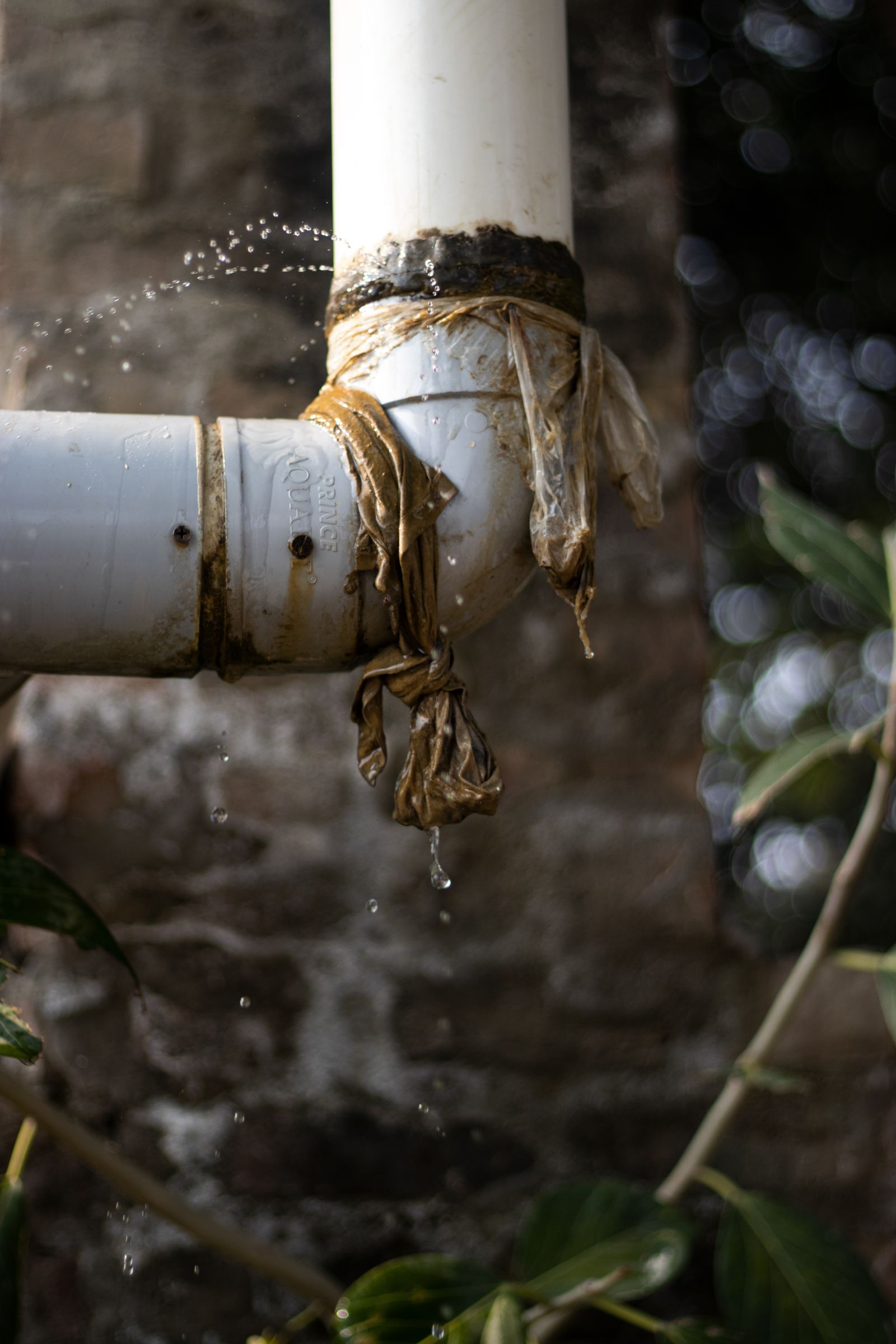
A puddle under the cabinet does not by itself mean the seal. There are four typical leak points in the equipment bay of a hot tub, and each has a different solution — and a different cost. Before you order anything, you need to find the spot.
Four suspects
- The mechanical seal. Drips from the space between the wet end and the motor, i.e. from the back of the pump housing. The key sign: it leaks mainly while the pump is running, and once it is switched off the dripping stops or weakens markedly.
- The union and its collar nut. The fitting that connects the pump to the pipework. It leaks around the circumference of the joint, often continuously — even with the pump stopped. The fix is usually hand-tightening and replacing a flat gasket costing a euro or two.
- The pre-filter lid gasket. The clear lid of the basket in front of the pump. It leaks from above, and once the lid is off the O-ring is usually flattened, cracked or displaced. The cheapest fault of them all.
- Cracked plastic. A hairline crack in the pump housing or in the pipework, typically after freezing. Damp appears even without pressure, and gluing is usually only a temporary fix.
Checking procedure
- Switch the hot tub off and leave the equipment to stand for several hours.
- Dry everything perfectly — the pump, the pipework, the joints and the cabinet floor. A dry starting point is the whole trick of this method.
- Lay pieces of paper towel under the pump and under each individual joint. The paper goes damp before a puddle appears and will tell you the exact spot.
- Switch the pump on to filtration mode and watch which towels go damp first and how quickly.
- Check the state with the pump off as well. A leak that continues at standstill points more to a joint or a crack; a leak only while running points to the seal.
- Photograph it. If you end up calling a service engineer, a photo of the spot saves both money and time.
If the pump is also making unusual noises or struggling to start, you may be dealing with a combination of faults, and the diagnostic procedure differs accordingly.
Seal replacement step by step
Safety warning. A hot tub is a 230 V or 400 V appliance standing in water. Before any intervention, switch off the supply at the main breaker and the RCD in the consumer unit — switching the hot tub off from the control panel is not enough. Only a person with the appropriate electrical qualification may disconnect and reconnect the pump. The procedure below is an informative overview of what the repair involves, not a set of instructions replacing the manufacturer’s documentation.
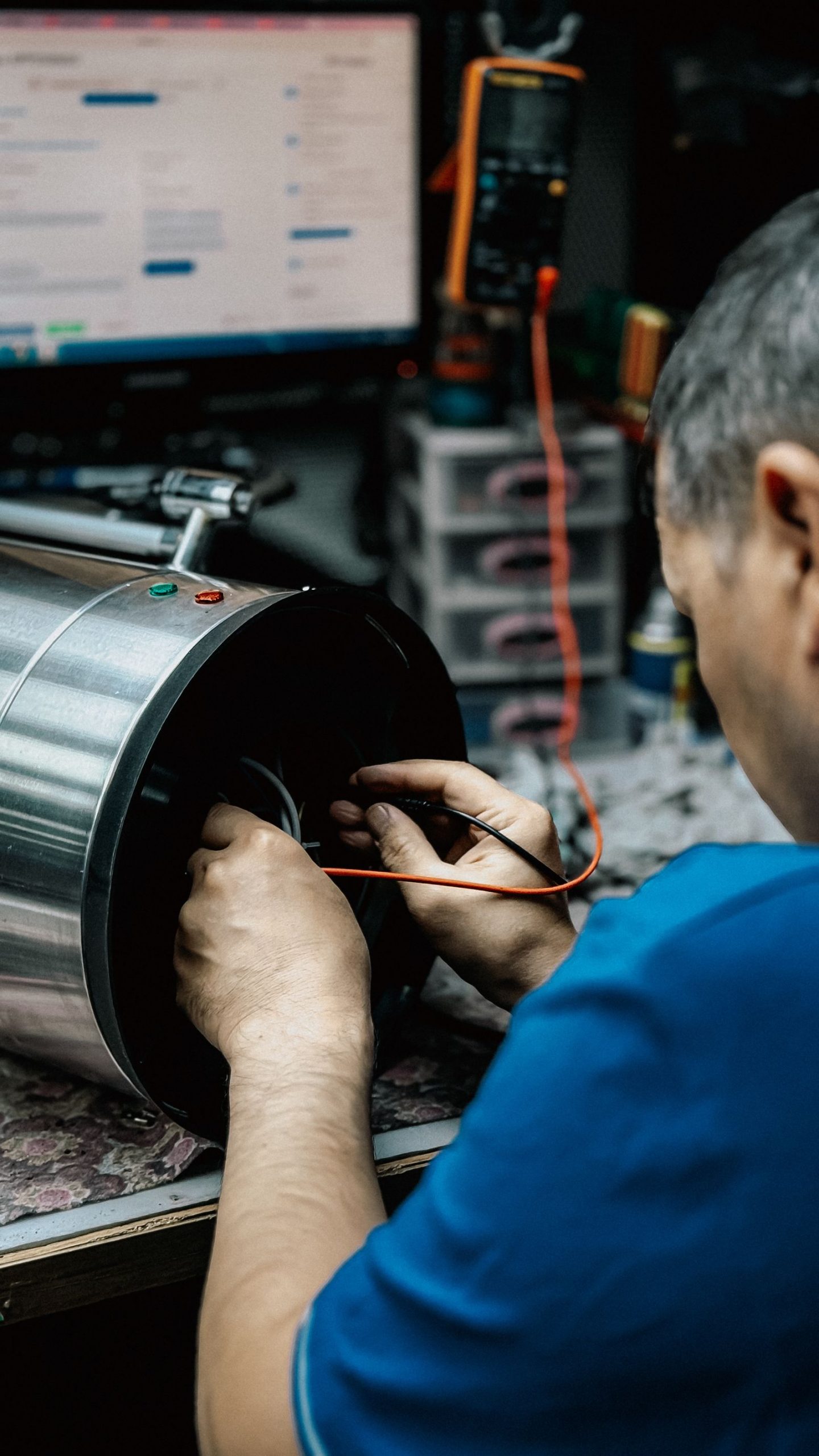
- Disconnect the electricity and verify that the circuit is dead. Only then can work begin.
- Close the gate valves on both suction and discharge. If the hot tub has no gate valves, the water has to be drained below the level of the lowest pipe — which means a complete water change.
- Remove the pump. Loosen the collar nuts of the unions, disconnect the pump from the pipework, unbolt it from the frame and carry it to the workbench. Photograph every step.
- Dismantle the wet end. Take off the pump housing (usually six to eight bolts) and remove the diffuser.
- Remove the impeller. Hold the shaft against rotation (there is usually a spanner flat or a slot at the rear of the motor) and unscrew the impeller. Careful: most pumps have a left-hand thread, so it undoes clockwise. The wrong direction means snapped plastic.
- Replace both halves of the seal as a pair. The rotating carbon part sits on the shaft, the ceramic one is pressed into the rear wall of the housing — push it out carefully from behind. Never combine a new half with an old one, even if the old one “looks fine”. The faces have bedded in to each other.
- Cleanliness above all. Degrease the seating faces with spirit and do not touch them with your fingers; a greasy fingerprint is enough to make the seal seep from the outset. The rubber cups are lubricated on assembly with water or spirit only, never with oil, grease or silicone spray — those swell the rubber and destroy it.
- Reassemble and test. Replace the housing O-rings as well (they usually come in the kit), tighten the bolts crosswise and by feel, and refit the pump without strain in the pipework. Bleed the air out before starting. Then watch it for half an hour and check again after a day and after a week.
Who should tackle it themselves — and who should not
The line between “manageable” and “better not” is unusually sharp with this repair. Take it to the bench if the hot tub has working isolating gate valves, the pump is a common type with an available part, and you have a quiet table where you can work cleanly.
Call a service engineer in these cases instead:
- The hot tub has no gate valves. That means draining the whole shell — and with it the cost of new chemicals and reheating, which can be more than a technician’s call-out.
- Full-foam construction. On hot tubs completely filled with insulating foam the pipework is buried in it and access to the pump is limited. Unskilled digging into the foam does more harm than good.
- A valid warranty. Working on the equipment yourself is the surest way to lose it. What the warranty does and does not cover is discussed in the article on warranty claims. Within the warranty period, always contact the retailer first.
- Uncertainty at any point in the procedure. Especially when disconnecting and reconnecting the electrical side. A wrongly assembled seal leaks immediately; a wrongly wired motor is dangerous.
How to find the right type of seal
Seals are not universal. Several figures decide the matter, and you need them in hand before you order anything:
- Shaft diameter — the most important dimension. On hot tub pumps the most common sizes are 5/8″ (about 15.9 mm) and 3/4″ (about 19 mm). Measure with a vernier caliper on a clean shaft.
- The outside diameter of the ceramic part and the overall installed length — it has to fit the seat in the housing.
- The pump data plate — make, type designation, power and speed. Photograph the whole of it; it is the fastest route to identifying the part.
- The seal type designation. It is usually stamped on the old part or given in the documentation. There are several widespread design series, and they can only be interchanged when every dimension matches.
- Material specification — ceramic/carbon is the standard, silicon carbide lasts longer in hard water and costs more.
The safest approach is to take the old seal with you or send the retailer a photo of both the data plate and the part. Finding your way around hot tub equipment markings is made easier by the article on how to read a hot tub spec sheet.
What it costs
The figures below are indicative only — they vary with the brand, the availability of the part and the region. Treat them as an order-of-magnitude estimate, not a quotation.
| Item | Indicative price | Note |
|---|---|---|
| Mechanical seal | 12–48 € | Depending on size and material; carbide costs more. |
| Set of O-rings and gaskets | 6–24 € | Replace together with the seal. |
| Service call-out + labour | 60–160 € | Travel, removal, refitting, testing. |
| New hot tub pump | 240–1,000 € | Depending on power and brand. |
| New motor without the wet end | 160–600 € | Not always available separately. |
The difference between repairing in good time and repairing too late is therefore roughly an order of magnitude. That is also why a puddle under the cabinet is worth dealing with straight away, rather than “in the autumn”.
Prevention: how to make a seal last longest
- Never run the pump dry. After a water change, after winterising and after any work on the pipework, always fill and bleed first. A few seconds of dry running damages the seal permanently.
- Watch the water level. If it drops below the skimmer, the pump draws in air. A regular check is a matter of ten seconds.
- Keep the chemistry balanced. A pH of 7.2–7.6, sensible alkalinity and dissolving products away from the skimmer protect both the seal and the shell surface. Regular water testing helps.
- Clean the filter. A clogged filter forces the pump to work under vacuum, which stresses the seal. The procedure is summed up in hot tub filter cleaning.
- Look inside the cabinet once a year. Five minutes with a torch reveals damp before it becomes a puddle. A practical overview is offered by the hot tub maintenance calendar.
Frequently asked questions
How long does a mechanical seal last?
With balanced chemistry, a clean filter and no dry-running episodes, commonly five to eight years of daily operation. But a single start-up without water can cut that life to months — the damage to the faces is irreversible, even if the leak only shows up later.
Can the seal simply be tightened to stop it leaking?
No. Unlike old packed gland seals, there is nothing to tighten — the pressure is provided by the spring inside. Once the sealing faces start to seep, they are damaged and the only answer is to replace both halves.
Do I have to replace both halves when only one is leaking?
Yes, always as a pair. The carbon and the ceramic lap each other in during operation. A new half against an old one will not seat evenly and will start to seep within a few weeks — saving a couple of euros is not worth it.
Can I tell a seal from a leaking union?
The best clue is whether it depends on the pump running. A seal leaks mainly when the pump is running, and drips from the space between the wet end and the motor. A leaking union or pre-filter lid lets water through even with the pump stopped, and the water appears around the circumference of the joint. The drying-and-paper-towel method distinguishes the two reliably.
My hot tub is tripping the RCD because of a wet pump. Can I keep using it for now?
No. A tripped RCD means current is escaping by a route it should not — most often through moisture in the motor. At that moment the RCD is doing exactly its job, and resetting it repeatedly is dangerous. Leave the hot tub disconnected and call a service engineer or an electrician.
The mechanical seal is the cheapest part capable of destroying the most expensive component in a hot tub’s equipment. A few minutes of attention during routine maintenance therefore pay back more than most other checks. If your diagnosis shows it is time for a new pump, you will find the relevant range in the pool and hot tub equipment category. More guides are waiting in the Guide.
