
A steam room offers a different experience from a classic Finnish sauna: instead of dry heat at 80–100 °C, you are enveloped in dense mist at 40–50 °C with humidity approaching 100%. That is exactly why it appeals to people who find dry heat uncomfortable, as well as those who want to enjoy traditional care for the airways and skin. Of all home wellness features, however, a domestic steam bath is the most demanding in terms of construction preparation — and that is precisely what this guide covers in the greatest detail.
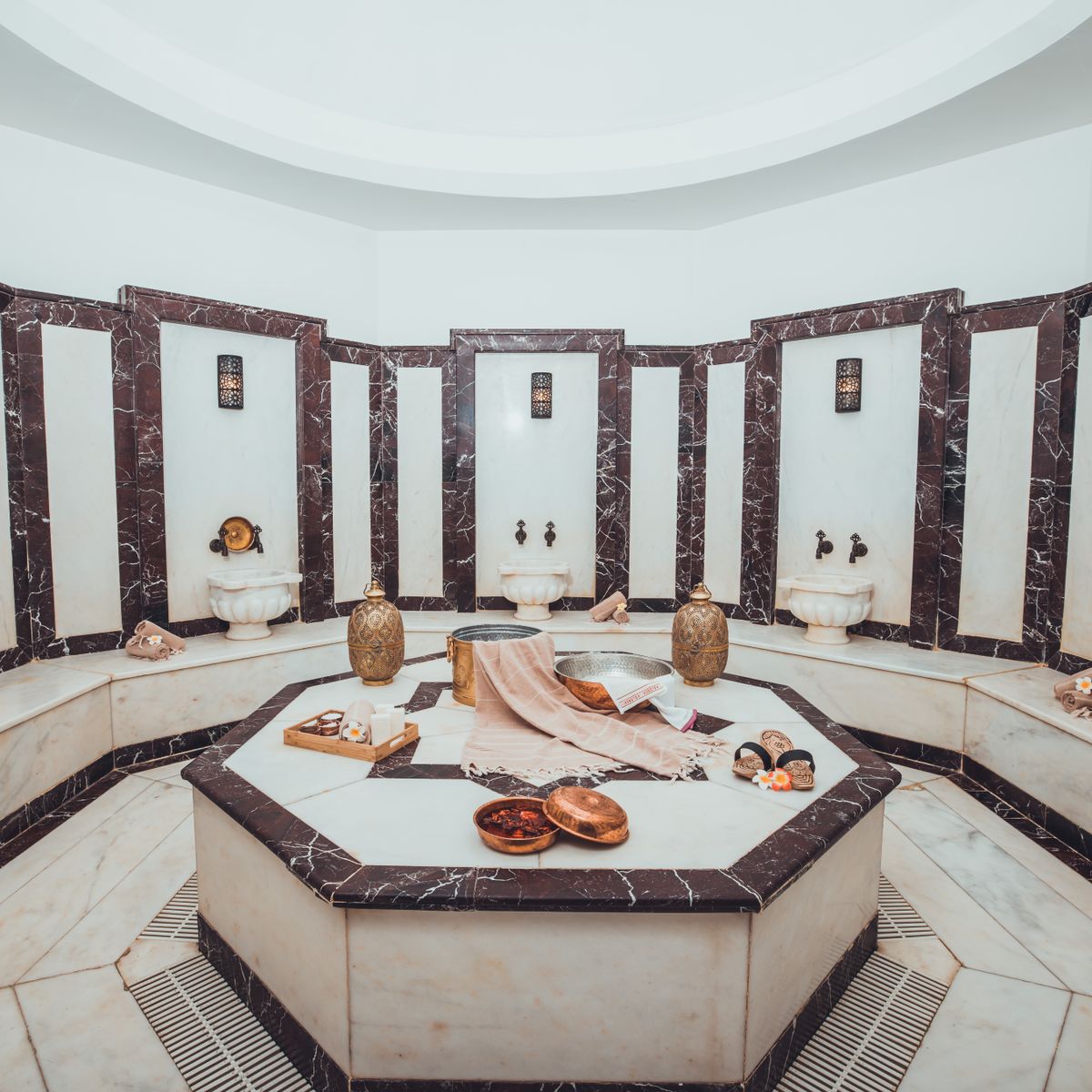
How does a steam room work and how does it differ from a Finnish sauna?
The heart of a steam bath is the steam generator — essentially a powerful steam producer installed outside the cabin, in a technical niche or an adjacent room. It heats water to boiling point and drives the resulting steam through a nozzle into the cabin until humidity reaches practically 100%. A thermostat keeps the temperature typically between 40 and 50 °C.
At first glance, 45 °C sounds like a watered-down version of a Finnish sauna. The physics, however, is different: in air saturated with steam, sweat cannot evaporate, so the body heats up intensively even at a lower temperature and the subjective sensation of heat is surprisingly strong. A Finnish sauna, by contrast, works with dry air at 80–100 °C and humidity of only around 10–20%.
The environment differs too: a Finnish cabin is made entirely of wood, while a steam bath must be built from materials that tolerate permanent moisture — ceramics, stone, glass, acrylic. If you are deciding between a dry and a steam version (or an infrared sauna), you will find a basic comparison of the types in our article How to choose a home sauna. This text is devoted purely to the steam bath — the “steam room” familiar from hotel spas.
What a steam bath can do: airways, skin and gentler heat
Steam baths are among the oldest spa traditions — from Roman thermae through the Turkish hammam to the Russian banya. Warm, moist steam has traditionally been used to warm the body through, relax the muscles and induce a feeling of deep rest. Inhaling warm water vapour is also a classic home remedy for a feeling of congestion and dryness in the airways; many people describe breathing in steam as freer and more pleasant.
The second traditional argument is the skin. Steam opens the pores, softens the upper layer of the skin and makes subsequent cleansing or exfoliation easier — which is why the hammam has always been associated with skincare rituals. Unlike a dry sauna, it does not dry the skin out, something people prone to dry skin will appreciate.
The third advantage is the gentler temperature. Those who find the 90 °C of a Finnish sauna unpleasant often discover that they tolerate 45 °C steam considerably better — they warm through, but without the burning sensation in the nose and on the skin. To be fair: a steam bath is wellness, not a treatment. If you have a heart or vascular condition, skin problems or are pregnant, consult a doctor about whether time in the steam is suitable for you, just as with any sauna.
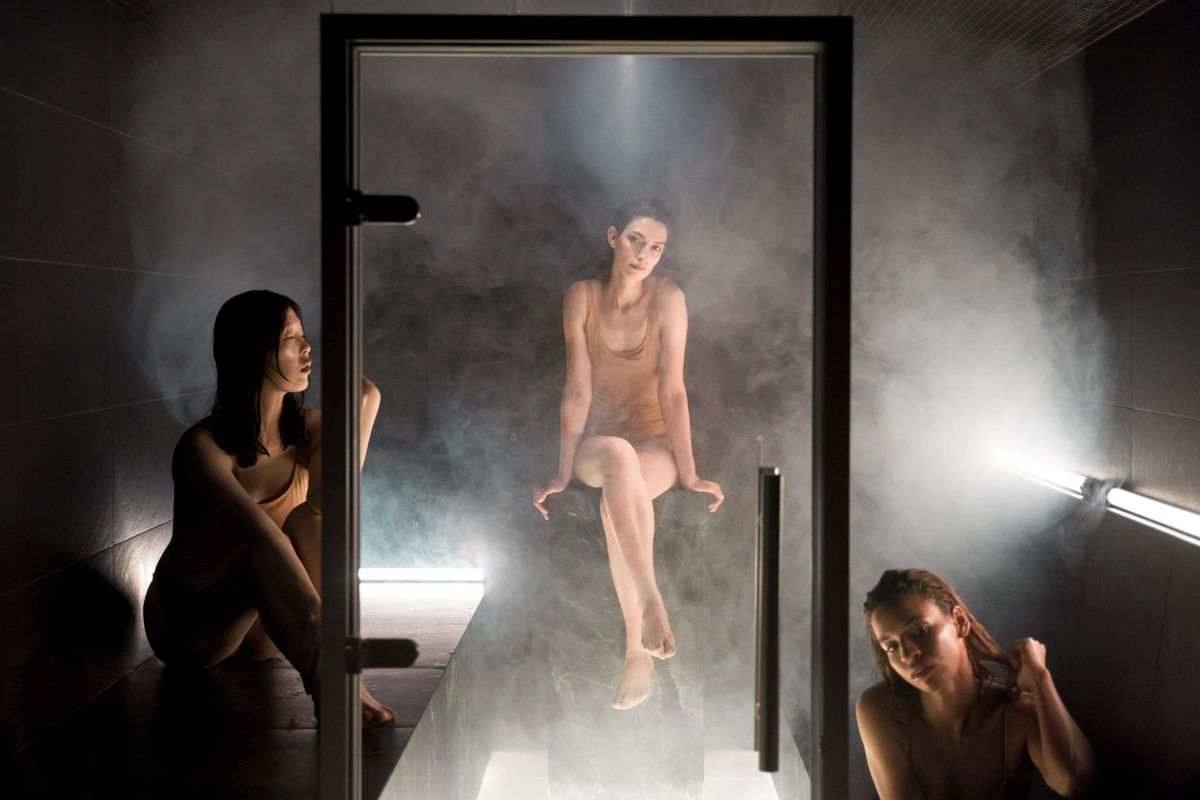
Construction requirements: this is where the success of the whole project is decided
While a Finnish sauna can be built in practically any dry room, a steam bath is a small “wet build” inside the house. For an hour or more it operates at 100% humidity, with water condensing on every surface. Underestimating the construction preparation is the most common reason why home steam baths end in mould and an expensive renovation.
A vapour-tight cabin envelope
The walls and ceiling must form a continuous vapour-tight layer — without it, steam penetrates the structure, condenses in the insulation and destroys the surrounding masonry or plasterboard. The standard is cement construction boards with a waterproofing coat and vapour barrier, over which the tiling is laid. Ordinary “bathroom” plasterboard is not enough. The ceiling is also sloped (usually 1–2% or built as an arch) so that condensate runs down the walls rather than dripping onto seated bathers.
A floor with a drain and condensate removal
The floor must slope towards a floor drain — after every session, a litre or more of condensate runs off the surfaces and the cabin needs rinsing. The drain also handles the draining and flushing of the steam generator. If there is no waste connection at the location, expect to break up the floor; this is often the biggest item in a retrofit installation.
Materials: tiles, mosaic, glass
The interior is clad with ceramics, glass mosaic or stone; the benches are usually masonry-built and heated so they are not cold to sit on. Doors and any glass walls must be made of toughened safety glass with sealing around the perimeter. Wood does not belong in a steam bath — with the exception of special accessories, permanent moisture destroys it quickly.
Ventilation: protecting the rest of the house
Good ventilation is just as important for the house as vapour-tightness. The room in which the steam cabin stands needs mechanical extraction (ideally connected to a heat-recovery system or a dedicated fan) so that the humidity is reliably carried outdoors after bathing and does not condense on windows and walls. The same humidity-management principles apply here as those we describe in detail for an indoor pool at home — and if you plan to combine your home spa, also read our article Indoor hot tub, where we tackle humidity from the hot tub’s perspective.
The steam generator: output, limescale and maintenance
The generator is sized according to the cabin volume in m³ and the wall material. Tiles and stone store heat and “eat into” the output, while glass loses heat quickly — both increase the kW required compared with a lightweight acrylic cabin. As a rough guide:
- acrylic steam cabin of 1.5–2.5 m³: approx. 3–4.5 kW,
- tiled cabin of 3–5 m³: approx. 6–9 kW,
- larger masonry steam bath of 6–9 m³, or one with a lot of glass and stone: 9–12 kW or more.
Manufacturers publish conversion tables with corrections for the material — it pays to size one step up rather than down, as an undersized generator will not heat the cabin and runs flat out. From roughly 9 kW upwards, expect a three-phase connection.
The generator’s arch-enemy is limescale. The steam producer boils the water, the minerals stay behind in the tank and settle on the heating elements — with hard water, a neglected generator can be destroyed within a few seasons. Find out the hardness of your water (we explain how in our article Water hardness and limescale) and, if it is on the harder side, fit a softener upstream or at least a filter. Most quality generators have an automatic flush: after switching off, they drain the water and rinse the tank. Consider this feature mandatory equipment; alongside it comes occasional descaling according to the manual and checking the nozzle.
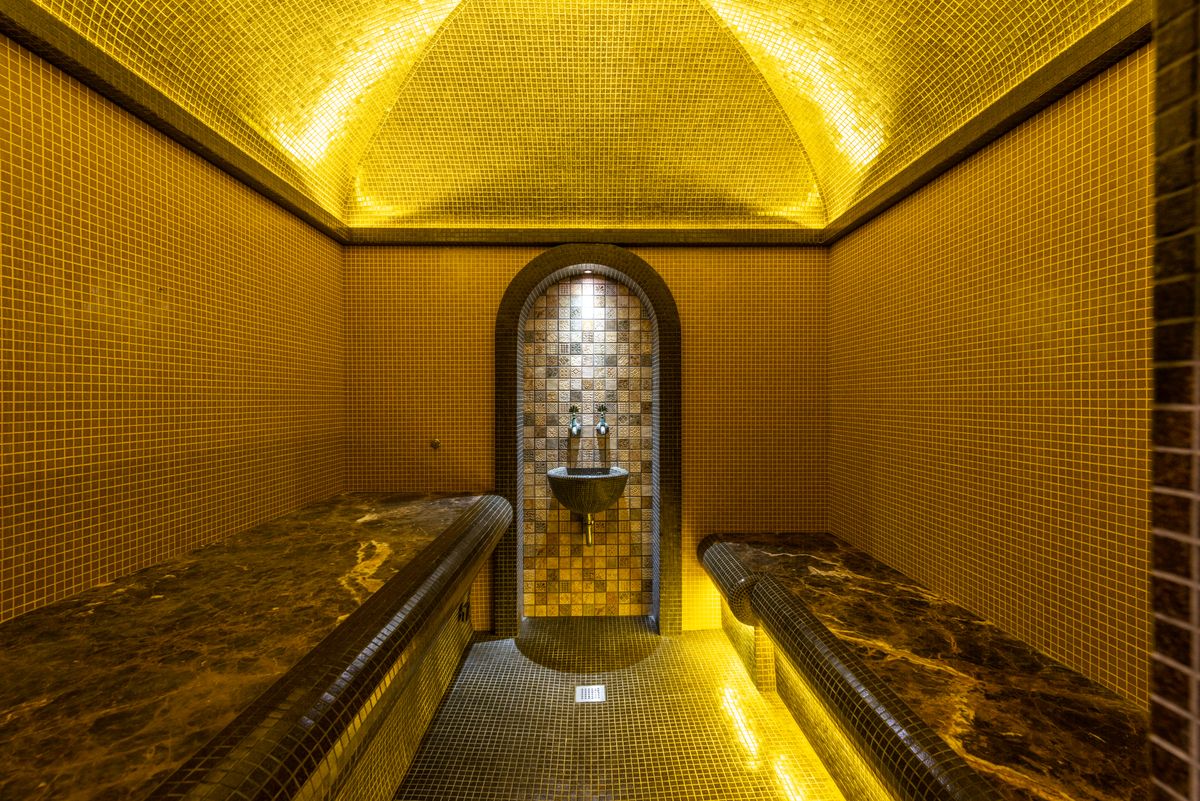
Prefabricated cabin, custom build, or steam shower enclosure?
There are three routes into the home, differing in price, comfort and construction demands:
| Solution | Indicative price incl. installation | Construction requirements | Who it suits |
|---|---|---|---|
| Steam shower enclosure (acrylic, integrated small generator) | approx. €1,400–4,800 | Low — water supply, shower waste, 230 V socket | A quick solution for a standard bathroom, steam for 1–2 people |
| Prefabricated steam cabin | approx. €6,000–18,000 | Medium — level floor, waste, water supply, 230/400 V, room ventilation | Full-scale steam for 2–4 people without major building work |
| Custom build (masonry, tiles/mosaic, separate generator) | approx. €14,000–40,000+ | High — vapour-tight envelope, sloped floor with drain, heated benches, mechanical ventilation | A no-compromise home spa, tailored exactly to your space and design |
The steam shower enclosure is the entry level: it produces steam, but the weaker generator and thin acrylic mean a shorter, less intense bath. A prefabricated cabin already delivers an experience comparable to a hotel spa with a reasonable construction burden. A custom build is the most expensive, but the only option with no limits on dimensions and materials — and the only one where everything we wrote about construction preparation truly applies.
Aromatherapy in the steam: eucalyptus and friends
Steam is the ideal carrier of fragrance — which is why aromatherapy is an inseparable part of the steam bath. The classic is eucalyptus, traditionally associated with a feeling of free breathing, followed by mint, pine, citrus, or lavender for winding down in the evening.
In practice: essences are never poured directly into the generator (they damage the tank and the sensors), but into an aroma dispenser on the steam pipe, or alternatively into a bowl or a designated spot near the nozzle. Choose essences intended for steam baths and dose sparingly — in a small cabin, a few drops are enough. You will find fragrance tips and safe dosing in our article Aromatherapy for hot tubs as well; the principles of essence quality are the same.
Hygiene: so the steam smells fresh, not foul
Warmth and moisture are paradise for mould and bacteria — a steam bath therefore requires a simple but regular routine:
- After every use, rinse the benches and walls with water (a hand shower in the cabin is ideal) and leave the door open so the cabin can dry out.
- Ventilate — leave the mechanical extraction running until the humidity drops; permanently damp tile joints are the first place mould appears.
- Weekly to monthly (depending on how often you use it), wash the surfaces with a non-aggressive cleaner suitable for tiles and glass, and clean the drain.
- Sit on a towel and shower before your session — basic spa etiquette applies at home too.
If the cabin smells musty despite this care, the cause is usually poor ventilation or a leak through which moisture is seeping into the structure — that is a reason for a professional inspection, not for stronger chemicals.
Steam and cooling down: the combination that makes it wellness
Just as with a Finnish sauna, it is the alternation of heat and cold that makes the experience. After 15–20 minutes in the steam comes a lukewarm to cold shower, a cooling bucket or a cold plunge straight away, followed by rest and rehydration — and by all means another round. Why alternating temperatures does the body good and how to start cautiously is covered in our article Contrast therapy: hot tub and cold plunge.
In a home spa, the steam bath pairs beautifully with a hot tub: the steam warms and relaxes, the hot tub adds massage. Those with the space line up steam, cooling and a relaxation area side by side — a compact home circuit that even a larger bathroom or basement can accommodate.
Frequently asked questions about a home steam room
How much does a steam bath cost to run?
A 6 kW generator consumes roughly 4–6 kWh for a one-hour session including heat-up, i.e. around €1–1.8 depending on electricity prices. Add a few litres of water and the energy for ventilation. Unlike a hot tub, a steam bath consumes nothing between uses.
How long does it take for the cabin to be ready?
A correctly sized generator fills the cabin with steam in 10–20 minutes, depending on volume and material. Masonry cabins with heated benches start more slowly but hold a more stable climate.
Can I build a steam cabin in a standard bathroom?
A steam shower enclosure, yes — it only needs water, a waste connection and a socket. A masonry steam bath requires a vapour-tight envelope, a sloped floor with a drain and mechanical ventilation; in a standard bathroom that means building work, which is cheapest to tackle during a renovation.
Is a steam room suitable for children?
Thanks to the lower temperature, steam is usually easier for children to tolerate than a Finnish sauna, but the rules always apply: shorter sessions, a lower set temperature, plenty of fluids and adult supervision. For small children and in case of health issues, consult a paediatrician.
How often should the water in the generator be changed?
You do not change the water manually — a quality generator drains and flushes it itself after every session. Your job is descaling according to your water hardness (typically a few times a year) and, if needed, a softener on the supply line.
A steam room is the most demanding but also the most sensory piece of home wellness: moist heat, the scent of eucalyptus and silence behind glass doors. If you do not underestimate vapour-tightness, water drainage and ventilation, it will reward you with years of trouble-free operation. You will find steam generators, saunas and other home spa equipment in the wellness category at poolspashop.eu, and inspiration for a complete home spa in the other articles in our Guide.
