
A hot tub does not need hours of work, it needs a rhythm. Once you know what belongs to every soak, what to the weekend, what to the first day of the month and what to once a year, the whole routine comes down to roughly 10–15 minutes a week plus two or three bigger jobs a year. This calendar is a signpost: for each task you will find how often it is done, how long it takes and where to click through for a detailed guide.

Why a hot tub follows a different rhythm than a pool
Anyone who also owns a pool knows the year-round pool maintenance calendar — that one is driven by the seasons: open in spring, watch over the summer, winterise in autumn. A hot tub works differently. It runs all year and its calendar is set not by the weather, but by the number of soaks and the water volume.
The difference lies in the ratio. In a pool, each bather has several dozen cubic metres of water; in a hot tub roughly 200–300 litres. At the same time the water is a warm 36–38 °C, so organic residues break down far faster in it and the disinfectant is consumed at an order of magnitude faster rate than in cool pool water. That is why you test a hot tub more often, but always for just a few minutes — unlike a pool, there is no vacuuming or brushing of the floor here.
The second difference: a hot tub holds a small volume, so after a while the water becomes “saturated” and cannot be dosed with chemicals indefinitely. Instead of seasonal winterising it therefore follows a water change cycle every 3–4 months. That is the main axis of its calendar.
The big overview table: interval × task × time
The table applies to an ordinary domestic acrylic hot tub for 4–6 people with a volume of 1,000–1,800 litres, used 3–5 times a week. With heavier use (daily, a full tub, rentals), move the frequency of testing and filter cleaning up one notch.
| Interval | Task | Time |
|---|---|---|
| Every time you use it | A look at the water surface and display, check the temperature, close the cover after soaking | 1 min |
| Before soaking | A shower with no cosmetic residues (prevents foam and cloudiness) | 3 min |
| 2–3× a week | Water test: disinfectant, pH, alkalinity where relevant | 2 min |
| Weekly | Correcting pH and dosing disinfectant, oxidising the water where needed | 5 min |
| Weekly | Rinsing the filter cartridge with a jet of water | 5 min |
| Weekly | Wiping the waterline and the shell rim | 3 min |
| Monthly | Deep cleaning the filter by soaking it in a solution | 10 min of work + overnight soak |
| Monthly | Checking water hardness and stabiliser (CYA) | 5 min |
| Monthly | Checking and cleaning the cover, treating the vinyl | 15 min |
| Monthly | Inspecting the equipment bay under the cabinet (damp, drips, rodents) | 10 min |
| Every 3–4 months | Water change including a pipe flush and cleaning the empty shell | 2–4 h (of which ~1 h of work) |
| Every 3–4 months | Checking the jets, suction covers and seals with the tub empty | 15 min |
| Yearly | New filter cartridge | 5 min |
| Yearly | Treating the acrylic with polish, preserving the cabinet | 1 h |
| Yearly | Service inspection (pumps, heating, electronics, seals) | 1–2 h of a technician’s time |
| Yearly | Electrical check: residual current device, supply, bonding | 15 min |
| Seasonally | Preparing for winter / responding to summer load | 30–60 min |
Daily: the minute you never skip
Daily hot tub care is not work, it is a habit. When you walk past, look at three things.
- Water level: it should reach halfway up the skimmer or the mark set by the manufacturer. A falling level is the cheapest warning signal there is — either more is evaporating than usual, or something is leaking.
- Display and temperature: the set and actual temperature should match. An error message or a temperature 2 °C lower means something is going on with the heating or the flow.
- Cover: close it after soaking and clip the straps. An open cover is the single biggest heat loss and the biggest source of contamination in the water.
Shower before you get in. Body lotions, sunscreens and detergent residues in swimwear are the most common cause of foam and cloudiness — three minutes of prevention saves you a dose of antifoam and a burnt-through disinfectant reserve.
Weekly: the core of the whole routine (about 10–15 minutes)
The weekly block is the one thing you really have to keep to reliably. It breaks down into four steps.
1. Test the water 2–3 times a week
Dip a test strip or run a drop test and read the values. Target ranges: pH 7.0–7.4, free chlorine 3–5 mg/l (or bromine 3–6 mg/l), alkalinity 80–120 mg/l. Testing once a week is not enough — in water at 37 °C the disinfectant is used up within a few days and drops sharply after every more intense soak. This is covered in detail in the article on how to test pool and hot tub water.
2. Balance the pH and disinfectant
The order is always the same: pH first, disinfectant second. Above pH 7.6 chlorine loses much of its effectiveness, so dosing disinfectant into unbalanced water is powder thrown away. Add products with the pump running and the cover open so the water mixes and off-gasses. You will find the complete procedure in the guide to hot tub chemistry step by step.
3. Rinse the filter
Take out the filter cartridge, open up the pleats with your finger and rinse it with a jet of water from a hose, working from top to bottom. Do not use a pressure washer — it cuts through the fibres and the cartridge then lets dirt pass. A clogged filter is the most common cause of weak flow from the jets and of flow error messages. The details, and the mistakes to avoid, are described in the article on hot tub filter cleaning.
4. Wipe the waterline
An oily film from skin and cosmetics builds up at the level of the water surface. Wipe it off with a soft sponge or a cleaning wipe made for acrylic; never with a scouring pad or a household all-purpose cleaner, which will foam up the water. If you let the line dry on for several weeks, it turns into a hard deposit that only comes off with the tub drained.
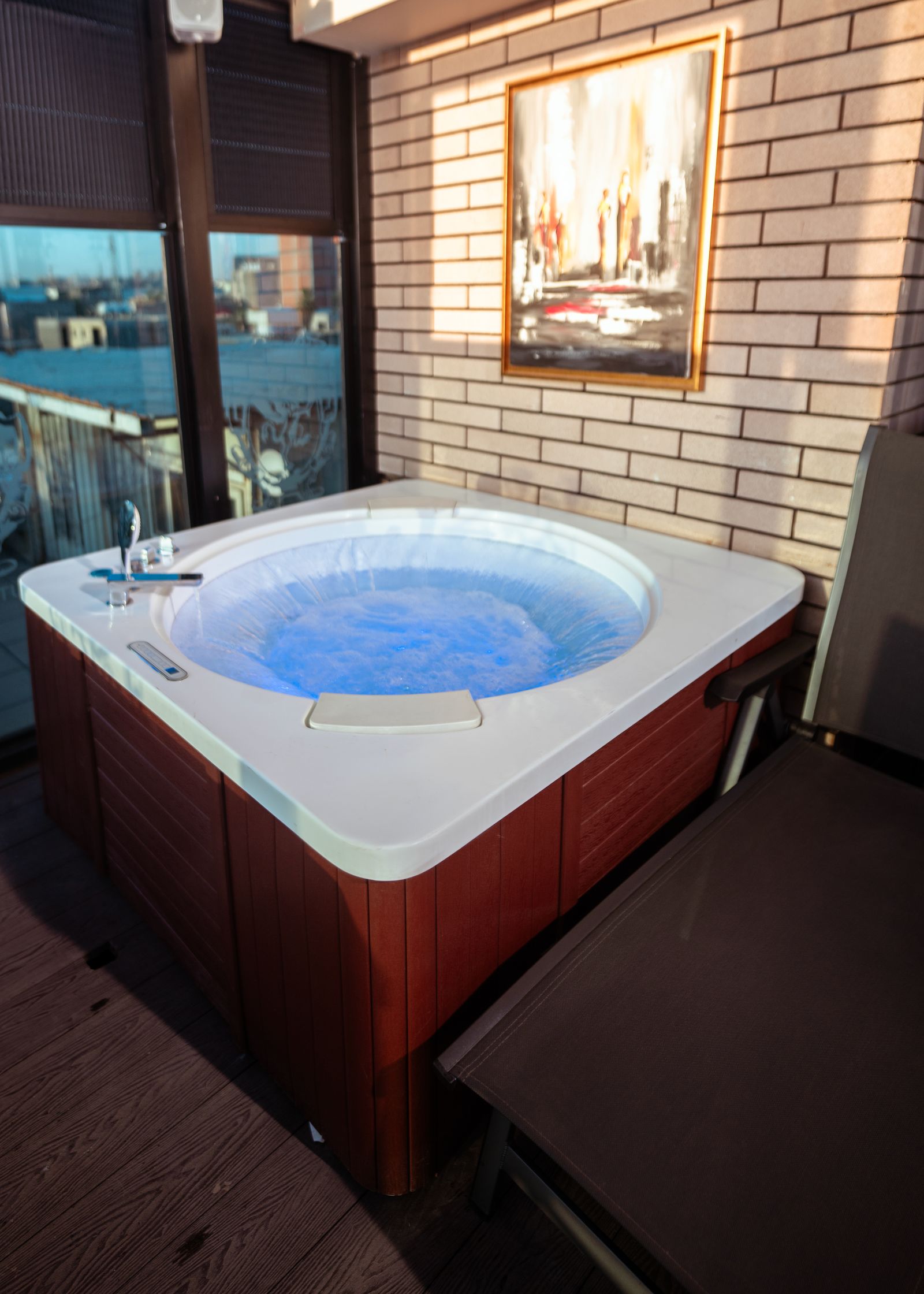
Monthly: the hour that extends the lifespan
Once a month, set aside roughly 40 minutes for the hot tub. It pays to tie it to the first weekend of the month so you do not have to think about it.
Deep cleaning the filter. Rinsing with water alone removes coarse dirt, but not the grease and lime deposits in the pores. So once a month soak the cartridge overnight in a filter cleaner solution, rinse it thoroughly in the morning and let it dry. Ideally you should have two cartridges and alternate them — the hot tub then never runs without a filter and the wet cartridge has time to dry out.
Water hardness and stabiliser. Hardness (calcium) is tested monthly because it becomes concentrated as water evaporates — the target range is roughly 150–250 mg/l CaCO₃. Water that is too soft foams and is aggressive towards components; water that is too hard forms limescale on the heating element. With chlorine disinfection, also keep an eye on cyanuric acid; above 50 mg/l chlorine noticeably loses effectiveness and the only solution is dilution with fresh water.
Checking the cover. Take the cover off, rinse it, wipe the underside and treat the surface with a vinyl product. Lift it in your hands: if it has become heavy, that means waterlogged insulating foam and rising electricity bills. You will find the details and the criteria for replacement in the article on the hot tub thermal cover.
Inspecting the equipment bay. Open the service door of the cabinet and shine a torch inside. You are looking for three things: damp patches and drips under the pump or unions, white crystals (a dried-up leak), and traces of rodents — mice in the cabinet insulation are a surprisingly common problem in garden hot tubs. None of this gets better on its own, but caught in time it is a repair costing tens of euros rather than thousands.
Every 3–4 months: the water change
The water change is the biggest regular job and at the same time the most effective “reset” for the whole hot tub. Derive the interval from how much it is used: 3–4 months with ordinary family use, and as little as 6–8 weeks with intensive use or in holiday accommodation. The rule of thumb is simple — the tub volume in litres divided by the number of bathers per day, and the result in days divided by ten. The complete logic and the calculation are covered in the article on how often to change hot tub water.
Before draining, flush the pipework with a plumbing cleaner. Biofilm builds up in the air and water channels — a slimy layer that shields bacteria from the disinfectant and releases them straight back into the fresh water. Flushing is precisely the main hygiene measure against bacteria multiplying in the pipework; the background is described in the article on hot tub hygiene and legionella.
An empty tub brings an opportunity that a full one does not allow: cleaning the entire shell, inspecting the jets and how freely they rotate, checking the suction covers and the seals. On acrylic, use only products intended for spas; the right procedure and what to avoid are summed up in the article on hot tub acrylic care.
Once a year: major maintenance and service
Plan the annual block for the same time each year, ideally the start of autumn, when you begin using the hot tub most.
- A new filter cartridge. Even a well-cleaned filter has a service life of roughly 12 months — the fibres loosen and stop capturing fine particles. A cartridge costing a few tens of euros is the cheapest maintenance a hot tub has.
- Treating the acrylic and the cabinet. Once a year apply an acrylic polish to the shell; it creates a slippery film that limescale and grease find harder to cling to. Treat a wooden or imitation cabinet with oil or a preservative appropriate to the material.
- Service inspection. A technician will check the pumps and their bearings, the heating element and how furred up it is, the flow switch, the union seals and the state of the electronics. What the inspection involves and how it translates into the lifespan of the machine is covered in the article on hot tub lifespan and servicing.
- Electrical check. Once a year press the test button on the residual current device (it must trip immediately) and visually inspect the supply cable, the box and the terminals. Anything beyond a visual check belongs to an electrician.
Seasonal adjustments: winter and summer
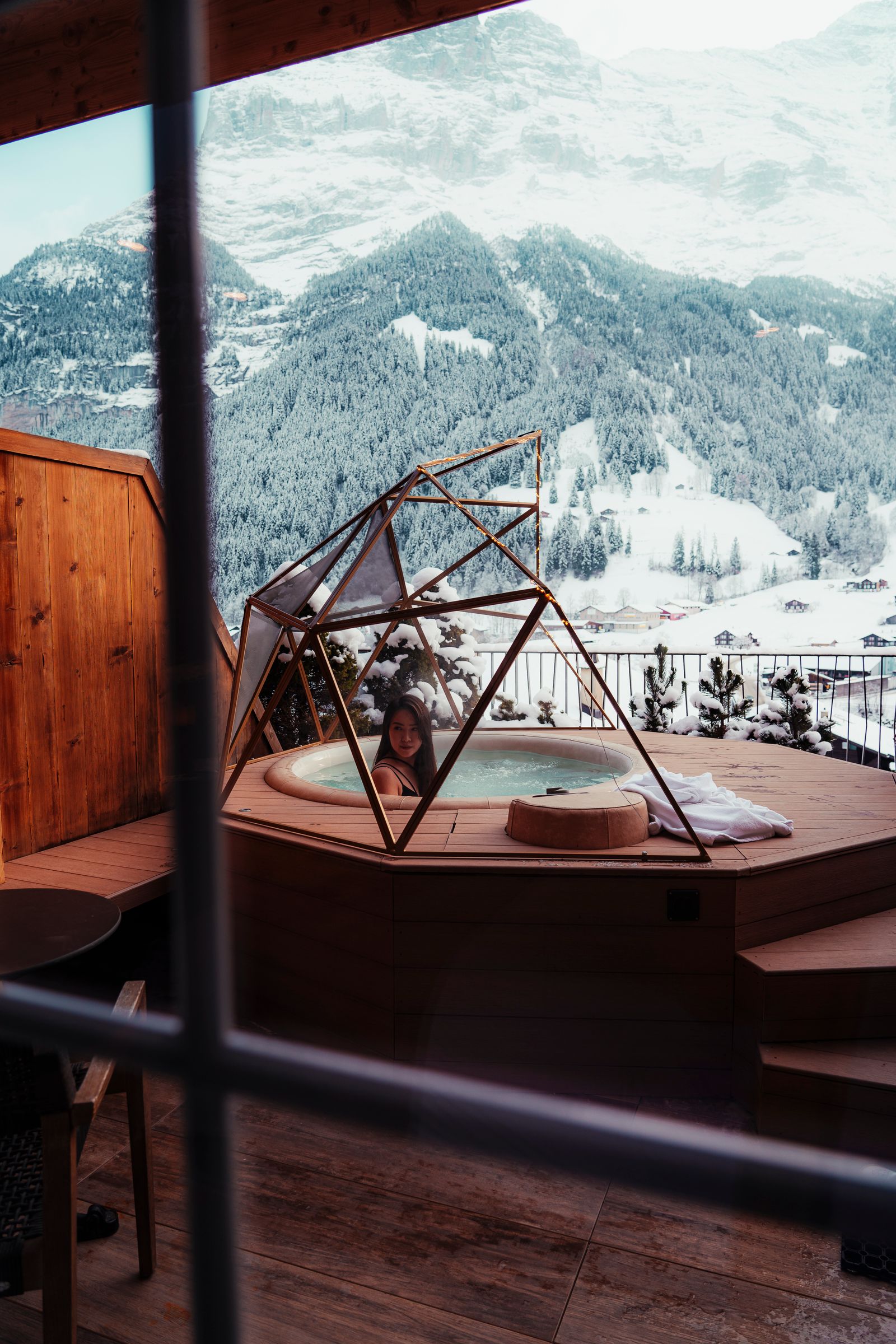
A hot tub runs all year, but the seasons change the load. Before winter check the tightness and condition of the cover, make sure the cabinet insulation is not missing anywhere, and secure safe access — the most common winter injury around a hot tub is slipping on an icy deck, not anything technical. How a hot tub works in freezing weather and what to do during a power cut is described in the article on running a hot tub in winter.
In summer the load goes up for a different reason: more soaking, sunscreens, sweat, pollen and insects in the water. In practice that means testing 3 times a week rather than twice, expecting higher disinfectant consumption and rinsing the filter more often. At the same time, a higher ambient temperature means the water holds its set temperature more easily — some owners lower the temperature to 34–35 °C over the summer, which benefits both the water and the electricity bill.
How much time it all takes
Add up the regular tasks and the realistic annual balance comes out like this: weekly care roughly 10–15 minutes, the monthly block about 40 minutes on top, a water change three or four times a year at roughly an hour of actual work each (plus waiting for draining and heating), and annual maintenance with a service visit taking half a day.
| Block | Frequency | Time per session | Total per year |
|---|---|---|---|
| Weekly care | 52× a year | 10–15 min | 9–13 h |
| Monthly block | 12× a year | 40 min | 8 h |
| Water change | 3–4× a year | ~1 h of work | 3–4 h |
| Annual maintenance | 1× a year | 2–3 h | 2–3 h |
| Total | — | — | 22–28 h a year |
Twenty to thirty hours a year looks like a lot on paper, but in practice it is under half an hour a week — less than mowing the lawn in a small garden. And unlike the lawn, every half hour you skip comes back with interest: a neglected filter costs you a pump, neglected pH costs you a heating element.
Frequently asked questions
Do I have to switch the hot tub off if I am not using it for a week?
No. Leave it running in its normal mode with the filtration cycles and the cover closed — circulation and disinfection will keep the water in good shape. Before a longer absence, balance the pH, dose the disinfectant to the upper end of the range and lower the temperature by 2–3 °C. Draining and shutting down only makes sense for absences measured in months.
Is testing the water once a week enough?
For a hot tub that is only used occasionally and runs through an automatic doser, yes. For ordinary family use, no — warm water consumes disinfectant within two or three days and a single test a week shows you a value that no longer holds a day later. Two to three times a week is a sensible minimum.
Can I stretch the water change to six months if the water is clear?
Clear water is not the same as healthy water. After a few months the content of dissolved solids, stabiliser and disinfection by-products rises — the chemistry stops working even though the water looks fine. Extending the interval is defensible only for a lightly used hot tub with demonstrably good hardness and CYA test results; otherwise you are asking for foam, odour and needless product consumption.
How much do the annual consumables for maintenance cost?
It depends on the type of disinfection and the water hardness. As a guide, budget for a filter cartridge (roughly 40–140 € depending on type and size), a year’s set of chemicals (80–160 €) and test strips (12–25 €). A service inspection is on top of that and is charged at the technician’s hourly rate.
What if I rent the hot tub out or it is at a holiday cottage?
Cut all the intervals roughly in half: testing practically daily, cleaning the filter twice a week, changing the water every 6–8 weeks. Accommodation use is also subject to different hygiene rules than a private hot tub — treat rental operation as a semi-professional regime, not a domestic one.
A calendar you set up once
The simplest way to keep to this calendar is to transfer it into recurring reminders on your phone: the weekly one on the same day, the monthly one on the first weekend, the water change four times a year and the annual service on a specific date. After that you just work through the list and do not have to remember anything.
If you want to top up your supply of test strips, filter cleaner, pipe-flushing products or pH correctors right away, you will find them in the water treatment category. Anyone still choosing and looking for a hot tub that is easy to maintain (an accessible cabinet, a quality cover, well-sized filtration) can start in the hot tubs category — and further guides to the individual tasks are waiting in the Advice section.
