
The power has gone off, it is freezing outside and there are a thousand litres of warm water sitting in your hot tub. The good news: the water in the shell cools far more slowly than you would expect. The bad news: it is not the shell that freezes, it is the pipework and the equipment in the cabinet — and burst pipework or a split pump body means a repair costing thousands of euros. This guide sets out roughly how much time you have, what to do immediately, and when draining is the only sensible move.
What happens inside a hot tub during a power cut
A hot tub in operation is a closed thermal system held together by one thing — circulation. The pump constantly draws water from the shell through the filter, the heater and the pipework and back to the jets. The water in the pipes therefore never stands still, and the equipment in the cabinet keeps its temperature thanks to the flowing water and the residual heat from the motors.
The moment the power goes, circulation stops. The water in the shell stays as one mass: 1,000–1,500 litres of warm water has enormous thermal inertia and, with the cover closed, it typically loses only a few degrees a day. In pipework 40–50 mm in diameter, by contrast, there are only a few hundred millilitres of water per metre, surrounded by cold air inside the cabinet. That freezes an order of magnitude sooner.
The most vulnerable points are not in the shell
In a frost, the risk concentrates in a handful of places you never think about in normal use:
- Pipework in the equipment bay — the thinnest columns of water with the least heat around them. They burst first.
- Pump bodies — the water in the impeller and the volute has nowhere to expand, and frost splits the plastic body open.
- The filter chamber and its well — often the closest point to the outer skin of the cabinet.
- The flow-through heater — a stainless tube with a heating element inside, which freezing water literally prises apart.
- Air lines and manifolds — here the joints are more likely to crack than the tubing itself.
Freeze protection does not work without power
Almost every decent hot tub has freeze protection built into the control pack — a sensor watches the temperature and, when it drops below the set limit, starts the pump by itself and may add heat. It is a very effective function, but it is an electrical function. With no supply the control pack is dead and the protection does not exist. That is exactly why a power cut in a frost is incomparably more dangerous than frost on its own, which a hot tub normally handles perfectly well — we cover the standard winter regime in detail in our article on running a hot tub in winter.
How much time do you really have?
Here we have to be honest: there is no universal number and nobody serious will give you one. How long it takes before the equipment starts to freeze depends on the outside temperature, the wind, the quality of the cabinet insulation, the type and condition of the cover, the starting water temperature, and whether the tub is sunk in or standing free on a deck. The difference between a badly insulated second-hand tub and a fully foamed model with a good cover can easily be two days.
The table below is therefore an indicative estimate, not a guarantee. Treat it as an aid to the decision “wait or act”, not as a countdown. It assumes a starting water temperature of around 37 °C, a closed working cover and a hot tub with normal cabinet insulation.
| Outside temperature | Up to 6 hours | 6–24 hours | Over 24 hours |
|---|---|---|---|
| above 0 °C | No risk, do nothing | No risk, keep the cover closed | Watch the forecast, risk is small |
| 0 to −5 °C | No risk | Low risk, add blankets over the cover | Consider draining, keep an eye on the forecast |
| −5 to −10 °C | Low risk | Growing risk, get ready to drain | Drain if there is no clear restoration time |
| −10 to −15 °C | Monitor, get the vacuum and tools ready | High risk, drain | Drain without hesitating |
| below −15 °C | Decide immediately | Drain | Drain |
Only one usable rule follows from the table, and it is the one worth remembering: the harder the frost, the sooner you act. At around zero you have practically a whole day to think it over. At −15 °C you are deciding within hours — and deciding in the dark, in a frost and with no electric light is a great deal worse than doing it an hour earlier in daylight.
What to do straight away: step by step
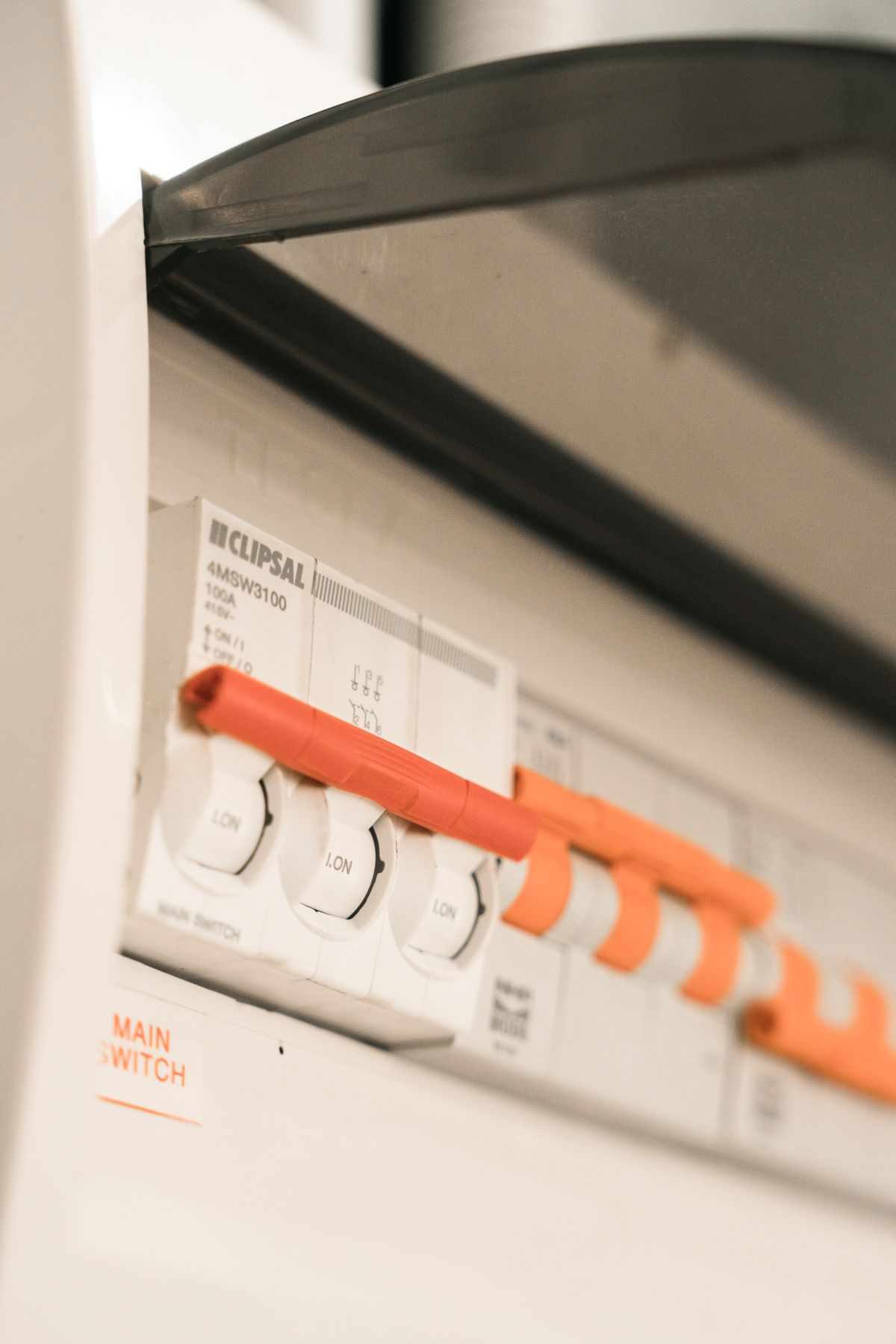
- Find out whether the cut is only at your property. Before you start thinking about draining, look in the consumer unit. A tripped breaker or a tripped RCD means the distribution network is working and the problem is in your installation or in the hot tub itself — and that can often be sorted out in a few minutes. We describe how to tell damp, a faulty heating element and a pump fault apart in our article on why a hot tub trips the RCD. If the whole street is off, ring the network operator’s fault line and find out the expected restoration time. That number is the most important input for every further decision.
- Keep the cover closed and insulate it. Every opening of the cover costs the water a measurable amount of heat that nobody is going to put back. Do not open the cover “just to check”. Do the opposite — put blankets, old duvets, polystyrene boards or a thermal blanket on top and weigh them down against the wind. It is particularly worth wrapping the side walls of the cabinet as well, because that is where heat escapes from around the equipment. This is the cheapest and most effective step on the whole list.
- Short cut: do nothing else. For a few hours — and at temperatures around zero comfortably for a whole day — there is no reason to take any action at all. The hot tub will ride the cut out on its own. Nervous interventions at this stage do more harm than good.
- Longer cut in a frost: decide about draining. As soon as you know the power will be off for several hours and it is properly freezing outside, start draining rather earlier than later. Draining by gravity easily takes an hour and a half on a larger tub, and in a frost you may not have that margin left. A drained hot tub costs you nothing; a split pump costs from a couple of hundred euros for the part upwards.
- Drain so that no water is left anywhere. Emptying the shell alone is not enough — and that is the most common mistake. The detailed procedure is in the next section.
- Deal with the heater and the jets. The heater is usually the lowest-mounted part and water stays in it even after the shell is empty. Slacken its unions or the drain plug and let the water run out. On the jets, turn the adjusting rings to the fully open position and blow the air channels through for a few seconds — residual water in a jet body will split it in a frost just as readily as a pipe.
How to drain a hot tub so that no water is left in it
The aim is not an empty shell. The aim is an empty system. After gravity draining, a hot tub commonly still holds 20 to 40 litres of water spread through the pipework, the pumps and the filter chamber — and that is precisely the water that does the damage.
- Disconnect the hot tub from the electricity supply (the breaker in the consumer unit), if you have not already done so.
- Empty the shell using the drain valve, or more quickly with a submersible pump. Route the water so that you do not create a sheet of ice on the deck.
- Take out the filter cartridge, empty the filter chamber and leave it open.
- Slacken the drain plugs on the bodies of all the pumps (both jet and circulation pumps). They are usually on the underside of the volute. Put a container underneath — more water comes out than you expect.
- Close or, conversely, open the isolating gate valves at the pumps according to the type of installation, so that the pipework can empty — on most hot tubs the valves need to be opened.
- Vacuum out the remainder with a wet vacuum from the seats, footwells, jets and suctions. Drawing through the jets pulls water out of short runs of pipework as well. The alternative is blowing through with a low-pressure compressor (up to 0.5 bar) — higher pressure risks damaging the joints.
- Dry the shell with a cloth so that no water is left in the seams, where a frost will lift the trim.
- Leave the plugs and unions slack for the whole time the hot tub is out of service, and make a note of where they all are — it is easy to forget one when you recommission it.
- Put the cover over the shell so that rain and snow cannot get in.
If you are draining for the first time, go through your hot tub’s spec sheet beforehand. The layout of plugs and valves differs between manufacturers, and hunting for them blind in a frost is no fun. There is a practical overview of seasonal jobs in our hot tub maintenance calendar.
What you must never do
- Do not top up with hot water from a kettle or a pan. You will only warm the top layer of the shell, it does nothing at all for the equipment in the cabinet, and you risk thermal shock to the acrylic — a sharp difference in temperature can create fine cracks in the surface.
- Do not use a naked flame or a gas torch. The cabinet of a hot tub is full of plastics, insulating foam and wiring. The fire risk is entirely real, and your insurer will not help you in that situation.
- Do not put an electric heater or a fan heater in the cabinet. Quite apart from the fire risk, during a power cut there is nothing to run it from anyway, and once the power is restored a forgotten appliance in the equipment bay is a serious problem.
- Do not start the hot tub straight after the power comes back without checking it. If ice has been left in the system, or the water level is below the suctions, the pump will run dry and the heater will be heating thin air. The pump seal and the heating element can both be destroyed within tens of seconds — we cover diagnosing a burnt-out element in our article on the hot tub heating element.
- Do not ignore the chemistry. Water that has stood for a week with no circulation and no disinfection is not in good order, even if it looks clear.

After the power comes back: a checklist
The electricity is on. Before you switch the hot tub’s breaker on, go through these points — the order is not accidental.
- Water level. It must be above the highest suction openings, ideally at the normal operating height. If you drained the tub, fill it with a hose into the filter chamber — that limits the amount of air in the system.
- Check that all the plugs and unions are tight and that the valves are in the right position. This is the most common cause of a flooded equipment bay after winter.
- Bleed the air out. After filling, slightly slacken the union on the pump discharge until air escapes and water runs out, then tighten it again. Without bleeding, the pump only hums and pushes nothing.
- Watch for error codes. Stay by the display for the first ten minutes after starting. Codes such as FLO or flow-related messages usually mean air in the system or a clogged filter. If the display does not respond at all, or reports a sensor fault, the electronics may be damaged — the options are described in our article on replacing a hot tub control pack.
- Check for drips under the cabinet. Let the hot tub run for an hour, then shine a light into the equipment bay. A wet trace under the pump most often means a damaged mechanical seal — you will find the replacement procedure in our article on replacing a hot tub pump seal. Drips at pipework joints, on the other hand, signal a micro-crack from the frost, which has to be dealt with immediately.
- Sort out the chemistry. After several days without circulation, measure the pH, the total alkalinity and the disinfectant level, and shock dose the water. Wash or replace the filter cartridge to be on the safe side.
Prevention: how to be ready for the next cut
Backup power
A hot tub is an appliance drawing several kilowatts, so you will not connect it to an ordinary backup supply. To survive a frost, though, you do not need to heat — it is enough for the circulation pump to run, and it often draws only 150 to 350 W. Even a small generator or a battery storage unit will manage that. The connection must, however, be designed and carried out by an electrician: you need a mains/backup changeover switch, correct protection and a properly handled protective conductor. Wiring a generator in “on an extension lead into a socket” is dangerous both for you and for the technicians repairing the network.
Insulation and cover
The cheapest insurance is the one you already have. A good cover with no waterlogged foam and full cabinet insulation extend the safe time without power by hours or even days. We go through the differences between the various methods of insulating in our article on types of hot tub insulation, and choosing a cover is covered in our text on the hot tub cover.
An alarm that tells you in time
The worst scenario is not a power cut — it is a power cut you do not know about because you are away on holiday. A cheap solution: a smart plug or a temperature sensor with notifications to your phone, which sends a message when the supply is lost or the temperature drops below the set limit. An investment of tens to a couple of hundred euros against damage running into thousands. Many newer hot tubs can do this through their own app.
Contacts and insurance
Keep the number for your service engineer and for the network operator’s fault line saved in advance — in a crisis there is no time to go looking. And read through your insurance policy: damage from burst pipework is usually covered by household and buildings insurance, but a hot tub may be treated as outdoor equipment or as an accessory to the building with its own limit. It is often decisive whether the insurer will apply an exclusion for “inadequate maintenance” — all the more reason to document what you did with photographs.
Frequently asked questions
Will a hot tub crack if the water only freezes on the surface?
A thin crust of ice on the surface will not harm the shell, because the ice has room to expand upwards. What is dangerous is freezing in a closed volume — in the pipework, in a pump body or in the heater. If you can see ice on the surface, it is a sign that the equipment has already been at risk for some time.
Can I leave the water in the hot tub and just let it cool down?
At temperatures around zero, yes. In a sustained frost, no — cold standing water in pipework freezes more readily than warm water, and without circulation the system has no defence at all. What matters is not the temperature of the water in the shell, but how long the equipment stays with no water moving through it.
How do I tell whether something has already burst?
After filling and starting up, look for drips or wet traces in the equipment bay, watch whether the level drops faster than usual, and take note of repeated flow errors. A crack in pipework often only shows up under the pressure of a running pump, so do the check with the tub running, not switched off.
Does it help to put salt or antifreeze in the water?
It does not, and do not do it. The concentration needed to lower the freezing point would be enormous, it would damage components, and you would have to throw the water away anyway. Antifreeze solutions for winterising pipework are meant only for empty pipes, never for a filled hot tub.
Is it better to drain a hot tub for the winter as a precaution?
That depends on how often you use it. If you bathe all winter, it makes sense to keep it running — a hot tub is at its most enjoyable in a frost. If you do not open it between November and March, you will save on electricity and on worry by draining it properly and winterising it.
Conclusion: an hour of preparation against a repair costing thousands
A power cut in a frost is one of the few scenarios in which a hot tub can suffer genuinely expensive damage in a single night. Yet the defence is simple: know where the drain plugs are, have a wet vacuum and blankets for the cover to hand, and make the decision before the temperature falls to the point where time is no longer on your side.
You will find replacement pumps, heaters, covers and insulating materials in our hot tubs category and in the equipment section. We publish further practical guides to hot tub care on an ongoing basis in our Advice section.
