
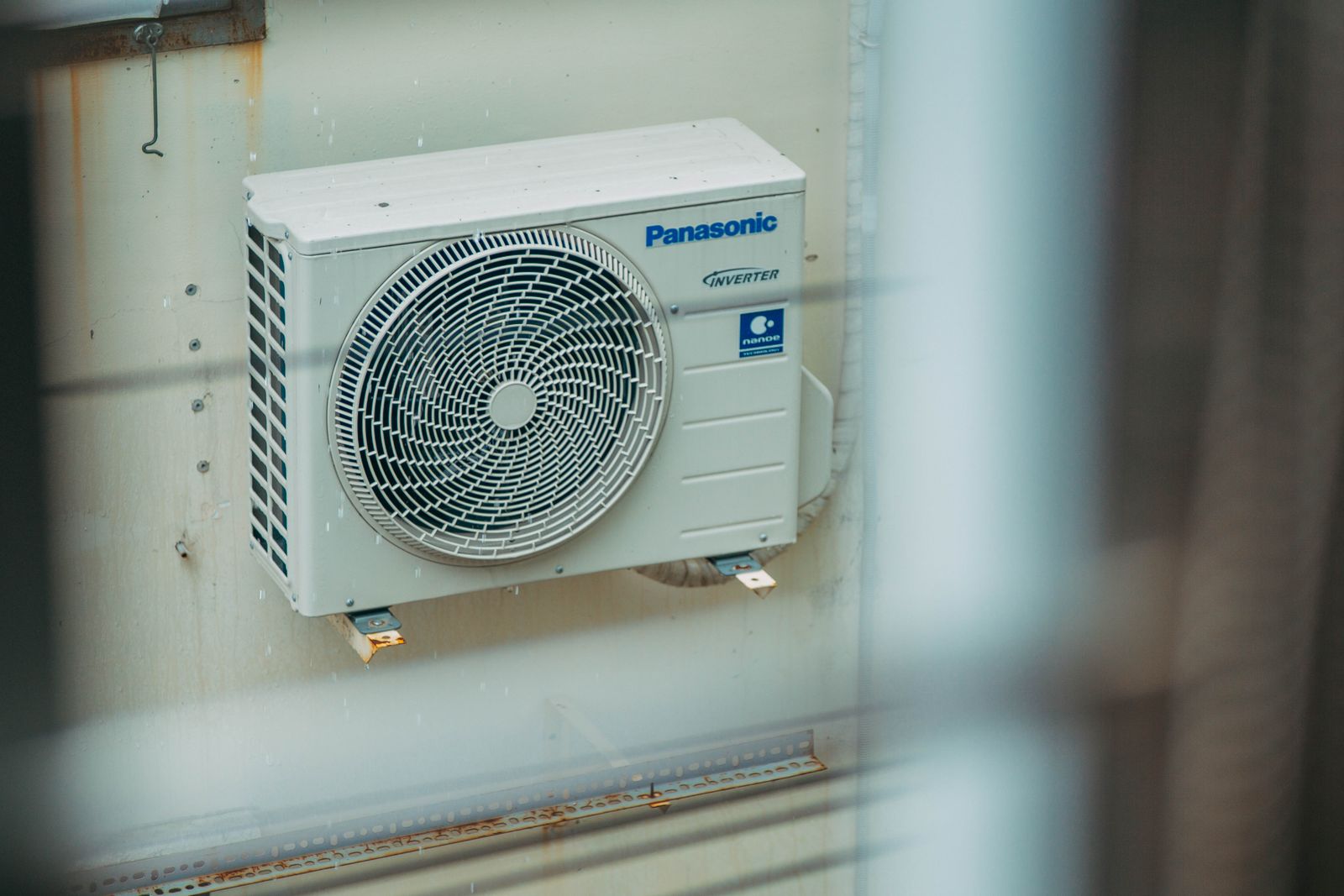
Frost on a heat pump evaporator is a normal phenomenon in cold, damp weather — the unit melts it off itself during the defrost cycle and carries on heating. The problem only starts with persistent heavy icing, ice at the bottom of the unit, or a situation where the pump is running and the water is not getting any warmer. A low flow warning, on the other hand, almost always has a hydraulic cause: a clogged filter, a badly set bypass, air in the pipework or a tired circulation pump.
When icing is normal operation and when it is a fault
A heat pump extracts heat from the surrounding air. The air cools down on the evaporator fins, the moisture in it condenses, and at temperatures around zero and below it settles as hoar frost or a thin layer of ice. That is not a malfunction — that is physics.
The control unit has a defrost cycle for exactly this. Using sensors on the evaporator it recognises that a layer of frost has built up, reverses the circuit for a few minutes via the four-way valve, and heats the fins with hot refrigerant. The water runs off the evaporator and the unit returns to heating. In damp weather around 2–7 °C the cycle may repeat as often as every half hour.
You can recognise normal operation by the fact that the frost appears and disappears, water drips from under the unit, the pool water temperature slowly rises and no error is showing on the display. Output is logically lower at low outdoor temperatures, so heating takes longer.
A fault, by contrast, is signalled by: frost that does not disappear even after hours of operation, a continuous crust of ice across the whole fin area, a chunk of ice grown in the tray under the unit or on the paving beneath it, a fan scraping against the ice, and above all a situation where the pump is noisy and running, but the temperature difference between the water inlet and outlet is zero.
Why a heat pump ices up permanently
Outdoor temperature below the unit’s operating range
The most common “fault” is no fault at all. Ordinary pool heat pumps have an operating range from roughly +7 °C upwards, models with full inverter technology and a modern refrigerant often from 0 °C or −5 °C, and year-round units for hot tubs lower still. Running the pump below the limit stated by the manufacturer in the datasheet means the defrost cycle cannot keep up — the unit ices up faster than it can melt the ice away.
So first check in the documentation what outdoor temperature your unit is designed for. If you are well below it, the answer is not a service call but the end of the season and winterising the pool.
Insufficient water flow
Refrigerant flows through the evaporator, pool water through the condenser. When too little water flows through, the refrigerant in the circuit has nowhere to give up its heat, the pressures drift apart and the evaporator starts to ice up even at temperatures where it should not. Low flow therefore very often shows up precisely as icing — and vice versa.
A dirty or blocked evaporator
The evaporator fins are a dense aluminium comb that collects leaves, mown grass, pollen, seeds, cobwebs and dust over the season. A blocked evaporator means less air passing through, sharper cooling and faster icing.
You can handle the cleaning yourself. Disconnect the unit from the power supply, remove the protective grille as described in the manual, vacuum off the coarse dirt or remove it with a soft brush in the direction of the fins, never across them — aluminium bends easily. Rinse the rest with a gentle stream of water or a garden hose without a nozzle, or use a foam fin cleaner. A pressure washer has no place near an evaporator; it flattens and damages the fins. And do not flood the electronics and the fan while you are at it.
Poor siting and insufficient clearances
The unit needs free air both in and out. When it stands tight against a wall, in a corner between fences or in a technical shaft, it draws in its own chilled exhaust air and ices up even in mild temperatures. Most manufacturers require at least 50 cm from the intake side, 2–3 m of free space in front of the fan outlet and nothing above the unit.
The second typical shortcoming is condensate drainage. A heat pump can easily produce tens of litres of condensed water a day. If it stands in a shallow tray with no outlet or straight on paving with no fall, the condensate turns to ice beneath it in freezing weather — and that ice grows upwards into the unit. The answer is a stand, a gravel bed or connecting the condensate outlet to a drain.
A covered unit
A tarpaulin, a leaf guard or an improvised roof over the winter are fine only when the pump is not running. A covered unit in operation has nowhere to draw air from and will ice up virtually every time.
A faulty sensor, four-way valve or low refrigerant charge
If all the previous points are in order and the unit still ices up permanently, it is time for the technical causes. An evaporator temperature sensor reporting a wrong value will either fail to start the defrost cycle or end it prematurely. A stuck four-way valve cannot reverse the circuit for the defrost — you can recognise it by the fact that defrost does start in the menu, but the ice does not melt. A refrigerant shortage after a leak in the circuit shows up as weak output, icing and often frost on the pipework near the compressor as well.
These three things are not for you to deal with yourself. Work on the refrigerant circuit may only be carried out by a certified person, and with flammable refrigerants such as R290 that goes double — we covered the details in our article on R290 refrigerant in pool heat pumps. What is more, topping up refrigerant is never “maintenance”: if the refrigerant level has dropped, there is a leak somewhere and it needs to be found.

The low flow warning: what usually lies behind it
A heat pump monitors flow with a flow switch or a pressure sensor. When the water is not moving sufficiently, the unit shuts down and displays a flow error — it is there to protect the condenser from freezing and damage. Work from the simplest cause to the most complicated.
- A clogged filter and baskets. Clogged filtration is cause number one. Check the skimmer basket, the pump strainer basket and the state of the filter — with a sand filter, go by the pressure gauge, see filter pressure and what it means. Maintenance of the suction side is summed up in the article on how a skimmer works and how to look after it.
- A throttled or badly set bypass. A classic after installation: the fitter leaves the bypass in its default position and nobody ever fine-tunes it. Either too little water flows through the pump (flow error) or almost all of it does (small temperature difference, poor efficiency).
- A weak or worn circulation pump. A worn impeller, a failing shaft seal or an undersized model will not deliver the required flow, especially when the pump is in eco mode at lower speed. Temporarily raising the speed can help — the selection criteria are covered in the article on choosing a pool pump.
- Air in the system. Bubbles in the pipework confuse the flow switch and reduce the actual flow. A leaking strainer lid, cracked O-rings or a low water level in the pool are the most common sources — you will find the procedure in the article on a pump that will not prime and air in the system.
- A fouled or faulty flow switch. A switch paddle coated in scale or biofilm will not move even when the water is flowing correctly. Cleaning the switch is a routine service job.
- Undersized pipework and too many bends. If the whole installation is built right on the limit, the pump simply has no way of delivering the flow. The principles of good design are covered in the article on pool hydraulics, pipework and jets.
How to set a heat pump bypass correctly
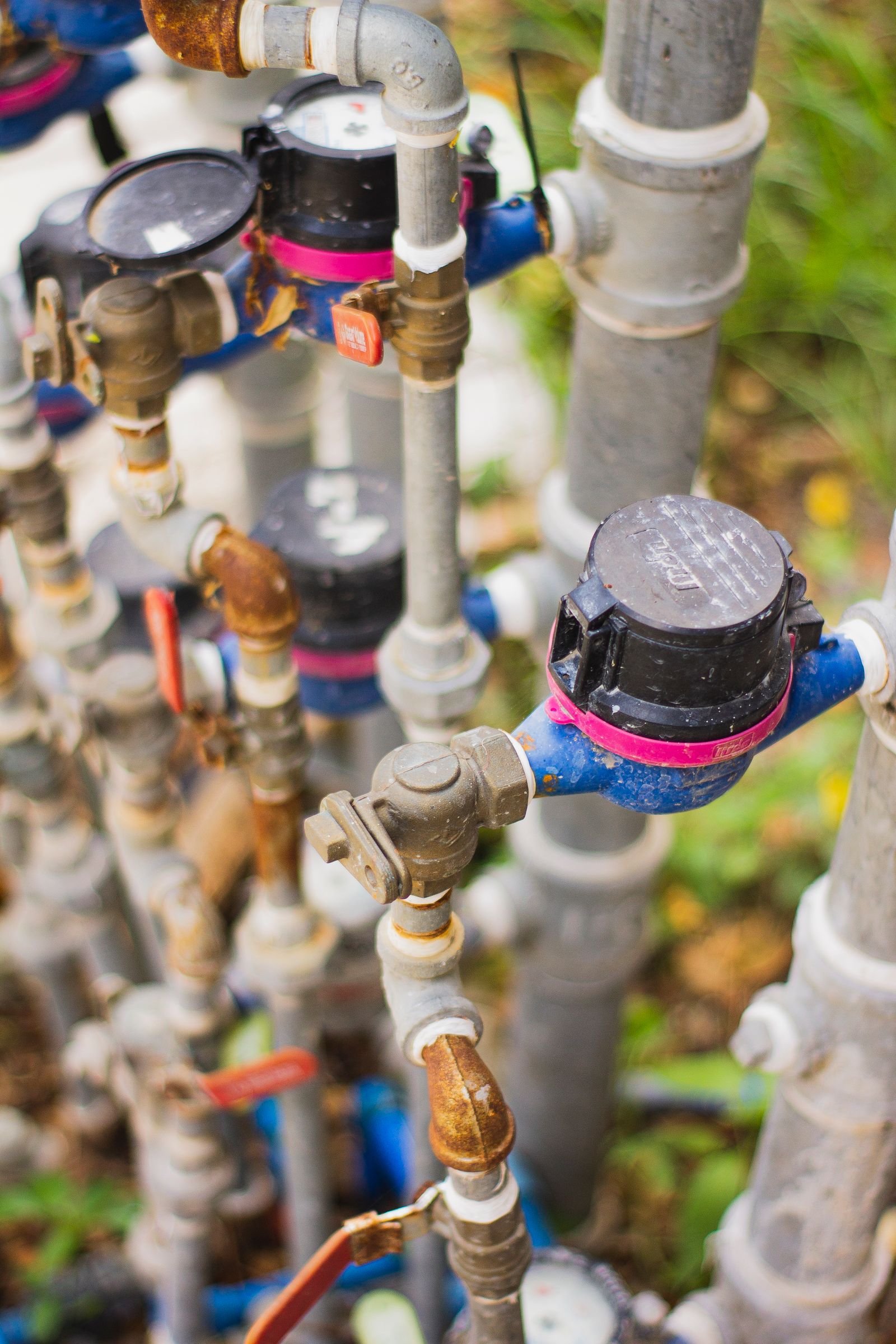
The bypass is three valves: two on the inlet and outlet to the heat pump and one on the bypass line between them. Their job is not to send the maximum amount of water through the pump, but exactly enough for the temperature difference between inlet and outlet to fall within the range the manufacturer recommends — typically a few degrees; you will find the exact figure in your unit’s manual.
The logic is simple: if too much water flows through the exchanger, it warms up only marginally and the unit works inefficiently. If too little flows through it, the condenser overheats, the unit reports errors and ices up.
- Start the filtration and the heat pump and let them run for at least 10–15 minutes so that operation stabilises.
- Open both valves to the heat pump fully, and for now open the bypass valve fully as well.
- Gradually close the bypass (middle) valve. This forces more water into the heat pump.
- After each change wait a few minutes and read the inlet and outlet temperatures — either from the unit’s display, if it shows both values, or with a thermometer on the pipework.
- The aim is to bring the difference into the range stated by the manufacturer. A smaller difference means the flow is too high (close the bypass further), a larger difference means the flow is too low (open the bypass up).
- If the unit reports a flow error while you are fine-tuning, you have gone too far: open the bypass up, or close the outlet valve from the pump only marginally.
- Make a note of the setting or mark the valve positions with a marker pen. You will come back to it after winterising and the spring start-up.
The bypass is a service element too — by closing both outer valves and opening the bypass you take the heat pump out of the circuit without having to drain the pool.
Diagnostic table: symptom, cause, check
| Symptom | Most likely cause | What to check | Who deals with it |
|---|---|---|---|
| Frost forms and disappears again, water is heating | Normal defrost cycle | Water temperature rising, water dripping under the unit | Nothing to do |
| Persistent heavy icing, unit runs but does not heat | Low flow or a blocked evaporator | Inlet/outlet temperature difference, cleanliness of the fins, filter pressure | Owner, then service |
| Ice grown under the unit and in the tray | No condensate drainage | Fall of the base, free outlet, height of the stand | Owner or fitter |
| Ices up even in mild weather | Small clearances, air recirculation, being covered | Distances as per the manual, nothing above the unit, tarpaulin removed | Owner |
| Flow error immediately after the filtration starts | Clogged filter, basket or a badly set bypass | Skimmer basket, strainer basket, pressure gauge, valve positions | Owner |
| Occasional flow error, bubbles in the pipework | Air in the system, a leaking suction side | Strainer lid, O-rings, water level in the pool | Owner |
| Filtration clean, bypass fine, error persists | Fouled flow switch or a weak pump | Actual flow, pump speed, state of the switch | Service |
| Defrost starts, but the ice does not melt | Faulty sensor or four-way valve | Sensor values in the service menu | Service |
| Weak output, frost on the pipework near the compressor | Refrigerant shortage, a leaking circuit | Circuit pressures, leak detection | Certified technician |
When it is a warranty fault and what to ask of the service company
A warranty claim typically covers a faulty sensor, a stuck four-way valve, a leak in the refrigerant circuit from the factory, a faulty compressor or faulty electronics. What a warranty does not cover is the consequences of running outside the operating range, a blocked evaporator, poor siting without clearances, a unit that was not winterised and was damaged by frost, or missing regular maintenance.
Before you call the service company, get together the model and serial number of the unit, the exact wording of the error code, the water temperature and the outdoor temperature, a photograph of the icing and details of what you have already checked. It shortens the diagnosis and reduces the risk of paying for a call-out because of a blocked basket.
Ask the service company for a written report describing the fault, the work carried out and the parts replaced — and, for work on the refrigerant circuit, the quantity and type of refrigerant as well. Your rights and the deadlines when making a claim are summed up in the article on warranty claims for pools and hot tubs.
Prevention: what to do so the problem never arises
- Keep the evaporator clean. Once a season, twice in gardens with deciduous trees. Check the intake side regularly after mowing the lawn too.
- Respect the clearances and condensate drainage. The cheapest time to put this right is at installation; later it means moving the unit.
- Winterise and drain down. Water left in the exchanger and frozen solid will destroy the unit, and it is a classic non-claimable fault. You will find the procedure in the article on winterising a pool step by step.
- Have an annual inspection done. Checking the pressures, the electrical connections and the state of the fan will uncover a problem before it shows up as icing in the middle of the season.
- Size the output to the volume of the pool. An undersized unit runs flat out continuously and ices up more often. The criteria are covered in the article on choosing a heat pump for a pool and hot tub.
- Limit heat losses. A solar cover or a pool cover means the pump does not have to run as long in unkind weather.
Frequently asked questions
Do I have to switch the heat pump off when it ices up?
If the frost disappears during the defrost cycle and the water is heating, no. Switch it off when the ice does not disappear even after several hours, when a continuous ice floe is forming or when the fan is scraping against the ice — in that case there is a risk of mechanical damage.
Can I remove the ice with hot water?
Once and carefully, yes: with lukewarm to warm water from a watering can, never boiling and never under pressure. Never chip the ice off with sharp objects; both the fins and the evaporator tubes are thin-walled. Removing the ice deals with the consequence, though, not the cause.
How do I know whether I really have low flow rather than a faulty sensor?
Measure the temperature difference between the heat pump inlet and outlet and compare it with the figure in the manual. When the difference is significantly higher than recommended, flow really is lacking. When it matches and the unit still reports an error, suspicion falls on the flow switch or its fouling.
Why is the pump icing up this year when it was fine last year?
Most often because of a gradually blocked evaporator, a worn circulation pump with a lower actual flow, or a changed bypass setting after the spring start-up. Keep an eye out too for vegetation that has grown up in the meantime and blocked the unit’s air intake.
How much refrigerant should I top up?
None. The refrigerant circuit is hermetically sealed and normal operation does not consume refrigerant. A drop in the charge means a leak, and that has to be found and repaired by a certified company. Topping up on a DIY basis is not permissible on pool heat pumps.
In conclusion
Most cases of an “iced-up” heat pump are solved by half an hour of work: a cleaned basket and filter, a rinsed evaporator, freed-up clearances and a correctly set bypass. Only when all of that is in order and the unit still reports low flow or fails to defrost are you looking at a technical fault for the service company. You will find a more general procedure for when the water is not heating in the article on a pool that is not heating up: diagnosis.
If the diagnosis shows that the problem lies in undersized or worn-out equipment, you will find an overview of pumps, filtration and heating in the pool technology category. Further guides and diagnostic procedures are in the Guide section.
