
An enclosed hot tub gets used far more often than one left in the open — rain and snow no longer spoil your soak, and UV rays stop degrading the thermal cover and cabinet. The most popular choice is a bioclimatic pergola with tilting louvres (from around €6,000), with a wooden gazebo or fabric pergola as a budget-friendly alternative, and a fully enclosed wellness house at the luxury end. This guide compares five options and covers everything worth thinking about: steam ventilation, anchoring, service access, and building regulations.
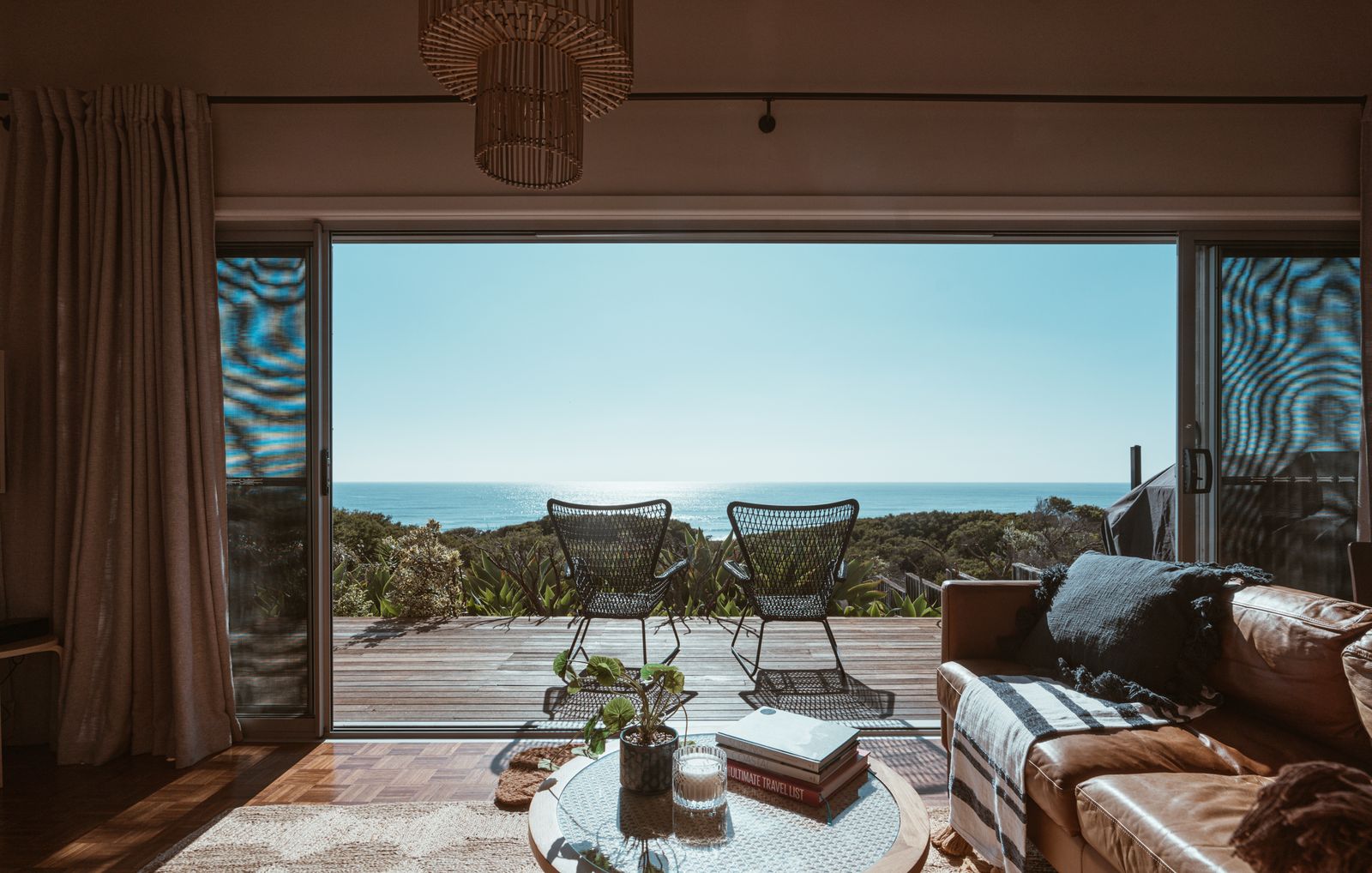
Why cover a hot tub at all?
A hot tub works perfectly well under open sky — but a roof fundamentally changes both comfort and running costs. The reasons add up:
- Soak in any weather. Rain, snow, and harsh midday sun no longer chase you out of the water. Bathing under a roof in autumn and winter, watching the snow fall outside, is one of the best experiences a hot tub can offer — without a shelter, you only get it at the cost of a wet dash from the door.
- Protects the cover and cabinet. UV radiation is the main enemy of a thermal cover’s vinyl shell and the cabinet’s plastic panelling. A cover left exposed to sun and weather typically lasts 4–6 years; under a roof, easily double that. That saves you thousands on early replacement.
- Less debris in the water. Leaves, pollen, dust, and insects land on the roof instead of in the filter. The water stays clear longer and you use less chemistry.
- Privacy. Side walls, blinds, or a trellis with climbing plants screen you from neighbours’ eyes — and you relax very differently in a hot tub once you’re truly private.
- Lower heat loss. A roof and walls block wind, which — alongside cold air — is the biggest heat thief of all. You’ll notice the difference on your winter electricity bill.
What types of hot tub shelters are there?
Options range from a simple canopy for a few hundred euros to a brick-built winter garden costing well over €40,000. The table below summarises the five most common solutions with approximate prices including installation (excluding the foundation slab):
| Option | Approximate price | Advantages | Disadvantages |
|---|---|---|---|
| Bioclimatic pergola (aluminium, tilting louvres) | €6,000–16,000 | Louvres regulate sun, rain, and steam venting; virtually maintenance-free; modern look; optional side screen blinds | Higher price; condensation needs managing when louvres are closed; quality varies significantly between manufacturers |
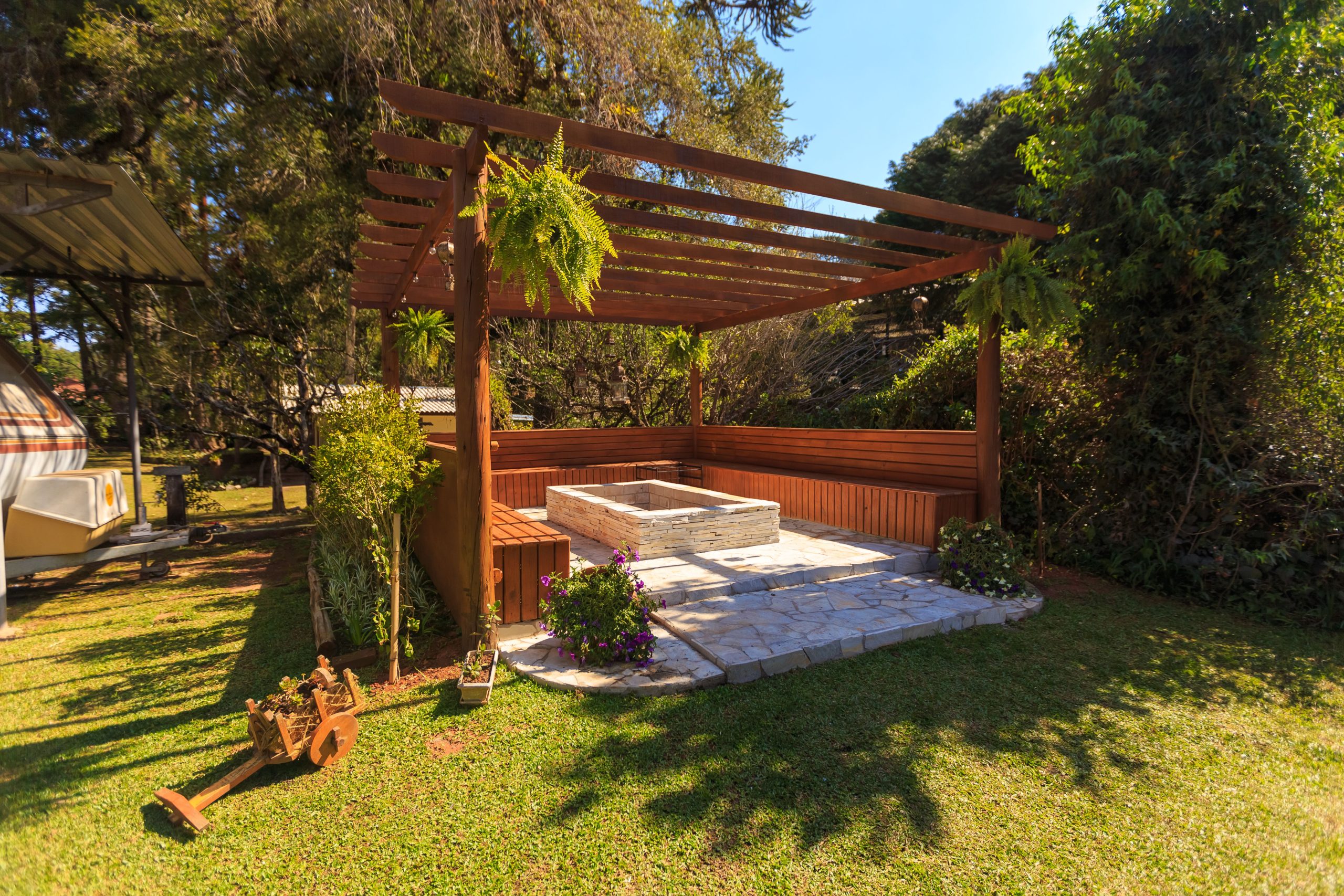
| Wooden gazebo | €1,600–8,000 | Natural look; ready-made kits widely available; easy DIY assembly; good protection from rain and sun | Regular re-staining needed; steam isn’t kind to wood; fixed roof with no light control |
| Fabric / canopy pergola | €600–2,400 | Lowest price; quick to install; canopy can be removed for winter | Limited fabric lifespan (3–7 years); can’t bear snow load; noisy in wind; minimal winter protection |
| Winter garden / enclosed wellness house | €12,000–40,000+ | Year-round comfort with no compromises; maximum privacy; room for a sauna or loungers | Highest investment; needs ventilation and humidity control like an indoor space; usually requires planning permission |
| Mobile / sliding shelter | €2,400–10,000 | Slide it away and bathe under open sky; low profile doesn’t block the view; still protects the cover | Needs extra clear space to slide into; lower models don’t allow standing; limited privacy |
Treat these as rough ranges for typical sizes around 3 × 3 to 4 × 4 m — unusual dimensions, side infill panels, and automation push the price up.
Which material and footprint should you choose?
In practice, the choice of material comes down to three contenders. Aluminium is the most practical option for a hot tub: it shrugs off constant humidity, needs no maintenance, and powder coating lasts for decades. Wood (larch, Douglas fir, glued spruce beams) wins on looks and atmosphere, but needs structural protection — covered post heads, feet on metal shoes above ground level — and periodic refinishing. Steel spans the widest openings, but around a hot tub it needs hot-dip galvanising, or steam will corrode it.
Plan the footprint with room to spare. The hot tub itself typically takes up about 2.2 × 2.2 m, but you also need space for towels and robes, room for the folded-back thermal cover, and ideally two chairs. In practice, at least 3.5 × 3.5 m works, and 4 × 4 m or more is genuinely comfortable — a pergola built right up to the edge of the tub feels cramped, blocks service access, and rules out any real seating.
How high should it be, and how do you vent the steam?
The most common mistake is underestimating steam. A hot tub holding water at 37°C evaporates constantly — and steam condenses the moment it hits a cold roof. The result: drips down your neck, damp wood, and, in enclosed designs, mould.
Plan for a ceiling height of at least 2.2–2.5 m above the waterline; the higher it is, the better the steam disperses. With a bioclimatic pergola, cracking the louvres open lets steam escape on its own — that’s its biggest advantage. With a fixed roof, a sloped surface, a ridge vent, or simply open sides all help.
An enclosed wellness house or winter garden is a different discipline altogether: humidity there behaves just like an indoor hot tub — without controlled ventilation or a dehumidifier, it will damage the structure within a few years. We cover this in detail in Indoor Hot Tubs.
What to consider for access, anchoring, and wind?
Service access and moving the tub
A hot tub’s equipment (pumps, heater, control box) is reached by removing the cabinet’s side panels — leave a clear strip of at least 60 cm around the tub, ideally on every side. And plan for the worst case too: a hot tub weighing 300–500 kg (empty) may need to be moved someday. A pergola post planted 10 cm from the tub means you won’t get it out without a crane or dismantling the structure.
Anchoring and wind load
From the wind’s perspective, a pergola is basically a sail on four legs. Anchor every post into a concrete footing or slab with chemical anchors — ground spikes are fine for a fabric windbreak, nothing more. Bioclimatic pergola manufacturers publish wind resistance ratings (typically 100–160 km/h) and roof snow-load capacity; check these figures in advance if you’re in a mountain region. Always strip down a fabric pergola before winter.
Building regulations
Small garden structures under a certain footprint and height usually only need a simple notification, or nothing at all — but the rules vary by size, distance from the property line, and local regulations, and building codes change over time. Always check the specific requirements with your local building authority before ordering, especially for a winter garden attached to the house.
How should you orient the pergola, and can you combine it with a terrace?
Orientation determines how often you’ll actually use the shelter. Face the hot tub’s entrance toward the view, not a wall. Put a solid wall or blinds on the windward side (in most of Europe, that’s typically west or northwest) — wind chills a wet body faster than anything else. Save louvres or shading for the south and west, where summer sun hits hardest.
The most elegant solution is to integrate the pergola with the terrace: hot tub, seating, and the transition into the house all under one roof. If the hot tub will sit on a terrace, check the structure’s load capacity first — a full hot tub with bathers can weigh 2–3 tonnes. You’ll find a detailed guide in Hot Tubs on a Terrace and Structural Load.
What should you add for winter bathing?
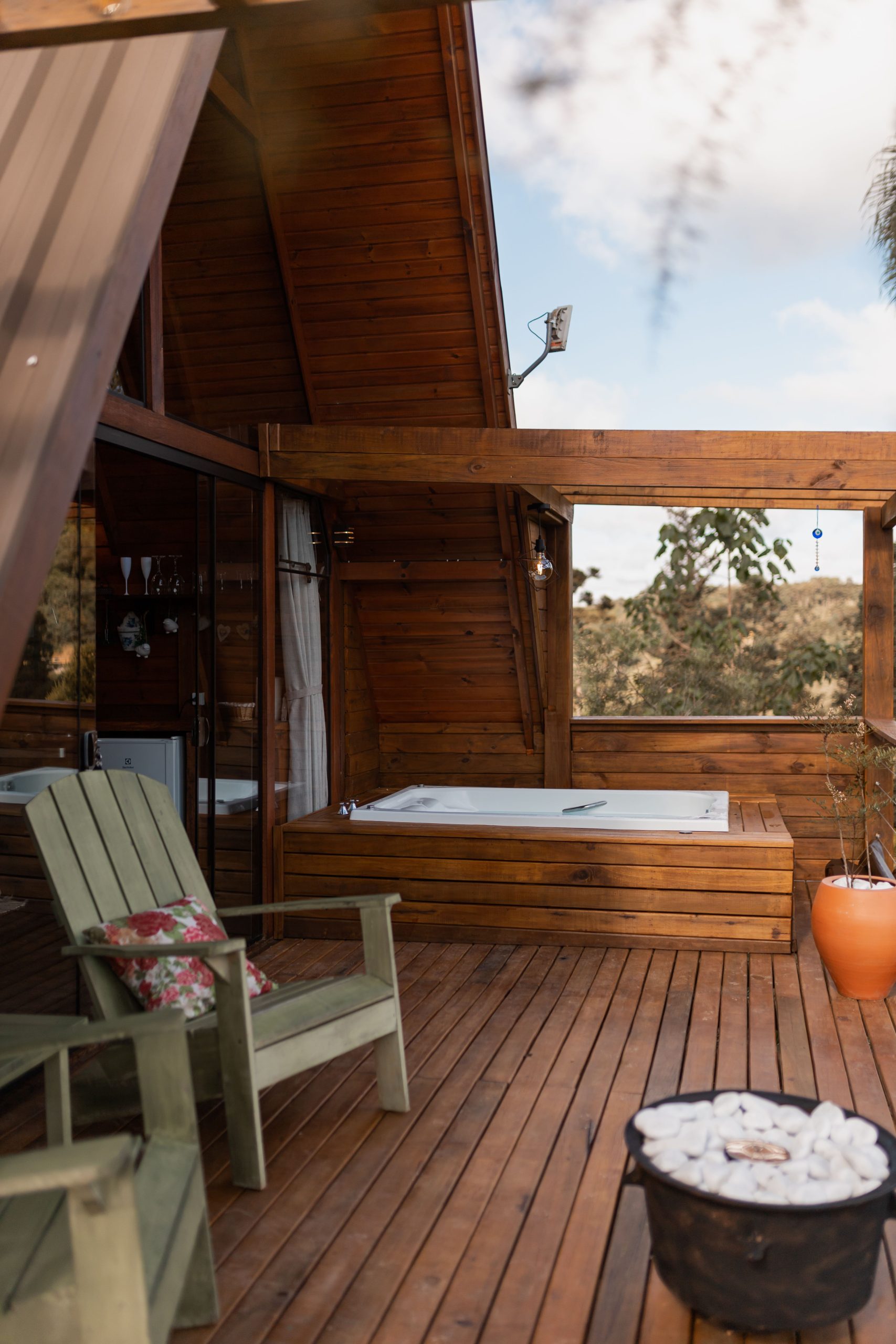
Winter is exactly when a shelter investment pays off fastest. Three additions turn a pergola into a year-round wellness space:
- Lighting. Warm LED strips built into the louvres or beams (2700–3000 K) with dimming — harsh light has no place near a hot tub. Everything should be rated for outdoor use, at least IP65 near the water, and low voltage.
- Heaters. An infrared heater rated at 1.5–2 kW positioned over the spot where you step out of the water turns the most uncomfortable moment of winter bathing into a comfortable one. Mount it clear of splashing water and well away from flammable materials.
- Slip-resistant, bare-foot-friendly flooring. Wood or composite decking feels far better than tile in freezing weather; if you use tile, choose an R11 slip-resistant finish and keep a mat handy.
You’ll find a complete guide to preparing a hot tub for frost — from filtration settings to caring for the thermal cover — in Running a Hot Tub in Winter.
DIY kit or a custom-built pergola?
Kit-form wooden gazebos and aluminium pergolas start at around €1,200–3,200, and a handy DIYer with two helpers can put one up in a weekend. They make sense for standard sizes on flat, prepared ground. Watch two things: anchoring (see above), and the actual snow-load rating — the cheapest kits are designed for mild climates only.
A custom-built solution pays off once you want bioclimatic louvres, screen blinds, integrated lighting, or a connection to the house. The supplier handles the structural engineering, anchoring, and roof drainage for you, and backs the whole thing with a warranty. Above roughly €6,000, the price gap versus DIY is smaller than it looks — and a mistake in anchoring or roof slope costs more to fix than the installation itself.
FAQ: Frequently asked questions about hot tub shelters
Does a pergola over a hot tub need to be taller than usual?
We recommend a clear height of at least 2.2–2.5 m above the waterline. Hot tubs often sit on a raised platform, and seated bathers’ heads end up higher than you’d expect; a lower ceiling also hurts steam dispersal and worsens condensation.
Does hot tub steam damage a wooden structure?
Not in an open gazebo with good airflow — a quality stain reapplied every 2–3 years is enough. The problem arises with enclosed structures that lack ventilation, where condensation keeps the wood permanently damp. In that case, choose aluminium or add forced ventilation.
Do I need planning permission for a pergola over a hot tub?
Smaller garden structures usually go ahead without a permit, or with a simple notification, but it depends on footprint, height, distance from the property line, and local rules. Check the specific requirements with your local building authority before ordering — it’ll save you complications during an inspection or when selling the property.
Does a shelter actually pay off in energy savings?
Yes, mainly by blocking wind, which significantly increases heat loss. The roof alone cuts consumption by a few percent; side walls on the windward side make a noticeably bigger difference. But the biggest saving remains the extended lifespan of the thermal cover and cabinet.
Can I add a pergola over a hot tub that’s already installed?
Yes, that’s the standard approach — post footings are set outside the tub’s footprint. Just keep in mind that the roof gets built directly above the tub: protect it with boards or a tarp, and schedule the work outside the bathing season.
A shelter is the logical next step after getting a hot tub — and often the very reason to get one in the first place: it turns an occasional summer treat into a year-round ritual. If you’re still deciding on a hot tub, browse our range of hot tubs, and for kitting out your covered corner — from thermal covers to steps and accessories — see the wellness category. You’ll find more guides in our Advice Centre.
