
An early-2000s pool doesn’t have to end up under a digger. If the shell is sound, a new liner, a modern pump and an enclosure can bring it back to comfort on par with a new build — typically for €6,000 to €16,000, or a third to half the price of a new in-ground pool. The key is knowing when renovation pays off and tackling the steps in the right order.
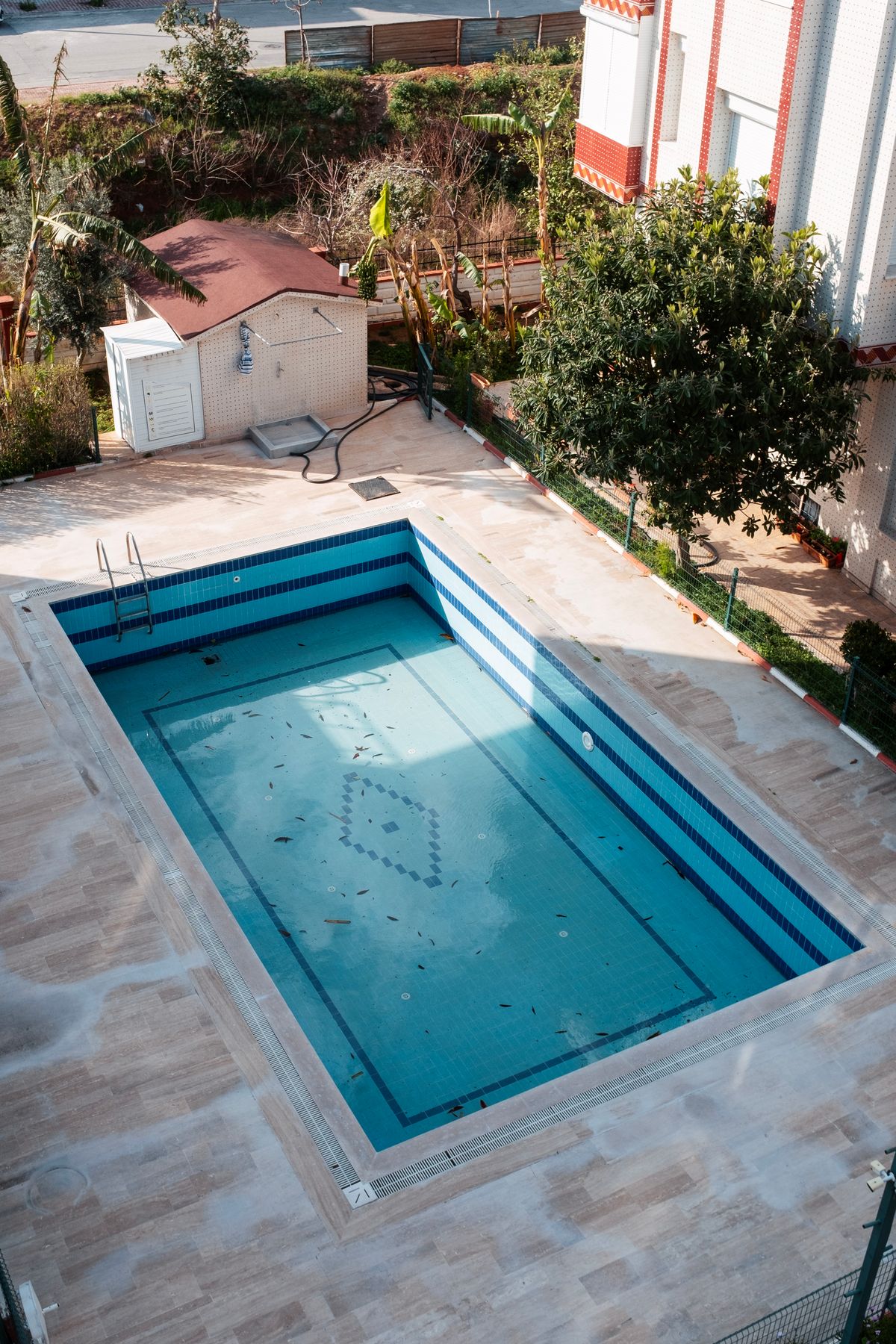
Renovate or demolish? It comes down to the shell
The first question isn’t “how much will this cost” but “what’s actually broken”. The vast majority of problems in older pools come down to the surface and the equipment — and both can be replaced. Demolition only makes sense once the load-bearing structure itself is failing.
Renovation makes sense when: the liner is faded, stiff or leaking in spots, the equipment is outdated or noisy, the pool is guzzling electricity and chemicals, or there’s no cover. Meanwhile the shell (concrete, permanent formwork, plastic, fibreglass) is holding its shape with no structural issues.
Consider demolition or a major rebuild when: the concrete shell has active structural cracks that keep reopening after repair, the floor is sinking or heaving (groundwater, poor subsoil), a plastic shell is warped or extensively cracked, or the pool simply sits somewhere you no longer want it. Hairline cracks in the render, on the other hand, are no reason to panic — a reinforced liner will cover them.
A simple test: leave the pool filled to its normal level over winter and watch the water level. A drop of a few millimetres a day is evaporation; losing several centimetres a week outside the swimming season points to a leaking liner or pipework — both fixable faults.
Common problems in pools over 15–20 years old
- Tired liner: a pool liner typically lasts 10–15 years. After that the colour fades, the material stiffens, seams start to give, and algae collects in the folds.
- Undersized or failing sand filtration: old sand filters poorly, the tank corrodes, and the six-way valve leaks.
- Single-speed pump with no frequency drive: runs flat out all the time and wastes a lot of electricity — often the single biggest power drain in the garden.
- No cover: the water cools down, evaporates and collects dirt, driving up heating and chemical costs.
- Outdated plumbing and lighting: corroded jets and skimmers, halogen lights, no automatic dosing.
The good news: each of these is a separate, well-defined investment. That means the renovation can be spread across layers — even across several seasons.
Layer 1: a new pool liner
Relining is the most common and most effective renovation step. Today’s reinforced 1.5 mm liners (ALKORPLAN, ELBE, CEFIL and similar) work as a standalone waterproof shell, independent of the original surface. They cover cracked render on concrete pools, tired fibreglass, and old liners alike.
2026 price guide: a complete turnkey relining job (material, geotextile, plastic-coated edge profiles, labour) runs roughly €33–60/m², depending on the liner type and the pool’s shape. A typical 7×3.5 m pool with a 1.4 m depth has an interior surface of around 55 m², putting the total at roughly €2,000–3,400. Installation usually takes 3–5 days.
The process: draining and cleaning, patching local unevenness, laying the underlay geotextile, anchoring the plastic-coated edge profiles around the perimeter, stretching and hot-air welding the liner, sealing around fittings (jets, skimmer, lights), then refilling — which pulls the liner taut.
When to call a professional: for a welded reinforced liner, practically always — the seams and details around steps and fittings determine whether it stays watertight for the next 15 years. DIY only makes sense for above-ground pools with a replaceable hung (overlap/unibead) liner, where a replacement part costs a few hundred euros.
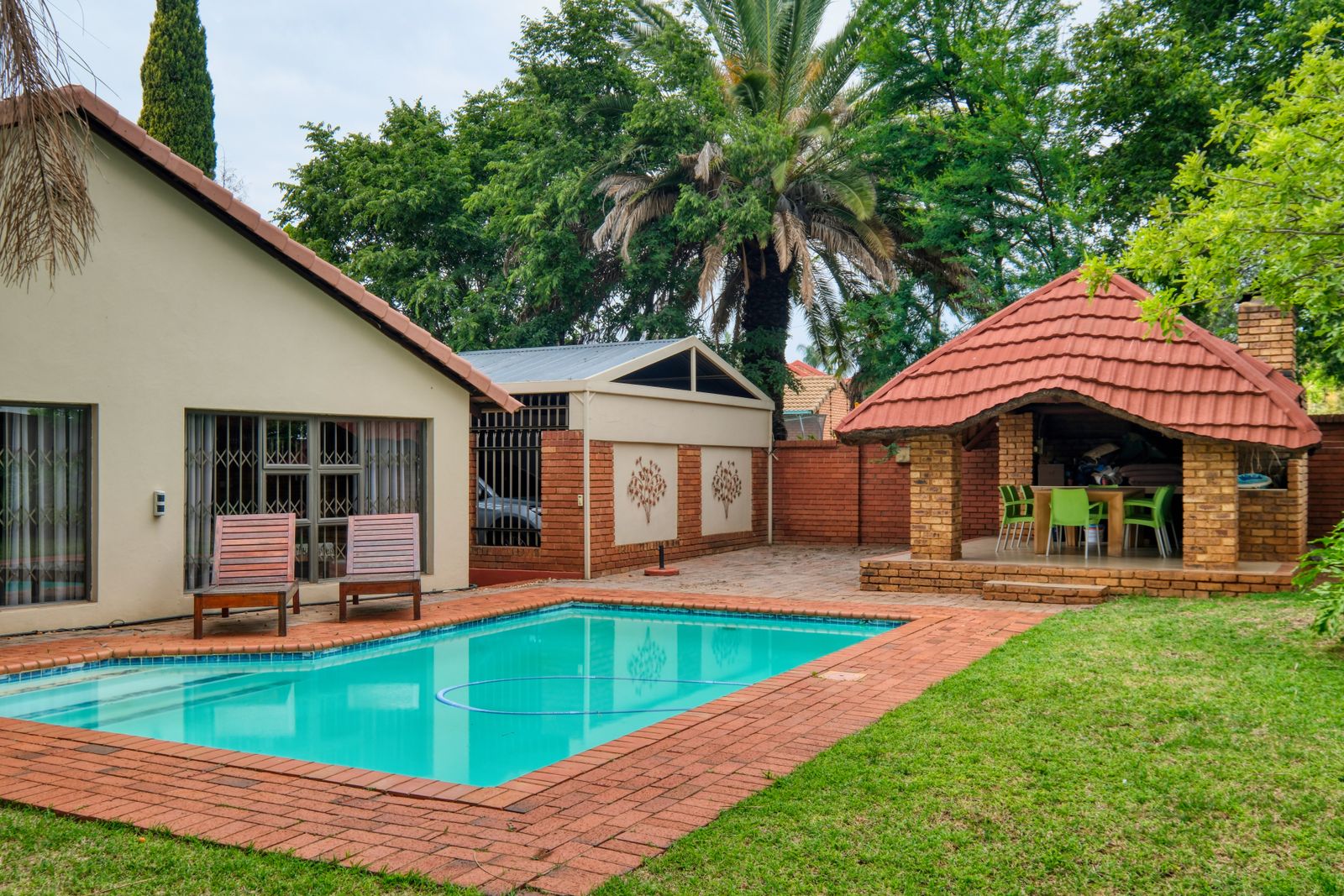
Layer 2: upgrading the equipment
Once the pool is already drained, it’s the perfect time to replace what’s hidden in the equipment pit too — and the equipment is what determines running costs for years to come.
Inverter pump: a frequency drive matches the pump’s speed to actual demand — filtration runs longer, but at a fraction of the power. Compared with an old single-speed pump, consumption drops significantly (manufacturers quote savings in the tens of percent) along with noise. Expect to pay roughly €600–1,200.
More efficient filtration: a new filter tank with the right flow rate and fresh media (sand, or filter glass) is the foundation of clean water. If you’re torn between filter types, see our comparison in sand vs. cartridge filtration.
Heat pump: extends the season from April to October for a fraction of the cost of electric heating. For guidance on choosing the right output and what to expect in practice, see our guide to heat pumps for pools and hot tubs.
Automation: pH/chlorine measuring and dosing, plus filtration and heating control from your phone. It gives an old pool a level of comfort that simply didn’t exist twenty years ago — details in our article on smart pool automation.
Layer 3: covering it — the fastest payback
If an older pool has no cover at all, that’s usually the investment with the quickest payback. A solar cover costing a few hundred euros cuts nighttime heat loss and evaporation; a solid enclosure goes further still, extending the season, reducing chemical use and improving safety. For a comparison of options from a simple cover to a full high enclosure, see pool enclosures vs. solar covers.
Bonus: switching to salt water
A renovation is also a good moment to switch to salt chlorination — the water feels softer and maintenance is simpler. Just watch out for material compatibility: salt water is more aggressive toward metal, so older stainless steel ladders, heat exchangers and metal fittings need to be salt-resistant grades (or simply replace them during the renovation), and a heat pump should have a titanium heat exchanger. For a full comparison of both systems, read salt water vs. chlorine.
How much does a renovation cost? 2026 budget guide
The table below sums up typical scenarios for an in-ground pool around 7×3.5 m. Prices are 2026 estimates including installation; an actual quote always depends on the pool’s condition and site access.
| Renovation scenario | What’s included | Estimated cost (2026) |
|---|---|---|
| Quick savings package | Solar cover + reel, new filter media, valve service | €320–800 |
| Equipment replacement | Inverter pump + new sand filtration + connections | €1,200–2,400 |
| New liner | Turnkey reinforced 1.5 mm liner, approx. 55 m², incl. details and fittings | €2,000–3,400 |
| Liner + equipment + heating | Relining, pump, filtration, heat pump, salt chlorination unit | €5,200–8,800 |
| Full “second life” package | Everything above plus enclosure, automation, LED lighting, new jets and skimmer | €10,000–18,000 |
| For comparison: a new build | New in-ground liner pool with equipment and enclosure | from €20,000 to €40,000+ |
For a detailed breakdown of new-build costs, including excavation and running costs, see how much does a pool cost — the complete budget.
Do efficiency upgrades pay off? Let’s do the math
Efficiency upgrades pay for themselves faster on an older pool than on a new build, because the starting point is usually much worse.
- Solar cover: by cutting evaporation and overnight heat loss it saves a meaningful chunk of heating costs; at €80–240, it typically pays for itself within one to two seasons.
- Inverter pump: compared with an old single-speed unit, savings run into hundreds of euros per season — payback is typically 3–6 years, plus quieter operation.
- Heat pump instead of an electric heating coil: delivers the same warmth on a fraction of the electricity; the more you heat, the faster it pays back.
- Automatic dosing: saves more on chemicals and time than on electricity — the main benefit is stable water without swings.
What order should you renovate in?
- Diagnose the shell and plumbing: a pressure test on the pipework and an assessment of the structure — before you spend a cent, you need to know the pool is actually worth investing in.
- Structural repairs and fittings: patching the surface, replacing corroded jets, the skimmer and lights. You’ll find replacement parts in our pool structural parts category.
- New liner: only after repairs — the liner goes onto a finished, clean base with new fittings already in place.
- Equipment: pump, filtration, heating, and salt chlorination and automation if applicable — ideally at the same time as the liner, since the pool is already out of action anyway.
- Cover and comfort: a cover or enclosure, lighting, a swim jet — a layer you can always add the following season.
This order protects your investment: never buy expensive equipment for a pool you don’t yet know holds water.
Frequently asked questions
How do I know if I just need a new liner and the shell is fine?
If the pool loses water but the leak stops at a specific level once it drops (a seam, a fitting, a damaged spot on the liner), it’s almost certainly the liner or a fitting. Structural problems show up as wall or floor deformation and cracks that keep coming back even after repair — those need an expert assessment.
How much does a new pool liner cost per m²?
A complete turnkey job with a reinforced 1.5 mm liner runs roughly €33–60/m² in 2026, including material and labour. For a typical family pool, budget around €2,000–3,400 in total.
Can the renovation be spread over several years?
Yes, and it’s common practice. Year one: the liner and essential equipment; the following year: a heat pump or enclosure. Just keep the order right — a watertight pool first, expensive appliances second.
Can I switch an old pool to salt water?
Technically yes, but check your materials first: metal fittings, ladders and heat exchangers need to be salt-resistant, and the heat pump needs a titanium heat exchanger. During a renovation, it’s cheapest to simply replace the at-risk parts while everything is already open.
Is renovation worth it for an above-ground pool too?
For cheap above-ground pools, the price of a new tank is usually the deciding factor — replacing a hung liner and the filtration for a few hundred euros makes sense, but a major renovation usually doesn’t. For quality steel or in-ground-style structures, the same logic applies as for built-in pools.
Renovating an old pool is one of the few investments around the house where a third of the cost of a new build gets you a result that feels practically brand new. Start with diagnostics, follow with the liner and equipment, and don’t forget the cover — every layer pays you back in lower bills and a longer season. You’ll find replacement jets, skimmers, lights and other renovation parts in our pool structural parts category and full equipment in pool technology. Read more guides in our Advice Center.
