
A good swim spa comes down to four things: a swim zone that’s long and deep enough, a genuinely powerful current, honest insulation, and a service line you can still reach in five years. A competitive swimmer needs a different machine than a family with kids, or someone rehabilitating a knee — and that’s exactly the criterion you should buy against. This guide walks through the specs step by step, including a table organised by purpose and the questions to ask your dealer before you sign the order.
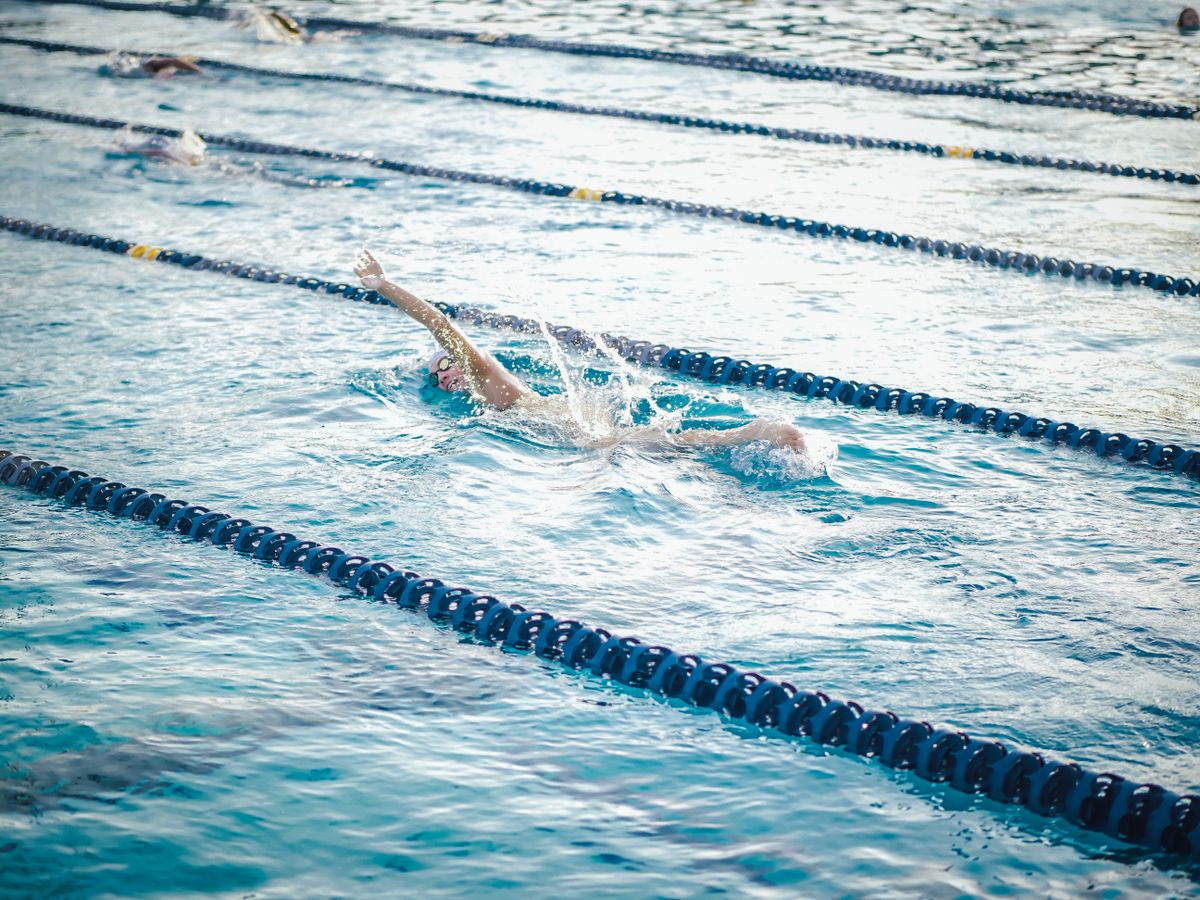
How is choosing a swim spa different from choosing a hot tub?
The general principles — acrylic shell, insulation quality, branded technology, dealer references — apply to swim spas just as much as to hot tubs. We covered them in detail in our guide How to Choose a Hot Tub, so we won’t repeat them here. If you’re still weighing a swim spa against a traditional pool, start with our comparison Swim Spa vs. Pool.
What a swim spa adds are parameters a hot tub never raises: the length and depth of the swim zone, the type and quality of the current, a possible split into two temperature zones — and a weight class that’s an order of magnitude higher, which dictates where it can go. These are the four areas we’ll focus on.
How long and deep should the swim zone be?
Swim spas run roughly from 4 to 6 metres long; the US manufacturer Master Spas quotes a range of 11 to 19 feet in its buying guide, or about 3.4 to 5.8 m. Canada’s Hydropool offers models from 13 to 19 feet (roughly 4 to 5.8 m). Longer isn’t automatically better — it depends what the tank is actually for.
Models around 4 m are enough for aqua fitness, water running, rehab exercises and recreational swimming against a gentle current. A tall swimmer with a long stroke, though, may “touch” the end of the tank at higher current settings — you need clearance ahead of the body and behind the feet.
Models from 5 to 6 m are the choice for fitness and competitive swimming. A longer swim zone gives the current room to straighten out and settle, so you swim in a more laminar, stable flow, and there’s still room left for training accessories or a second swimmer.
Choose the water depth around the tallest person in the household: a practical minimum for swimming is around 1.2 m, with 1.3 to 1.5 m a comfortable standard. Some “deep” models (e.g. the Master Spas MP Force Deep, at nearly 17 feet) offer a recessed floor for water running and exercise without touching bottom. A shallower tank means less volume and cheaper heating; a deeper one means a freer stroke and more exercise options — it’s a deliberate trade-off.
Jets, turbine, or paddlewheel: which current is best for swimmers?
The current is the heart of a swim spa, and the parameter where budget and premium models differ most. Three main systems are on the market.
Jet systems push water through several swim jets using pumps. On entry-level models the stream tends to be narrow and “hard” — it pushes against the shoulders rather than the whole body — and if the jets draw in air, the surface fills with bubbles that disrupt both your stroke and your view. Good jet systems avoid this by running without air injection and using several jets side by side: on its H2X line, Master Spas uses air-free VIP (Velocity Injector Plate) technology with six jets, which the manufacturer says boosts current power by up to 45% over a standard jetted swim spa. Hydropool’s AquaTrainer line uses wide-body V-Twin jets, while its AquaSport line uses AccuFlo jets for a smoother stream.
Turbine (propeller) systems create the current with a large propeller behind a grille at the head of the tank. The stream is wide, deep and bubble-free, with stepless speed control — swimmers say it feels closest to swimming in a river. A typical example is the Wave XP technology in Master Spas’ Michael Phelps Signature models: the propeller doesn’t draw in air, and variable motor speed lets you fine-tune resistance from a leisurely pace to race pace. The downside is a higher price.
Paddlewheel systems pull water through a wide cylinder spanning the full width of the tank. The result is a very even, laminar current across the whole body profile — many coaches consider it the closest simulation of open-water swimming. It’s a more complex, more expensive design, and only a few manufacturers offer it.
Practical rule of thumb: a recreational swimmer will be well served by a good air-free jet system, while ambitious and competitive swimmers will appreciate a turbine or paddlewheel. Either way, insist on stepless current strength control, not just two or three fixed settings. If you’re interested in a counter-current unit for a traditional pool, we compared those in Swim Jets for Pools.
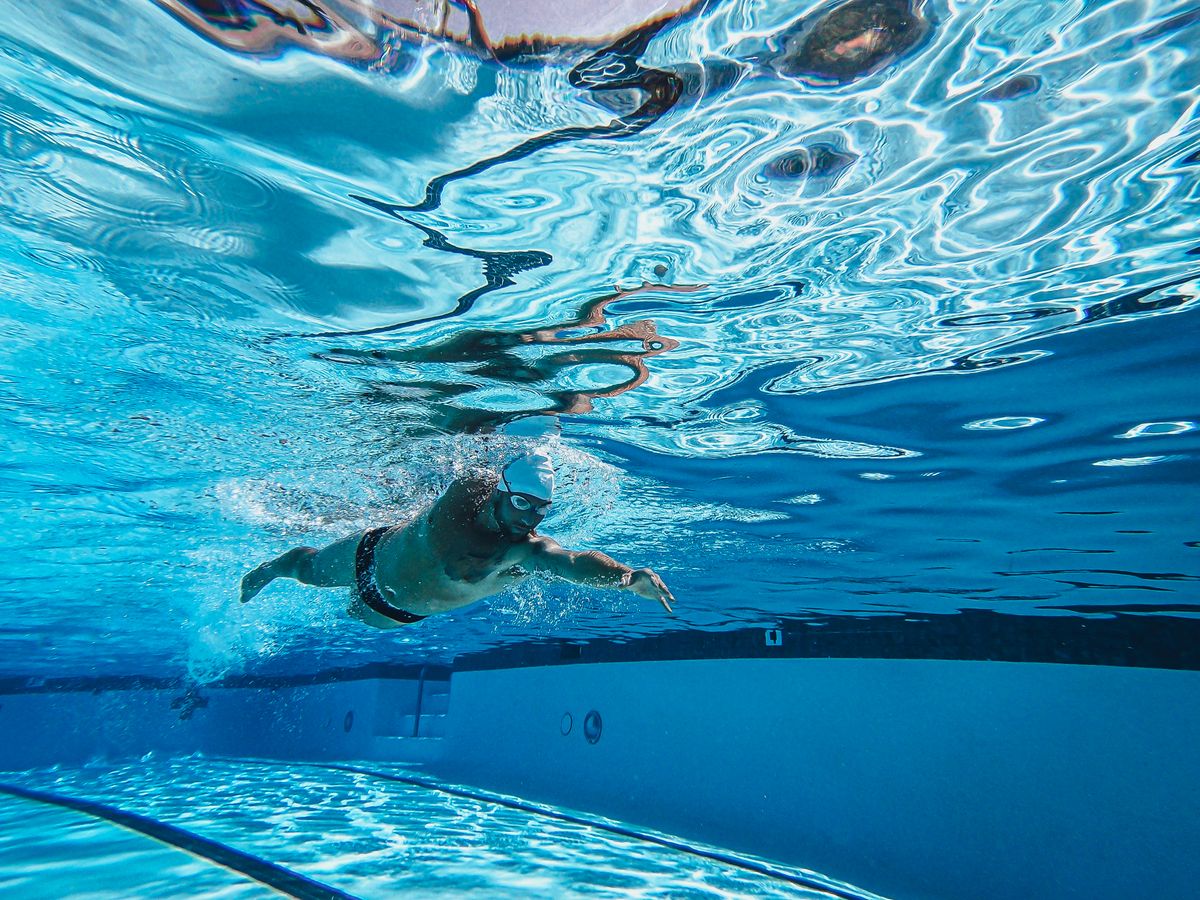
Single zone, or a dual model with a separate hot tub?
Single-zone swim spas are one tank at one water temperature. The swim section and the massage seating (usually at the back end) share the same water — typically 28 to 32 °C. It’s shorter, lighter and cheaper to buy and run, but the trade-off is temperature: 34 °C is too warm for swimming, and 29 °C is too cool for a proper massage soak.
Dual-zone models have two separate tanks, each with its own equipment, inside one cabinet: a swim zone at, say, 28 °C, and a full hot tub for 4 to 6 people at 36 to 38 °C. A typical example is the Hydropool AquaSport 19DTAX — a 19-foot dual model where you train in cooler water in the swim section and relax in warm water in the separate hot tub section. Training and recovery can then happen at the same time: one family member swims while another soaks. The price of that comfort is a length around 5.8 m, extra weight, and a higher price tag — you’re effectively buying two machines in one.
Decision guide: if you want a swim spa mainly for swimming and see the massage as a bonus, a single-zone model is enough. If it needs to replace both a hot tub and a pool for the whole family, a dual model makes sense — and the temperature contrast between zones can even be used therapeutically, as we describe in our article on contrast therapy.
Insulation and year-round running costs: where thousands a year are decided
A swim spa sits outdoors and heats 6 to 10 m³ of water 365 days a year, so insulation quality shows up on your electricity bill every single day. Ask about the insulation of both the shell and the cabinet (Hydropool addresses this with its insulated HydroWise cabinet, which limits heat loss and consumption; Master Spas cites premium foam insulation), about whether waste heat from the pumps is reused, and above all about the thermal cover: the water surface is where most heat escapes, so a rigid, tight-fitting cover with a solid locking system matters just as much as the foam in the walls.
For year-round running costs, ask for real consumption data for a Central European climate, not brochure figures from California. We put together a detailed budget with actual kWh and euro figures in What a Swim Spa Costs to Run — as a rough guide, expect higher costs than a hot tub and noticeably lower ones than a pool heated year-round. A heat pump instead of an electric heater can cut costs significantly; see our comparison in Heat Pumps for Pools and Hot Tubs.
Control system, technology and service
Ask which control system runs the swim spa. Widely used platforms (Balboa, Gecko, in.touch) mean spare parts are easy to find, technicians know them well, and diagnostics are straightforward — we’ve listed the error codes for the most common platform in our Balboa error code overview. Proprietary electronics with no local representation are a risk: every fault means waiting for a part to be imported.
Nice to have, though not essential, are Wi-Fi app control (checking temperature and filtration remotely), ozone or UV-C as an extra layer of disinfection, and self-cleaning filtration loops on higher-end ranges. On service, ask for concrete answers: who actually does the servicing, how many days until they arrive, and exactly what the warranty covers — especially on the shell, cabinet and pumps, where warranty periods vary widely.
Weight and installation: check the structure first, then order
A swim spa is dramatically heavier than a hot tub. Empty, it weighs roughly 1,300 to 2,500 kg; filled with water and people, 8 to 14 tonnes — over a footprint of around 10 m², that works out to a load over 1,000 kg/m². It needs a level, load-bearing base slab (typically 15–20 cm of reinforced concrete) and transport planned well in advance: craning it in over a house or fence is a routine line item, so budget for it from the start.
Don’t risk placing one on a terrace or roof without a structural engineer’s assessment — we covered what the structure needs to bear and how that assessment works in Hot Tub on a Terrace and Structural Load; for a swim spa, double all of it. Don’t forget the electrical connection either: larger models need 32 A or more, a three-phase supply, and a qualified electrician.
The wet test: why you should swim in it before you buy
For a hot tub, a wet test (a hands-on trial in a filled model) is a nice bonus. For a swim spa, it’s close to mandatory. Current quality simply can’t be judged from a brochure — two models with identical pump output can feel completely different to swim in. Arrange a trial in swimwear with your dealer and check three things.
- The current across its full range: swim at both low and high settings. Notice whether the current holds you centred in the lane, whether it pushes only your shoulders, and whether it creates bubbles that disrupt your breathing.
- Space: at full stroke length you shouldn’t touch the bottom, the walls, or the end of the tank. Try turning around and treading water too.
- Ergonomics: sit in the massage section, try the jets, get in and out via the steps, and check how easy the controls are to reach.
Swim spa parameters by purpose: comparison table
| Parameter | Competitive swimming | Family recreation | Rehabilitation |
|---|---|---|---|
| Length | 5–6 m | 4–5 m, up to 5.8 m for dual models | 4–4.5 m |
| Water depth | 1.3–1.5 m | 1.2–1.4 m | 1.2–1.5 m (water running without touching the bottom) |
| Current | Turbine or paddlewheel, stepless control | Good air-free jets | Finely adjustable, gentler current |
| Zones | Single zone, water at 26–29 °C | Dual model with hot tub, two temperatures | Single zone at 30–34 °C, or dual |
| Key features | Flat floor, handholds, training accessories | Seating, non-slip floor, lighting | Handrails, hydrotherapy jets, easy entry |
| What to focus on during the wet test | Current quality and width at full power | Room for several people at once | Stability during exercise, getting in and out |
Questions to ask your dealer: a checklist
- What type of current does this model have, and can you try it during a wet test?
- What’s the real energy consumption for year-round use in Central Europe?
- How are the shell and cabinet insulated, and what thermal cover is included?
- Which control system does it use, and who handles service and spare parts locally?
- How much does the filled spa weigh, and what does that mean for the base slab and electrical connection?
- Exactly what does the warranty cover on the shell, pumps and electronics — and for how long?
- What will delivery and crane placement cost at my specific site?
Frequently asked questions about choosing a swim spa
Is a 4-metre swim spa long enough for me?
Yes, for aqua fitness, rehab and recreational swimming. But if you’re over 180 cm tall and want to swim competitively against a stronger current, go for 5 m or more — at full stroke length you need clearance ahead of your hands and behind your feet, and a longer tank gives a calmer current.
Is a turbine current really better than jets?
For competitive swimming, generally yes: the stream is wider, deeper and bubble-free, with fine resistance control. But a good air-free jet system with several jets is more than enough for a recreational swimmer, and costs less. Let the wet test decide, not the brochure.
Is a dual-zone model worth it?
If the swim spa needs to replace both a pool and a hot tub for the whole family, yes — each zone has its own temperature, so you can swim at 28 °C while someone else relaxes at 37 °C at the same time. If it’s primarily for swimming, a single-zone model saves you metres, kilograms and a significant amount of money.
Can I run a swim spa in winter too?
Yes, a good swim spa is built for year-round use — the insulated shell, cabinet and thermal cover are designed with frost in mind. What matters most is insulation quality and sensible temperature settings; we cover the practical experience in our article on Running a Hot Tub in Winter, which applies to swim spas too.
Do I need a building permit for a swim spa?
In most cases it counts as a free-standing product on a hard surface rather than a structure, so a permit usually isn’t required. Exact rules vary by location and municipality, though — check with your local building authority before ordering, especially if you’re recessing it into the ground or a terrace.
In conclusion: choose by purpose, not by brochure
The best swim spa is the one that matches your purpose: an athlete needs length and a strong current, a family needs a dual model, and rehabilitation needs fine control and easy entry. Get clear on your priorities, work through the checklist of questions, and save the final decision for after the wet test. For more year-round wellness inspiration, browse our wellness category, the full range of hot tubs and spas in hot tubs — and more guides in our Advice Centre.
