
An outdoor hot tub is one of those amenities that genuinely sells in short-term rental listings: it extends your season across the whole year, attracts couples and groups looking for a wellness getaway, and lets you charge a higher nightly rate. At the same time, it’s a piece of technical equipment that demands disciplined operation as guests rotate through — hygiene, chemistry checks, and clear rules. In this guide, we’ll look at what the data says, which hot tub to choose for a rental property, how to handle hygiene between stays, and how to work out the payback period.
Why guests want a hot tub — and what the data says
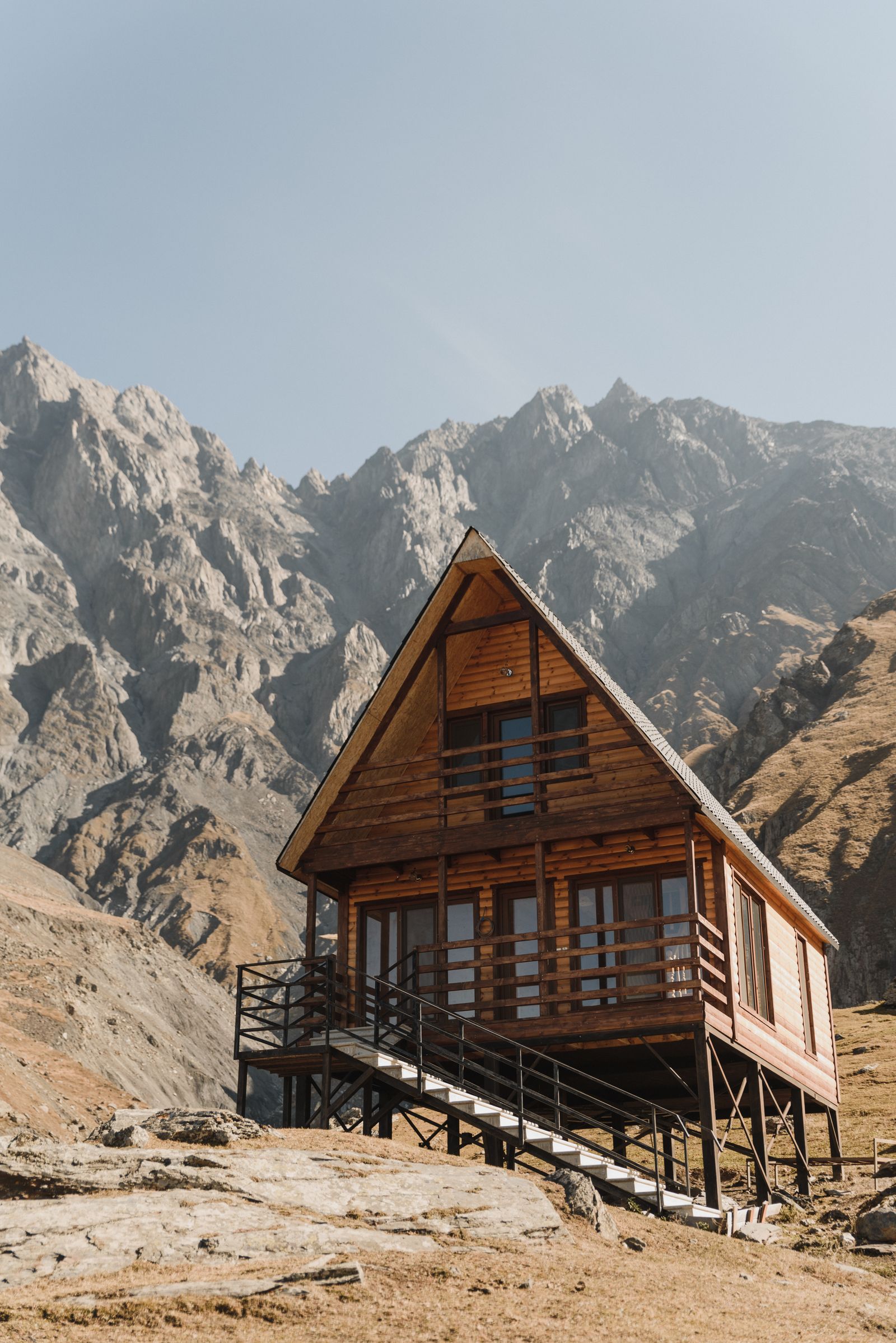
Wellness is one of the main reasons people book a cabin instead of a hotel: privacy, quiet, and the chance to sit in hot water under the stars in the evening is an experience no city hotel can match. And unlike a pool, a hot tub works year-round — a snowy winter weekend with a hot tub on the terrace is often more appealing to guests than a summer one. For hosts, this evens out seasonality: it helps sell November and February dates that would otherwise sit empty.
The data backs this up. AirDNA, the US short-term rental analytics platform that tracks the Airbnb and Vrbo market, consistently ranks hot tubs among the amenities with the biggest impact on revenue: according to its analyses, listings with a hot tub achieve roughly 15% higher average nightly rates than comparable listings without one. The effect on occupancy is more modest — a few percentage points — and is strongest for mountain and rural properties in the winter season, exactly the segment a typical Czech cabin or cottage falls into.
Exact figures vary from market to market, and we don’t have equally detailed statistics for the Czech market. But the general conclusion holds here too: a hot tub mainly lifts the achievable nightly rate and guest ratings, and it’s through that higher rate that the investment pays for itself. Just check any booking platform — the “hot tub” filter is one of the most-used for cabins and cottages, and properties that have one are often booked out for weeks in winter.
Which hot tub to choose for a rental: durability over luxury
A rental hot tub has a different operating profile than a home one: a different person uses it every week, less carefully, and without knowing the equipment. Choose it for durability and running costs, not for the number of coloured lights. We covered the general criteria — acrylic shell, branded technology, dealer references — in our guide How to Choose a Hot Tub; for a rental property, add four more specific priorities.
Good insulation: a difference of hundreds of euros a month
A rental hot tub runs at operating temperature year-round, because you never know when the next booking will arrive. The difference between a well-insulated and a poorly insulated shell can amount to more than €40 a month in winter — full-foam insulation or a quality thermal barrier together with a solid thermal cover are a necessity for a rental, not a nice-to-have. You’ll find a detailed cost breakdown in the article How Much Does It Cost to Run a Hot Tub.
A simple control panel
The less a guest can mess up, the better. Ideally, choose a model where guests only get access to the jets and lighting, while temperature, filtration cycles, and modes stay locked (most branded control systems let you partially or fully lock the panel). A complicated touchscreen menu with dozens of options is, in a rental, more likely to be a source of “our hot tub isn’t working” phone calls.
A lockable thermal cover
A lockable cover does three jobs at once: it retains heat, protects the water from debris, and — crucially — gives you control over when the hot tub gets used. Between stays, you simply lock it; a guest who arrives before servicing is finished can’t get into untreated water. A cover with child-safety catches is also a basic safety feature.
Service availability
Every day of downtime in season means compensating guests or cancelled bookings. Before buying, check how quickly the dealer can supply replacement parts (pump, heater, control board) and whether they have a service network within reach of your location. A widespread, branded technology with commonly available parts is a better choice for a rental than an exotic model with no support network, however tempting the price.
Hygiene between guests: the most important part of running a rental hot tub
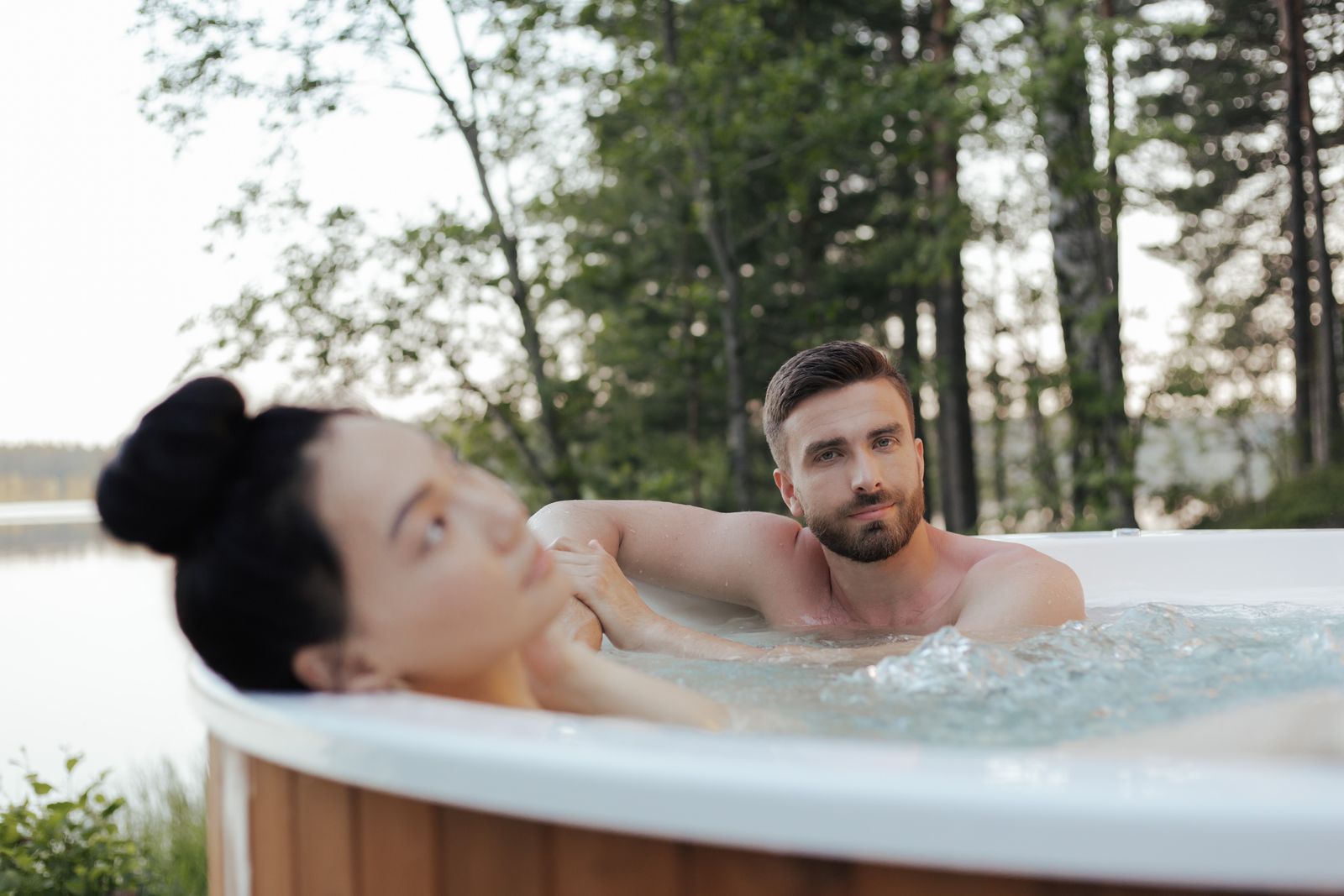
In a home hot tub, you’re bathing the same people over and over, and with the right chemistry the water can last for months. In a rental, the situation is different: every changeover brings a new load, and you’re responsible not just for the equipment but for your guests’ health. Poorly maintained hot water is an ideal breeding ground for bacteria, including legionella — and one bad review saying “the hot tub water was cloudy” can dent your occupancy for months.
Changing the water and disinfecting between stays
The basic rule: between stays, either fully replace the water, or demonstrably bring it back to a flawless state with shock disinfection, measure the values, and log the result. For short turnovers with few guests, good filtration and shock treatment can let you change the water every few turnovers; for weekly stays at a fully booked cabin, changing it after every stay is the safest practice. The rough calculation in the article How Often to Change Hot Tub Water is a useful guide too — at rental-level intensity of use, the interval comes out significantly shorter than at home. Don’t forget to clean the filters as well (ideally keep two sets to rotate) and flush the pipework regularly against biofilm.
What does Czech law say?
In the Czech Republic, hygiene requirements for pools and hot tubs that the public has access to are governed by the Public Health Protection Act and the related decree on hygiene requirements for bathing facilities. The key question is whether a hot tub used by lodging guests counts as a “public bathing facility” — this depends on the specific way the property is operated, and interpretation varies case by case for private properties. Don’t rely on your own interpretation: check your intended operating model in advance with your regional public health authority, and get written confirmation of which obligations (water quality, record-keeping, possibly an operating policy) apply to your property. It’s one phone call that can save you from a fine or a dispute with a guest.
An operating policy as part of your rental terms
Regardless of what the health authority requires, write your own hot tub operating policy and attach it to your rental terms: who may use the hot tub, at what times, what’s forbidden, and what the guest’s liability is for damage. A printed policy by the hot tub and a short version in your welcome message will prevent most problems.
A practical operating model: who looks after the water?
A rental hot tub needs a system, not improvisation. A proven model looks like this: one designated person (you, a property manager, or a cleaning service trained in basic testing) checks the chemistry and equipment, always between stays and at least once during a longer stay. The testing and dosing procedure is the same as for a home hot tub — we described it step by step in the article Hot Tub Chemistry Step by Step — it just needs to be done more often, and always with a record: date, values, actions taken. A water log is your safety net for both complaints and inspections.
If you manage the property remotely, it’s worth investing in smart monitoring: floating sensors and connected control systems report temperature, pH, and disinfectant level to your phone, and alert you before a guest notices a problem. You’ll find an overview of the options in the article Smart Pool Automation — the same applies to a hot tub, just on a smaller scale. Remote temperature control also pays off economically: you can lower the temperature by a few degrees between stays and turn it back up the day before check-in.
Checklist between stays
| Step | What to do | Approximate time |
|---|---|---|
| 1. Visual check | Condition of the water, shell, cover, and surroundings; document any damage | 5 minutes |
| 2. Water | Water change, or shock disinfection depending on your chosen routine | 30 min – 3 hrs (depending on volume and heating) |
| 3. Filters | Remove, rinse, fit a clean set; have the dirty set cleaned | 10 minutes |
| 4. Testing and logging | pH, disinfectant, alkalinity; record the values in the water log | 5 minutes |
| 5. Surfaces | Wipe the waterline, rinse the steps, clean the thermal cover | 10 minutes |
| 6. Settings | Set the temperature for the guest’s arrival, lock the panel’s service functions | 2 minutes |
| 7. Final check | Lock the thermal cover, check the printed operating policy is in place | 3 minutes |
What it costs and what it earns: a sample calculation
The figures below are illustrative model assumptions, not a promise of returns — plug in your own occupancy and rates for your location. Let’s take a cabin that currently rents for €140 a night with 130 booked nights a year. Estimate the cost of a quality hot tub for year-round use, including electrical wiring and a reinforced base, at roughly €10,000–14,000.
Assume the hot tub lets you raise the rate by €16 a night and adds 15 booked nights a year outside the main season. The benefit then comes to roughly €2,320 from the higher rate (145 nights × €16) plus €2,100 from the new nights (15 × €140), over €4,400 a year in total before costs. Against that stands the running cost: electricity of roughly €1,000–1,600 a year for year-round operation, chemicals and water around €400, and a service reserve of €200–400. In this model, the net annual benefit works out to around €2,200–2,800, with a simple payback period of 4–6 years — against a lifespan of 10-plus years for a quality hot tub. On top of that, add harder-to-quantify effects: better reviews, more off-season bookings, and a higher property value.
The model is mainly sensitive to running costs — which is why choosing a well-insulated shell (see above) feeds directly into the payback period. And don’t forget the tax and insurance side: notify your insurer about the hot tub on a rental property and account for it in your bookkeeping as part of the business.
Rules for guests: short, visible, enforceable
Most damage and hygiene problems come from not knowing the rules, not from ill intent. So set a few simple rules and communicate them both in advance and on site:
- Shower before entering — rinsing off (without soap) removes lotions, deodorant, and sweat that would otherwise load the water and cause foaming. We cover this in more detail in the article Foam and Smell in a Hot Tub.
- No glass by the hot tub — replace glasses with plastic or stainless steel; a broken glass in an acrylic shell means a complete drain and a risk of injury.
- Children only with an adult — and for younger children, consider banning use entirely: water at around 38°C isn’t suitable for small children, and supervision is always required. More on this in the article Child Safety Around Pools and Hot Tubs.
- A time limit — for example, until 10 p.m., out of consideration for neighbours and quiet hours.
- No changing the settings — only the operator adjusts temperature and filtration.
- Close the cover after use — it saves energy and protects the water; explain this to guests in one sentence in your welcome message.
FAQ: hot tub for a vacation rental
Is a hot tub worth it even for a cabin I only rent out on weekends?
Yes, often especially then: weekend wellness getaways are the main use case for a hot tub, and you can charge a higher nightly rate even with fewer nights booked. Just bear in mind that fixed running costs (keeping the water warm) are spread over fewer nights — which makes good insulation and remote temperature control even more important.
Do I have to change the water after every stay?
For fully booked weekly turnovers, the safest practice is a complete water change; for shorter stays with fewer people, shock disinfection with measurement and logging may be enough, with a full change every few turnovers. Set your routine based on usage levels and any requirements from the health authority — and always keep a water log.
Does the bathing-facility regulation apply to my guest hot tub?
It might, or it might not — it depends on how the property is operated and whether the hot tub is assessed as a public bathing facility. Interpretation varies for private lodging properties, so check your specific plans with your regional public health authority in advance and follow its guidance.
How do I stop guests from messing with the hot tub’s settings?
Choose a model with a lockable control panel: give guests access to the jets and lights, while temperature and filtration stay locked. Back this up with a line in your operating policy, and consider smart monitoring that alerts you remotely if the values change.
Can a rental hot tub handle year-round outdoor use?
A quality, fully insulated acrylic hot tub is built for year-round use — in winter it just must not be allowed to freeze, so it needs a constant power supply and monitoring. We’ve laid out the practical rules for winter operation in the article Hot Tub in Winter.
Conclusion: an investment that works all year round
A hot tub is one of the few investments in a holiday property that raises the nightly rate, extends the season, and improves guest ratings, all at once. The key to success isn’t luxury features but disciplined operation: a durable, well-insulated model, a clear hygiene routine between stays, and rules guests can understand. If you’re considering a hot tub for your cabin or apartment, take a look at our range of hot tubs at Poolspashop — and you’ll find more practical guides in our Guide section.
