
Cold exposure does not begin with an ice barrel, but with the last thirty seconds of your ordinary morning shower. The riskiest moment is always the first minute in cold water, when the body responds with a sharp gasp and rapid breathing — and that reaction is precisely what you are learning to manage, not to overpower. The plan below leads from a lukewarm shower to an immersion at 5–10 °C in roughly two to three months, and it puts safety ahead of speed.
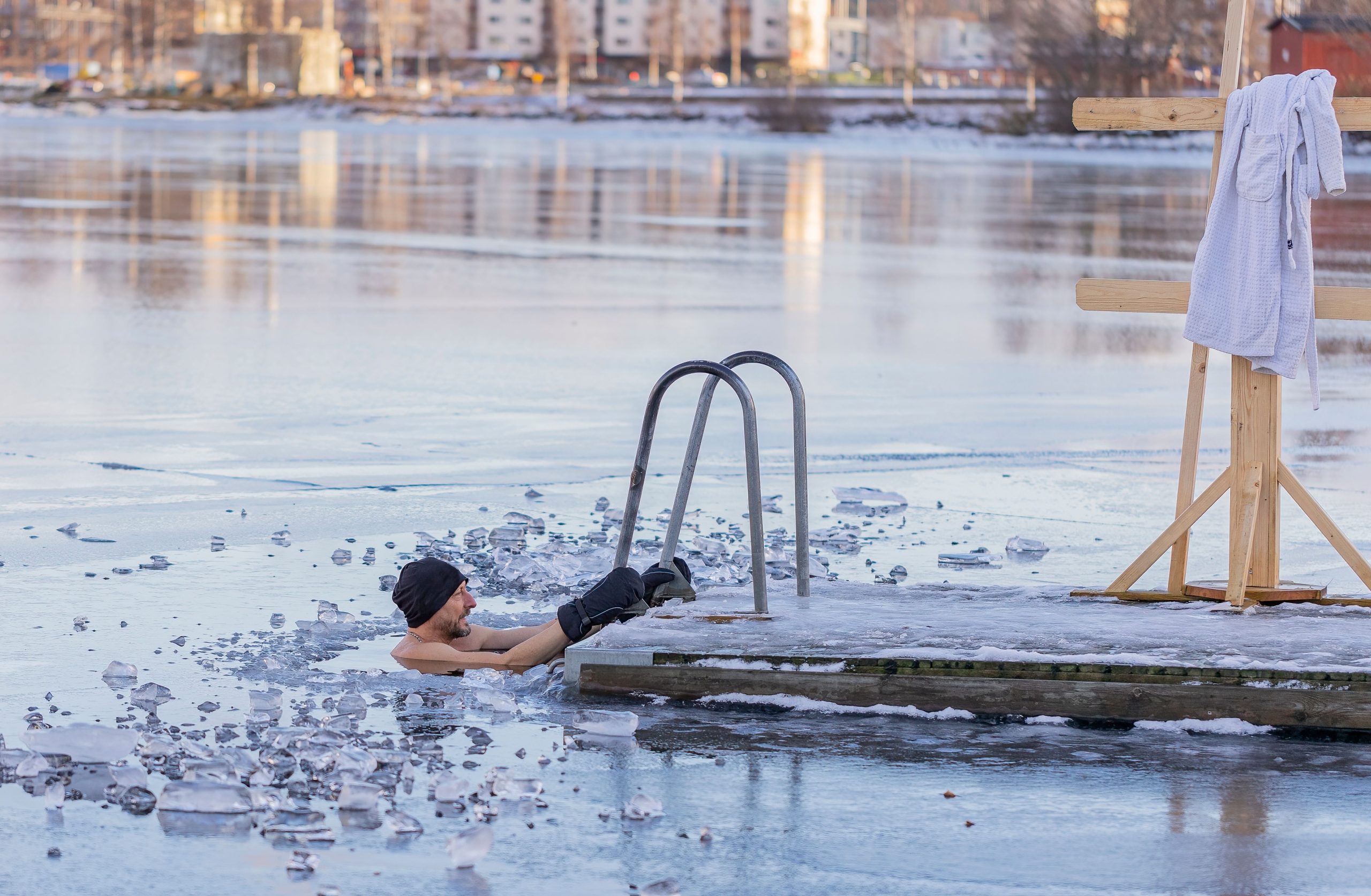
One thing right at the outset, and you will see it several times in this article: if you are being treated for a heart, vascular or blood pressure condition, for epilepsy, or if you are pregnant, talk to your doctor first. The text below is a general guide, not medical advice for any individual person.
What happens in the body when you get into cold water
Skin contact with water below roughly 15 °C triggers what is known as the cold shock response. It shows up as a sharp involuntary gasp, followed by hyperventilation, a faster heart rate and a rise in blood pressure. This reaction is strongest in the first few seconds and subsides within minutes.
That is exactly why the first minute is the most dangerous part of the whole immersion. An involuntary gasp below the surface, or panicked gasping for air, is the main reason people drown in cold water — not hypothermia, which arrives much later. The professional literature has long described the first minute of immersion as critical for survival.
At the same time vasoconstriction sets in: the blood vessels in the skin and the limbs narrow and blood shifts towards the body core. Hands and feet cool fastest and lose fine motor control and sensation. That is normal, but it also means your ability to climb out of the water or to grip anything at all declines faster than you expect.
Once you are out, the constricted vessels gradually open again and cold blood from the limbs returns to the core. Body temperature therefore keeps falling for a while even out of the water — this is called afterdrop. It is usually described as peaking around half an hour after the immersion, which is why people often start shivering in the changing room rather than in the water.
What “adaptation” means
A systematic review of studies on repeated immersion in cold water (Extreme Physiology & Medicine, University of Portsmouth and follow-up work) describes how the breathing and heart rate response to cold is markedly blunted by repeated exposure, and that after only a handful of immersions. Adaptation therefore does not mean you stop feeling cold. Above all it means the breathing response calms down and you keep better control over those first seconds.
Let us be clear about what adaptation is not: it is not protection against hypothermia, it is not a reason to keep extending immersions indefinitely, and it is most certainly not permission to go into the water alone.
A step-by-step plan for beginners
The goal is simple — to teach both body and mind to handle the first minute with a calm exhalation. Adjust the pace to suit yourself; if a particular week feels unpleasant, repeat it instead of skipping ahead.

| Phase | Setting | Water temperature | Duration | Frequency |
|---|---|---|---|---|
| Weeks 1–2 | Shower — lukewarm, cold at the end | approx. 20–25 °C | 30 s | Daily |
| Weeks 3–4 | Shower, colder and longer | approx. 15–20 °C | 1–2 min | Daily |
| Weeks 5–8 | Bathtub or barrel, head above water | 12–15 °C | 1–2 min | 2–4× a week |
| From month 2–3 | Barrel, cold plunge, open water with company | 5–10 °C | 1–3 min | 2–3× a week |
Weeks 1–2. Shower as usual and turn the water lukewarm to cold for the last 30 seconds. Start with the feet and hands, only then the back and chest. Breathe through the nose and make the exhalation longer than the inhalation.
Weeks 3–4. Extend to one or two minutes and lower the temperature. The test is simple: if you are still gasping for air in the final seconds, do not lower the temperature and stay with the same setting for another week.
Weeks 5–8. Your first immersion up to the shoulders, ideally in a bathtub filled with cold water or in a barrel at 12–15 °C. Get in slowly, keep your head above the surface and focus on nothing but the exhalation for the first 30 seconds. One to two minutes is enough.
From the second or third month. Only now does it make sense to consider 5–10 °C. And the duration does not grow in proportion to the cold — quite the opposite. In single-digit temperatures, one to three minutes is standard for recreational cold exposure, and staying in longer brings nothing but higher risk.
Safety rules that are never broken
- Never alone. Not in the bathtub, not in a barrel in the garden, not in a lake. Collapse in cold water comes fast and without warning.
- Never in unknown water. Unknown depth, currents, ice or a weed-choked bottom are a bigger risk than the temperature itself.
- Never after alcohol. Alcohol impairs judgement, dilates the peripheral vessels and accelerates heat loss.
- Head above water. Submerging the head deepens the shock response. Diving and head-first jumps into cold water have no place in recreational cold exposure.
- Controlled exhalation. A long, slow exhalation is the most effective tool against hyperventilation. Holding your breath before immersion, by contrast, increases the risk.
- Get out immediately if you lose sensation in your fingers, start shivering uncontrollably, feel dizzy, have chest pain or become confused.
- See a doctor first: heart and vascular disease, arrhythmia, untreated or poorly controlled hypertension, epilepsy, Raynaud’s syndrome, pregnancy, post-operative states.
- Children do not belong in cold water. They have a less favourable body surface to volume ratio and cool down considerably faster than adults. On the safety of children around water in general we have a separate article on child safety around the pool and hot tub.
If during or after cold exposure you notice a pounding heart that will not settle, breathlessness or pressure in the chest, stop and see a doctor. This is not “weakness” but a signal worth having examined.
Rewarming after immersion: the most underrated part
Because of afterdrop, rewarming matters just as much as the immersion itself. The procedure is always the same: dry off quickly, dress in layers from the top down (torso, legs, hat, gloves, socks) and start moving gently — walking, squats, small jumps. A warm drink, unsweetened or lightly sweetened, helps mainly subjectively and tops up your energy.
What not to do: jump straight into a hot tub or under a hot shower. A sudden burst of heat dilates the peripheral vessels all at once, cold blood returns to the core faster, and that can mean a drop in blood pressure, weakness or even collapse. Work your way up through lukewarm water and wait a few minutes. Combining hot and cold water is worth exploring only as a more advanced practice — we cover the rules and protocols in our article on contrast therapy with a hot tub and cold plunge.
Shivering after immersion is normal and it is how the body generates heat. Uncontrollable shivering that does not ease even after 20–30 minutes in the warm is no longer normal.
At home, in the garden, or outdoors?
A bathtub at home is the cheapest and safest way to start. Cold tap water run into the tub is commonly 8–12 °C in winter and 15–20 °C in summer. Check the temperature with a thermometer rather than by guesswork — the difference between 15 °C and 10 °C is enormous in how it feels.
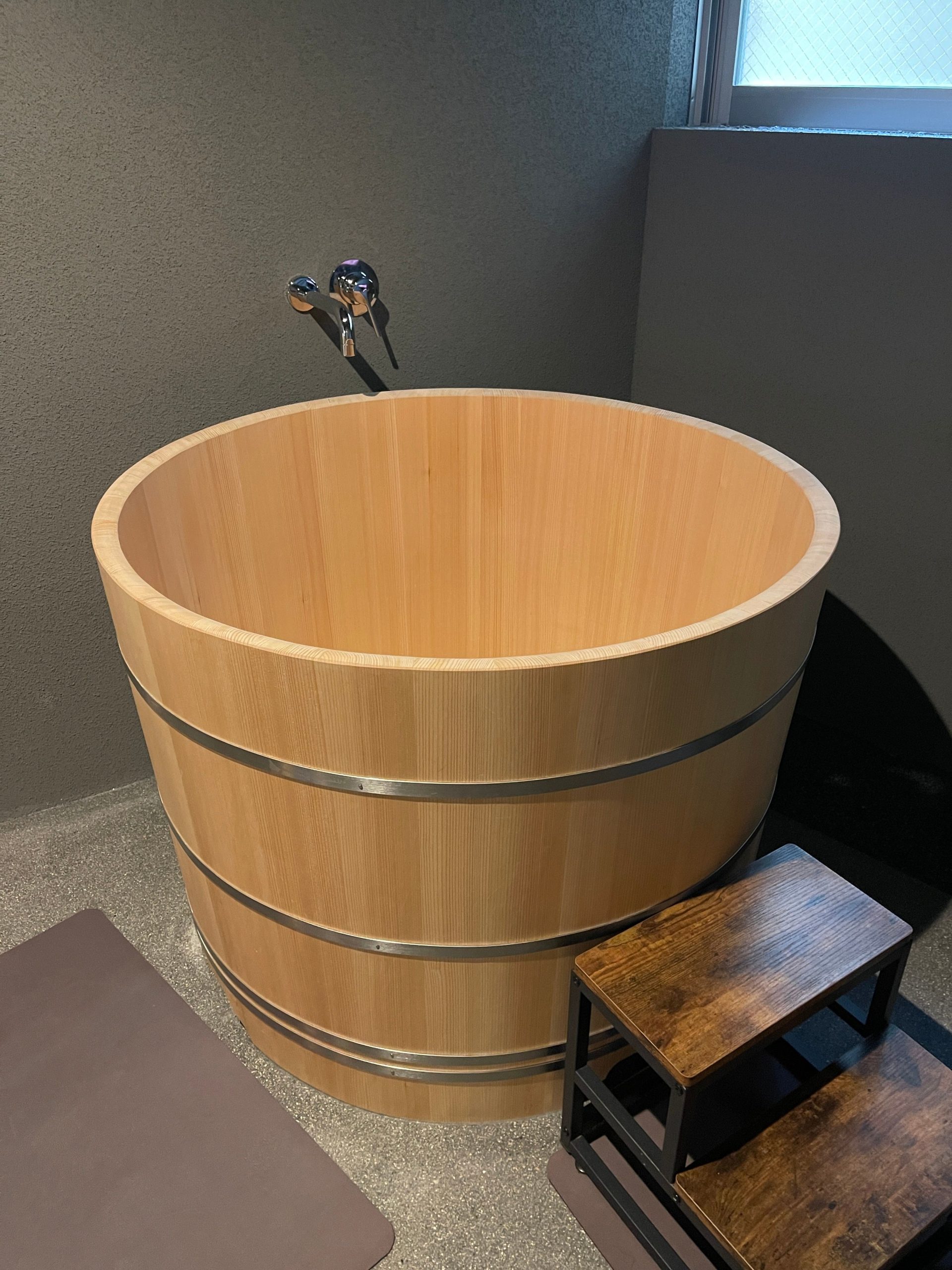
A barrel or cold plunge in the garden gives you a stable temperature all year round and removes the need to travel. The differences between a wooden barrel, a plastic tub and a chilled vessel with a cooling unit, including the costs, are summarised in a separate guide on how to choose a cold plunge. The classic option without electricity is described in our article on the wood-fired bathing barrel.
Cold water hygiene is often underestimated, on the assumption that “nothing grows in cold water anyway”. It does grow — just more slowly. Water in a barrel you immerse yourself in repeatedly needs filtration or regular replacement and checking. How to measure and interpret the results is shown in our article on testing pool and hot tub water.
A pool in winter, a pond or a lake is the most beautiful but also the riskiest option. Here you add the risks of ice, an unknown bottom, currents and distance from the bank. Go only as a group, with a marked entry and exit point, and never after dark. Running outdoor equipment in freezing conditions is covered in our article on the hot tub in winter.
How often, and how to measure progress
For most people, two to four times a week makes sense. Daily ice immersions are not necessary for a beginner and will not speed up adaptation nearly as much as they raise the risk of a mistake made through fatigue.
Do not measure progress by how long you last, nor by how low a temperature you can bear. More useful indicators are:
- How quickly your breathing settles after you get into the water (target: a calm, controlled exhalation within 30 seconds).
- How long it takes you to warm up and stop shivering after getting out.
- How you feel 2–3 hours after the immersion — pleasantly awake, or exhausted?
It pays to keep a simple log: date, water temperature, duration, how it went. After a month you will see the trend far more accurately than from memory.
Myths worth abandoning
“Cold exposure cures illness.” No. Cold water is not a treatment and does not replace medication or medical care. Studies suggest links between regular cold exposure and certain markers, but they involve small samples, short follow-up periods and often subjectively assessed effects.
“The longer, the better.” No. A longer stay in ice water mainly adds the risk of hypothermia and a stronger afterdrop.
“If I am not shivering, I must be well adapted.” The absence of shivering at an advanced stage of chilling is a warning sign, not a mark of achievement.
“Cold exposure replaces exercise.” It does not. It is a complement to movement, sleep and food, not a substitute for them.
What can be said soberly is this: many people describe an improvement in mood, alertness and subjective cold tolerance after immersion, and the physiological data on the blunting of the shock response is fairly consistent. That is a solid reason to try cold exposure — and a poor reason to expect miracles from it.
Frequently asked questions
What water temperature counts as “cold exposure”?
Physiologically, water below roughly 15 °C is considered a cold stress, because that is where the shock response is reliably triggered. For a beginner, though, even a 20 °C shower is a full-value session — the aim of the first weeks is a mastered breathing response, not a low number on the thermometer.
Do I have to immerse my whole body?
No. The head always stays above the surface, and immersion up to the shoulders is entirely sufficient for recreational cold exposure. Submerging the face deepens the shock response and makes no sense for a beginner.
Can I go into cold water straight after the sauna?
Yes, but carefully and gradually — not in one leap. The transition from heat to cold is a strain on the circulation, and for someone without experience it is safer to stick to a lukewarm shower. You will find the details and the recommended order in our articles on how to sauna properly and contrast therapy. With any heart or blood pressure problems, ask your doctor first.
Is it normal for my hands to hurt after immersion?
A burning, even painful reaction in the fingers during rewarming is common, because the vessels are opening again. But if the fingers turn white and blue and the reaction is repeatedly very painful, it may be Raynaud’s phenomenon — in that case discuss cold exposure with your doctor.
When is it better to postpone a session?
During an acute illness or fever, after a demanding training session that left you exhausted, when short of sleep, after alcohol, and at times when you are on your own. A missed immersion costs you nothing; an immersion in poor condition does.
In conclusion
Cold exposure rewards patience, not bravado. Anyone who devotes the first month to the shower and the second month to short immersions at 12–15 °C will reach the ice barrel safely and with their breathing under control. Anyone who starts by jumping into a lake usually just finds out how unpleasant the first minute can be.
If you are planning cold exposure at home or in the garden, browse the range in the wellness category — you will find barrels, cold plunges and accessories for year-round use. More practical articles on water and equipment care are available in our Guide.
