
The control pack is the brain of a hot tub — and after the pump, the most expensive single failure you are likely to meet. The difference between a replaced relay for a few tens of euros and complete new electronics with a topside panel is easily tenfold, so on a twelve-year-old hot tub it decides whether the repair is still worth doing. This article gives you three things: how to read error codes, what you can verify yourself, and how to choose between repairing, replacing the pack and buying a new hot tub.

Safety first: what you may do and what you may not
A hot tub control pack runs on 230 V or 400 V and sits in an equipment bay full of damp, condensation and often water as well. The combination of water and voltage forgives mistakes less than anything else in the garden. So there is a simple boundary.
The owner may: read the error code off the display, check and clean the filter, top up the water level, verify the position of the isolating valves, switch the hot tub off at the breaker and let it cool down for a while, open the service door once the breaker is off, look for damp or signs of rodents, and let the bay dry out (air circulation, or a dehumidifier positioned so it does not blow hot air straight onto the electronics).
The owner may not: open the control pack housing, disconnect or rewire conductors, change relays, fuses, sensors or the heater element, bypass the flow switch, or try to revive a damp board while it is live. Removal and wiring belong to a suitably qualified electrician or an authorised service engineer — not only because of the risk of injury, but also for the sake of the warranty and your insurance. Work on a hot tub’s electrics also ties into the supply and the RCD; how the connection should be arranged is covered in our article Hot tub electrical requirements.
And one thing you must never work around: if the hot tub is tripping the RCD, that is not a “sensitive RCD”. It is a signal that current is leaking somewhere — into the water, into the frame, into you. Leave the hot tub switched off and call a service engineer.
What does the control pack actually do?
It looks like a metal box with cables, but it runs the entire hot tub:
- It switches the power circuits — circulation and jet pumps, blower, heating, lighting. Each of them has its own relay on the board.
- It reads the temperature sensors and holds the set temperature accordingly; it typically works with two sensors so it can cross-check the reading.
- It monitors flow through a flow switch or a pressure sensor. Without water moving, the heater element must not switch on, or it would burn out within tens of seconds.
- It protects against overheating — above a safe temperature it cuts the heating and displays an error.
- It protects against freezing — at low temperatures it starts the pumps by itself to keep the water moving. That is exactly why a hot tub must not be disconnected from the power in winter unless it has been properly winterised (see Hot tub in winter).
- It communicates with the topside panel — the display on the rim of the shell is only a display and control device; the pack does the calculating.
- It runs the filtration cycles and, on newer models, the app connection too.
Which leads to something important: most error messages are not a fault in the electronics themselves. The pack is only reporting that something is wrong in the water circuit — and most often that is a clogged filter.
Error codes: categories and what to check first
An important caveat: the specific codes differ by control pack manufacturer (Balboa, Gecko, HydroQuip, In.Yj, unbranded Chinese packs…) and by software version. The table below gives typical examples and, above all, categories of meaning — not a universal standard. The manual for your specific pack always takes precedence over a generic table from the internet.
| Category | Typical abbreviations | What the pack is reporting | What to check first |
|---|---|---|---|
| Low flow / dry running | FLO, FL, dr, dry | The flow switch is not reporting sufficient water movement | Clogged filter, low water level, closed valves, air in the pipework, blocked suction basket |
| Overheating | OH, OHH, HL, HH | The water or the heater element has exceeded a safe temperature | Let it cool down, check the filter and the flow, verify the set temperature and the length of the filtration cycles |
| Temperature sensor fault | Sn, SnA, SnB, Sn1/Sn2 | A sensor is not responding, is reporting a nonsensical value, or the two sensors disagree | Nothing for the owner — usually a faulty sensor or connector; a job for a service engineer |
| Heating problem | HTR, no heat, Htr Flow | The heating is blocked or is not reaching temperature | Rule out flow and the filter first; then have the service engineer take readings on the heater element |
| Freeze protection | ICE, FR, snowflake | Low temperature, the pack has started circulation by itself | Not a fault — information only. Check the cover and the insulation |
| Panel communication | COM, Err, blank or flashing display | The panel and the pack are not talking to each other | Damp in the connector, damaged ribbon cable, rodents; a job for a service engineer |
| Supply and protective devices | GFCI, RCD test, repeated RCD tripping | Earth leakage or a failed self-test | Do not use the hot tub, call an electrician or a service engineer |
For the vast majority of messages the order of checks looks like this: filter → water level → valves → air in the system. A clogged filter is by far the most common cause; the procedure and the intervals are described in our article Hot tub filter cleaning. Air drawn into the circuit shows up as gurgling, fluctuating output and weak jets — that is covered in weak hot tub jets diagnosis. And if the hot tub is not heating without any error message, start with the article Hot tub not heating.

Why electronics fail: five typical causes
Water and condensation. A leaking union above the pack, a dripping pump, or simply a cabinet that stays damp for years without ventilation. Water corrodes the tracks and causes short circuits. It is not always a dramatic flood — years of damp are often enough.
Rodents. The warm, dry, sheltered space inside a hot tub is an ideal winter home for mice. Chewed cables, damaged insulation and dirt in the connectors are a routine find in service practice.
Surge. Lightning or a switching surge in the mains can destroy a board instantly. A hot tub is also permanently connected, and in a garden circuit with no surge protection it is an easy target.
Burnt-out relay. The heater relay switches several times a day for years on end. The contacts pit, the contact resistance rises, the temperature rises with it — and eventually the relay welds shut or burns out. A typical failure on hot tubs from roughly eight years of age upwards.
Corroded connectors and terminals. Damp plus vibration means a poor contact that shows up at random: one time the heating will not run, the next time it is the display. This is the fault that is hardest to track down and most tempting to “fix” by hastily replacing the whole board.
What can be repaired and what cannot
“Replace the pack” tends to be the first sentence an owner hears — but it is far from always necessary. The following are usually repairable:
- Fuses on the board — the cheapest job, but you always have to find out why they blew.
- Relays — on boards with conventional soldered relays this means a few tens of euros in materials; it depends on whether the board around the relay has not already been heat-damaged.
- Temperature sensors — supplied as a separate part, quick to replace.
- The flow switch — a common and cheap replacement.
- The heater element — supplied separately, does not require the board to be replaced.
- The topside panel — a separate part; with a damaged display or a membrane that has let water in, only the panel is changed, not the pack.
Typically beyond repair (or beyond economic repair) are: cracked or corroded tracks after flooding, a microprocessor damaged by a surge, potted packs with no serviceable parts, and packs from manufacturers who are no longer on the market. In those cases the whole board or the whole assembly is replaced.
Decision table: repair, replace, or stop investing?
The key is not to look at the repair price on its own, but in proportion to the value of the hot tub and the condition of the rest of the equipment. Treat the prices below as an indicative range including labour — a specific quote depends on the brand, parts availability and the call-out distance.
| Age of hot tub | Repair cost | Condition of other components | Recommendation |
|---|---|---|---|
| up to 5 years | up to €600 | pumps, insulation and acrylic all sound | Repair — no question, ideally with an original part |
| 5–8 years | €400–1,000 | no other spending planned | Repair, or replace the pack with a new generation |
| 8–12 years | €600–1,400 | pumps still quiet, cover still sealing | Replace the pack (often cheaper than a labour-intensive repair of the old board) |
| 8–12 years | over €1,200 | noisy pump, waterlogged cover, cracked acrylic | Do not invest piecemeal — cost the full refurbishment against a new hot tub |
| over 12 years | up to €400 | hot tub otherwise working and in use | Repair and keep an eye on it — a small repair almost always pays |
| over 12 years | over €800 | several failures looming, high running costs | Seriously consider a new hot tub |
A practical rule of thumb used by service companies: if the repair exceeds roughly a third of the price of a comparable new hot tub and the machine has more than ten seasons behind it, that is usually the moment when the money makes more sense in a new shell — mainly because of running costs. The difference between an old uninsulated hot tub and today’s insulated construction shows up on the electricity bill every month; we go through the figures in the article Hot tub running costs.
Retrofit: a universal pack instead of the original
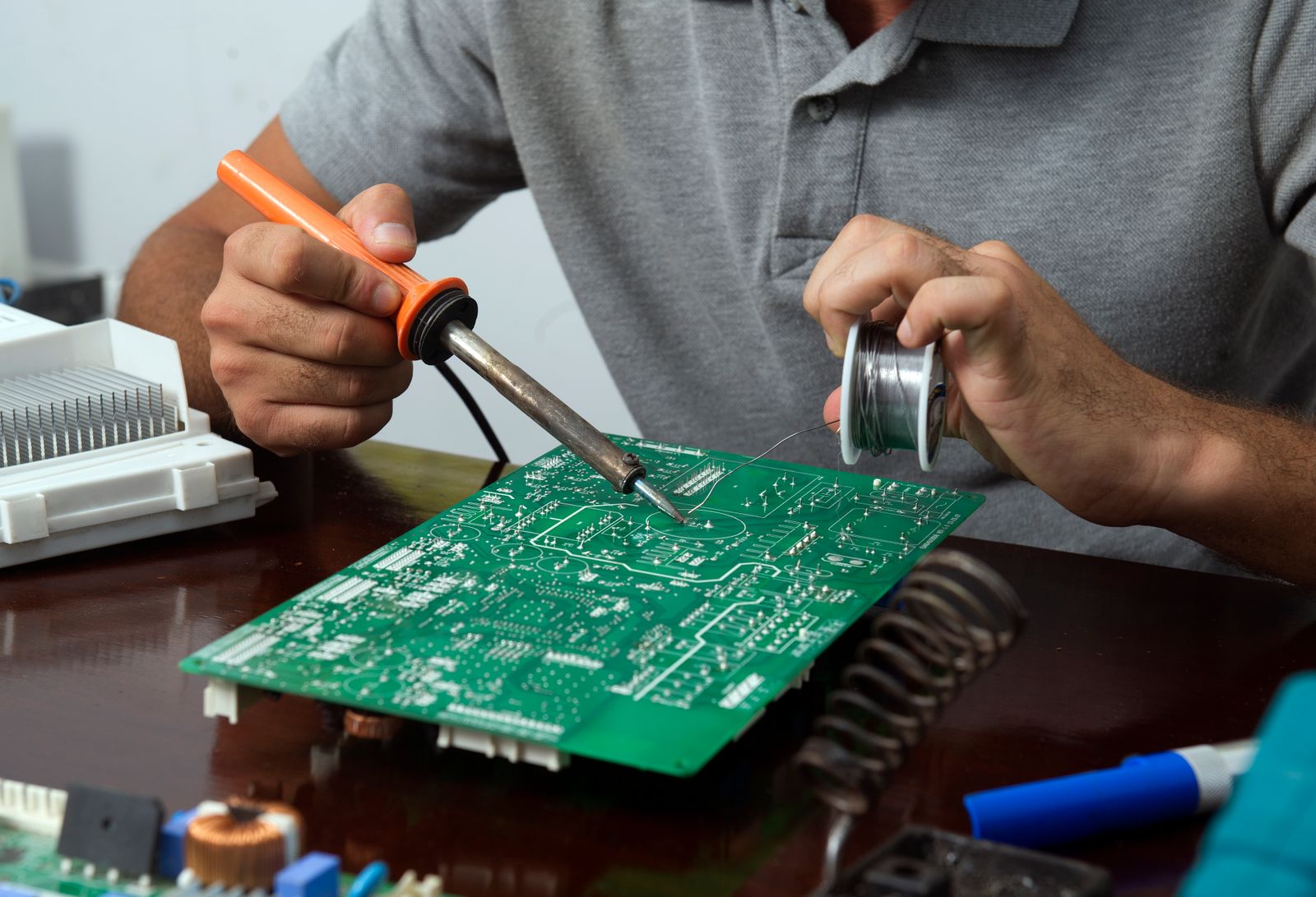
On older hot tubs it often turns out that the original control pack is no longer made. The answer is usually a retrofit — replacing it with a universal kit (pack + topside panel + wiring) adapted to the existing equipment.
When it works: when the supply and protection, the number and power rating of the pumps, the blower type and the heater output all match, and when there is physically somewhere to mount the pack. The service engineer also has to verify whether the existing pumps have a compatible number of speeds and whether the lighting and any sanitising system (ozone, UV, salt chlorinator) can be kept.
What changes: different controls and different menu logic, usually a different layout of filtration cycles, and sometimes the loss — or the gain — of features (smart app control, a different way of setting economy mode). The original panel usually cannot be kept; it is changed as part of the set.
Why a service engineer has to assess it: a retrofit is work on the supply circuit and on the safety functions (overheat and dry-run protection). A badly chosen pack may be underrated, or conversely may allow the heating to run without adequate flow. A retrofit typically costs roughly €600 to €1,600 depending on scope, which tends to be significantly less than an original part for a premium brand.
How to protect the electronics
- Surge protection. Ideally a combination of arresters in the house consumer unit and protection on the hot tub circuit. Set against the price of the pack it is a negligible investment.
- A dry, sealed cabinet. The service door must seat properly, seal the cable entries, and fix a leaking union straight away. Drip by drip will destroy a board more reliably than one flood.
- Rodent control. Ventilation openings meshed over, no scraps of insulation or cardboard left in the cabinet, a check for tracks in the autumn. The cheapest prevention there is.
- Regular servicing. An annual inspection including a check of terminal tightness, the state of the relays, the sensors and the RCD. A related topic is overall hot tub lifespan and service intervals.
- Before winter. Check that the freeze protection works and inspect the cover, clean the filter, verify that neither the breaker nor the RCD is tripping, and make sure the hot tub is not left without power. If you are shutting the hot tub down for the winter, it must be completely drained and blown through — half measures end in a cracked element and cracked pipework.
What it costs — a rough guide
To give you an idea of what to budget for (prices including labour, excluding the call-out):
- On-site diagnosis: €60–140 (some service companies deduct it from the repair)
- Replacing a temperature sensor or a flow switch: €80–200
- Replacing a relay or a fuse on the board: €100–280
- A new topside panel: €160–480
- A new heater element: €200–600
- A new control pack (original or retrofit): €600–1,800
When the total starts approaching a third of the price of a new hot tub and other weak points are piling up, it is time to look at a new machine — you will find guidance on choosing in the article How to choose a hot tub. And if you are considering a used hot tub, the state of the electronics is something to check before you buy (see Used hot tub buying guide).
Frequently asked questions
Can I use the hot tub while it is showing an error?
With informational messages such as freeze protection, yes. With flow, overheat and sensor errors, and anything to do with the RCD, no — cutting the heating is precisely why the pack reports them. Ignoring them means risking a burnt-out heater element, a damaged pump or an injury.
Will restarting at the breaker clear the error message?
Sometimes — with a transient fault after a power cut or after air has got into the system. But if the code comes back, the restart solved nothing, it only hid the cause. Repeatedly restarting after an overheat error is downright dangerous.
How many years does a control pack last?
In a dry, well-ventilated cabinet and with surge protection, commonly ten or even fifteen years. In a damp bay or after flooding, easily three. Lifespan depends far more on the conditions the pack works in than on the brand.
Can I tell a faulty sensor from a faulty board myself?
Not reliably without taking readings — both show up in a similar way. Telling them apart is part of service diagnosis and requires working on live equipment, so it is a job for a professional, not for the owner.
Does replacing the pack put the warranty at risk?
On a hot tub still in warranty, yes — work by an unauthorised person generally voids it. On an older hot tub out of warranty, what matters is the qualification of whoever does the work and the documentation of the work carried out. On what a warranty does and does not cover we have a separate article, Warranty claims.
The control pack is the one part of a hot tub where it pays to be more than averagely careful — both with safety and with money. The best strategy is a boring one: clean the filter, keep the cabinet dry, fit surge protection and have the hot tub serviced once a year. If you are looking for spare parts, pumps, heating or complete equipment, you will find them in the equipment category; more practical guides are waiting in the Guide.
