
The price quoted for a hot tub is the price of the shell and its equipment. Before you get into it for the first time, you will also have paid for delivery and the final move into position, the base, a dedicated electrical supply with an inspection certificate, the first batch of chemicals, a cover and a handful of small things nobody thinks of. On a typical family hot tub these one-off items most often add up to somewhere in the low thousands of euros — and the largest share of that goes on the electrical work. The good news: almost all of it can be established and priced up before you place the order.

This article deals exclusively with the one-off costs of getting a hot tub installed. What it then costs month after month in electricity, water and chemicals is covered separately in Hot tub running costs.
An important note about the figures: every range given here is an indicative estimate, meant to help you build a budget and ask the right questions. It is not a price list — the real cost depends on your region, how accessible the plot is, the state of the house wiring and the particular model. Labour rates in particular vary considerably from country to country, so treat these numbers as a starting point rather than a quote. Only a specific offer made after a site visit is binding.
Delivery and the last few metres: the most common nasty surprise
Delivery by lorry or van to the house is usually mentioned in the quote. What matters, though, are the last few metres — from wherever the vehicle can stop to the final position. This is where most of the extra cost and most of the disappointment comes from.
A hot tub for four to six people weighs roughly 250–400 kg empty and measures around 2 × 2 metres. That means it cannot be carried like a washing machine. It has to get through a gate, round the corner of the house, possibly up a slope or a flight of steps — all of it on its edge or on a trolley.
What drives the cost of moving it:
- Width of the access route. You typically need 10–15 cm more than the width of the shell on edge. If the gate or passage is too narrow, the answer is dismantling part of the fence or bringing in a crane.
- Steps and height differences. A few steps can be handled by a team of people; a longer flight of stairs or a retaining wall usually means a crane.
- Soft ground. Fresh turf or a muddy garden makes using a trolley difficult.
- Distance from the road. Beyond roughly 20–30 metres, both the number of people needed and the time go up.
- Lifting over the house or over a garage roof. Practically always a crane.
As a rough guide: domestic delivery commonly runs to the low hundreds of euros depending on distance, moving the tub into position by hand with a team of people usually a couple of hundred euros, and a mobile crane — depending on reach and how long it is needed — typically somewhere in the region of €300–1,000. A crane with a long reach lifting over the house can be considerably more.
A practical tip: before you order, walk the route with a tape measure and photograph it. Measure the narrowest point, count the steps and find out where the lorry can get to. Send that information to the retailer in advance — it will save you the worst outcome of all, where the hot tub arrives and cannot be got into position.
Preparing the base: slab, deck or paving
A hot tub needs a level, rigid, load-bearing surface supporting the whole of its base. A five-person hot tub filled with water and people easily weighs 1,500–2,000 kg, which is a load of around 400–600 kg per square metre. Grass, gravel or uneven paving will not do — the acrylic shell will only bear on a few points and the frame will twist over time.
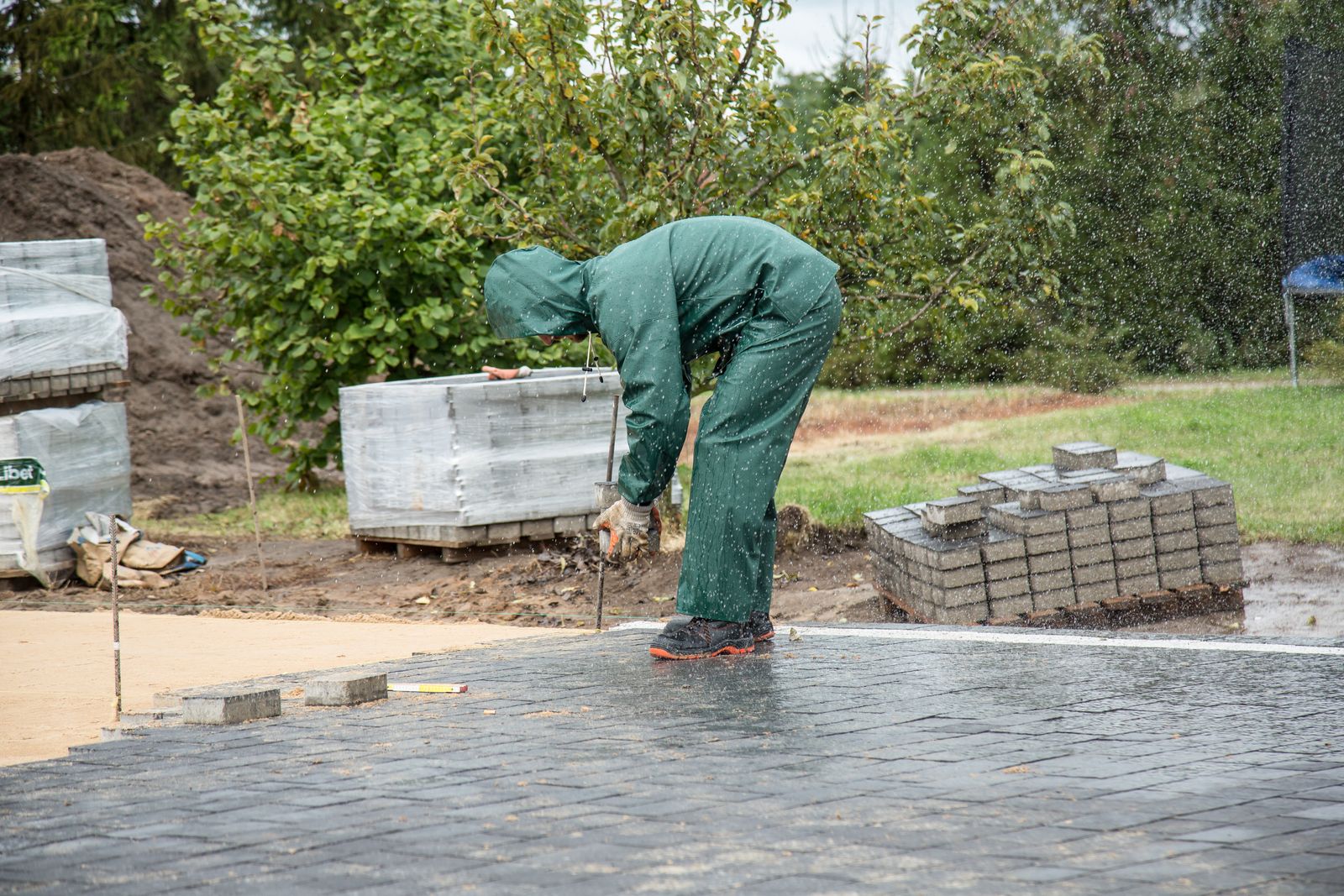
A concrete slab is the safest option. Typically 10–15 cm of concrete with steel mesh on a compacted gravel bed, with a slight fall away from the house. As a rough guide, budget in the low thousands of euros depending on the area and how easily machinery can reach it.
Block paving on a compacted sub-base works out cheaper, but only if it is laid to a genuinely adequate bearing capacity and truly level. Levelling or relaying it afterwards often costs more than doing it properly first time.
A timber deck is the most delicate case. An ordinary deck designed for people to stand on has nowhere near the reserve for a two-tonne point load. The answer is usually local strengthening of the joists, or separate pads passing through the deck down to the ground. We go into this in detail in Hot tub on a terrace and structural load. A structural engineer’s assessment usually costs a couple of hundred euros; the strengthening work itself depends on its extent.
Electrics: the biggest unexpected item, and the one to sort out first
The electrical installation is the most common reason a budget parts company with expectations. A hot tub is not an appliance for an extension lead — it needs a dedicated supply from the house consumer unit, its own breaker sized to the load, an RCD and a certificate of inspection.
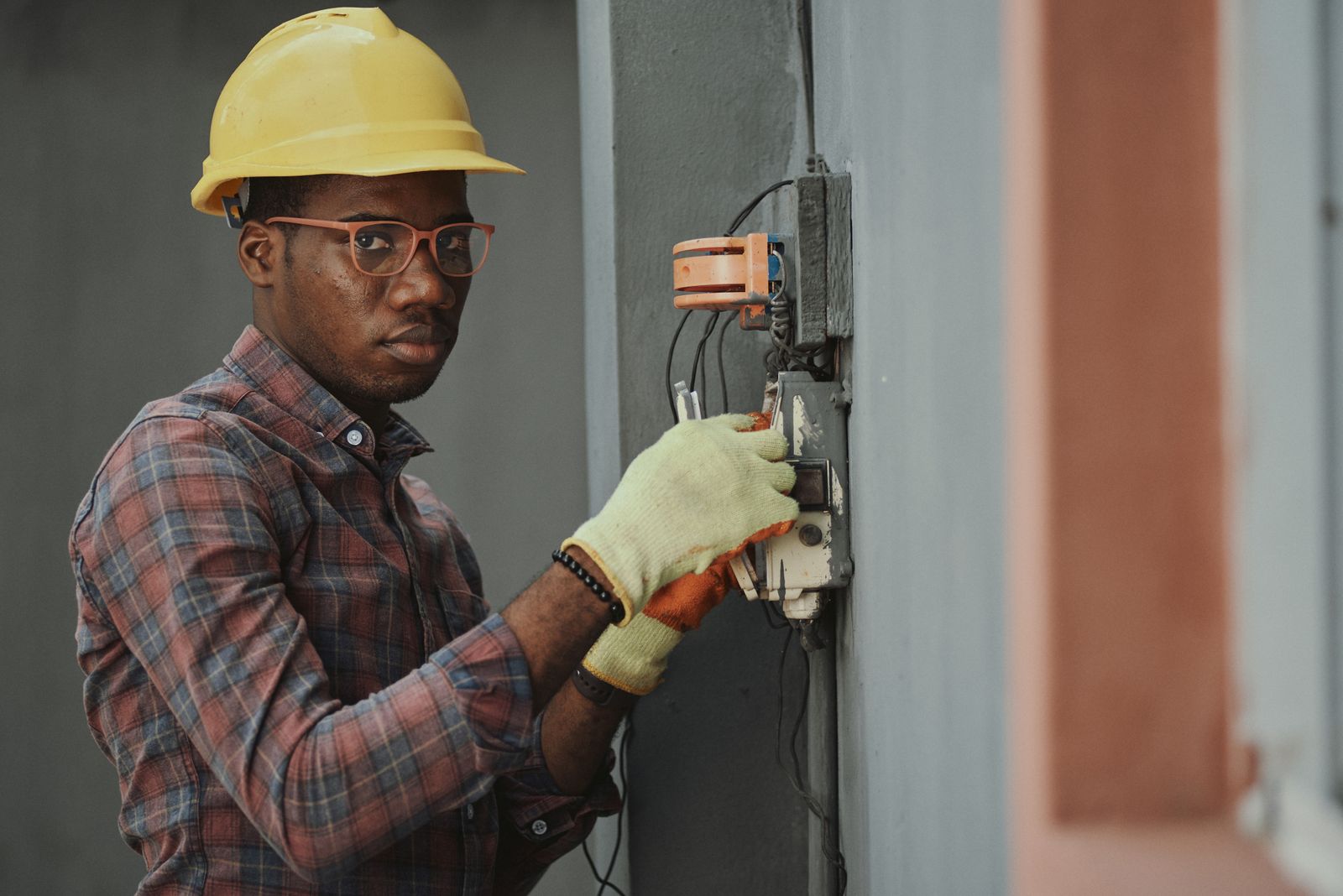
What this item usually covers:
- Cable of the appropriate cross-section from the consumer unit all the way to the hot tub, run outdoors in a trench inside a conduit at the required depth. Metres of trench are the main variable here — 5 metres and 35 metres are entirely different prices.
- A breaker and an RCD in the consumer unit, and on higher-powered models often modification or extension of the unit itself.
- A possible increase in the main incoming supply rating with the network operator, if the existing headroom is not enough. That also brings a permanently higher monthly standing charge for the reserved capacity.
- Bonding and earthing of nearby metal parts.
- An initial inspection and certificate — needed both for your insurer and for any future warranty claim.
As a rough guide: a simple connection within a few metres of the consumer unit often comes in around a thousand euros or so; a longer trench across the garden, work inside the consumer unit and an increase in supply capacity can push the whole item substantially higher. The full technical picture is in Hot tubs and electricity: connection step by step, and if you are curious why residual current devices get so much attention with hot tubs, see Hot tub tripping the RCD.
Why to deal with this before ordering, not after delivery: by the time the electrician discovers on site that there is no room in the consumer unit or that the main supply is not up to it, the hot tub is already in your garden and you have no room to manoeuvre. Get a survey and a quotation from an electrician before you sign the order for the tub. Sometimes it turns out that a model with a lower power draw or better insulation is worth choosing, because it saves more on the supply than it costs in itself. All of this — dedicated supply, breaker, RCD and inspection — is work for a suitably qualified person, and it belongs at the start of the process.
Water: filling it and what to do with it at a water change
Filling is a minor item — a hot tub holding 1,000–1,500 litres works out at just a few euros at a water price of around €4 per m³. The more practical question is the supply point: if there is no tap near the hot tub, add a garden valve to the list.
More significant is getting rid of the water at a change, which happens several times a year. Emptying 1,500 litres onto the lawn or into a surface water drain is not a given, and in some municipalities there are rules about it. The answer is usually a soakaway, a connection to the drainage system, or simply a well thought-out route for the hose. The options and their pitfalls are covered in Draining pool water safely.
Cover, lifter and screening
A thermal cover comes as part of the package with quality hot tubs, but not always — and the quality varies a great deal. A waterlogged or thin cover adds more to running costs than a better one costs to buy. What to expect from a cover and when to replace it is summed up in Hot tub covers.
A cover lifter often does not appear in quotes because it counts as an accessory. In practice it decides whether you will use the hot tub on a weekday at all — very few people keep on lifting a 30 kg cover by hand twice a day. Budget a couple of hundred euros.
Steps are practically essential on an above-ground hot tub and are usually an optional extra. Screening or a roof is a matter of comfort and privacy, but with a hot tub in a visible spot it comes up almost every time — from a simple screen roll through a timber panel to a pergola, which is a category all of its own.
Chemicals, a test kit and lighting the path
The first batch of chemicals and a test kit are a small but necessary item: sanitiser, pH adjuster, test strips or a drop test kit, anti-foam and filter cleaner. A starter set commonly comes to somewhere around €40–80. What you actually need and in what order to dose it is described in Hot tub chemistry step by step.
The thing people forget entirely: lighting the path to the hot tub. A hot tub gets used after dark, and a wet path in the dark is a safety risk. A few ground lights or a single LED fitting with a motion sensor is a cheap answer, but it has to be part of the electrical plan — digging in a cable afterwards is needless extra work.
Winter kit is the last small item: a non-slip mat against ice and a snow brush. On the order of tens of euros up to around a hundred.
Commissioning and service call-out charges
First commissioning (filling, bleeding the system, setting it up, showing you how it works) is included in the package with any reputable supplier — but check. If it is not, it is a separate technician’s visit.
It is worth allowing for service call-out charges in your first-year budget too. With hot tubs, the price of a service visit is made up of a flat call-out fee plus an hourly rate. In a more remote location the technician’s journey is a noticeable item, and it pays to know where the nearest service partner is based — before you buy.
Summary: item, typical range, can you save on it?
| Item | Indicative range | Can you save on it? |
|---|---|---|
| Delivery to the house | low hundreds of euros depending on distance | Partly — by combining it with another job nearby |
| Moving it into position by hand | a couple of hundred euros | Yes, if you help with access (clearing obstacles) |
| Mobile crane | roughly €300–1,000 | Only by changing the position or temporarily removing a fence |
| Concrete slab | low thousands of euros | Yes if you do it yourself, but quality and levelness are critical |
| Deck strengthening / structural engineer | a few hundred to a couple of thousand euros | No — structural work is not the place to economise |
| Electrical supply, breaker, RCD | roughly €1,000 to €3,000 and up | Yes — with a shorter route and digging the trench yourself |
| Electrical inspection | low hundreds of euros | No — it is mandatory |
| Increasing the main supply rating | one-off fee + permanently higher standing charge | Yes — by choosing a model with a lower power draw |
| Filling with water | a few euros | Not worth worrying about |
| Dealing with waste water | tens to a few hundred euros | Yes — with a well thought-out hose route |
| Cover lifter | a couple of hundred euros | Not recommended — it fundamentally affects how you use the tub |
| Steps | a couple of hundred euros | Partly — a home-made timber version |
| Screening / shade | a few hundred to a couple of thousand euros | Yes — it can be put off to the next season |
| Starter chemicals and test kit | €40–80 | No — this is the necessary minimum |
| Lighting the access path | tens to a few hundred euros | Yes, but plan it together with the electrics |
| Winter kit | tens to around a hundred euros | Yes — it can be put off |
How to question the retailer so the quote is complete
The simplest way to avoid surprises is to ask a few specific questions before you sign. Phrase them so they cannot be answered in general terms.
- Is delivery to the installation position, or only to the kerb? This is the single most important question. “Free delivery” often means unloading from the lorry at the gate.
- Who does the electrical work, and is it included? If not, ask what supply and what protection the model requires, so you can have your own electrician price it up.
- Is first commissioning and a handover demonstration included? That is, filling, a leak check, setting it up and showing you the controls.
- What if the lorry cannot reach the spot — who arranges the crane and who pays for it? Ask as well whether an access survey is carried out beforehand.
- Exactly which accessories are included? Cover, lifter, steps, starter chemicals, a spare filter cartridge — item by item.
- Where is the nearest service centre and how is a call-out charged? This determines your costs over the whole life of the tub.
- What is the warranty on the shell, on the equipment and on the heater separately? They are often of different lengths.
Three typical scenarios and how the budget differs
A hot tub on an existing deck with adequate load capacity. The cheapest option, provided the deck really will take the load and is accessible. The electrics remain the main item. The risk: the deck looks solid, but load capacity is a different matter — an assessment is worth having.
A hot tub on a new concrete slab. A higher one-off cost, but the fewest problems later. The advantage is that the trench for the electrics is dug in the same phase as the slab, which saves both work and money. This is the most common and most sensible option for a permanent installation.
A sunken hot tub. The most demanding solution: it needs a pit with drainage, access to all the service sides and carefully planned ventilation for the equipment. The cost of the building work can exceed the price of the hot tub itself, and a mistake in access to the equipment is paid for dearly at every service visit.
Frequently asked questions
How much should I add to the price of the hot tub for a rough budget?
As a rough indicative estimate for planning purposes, an outdoor hot tub with a new base and a new electrical supply is often quoted as adding an amount in the low thousands of euros on top of the price of the shell. Whether you land at the bottom or the top of that mainly comes down to the distance from the consumer unit and how accessible the plot is. Only a quotation after a site visit will give you an exact figure.
Why does the cheapest quote often end up being the most expensive?
Because the cheapest quote tends to be the least complete. The easiest way to bring the price down on paper is to leave out delivery to the position, commissioning, the cover lifter and the electrics. When comparing quotes, do not compare the bottom-line figures but the lists of what is in them. A quote that is €800 more expensive but includes the crane, commissioning and accessories can work out cheaper in the end.
Can I do the electrical work myself?
The trench and laying the conduit, yes — that is a standard DIY saving most electricians welcome. The connection into the consumer unit itself and the inspection must be carried out by a suitably qualified person. Without an inspection certificate you risk problems with both your insurer and any warranty claim on the tub.
When does a crane make sense instead of carrying it by hand?
Whenever there is an obstacle in the way that cannot be removed: a retaining wall, a longer flight of steps, a passage narrower than the hot tub on edge, or a position behind the house with no side access. In that situation a crane is cheaper than improvisation that ends in a damaged shell or an injury.
How much does it cost to move a hot tub later on?
Practically the same as delivering it — plus disconnection and a new electrical connection at the new location. That is why it pays to spend time choosing the position right at the outset, and to think through how the equipment would be replaced if needed.
In closing
A hot tub is one of the few investments in a home where all the incidental costs can be established in advance. All it takes is walking the delivery route with a tape measure, having an electrician survey the job, and going through the checklist of questions in this article with the retailer. A budget put together this way usually does not move — unlike one built purely on the price in the online shop.
Once you are clear on everything there is to sort out around a hot tub, our range of hot tubs will help you choose a model by its consumption and dimensions. And if you want to see straight away what the following years hold, we recommend reading hot tub running costs and browsing the other articles in the Guide section.
