
Sauna stones are the cheapest part of a sauna and at the same time the part the whole experience rests on. They store heat from the heating elements or from the fire, and the moment you throw water over them they turn that heat into steam — the famous löyly. When the stones are the wrong type, badly stacked or simply old, the steam is sharp and weak, the sauna takes longer to heat up and the heating elements die early. Replacing them costs around twenty euros and takes an hour. This article explains which rock types are used and why, how to stack the stones correctly, how many of them you need and how to tell when they are finished.
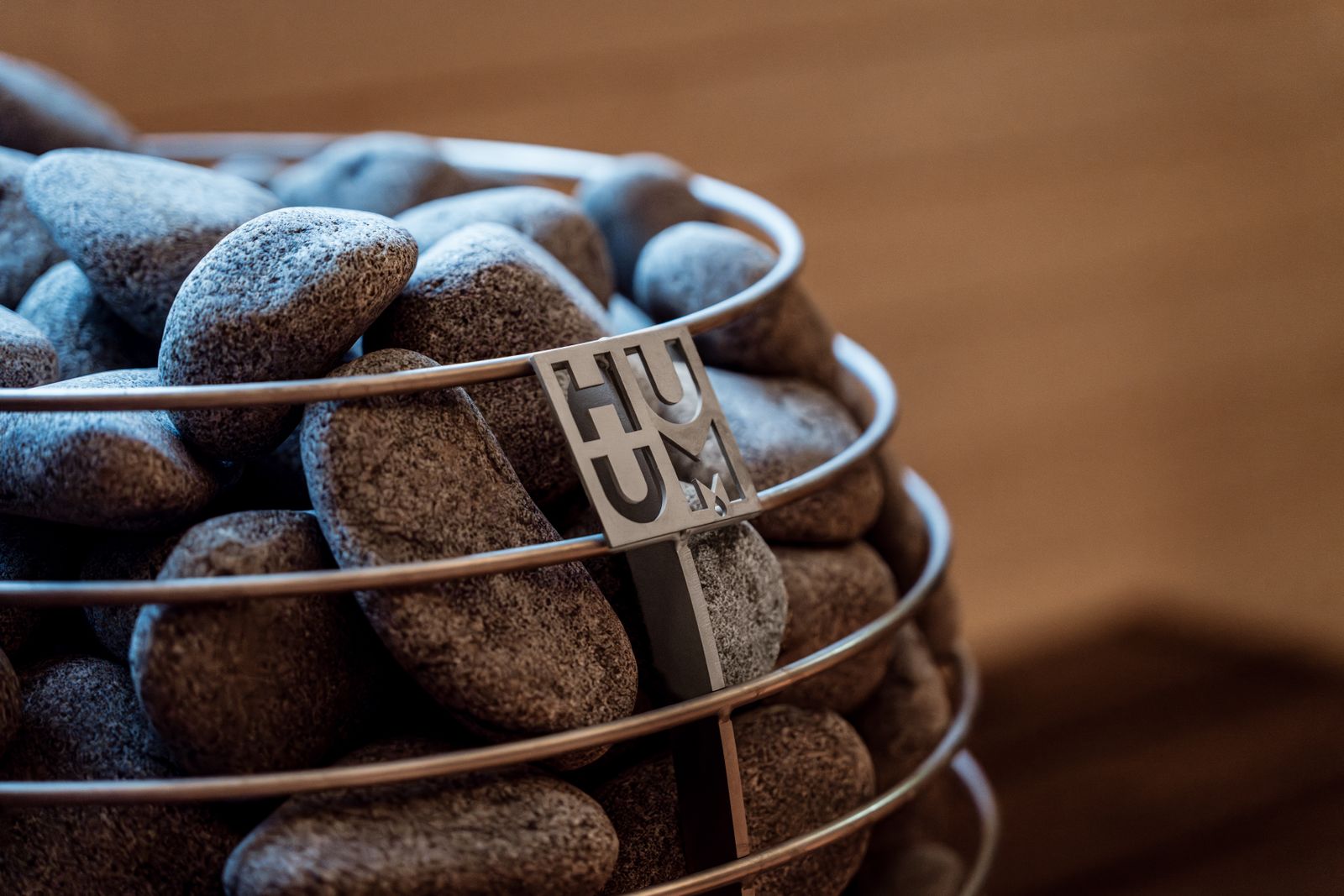
What do sauna stones actually do?
They have two jobs at once. The first is heat storage: the stone mass heats up to several hundred degrees and holds that heat even when the heater is not firing. That is why heaters with a large stone capacity give a more stable climate — the temperature does not swing with every click of the thermostat.
The second job is steam generation. Water poured onto glowing stones evaporates instantly and creates a wave of humid hot air that the skin reads as a sudden surge of heat. This is where good and bad stones part company: if the water runs down through a loosely packed layer of properly hot stones, the steam is soft, enveloping and even — the Finns call it “soft löyly”. If the stones do not hold enough heat, or the water meets them right at the surface and drips down onto the heating elements, you get a short, aggressive, noisy burst that stings the nose and fades quickly.
Steam quality is therefore not just a property of the heater as an appliance. To a large extent it is a property of the stones, their condition and the way they are stacked — all of which are fully in the owner’s hands.
Which rock types suit a sauna
A sauna stone has to survive something ordinary rock cannot: hundreds of cycles of heating to a high temperature followed by the shock of cold water landing on it. That rules out most of the stone you can pick up locally and narrows the choice down to a few proven types.
Olivine and olivine diabase — the standard
Olivine diabase is the most widely used sauna stone, and heater manufacturers (Finland’s Harvia, for example) list it as a type suitable for all kinds of heaters. It has a high density, stores and conducts heat well, and its structure survives sharp temperature swings without crumbling. It is sold in both split (angular) and tumbled (rounded) versions. Rounded stones often go into the top layer — water runs off them more readily into the depth of the pile and the steam comes out softer.
Peridotite and volcanic rock
Peridotite is a plutonic igneous rock related to olivine, with a similarly high density and durability. A range of dark volcanic rocks is also used — basalt, gabbro and other magmatic rocks that formed at high temperatures and therefore tolerate them inside a heater as well. They suit wood-fired heaters particularly well.
Ceramic sauna stones
Fired ceramic “stones” are the industrial option, with consistent properties and a long service life. They tend to cost more, but they work well as an addition to the top layer.
What definitely does not belong in a sauna
- Stones from a stream, a river or the garden. This is not about looks, it is about safety. Inside they carry microscopic pores and cracks soaked with water. On heating, that water turns to steam with nowhere to escape — the stone can burst, and a flying fragment is dangerous. They also tend to be smooth, which chokes the airflow.
- Granite and rock with a high quartz content. Granite splits and crumbles under repeated thermal shock. In Finnish durability tests, decorative granite stones are usually among the first to fall apart. White or red granite is sold as decoration for the top of the heater — not as a working charge.
- Limestone and soft sedimentary rock. Heat and water break them down; they shed dust and clog the space between the elements.
- Soapstone (steatite) as the main charge. It is not durable enough for a full charge, but it is fine as a decorative top layer.
What size stones to choose
Size is governed by the type of heater, not by looks. The rule is simple: the bigger the firebox and the bigger the stone mass, the bigger the stones.
| Heater type | Recommended stone size | Why |
|---|---|---|
| Electric heater with heating elements | roughly 5–10 cm | Smaller stones wrap around the thin elements better, carry heat away from them and do not leave them “hanging” in the air. At the same time they fit between the elements without pressing on them. |
| Wood-burning heater | roughly 10–15 cm (bottom layer), smaller on top | Large stones take the direct heat of the flame, have greater thermal inertia and leave wider channels between them for the hot flue gases to flow. |
| Heater with a large storage mass | a mix of sizes as per the manual | The aim is to fill the volume so that air and water reach all the way down instead of staying on the surface. |
The exact range is always given by the manufacturer in the heater manual, and it takes precedence over any general recommendation. If you are still choosing a sauna or a heater, you will find the types compared in How to choose a home sauna and Sauna heaters: electric vs wood-fired.
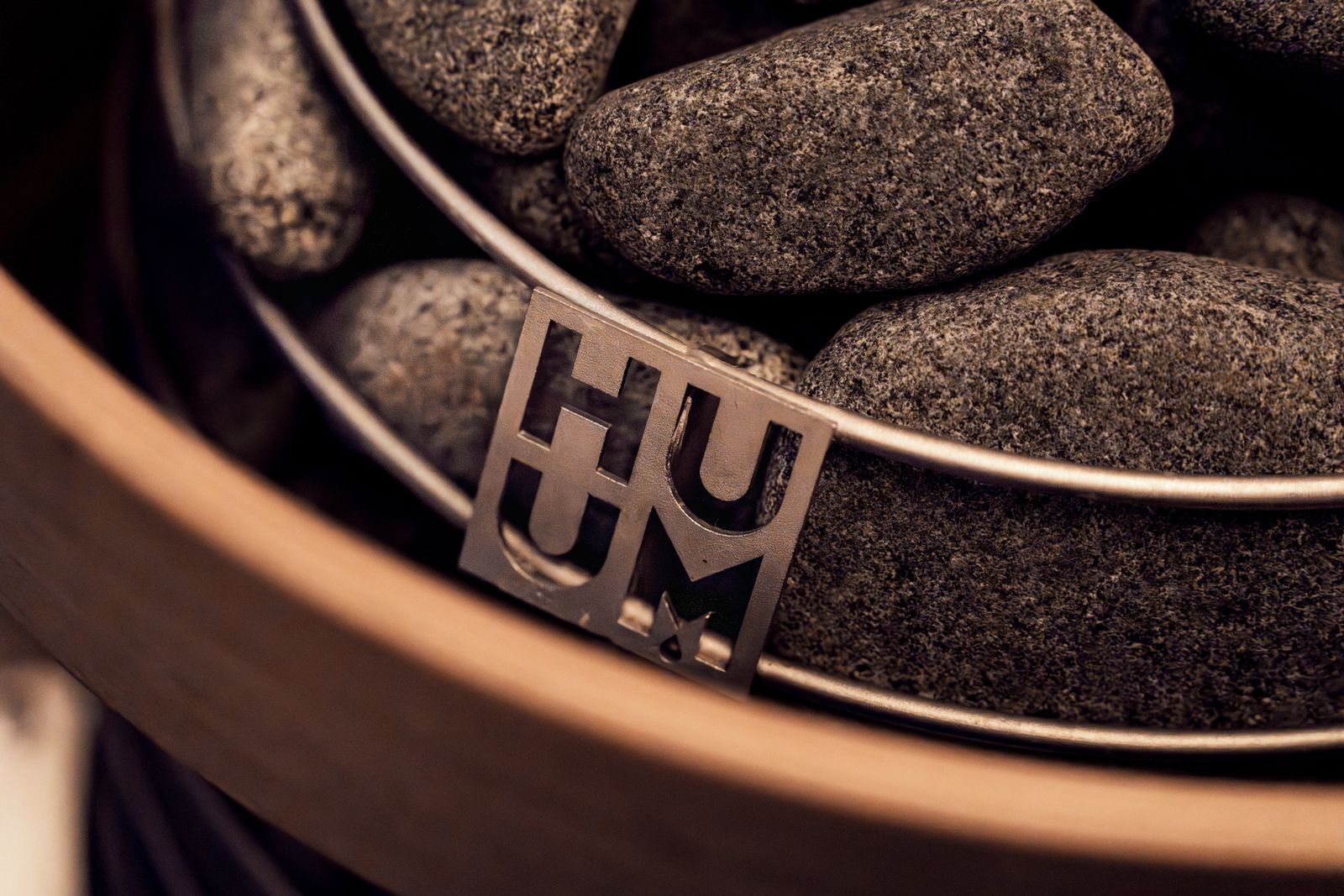
How to stack the stones correctly, step by step
Stacking is the part most people rush — and yet it decides the quality of the steam and whether the heating elements last three years or ten. Before you start, disconnect the heater from the power supply (on an electric heater, switch off the breaker) and let it cool down.
- Wash the stones and let them dry. New stones carry stone dust that would bake on and smell during the first heat-up. Rinse them with clean water and let them dry thoroughly before you put them into the heater.
- Clean out the stone compartment. When replacing, take all the old stones out and remove the grit and fragments that have settled at the bottom. It is exactly this “sand” that chokes the airflow most and overheats the elements.
- Inspect and sort. Discard any stone with a visible crack or that crumbles in your hand. Split the rest into larger and smaller pieces.
- Larger stones at the bottom and around the heating elements. The bottom layer is made of the biggest pieces. On an electric heater, place them so that they support and surround the elements rather than wedging themselves between them. Stand elongated stones more or less upright — they create vertical channels between each other.
- Smaller stones on top. The top layer catches the poured water and distributes it down into the pile. If you have tumbled, rounded stones, this is where they belong.
- Lay them loosely, piece by piece. Stones are not tipped out of the box; they are placed one at a time so that gaps remain between them. Air and water have to pass through the whole layer all the way down. Loose packing is the main condition for soft steam.
- Do not compress, do not overfill, do not push against the elements. The stones must not overhang the rim of the basket or form a tall heap. No lateral pressure may act on the heating elements.
- Do not cover the temperature sensor. The sensor must stay clear and in the position given in the manual. A covered or buried sensor measures a different temperature from the sauna itself and throws the whole control system off.
- Ventilate during the first heat-up. After replacing the stones, run the sauna for the first time with the ventilation open — a brief smell from residues may appear.
What happens if you overfill the heater
This is the most common mistake and its consequences are predictable. Tightly packed stones block the airflow, so the heat from the heating elements has nowhere to go. The elements overheat and their service life drops sharply. At the same time the protection kicks in: the thermal cut-out trips and the sauna switches itself off halfway through heating. Owners typically diagnose this as an electronics fault, even though the cause is sitting in the stone basket. An overfilled heater also takes longer to heat up and uses more energy.
How many kilos of stones you need
The quantity is set by the manufacturer according to the design, not by a simple formula. Even so, a few indicative orders of magnitude help when buying:
| Heater type and output | Indicative quantity of stones |
|---|---|
| Electric heater 4.5–6 kW (typical home sauna) | roughly 20–25 kg |
| Electric heater 8–9 kW | roughly 20–30 kg depending on the model |
| Electric heater with a large basket (“high storage” type) | 50–100 kg or more |
| Wood-burning heater | usually 40–100 kg, considerably more on storage models |
The spread is deliberate: two heaters with the same 6 kW output can have a basket capacity of anywhere between 20 kg and 60 kg depending on the design. Always go by the data sheet for the specific model.
How often to replace the stones and how to tell they are finished
Stones have no fixed expiry date — they wear out through cycles, not through the calendar. Manufacturers and Finnish specialist sources agree on this framework:
- Public and heavily used saunas: a complete replacement as a rule once a year.
- Home sauna in normal use (several times a week): restacking and inspection at least once a year, replacement typically after one to two seasons depending on condition.
- Occasional use (holiday cottage, weekends): inspection once a year, replacement according to condition — quite possibly only after several years.
Condition decides, not the date. You can recognise the end of the service life by these symptoms:
- Grit and fragments under the stones. The most reliable signal. If fine gravel is appearing at the bottom of the basket or on the floor below the heater, the stones are disintegrating.
- Visible cracks. A stone with a crack running right through will soon break apart.
- A hollow sound. A quick test: tap two stones lightly against each other. A healthy stone rings hard, a tired one sounds hollow or simply crumbles.
- Scale and a white film. Hard water leaves a calcium layer on the stones that reduces their ability to evaporate water. We cover water hardness and its consequences in Water hardness and scale buildup.
- Weak or sharp steam. When a ladle of water produces only a brief hiss instead of a full wave, the stones are no longer holding heat.
- Longer heat-up and higher consumption. A sauna that used to be ready in 40 minutes and now needs an hour very often has clogged, compacted stones.
Restacking as routine maintenance
Even if you are not replacing the stones, take them out once a season, shake out the grit, inspect them and stack them again. Under their own weight and through thermal cycling the stones gradually settle, the gaps between them disappear and the airflow deteriorates. Restacking takes half an hour, costs nothing and returns the sauna to its original heat-up time.
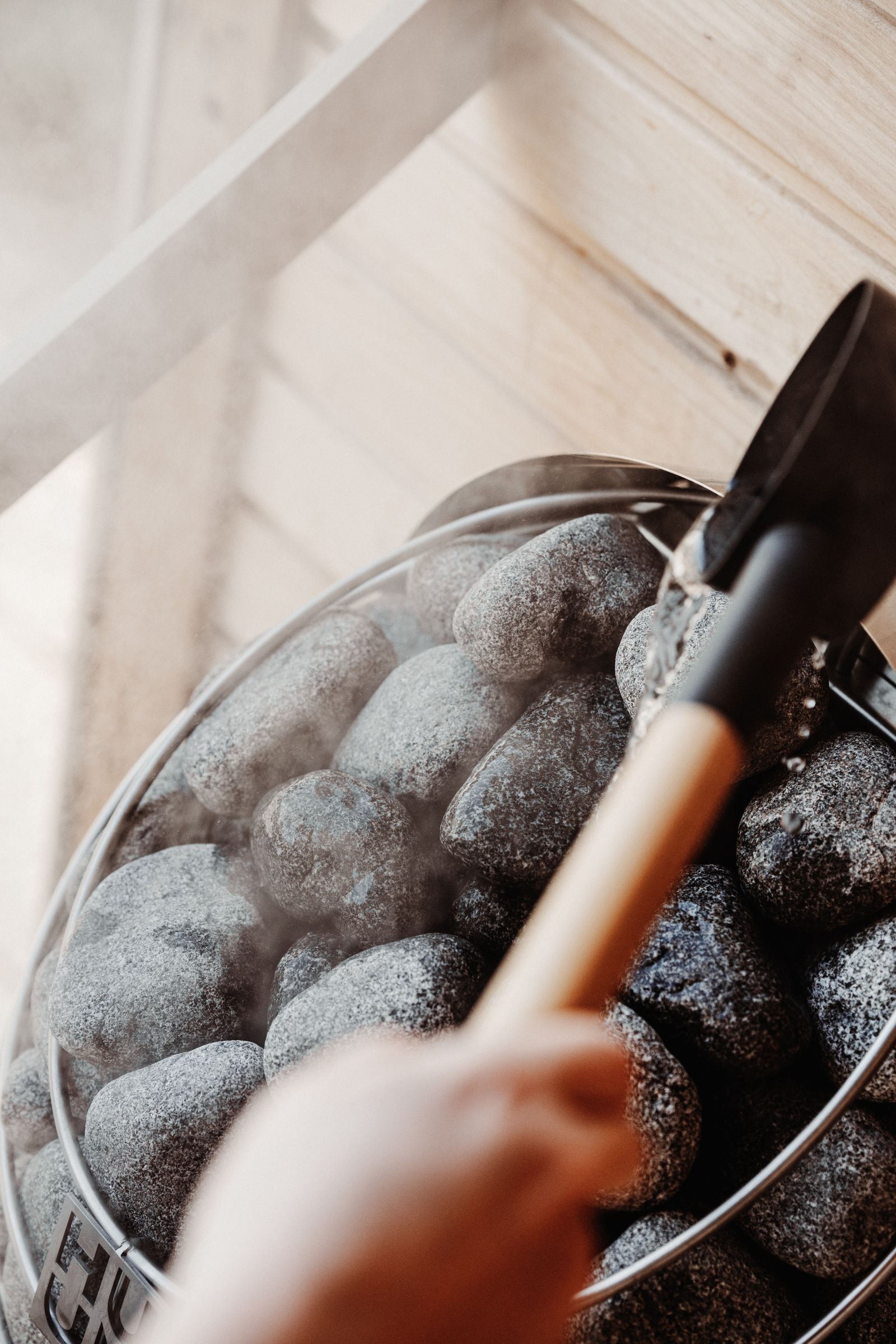
What to throw on the stones — and what not to
What belongs on the stones is clean, soft water, ideally drinking water from the tap; with very hard water, softened or clean rainwater is better. Hard water deposits limescale on the stones, which gradually worsens evaporation and hastens their end.
How much at a time: one ladle, roughly 100–200 ml, spread across the whole surface of the stones in one flowing movement. Not a single stream onto one spot. Leave 30–60 seconds between throws so the stones can reheat. Several smaller doses give a better löyly than one big pour, which cools the stones down and lets part of the water run through onto the elements.
Salt water has no place in a sauna. Salt is aggressive towards the metal of the basket, the heater casing and the heating elements, and it accelerates corrosion. Salt scrubs belong on the body, not on the stones — and after using them it is worth rinsing off in the sauna so that the salt does not condense on the metal parts.
Never pour essential oils directly onto the stones. Neat oil on a glowing stone does not produce fragrance but a burnt stench — and because it is flammable, a concentrated dose risks catching fire. It also bakes onto the stones and the elements and damages them. The correct procedure: stir a few drops of sauna concentrate into a ladle of water and only then pour that across the stones. Gentler still is a small container of water placed on the stones, or a bundle of birch twigs. We discuss similar rules for fragrances in water in Aromatherapy for hot tubs.
Table: problem, cause, solution
| Problem | Likely cause | Solution |
|---|---|---|
| The steam is weak, just a brief hiss after throwing water | Worn stones, too little stone, surface clogged with limescale | Replace the stones, top up to the quantity given in the manual, use softer water |
| The steam is sharp and stings the nose | Tightly packed stones, water does not get inside and sprays off the surface | Restack more loosely, use smaller or tumbled stones for the top layer, pour across the whole surface |
| The sauna takes markedly longer to heat up than before | Settled and clogged stones, grit at the bottom of the basket | Take the stones out, remove the grit, stack them again |
| The sauna switches itself off during heating | Overheated heating elements and a tripped thermal cut-out due to overfilling | Remove some stones, free up the airflow, reset the cut-out per the manual once cool |
| Fine gravel is falling out under the heater | The stones are disintegrating, end of service life | Complete replacement of the charge |
| White film on the stones | Limescale from hard water | Switch to softer water, do not be sparing with the stones when replacing |
| A burnt smell after throwing water | Essential oil poured directly onto the stones, or dirt in the basket | Dilute oils in water, clean the stones, air the sauna out |
| Heating elements fail repeatedly | Lateral pressure from the stones, overfilling, unsuitably large stones | Use stones of the recommended size, lay them so that they support the elements rather than clamping them |
Frequently asked questions
Can I put stones collected in nature into my sauna?
No. Stones from a stream, a field or the garden have water-soaked pores inside that turn to steam on heating and can tear the stone apart. The risk of a flying fragment is real, and sauna stones cost a fraction of the price of the sauna. Use only stones sold for this purpose.
Do I have to wash the stones before putting them in?
Yes. New stones carry stone dust that would smell during the first heat-up and settle in the basket. Rinse them with clean water and let them dry — do not put wet stones into the heater.
How do I work out how many stones to buy?
Go by the heater’s data sheet, not by its output. Two heaters with an identical 6 kW output can have a capacity of anywhere between 20 kg and 60 kg depending on the size of the basket. Buy slightly more rather than less — you will discard some stones while stacking and use the rest for topping up later.
Can I mix old and new stones?
Adding a few new pieces to an otherwise healthy charge is fine. But once the old stones are crumbling, mixing makes no sense — grit from the disintegrating stones will clog the new layer too and the airflow problem will come back. In that case replace the whole charge.
Why does the sauna heat up faster after replacing the stones?
Because the airflow between the stones is restored. Heat from the heating elements then reaches the sauna room instead of staying trapped in a compacted heap of stone and grit. A shorter heat-up time also means lower electricity consumption.
In conclusion
Sauna stones are a consumable costing tens of euros that influences the things that matter most — steam quality, heat-up time, energy use and the life of the heater. Stick to three rules: use only stones intended for saunas (olivine diabase is a safe choice), stack them loosely with the larger pieces at the bottom, and once a season take them out, shake them off and stack them again. How to get the most out of a heated sauna is summed up in How to sauna properly.
Stones, sauna heaters and other home wellness equipment can be found in the Wellness category. We publish further practical guides to pools, hot tubs and saunas in the Guide.
