
The worst part of winter bathing isn’t the water. The water sits at 38 °C and feels wonderful even in a hard frost. What’s unpleasant are the twenty seconds you spend standing wet on a cold patio, hunting for your slippers. The whole job of heating the area around a hot tub comes down to one sentence: make the cold stretch as short as possible — with heat, light, a robe within arm’s reach and a dry, non-slip surface underfoot. In this article you’ll find a comparison of patio heaters and fire pits, a worked example of what an evening costs, and the safety rules that really shouldn’t be cut around water and combustible materials.
Why the walk to the tub is the problem, not the tub itself
A hot tub works reliably in winter — an insulated shell, a thermal cover and the heater handle the frost perfectly well, as we describe in our article on running a hot tub in winter. The problem is the transition zone: the few metres between the house door and the steps into the tub, and the same walk back, this time with wet skin.
A wet body loses heat many times faster than a dry one, because water is evaporating from it. Add wind and it’s even more noticeable. That’s exactly why people who “don’t use” their hot tub in winter usually have no issue with the water or the running costs, but with that unpleasant half-minute at each end of the soak.
Which points straight to the solution. Don’t try to heat the garden — physics won’t let you win that one. Create one warm spot at the entry to the tub, shorten the route, shelter it from the wind and keep dry things within arm’s reach. Everything else is detail.
What are the options for heating a patio?
Outdoors, heating the air doesn’t work — warm air simply drifts away. The only thing that works is radiant heat, which warms surfaces and skin directly, much like the sun. Choose accordingly.
Electric infrared heaters
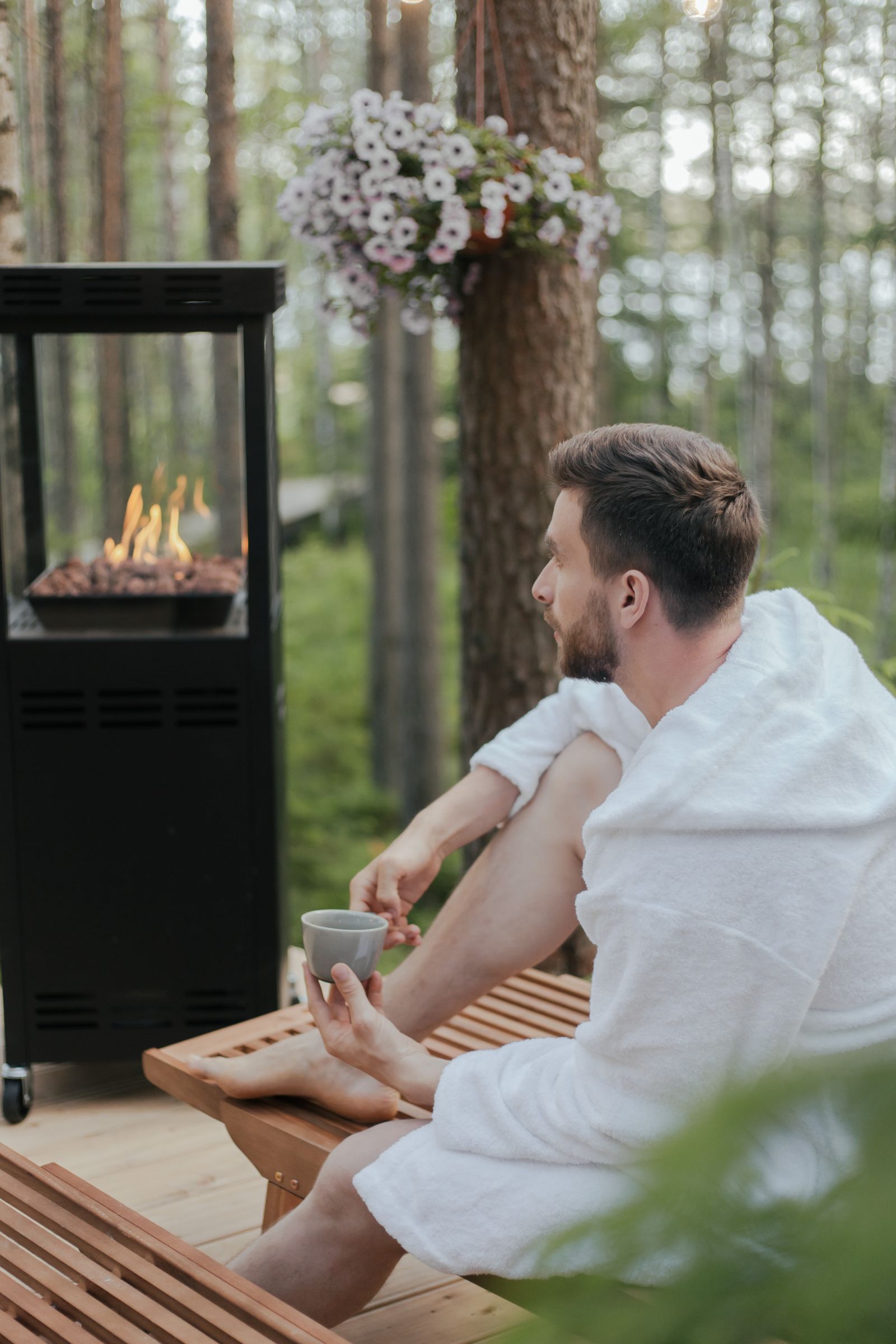
The most practical choice for most patios. Radiant heat is available the instant you switch on — no warm-up, no flame, no attention needed. Typical output for a private patio is 1.5–2 kW, mounted on the house wall, a pergola post or the ceiling of a canopy at a height of roughly 2.2–2.7 m.
The difference lies in the type of emitter. Halogen models glow a strong orange and heat up instantly, but they dazzle. Low-temperature dark emitters (carbon, “low glare”) heat less aggressively but don’t shine into your eyes — around a hot tub, where you want a calm evening, that’s usually the better choice. The effective reach of such a heater is realistically 1.5–2.5 m; it isn’t area heating, it’s a spot where you dry off and get dressed.
An infrared heater works best combined with a roof — under a pergola the radiation is reflected back and there’s no draught, so the same output feels distinctly warmer. How to design a roof over the tub is covered in our article on a pergola over a hot tub.
Gas patio heaters
The classic “mushroom” heaters from restaurant terraces, running on an LPG cylinder. The advantages are high output (typically 8–13 kW), independence from mains electricity and the ability to warm a larger area. The drawbacks are the handling, cylinder changes, sensitivity to wind and the need to store them somewhere in rain and frost.
One rule is fundamental: a gas heater belongs exclusively in an open outdoor space. Combustion produces carbon monoxide as well as water vapour — an appliance like this has no place in an enclosed conservatory, in a garage or under a closed gazebo. Under a partly open pergola only when the manual expressly permits it and permanent ventilation plus adequate clearance from the ceiling are assured.
Fire pits and outdoor fireplaces
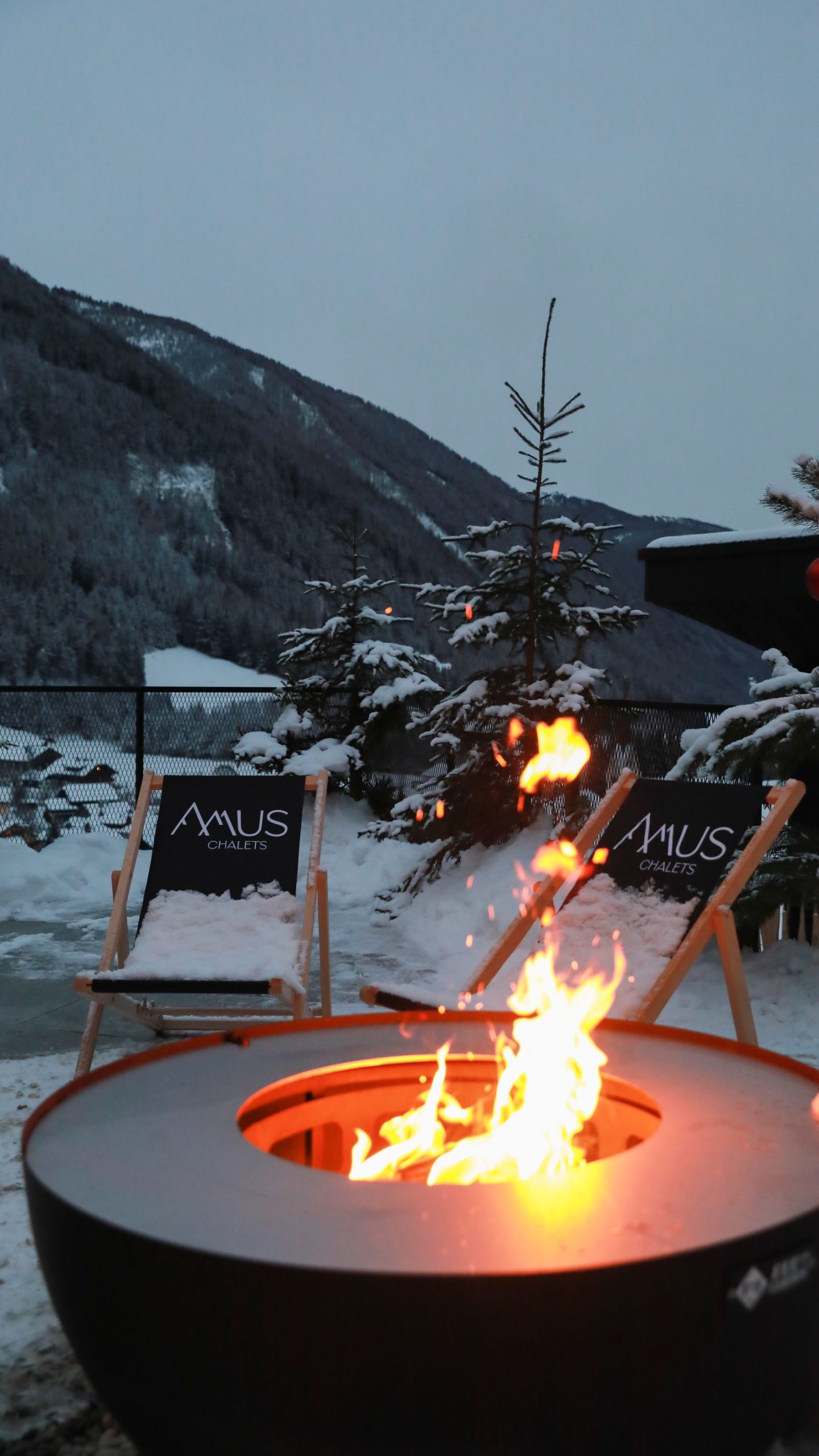
The best atmosphere, the worst technical performance. A fire heats in one direction only, needs feeding and — above all — throws sparks, which is a genuine risk on a timber deck next to a hot tub with a foam-and-vinyl thermal cover. If you do want a fire pit, choose an enclosed design (a glass-sided fire pit, a bioethanol or gas burner), stand it on a non-combustible base and keep it off the main route to the tub.
A practical compromise: a fire pit as a feature for sitting out in the far part of the patio, and a heater above the tub entry as the functional heat. Each does a different job, and together they work better than either one alone.
Heated paving or a mat at the entry
An underrated but highly effective option. A heating cable or mat under the paving in a 1×2 m strip by the steps does three things at once: the surface is warm underfoot, it doesn’t get slippery, and in winter neither ice nor snow settles on it. Power input for such an area is usually around 150–200 W/m², so 300–400 W for the whole entry strip.
This is a solution for the construction phase or a paving refurbishment — retrofitting it is awkward. If you’re still planning the area around the tub, think it through together with your choice of surface (see pool surrounds: decking and paving). A cheaper substitute is an outdoor non-slip mat that you put down before the soak and tidy away under the cover afterwards.
Comparison of ways to heat the area around a hot tub
| Solution | Typical output | Heat-up time | Running cost for 3 h | Best for |
|---|---|---|---|---|
| Electric infrared heater (dark) | 1.5–2 kW | instant | approx. €1.10–1.50 | tub entry, pergola, house wall |
| Halogen heater | 1.5–2 kW | instant | approx. €1.10–1.50 | short bursts of intense heat, but dazzles |
| Gas heater (LPG cylinder) | 8–13 kW | 1–2 minutes | approx. €3.60–4.80 | larger open patio, no electricity available |
| Fire pit / outdoor fireplace | — | 10–20 minutes | price of firewood | atmosphere, seating away from the route to the tub |
| Heated paving at the entry | 0.3–0.4 kW (2 m²) | 20–40 minutes | approx. €0.20–0.30 | slip resistance, de-icing, warmth underfoot |
| Heated towel rail | 0.1–0.3 kW | 15–30 minutes | approx. €0.05–0.25 | a dry, warm towel and robe after the soak |
The prices are indicative, at a rate of around €0.25/kWh and an LPG price of roughly €2/kg. Your own figures will differ depending on your tariff and on how long the heater actually runs — in most households that isn’t the full three hours, just the first and last ten minutes.
Tricks that work better than another kilowatt
Before you start buying output, go through this list. Most of the items cost very little and improve perceived comfort more than doubling the heater output would.
- Robe and slippers within arm’s reach. Not in the bathroom, not on a chair three metres away — on the edge of the tub or in a closable box next to the steps. Ideally under a roof overhang or right on the hot tub cover, so they stay dry.
- A heated towel rail. An outdoor model rated at least IPX4, switched on half an hour in advance. A warm towel after a soak in freezing weather is a far greater luxury than its price would suggest.
- Lighting along the whole route. In winter it’s dark by half past four. Low-level orientation lighting along the path and at the steps is primarily a safety feature, not decoration — and it shouldn’t dazzle. We cover the options in our article on pool and hot tub lighting.
- Slip resistance and de-icing the steps. The riskiest spot in the whole set-up. Anti-slip tape, a handrail you can genuinely rely on, and absolutely no de-icing salt anywhere near the tub — it gets carried into the water and damages both surfaces and equipment. For an overview of entry types, see our article on pool entry: steps and ladders.
- A windbreak. The cheapest “heating” there is. Glass, timber louvres or a dense hedge on the windward side raise the perceived temperature by several degrees and at the same time reduce evaporation and heat loss from the water surface.
- Close the cover immediately. An open tub in freezing weather loses heat faster than any other part of the system. A quality, well-sealing thermal cover saves more energy than any economising on the heater ever will.
Safety: where improvising doesn’t pay
The combination of water, electricity, frost and open flame is precisely the situation where cutting corners in the wrong place comes back to bite you.
Heaters and combustible materials
Every heater has minimum clearances specified in its manual — typically 0.5–1 m from the ceiling and side structures, and more from combustible materials. With a timber pergola, reed screens, canvas covers and shade fabrics, that goes double. A heater must never point at a canopy, an awning or the hot tub’s thermal cover. A gas “mushroom” additionally needs a stable, level base and clearance from railings and furniture so the wind can’t tip it over.
Electrics outdoors
All outdoor appliances must have an appropriate ingress protection rating (around a hot tub, at least IPX4 is normally required in the vicinity of the tub, with the specific zone governed by the standard) and be protected by a 30 mA residual current device. An extension lead trailed across the patio into a puddle is not a solution — the socket should be fixed, outdoor-rated and in the appropriate zone.
The details of the supply to the tub are covered in our article on hot tubs and electricity: connection. Equally important is bonding and earthing of all conductive parts nearby — with metal heaters, pergola structures and railings that isn’t a formality but a condition of passing the electrical inspection.
Gas and enclosed spaces — never
We’ll repeat this deliberately: a gas heater or a portable LPG heater must never be used in an enclosed or poorly ventilated space. Not “just for a moment”, not in an indoor conservatory, not in a gazebo with the sides pulled down. Carbon monoxide is odourless, and in warm, humid conditions someone tired from hot water can get into trouble before they notice anything is wrong.
Alcohol, hot water and frost
The combination of hot water and alcohol lowers blood pressure and impairs judgement. In winter you add a slippery surface and darkness. This isn’t moralising — it’s statistically the most common accident scenario with a domestic hot tub.
What does one winter evening actually cost?
A worked example. A hot tub for four, water at 38 °C, −3 °C outside, a 60-minute soak, at a rate of €0.25/kWh.
- Reheating the water after the soak: roughly 2–4 kWh depending on the quality of insulation and cover → €0.50–1.00
- 2 kW infrared heater, realistically on for 25 minutes (getting in and out) → 0.83 kWh → €0.20
- 200 W heated towel rail, 1 hour → 0.2 kWh → €0.05
- 350 W heated paving, 1.5 hours → 0.53 kWh → €0.13
So roughly €0.90–1.40 per evening on top of summer running costs, of which heating the surroundings accounts for only about €0.40. That’s the key finding: comfort around the tub is the cheapest item in the whole winter set-up. Most of the cost is keeping the water at temperature, which you tackle with insulation, a cover and your settings — you’ll find a detailed budget in our article on hot tub running costs.
A gas heater is another league: a 10 kW mushroom burns around 0.7 kg of LPG per hour, roughly €1.40/h. For a three-hour sit-out that’s over four euros — acceptable for weekend visitors, impractical for everyday fifteen-minute use.
The winter set-up: hot tub, sauna and cold plunge
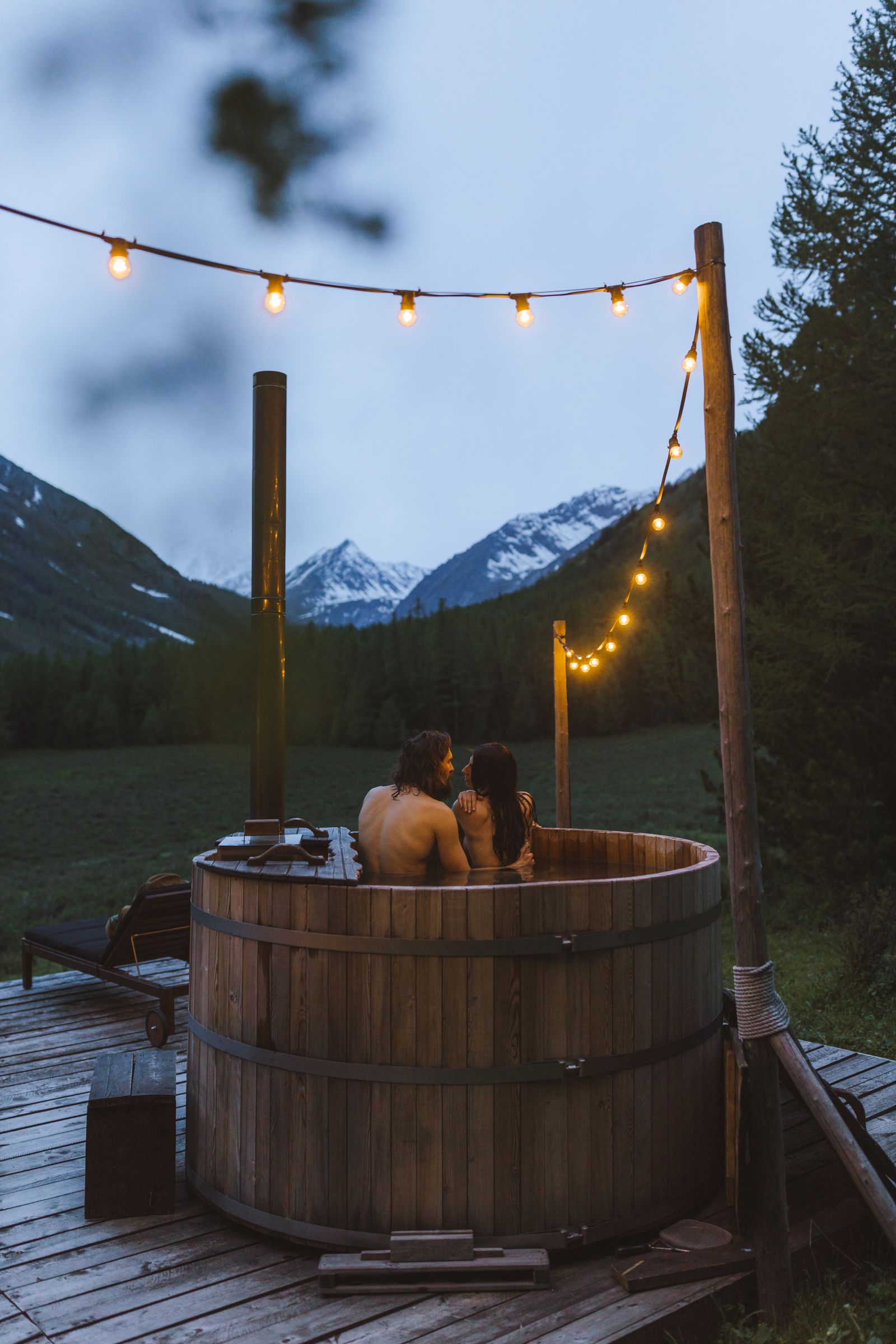
Once the warmth on the patio is sorted, it makes sense to think about the whole zone rather than a single appliance. The winter classic looks like this: a sauna or infrared cabin as the source of dry heat, the hot tub as the place for a long warm-through, and a cold tub for a contrasting finish.
It’s exactly with a set-up like this that a heated surround pays off most — there are several transitions between the elements over an evening, and each one means a wet walk across the patio. A warm spot in the middle of the layout, with towels and robes to hand, replaces several pointless dashes back into the house.
How to lay out such a zone — from the arrangement and spacing to the water and electrical supplies — is described in our article on a garden wellness area. The physiology of alternating hot and cold water, and sensible durations for each phase, are covered in our article on contrast therapy: hot tub and cold plunge.
Frequently asked questions
What infrared heater output is enough above a hot tub?
To warm an entry area of roughly 2×2 m, reckon on 1.5–2 kW. Under a covered, wind-free pergola the lower end is enough; on an open patio, go for the upper end. Two weaker heaters placed opposite each other work better than one powerful unit, because they cover the space evenly.
Can I have a heater directly above the tub?
Directly above the water surface, this is governed by the standard covering zones around pools and hot tubs — in the immediate vicinity of the tub, stricter requirements apply to ingress protection and appliance positioning. It’s safer and more practical to place the heater above the entry area and the steps, not over the water. Always discuss the specific solution with a qualified electrical inspector.
Is a fire pit next to a timber deck with a hot tub safe?
An open fire throws sparks, and a spark on a timber deck or a vinyl thermal cover does damage instantly. If you want a fire, choose an enclosed glass-sided design or a gas burner, place it on a non-combustible base at least several metres from the tub and off the main route. And definitely never leave it unattended.
Is heated paving worth it, or will a mat do?
If you’re building or rebuilding the patio, a heating mat under the paving in the entry strip costs relatively little and runs for a few cents an evening — it’s worth it. You can’t sensibly retrofit it into finished paving; there, go for a quality outdoor non-slip mat that you tidy away after the soak so water doesn’t sit underneath it and freeze.
Does an outdoor heater have to be protected by an RCD?
Yes. Outdoor socket circuits and permanently connected appliances around a hot tub should be protected by a residual current device with a 30 mA tripping current and installed in accordance with the relevant zones. Leave both the installation and the inspection to a qualified electrician — around water is no place for DIY improvisation.
The takeaway
Winter bathing stands or falls on how long you’re wet in the cold. A radiant heater above the entry, a dry robe within reach, a lit and non-slip route and a windbreak turn “I have to talk myself into it” into a daily routine — and it costs pennies per evening. Leave the fire pit to what it does best: atmosphere, at a safe distance from the tub.
Accessories for outdoor wellness — from thermal covers and steps through lighting to sauna and hot tub equipment — can be found in our Wellness category. More articles on operation, equipment and water care are in our Guides section.
