
The sharp “swimming pool” smell is not caused by chlorine, but by chloramines — combined chlorine, which forms when free chlorine reacts with sweat, urine, cosmetics and dead skin cells. The less free chlorine there is in the water, the longer chloramines persist and the stronger the smell. The solution therefore looks counter-intuitive: in most cases chlorine needs to be added, not taken away.
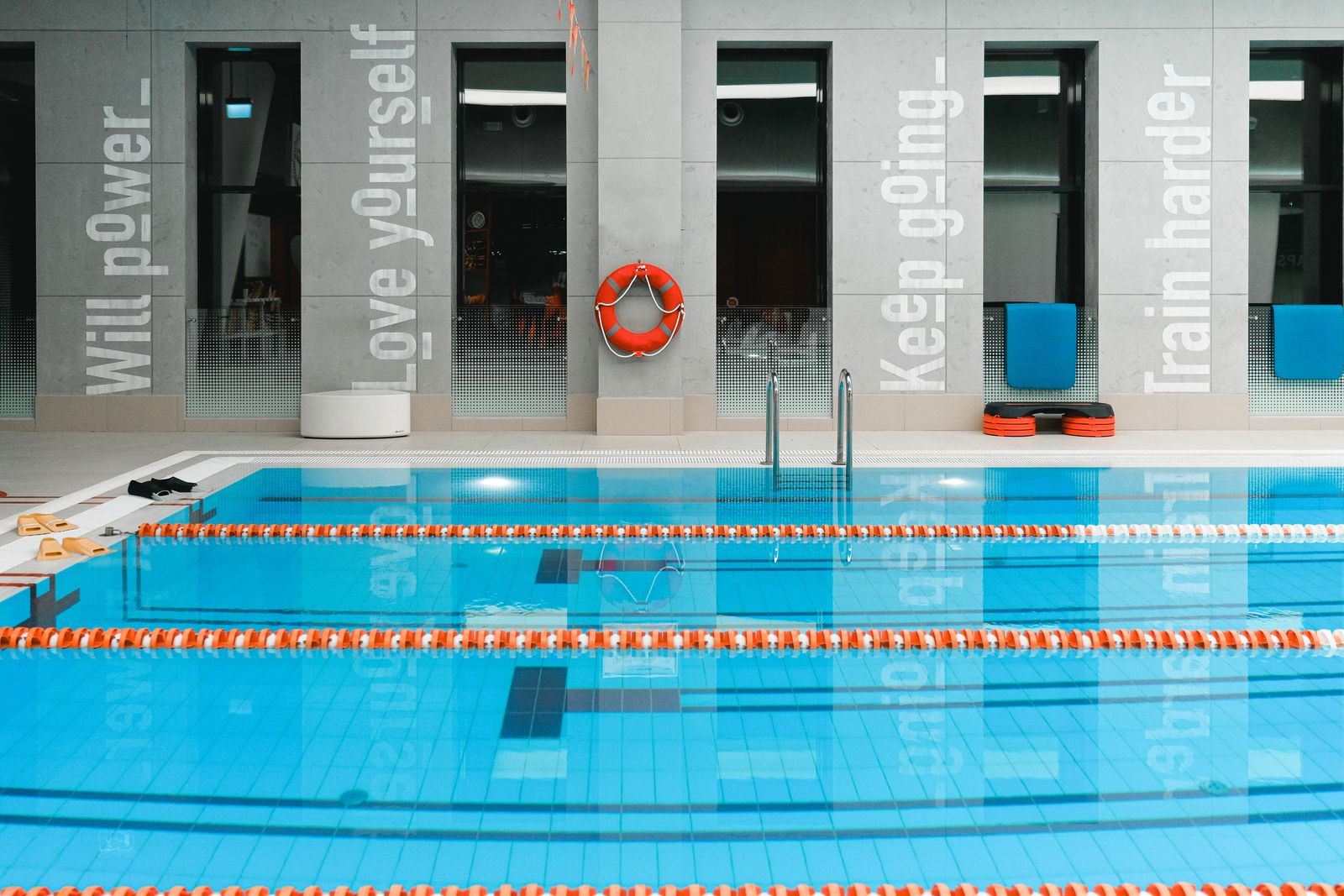
What you actually smell when a pool “smells of chlorine”
Free chlorine — that is, hypochlorous acid and the hypochlorite ion, the forms that actually disinfect the water — has a surprisingly weak odour. Water with correctly set free chlorine smells only slightly fresh, or of practically nothing at all.
The characteristic pungent smell comes from chloramines. They form when free chlorine reacts with the nitrogen compounds that bathers bring into the water: urea from sweat and urine, ammonia, amino acids, residues of sunscreen, deodorant and make-up. The products are monochloramine, dichloramine and trichloramine.
The smell is mainly down to trichloramine. It is volatile and poorly soluble in water, so it escapes from the surface into the air and lingers in a low layer just above it. That is why the “chlorine” smell is strongest at the water surface and in the halls of poorly ventilated indoor pools — and why an outdoor pool disperses it into the air far more quickly.
This leads to a fundamental shift in thinking. A strong smell is not a sign of an overdosed pool, but a sign of water in which the chlorine has already done its work and been used up — leaving behind too many intermediate products with nothing left to oxidise them.
Free, combined and total chlorine: three numbers, one equation
Without understanding these three terms the problem cannot be solved, because a standard “chlorine” test shows only one of them.
- Free chlorine (FC) — the disinfecting reserve that is ready to kill bacteria. This is the number you watch every day.
- Combined chlorine (CC) — chloramines. It disinfects only minimally, but it smells and irritates.
- Total chlorine (TC) — the sum of both.
A simple equation applies: combined chlorine = total − free. So you do not measure combined chlorine directly; you calculate it from two measurements.
How to measure combined chlorine in practice
The most reliable home method is the DPD test — liquid or tablet, ideally with a photometer. A DPD 1 tablet or reagent determines free chlorine; after adding DPD 3 (sold in some kits as “total chlorine”) the sample develops colour for total chlorine. The difference between the two values is combined chlorine.
Ordinary household test strips usually cannot do this: many of them measure total chlorine directly, or free chlorine only, and you cannot derive the difference from them. If you are dealing with the smell repeatedly, it pays to buy a kit that can do both — how to choose testing is described in more detail in the article on how to test pool and hot tub water.
Which value is still acceptable? The American Centers for Disease Control and Prevention states in its recommended operating code for public pools (Model Aquatic Health Code) that the goal is to keep combined chlorine below 0.4 ppm and to intervene when it is exceeded; many operators shock the water at around 0.2 ppm. For a home pool this is a good guide: below 0.2 ppm all is well, 0.2–0.5 ppm is a signal to act, above 0.5 ppm the water typically smells and irritates.
Why chloramines form faster than they should
Chloramines always form — every bather brings something into the water. The problem arises when they do not just form temporarily but accumulate. There are four most common causes.
Low free chlorine. With a sufficient reserve of free chlorine, chloramines are gradually oxidised further into harmless products. When there is too little free chlorine, the reaction stops halfway and chloramines remain in the water.
High pH. Above pH 7.6 the proportion of hypochlorous acid — the most effective form of chlorine — drops sharply. The same dose of chlorine then disinfects considerably worse. The target is pH 7.0–7.4.
Over-stabilised water. Cyanuric acid protects chlorine from the sun, but at high concentrations it also slows it down. The connections are covered in the article on chlorine stabiliser and cyanuric acid.
High bather load. An afternoon party with ten people brings into the water a multiple of what an ordinary day does. In small volumes — a children’s pool, a hot tub — this shows within hours.

Breakpoint (shock) chlorination: why adding chlorine helps
Chloramines cannot be “filtered out” of the water. They can, however, be broken down chemically — and the substance that breaks them down is chlorine itself, just at a higher concentration. This is called breakpoint chlorination, commonly known as shock chlorination.
The principle: as the chlorine dose rises, combined chlorine rises first, because the chlorine reacts with nitrogen compounds. Once a certain point is exceeded — the breakpoint — the chloramines start to be oxidised further and break down into nitrogen, which escapes from the water. Beyond that point every further dose increases free chlorine.
In practice a rule of thumb is used: free chlorine needs to be raised in one go to roughly ten times the measured combined chlorine. At 0.5 ppm of combined chlorine, therefore, aim for about 5 ppm of free chlorine. A dose below the breakpoint will make the situation worse — it creates further chloramines and the smell intensifies.
How to shock the water correctly
- Measure free and total chlorine and calculate combined chlorine. Without this number you are dosing blind.
- Adjust the pH to 7.0–7.4. At a higher pH the shock does not work as it should.
- Use an unstabilised product (sodium or calcium hypochlorite, or dichlor only exceptionally) — stabilised chlorine would raise cyanuric acid with every shock.
- Dose in the evening or at night so that UV radiation does not break the chlorine down. The filtration must run continuously, ideally for 8–12 hours.
- Enter the water only once free chlorine has dropped to the normal operating value (in a pool usually 0.5–1.0 ppm).
If combined chlorine remains high even after a shock, the reason is usually water overloaded with organic matter — then replacing part of the volume helps. How large a part and how often is covered by the topic of pool water usage.
Permanent solutions: UV, ozone, aeration and dilution
A shock is firefighting. If the smell keeps coming back, it makes sense to intervene systematically.
A UV lamp or ozone generator. UV radiation breaks down chloramines as the water flows past the lamp; ozone is a strong oxidising agent with the same effect. Both significantly reduce the need to shock and they are the most widely used solution for indoor pools and hot tubs. Neither, however, replaces residual disinfection in the tub itself — in detail in the article on the UV lamp and ozone in water disinfection.
Aeration. Trichloramine is volatile, so it leaves the water by itself — it just needs help. Water features, a cascade, a counter-current unit or the air blower switched on in a hot tub will speed up its escape from the water into the air. In an indoor pool this only makes sense together with ventilation, otherwise you simply move the smell from the water into the hall.
Replacing part of the water. Dilution is the simplest way to reduce the concentration of substances that consume chlorine. In a pool 10–20 % of the volume is usually enough; in a hot tub it is handled by a complete change — guidance is given in the article on how often to change hot tub water.
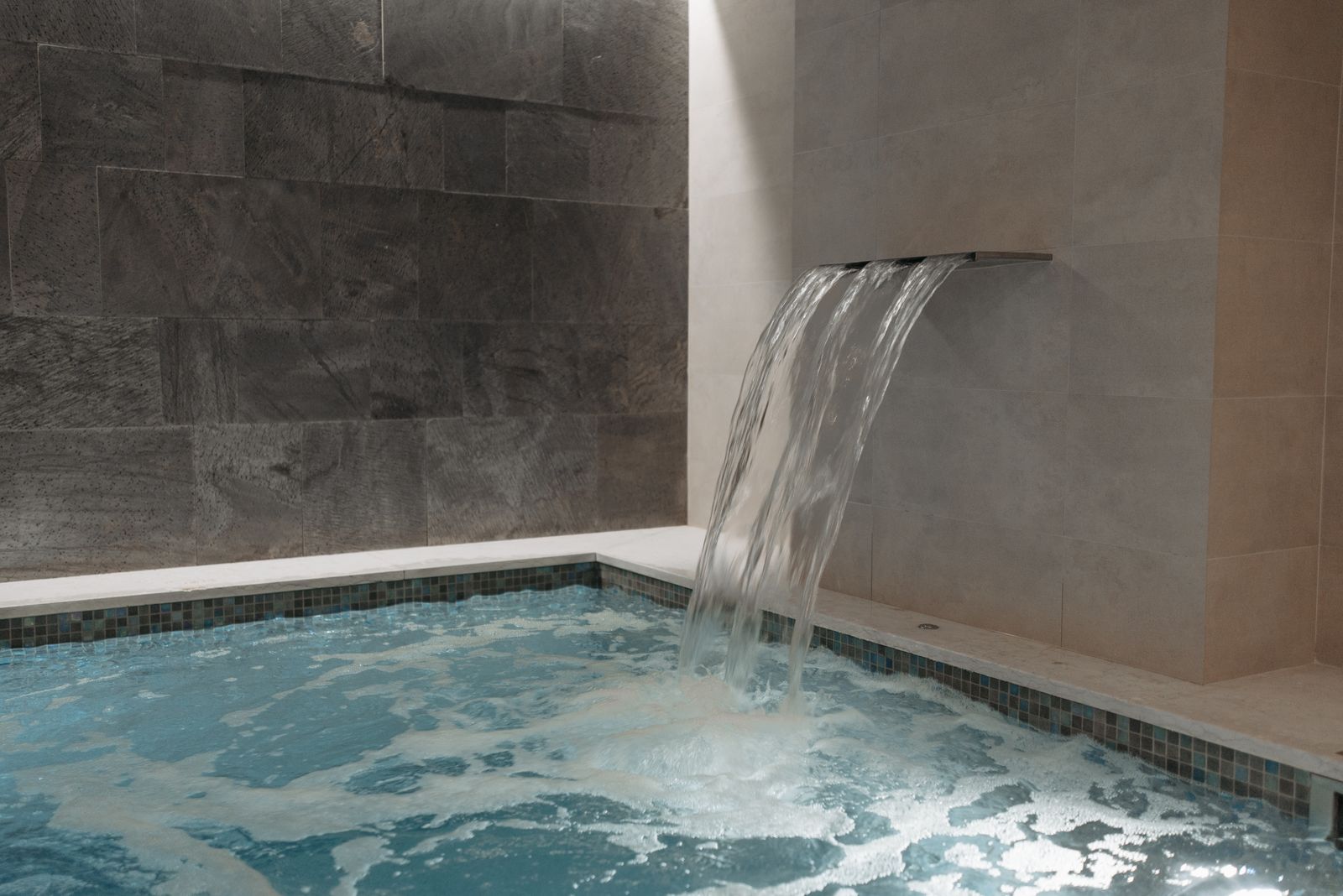
In a hot tub the problem appears much faster
A hot tub is an ideal environment for chloramines to form: a temperature of 36–38 °C speeds up chemical reactions, the water volume is a hundred times smaller than in a pool, and incomparably more people pass through it per litre of water. On top of that, hot water encourages sweating.
As a result, combined chlorine here builds up over a single evening, not over a week. A typical symptom is a combination of smell and foam on the surface — at that point it is usually no longer just chloramines, but also accumulated organic matter and cosmetic residues. The remedy is described in the article on foam and smell in a hot tub, and the overall dosing regime in hot tub chemistry step by step.
Health context: what gives chloramines their bad reputation
Eye irritation, sneezing and a scratchy throat after swimming in an indoor hall are commonly blamed on a “chlorine allergy”. However, the professional literature and CDC recommendations link these problems primarily to chloramines — specifically to trichloramine in the air above the water surface, not to free chlorine in the water.
In practice this means two things. First: in an indoor pool, the ventilation system is just as important as the chemistry. The extraction must draw air away from the water surface, otherwise the heavier trichloramine stays in the breathing zone — related topics are covered in the article on an indoor pool at home. Second: genuine hypersensitivity to chlorine does exist, but it is rare and it manifests differently from stinging eyes after an hour in a swimming hall. The options for sensitive skin are summarised in the article on sensitive skin and alternatives to chlorine.
The myth about chlorine turning hair green
Chlorine dries out hair, but it does not cause the green tint on blonde hair. That is down to copper — from copper-based algaecides, from copper parts in the circuit or from water with an elevated metal content. Chlorine merely oxidises the copper, which then binds to keratin. The solution is to watch the metal content in the source water (typically with well water) and not to use copper algaecides unnecessarily.
Quick diagnosis: symptom, measurement, solution
| Symptom | What to measure | Probable cause | Solution |
|---|---|---|---|
| Strong “chlorine” smell, stinging eyes | Free and total chlorine, pH | Combined chlorine above 0.5 ppm | Breakpoint chlorination to roughly 10× the combined chlorine, after adjusting the pH |
| The smell disappears and returns every week | Combined chlorine after a heavy load, cyanuric acid | Permanently low chlorine reserve or over-stabilised water | Increase dosing, possibly add UV/ozone; with CYA above 60–80 ppm dilute the water |
| Smell only in the hall, water is fine | Combined chlorine (low), state of the ventilation system | Trichloramine accumulated in the air | Increase the air exchange rate, extract air from just above the surface |
| Smell + foam in a hot tub | Free chlorine/bromine, pH, age of the water | Organic matter and cosmetics beyond the disinfection capacity | Shock, clean the filter, change the water if it is more than 3 months old |
| The smell did not go away after a shock | Free chlorine 24 h after the dose | The dose did not reach the breakpoint | Re-measure, dose again with a higher dose all at once, not in parts |
| The water does not smell, but chlorine disappears fast | Free chlorine morning and evening, CYA | Losses to UV radiation or high consumption | Top up the stabiliser, extend filtration, cover the water surface |
Prevention: where the smell can be avoided most cheaply
Most chloramines can be eliminated before they even form — by keeping nitrogen compounds out of the water in the first place.
- A shower before bathing. A short rinse removes most of the sweat, cosmetics and sunscreen. It is the single step with the best effect-to-cost ratio — the practical side is covered in the article on an outdoor shower by the pool.
- No peeing in the water. Urea is the main source of nitrogen for chloramine formation. With children, a regular break helps.
- Stable free chlorine. Fluctuating between zero and a high value is worse than a steady lower level. A floating dispenser helps, and an automatic chlorine doser even more.
- Sufficient filtration. Chemistry only works on water that passes through the filter — see how long to run the pool filter.
- A preventive shock after a heavy load. After a day with a larger number of bathers it pays to shock the water even if it does not smell yet.
Frequently asked questions
Does a strong smell mean there is too much chlorine in the water?
No. It means an excess of combined chlorine, i.e. chloramines. Free chlorine on its own hardly smells at all, and when there is enough of it, it gradually breaks the chloramines down. A strong smell is therefore, in the vast majority of cases, a signal that there is too little free chlorine.
How do I detect combined chlorine without a photometer?
You need a test that can measure both free and total chlorine — typically a liquid or tablet kit with DPD 1 and DPD 3. The difference between the two values is combined chlorine. Cheap strips measuring a single number are not enough for this.
How long after shock chlorination can you enter the water?
Only once free chlorine has dropped to the normal operating value, in a pool usually 0.5–1.0 ppm. Depending on the dose and the sunshine this takes roughly 8 to 24 hours. It is the measurement that decides, not an estimate of time.
Will a UV lamp or ozone solve the smell for good?
They will significantly reduce the amount of chloramines and the need to shock, but they will not replace disinfection in the water. A residual reserve of chlorine or bromine must remain in the tub or pool, because both UV and ozone act only in the circuit through which the water flows.
Will switching to salt water help against the smell?
Only indirectly. A salt chlorinator produces the very same chlorine from dissolved salt, so chloramines form just the same. The advantage is smoother dosing and a more stable level of free chlorine, which prevents the smell better than intermittent doses — a comparison is offered in the article on salt water vs. chlorinated water.
Summary
The “swimming pool” smell is not a sign of carefully treated water, but of overloaded water. So alongside free chlorine, keep an eye on combined chlorine as well, hold the pH in the 7.0–7.4 band, give the water a shock every time combined chlorine climbs above 0.2–0.5 ppm, and for indoor pools and hot tubs consider UV or ozone as a permanent measure.
DPD test kits, unstabilised products for shock chlorination, dosers and UV and ozone units can be found in the water treatment category. Further practical guides to pool and hot tub care are in the Guide.
