
A hot tub in a holiday rental, a glamping site or a serviced apartment is not simply a bigger domestic hot tub — it is a piece of equipment in commercial use. The water carries many times the load, you cannot train your guests, and you are the one responsible for their health. This article is not about whether a hot tub pays for itself (we covered that in Hot tub for a vacation rental), but about what running one actually involves: water hygiene under heavy load, the routine between changeovers, the costs, and equipment that will take the punishment.
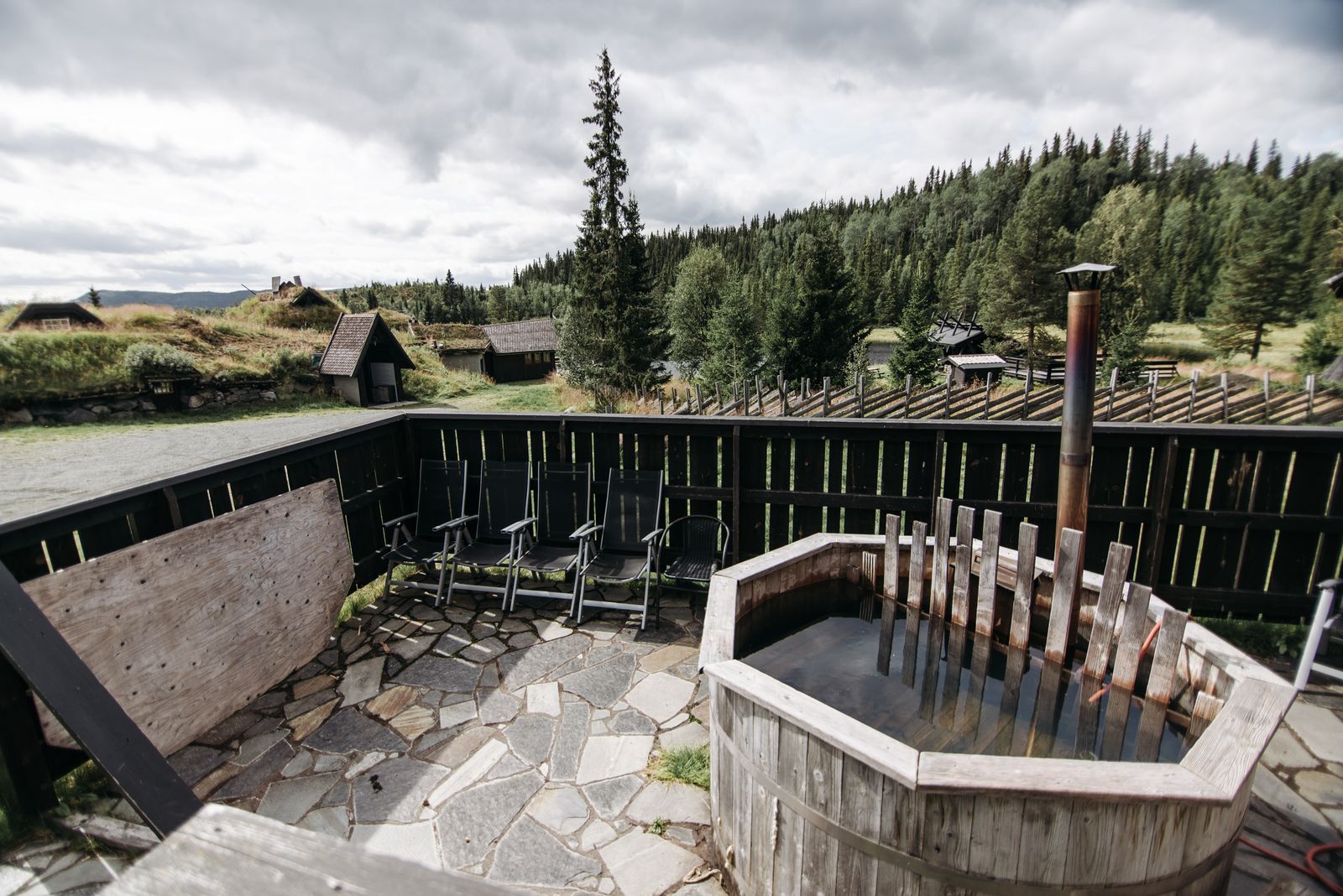
Why commercial use is a different discipline
The difference is not in the technology, it is in the load and in the uncertainty. A domestic hot tub holding 1,200 litres serves two people three times a week; the same shell in a rental handles six guests a day for the whole changeover period. Per litre of water that works out at roughly ten times the sweat, cosmetics and organic soiling.
On top of that comes a second variable: you have no control over how guests behave. They will not shower, they take a drink into the water, they add their own “bubble bath” and leave the cover open overnight. There is nothing you can forbid them in the moment — all you can do is design the operation so that it copes.
The third difference is legal and reputational. At home, bad water is your problem; in a rental it is a potential injury to a guest’s health, a dispute and a bad review. That is why commercial use is not run by eye, but to a defined procedure with records.
Water hygiene and chemistry under heavy load
Why a domestic routine is not enough
A domestic routine rests on testing twice a week and dosing according to the result. In a rental, twelve hours can easily pass between a test and the next guest’s soak — and in that time free chlorine can fall from 3 mg/l to zero if six people get in after a full day out. Organic load consumes disinfectant in proportion to the number of people and their time in the water, not to the time on the calendar.
The practical consequence: commercial use works with a higher maintained disinfectant level and with automation. A floating dispenser or automatic dosing holds the baseline; check testing deals with the peaks. The method is the same as at home — see Hot tub chemistry step by step and How to test pool and hot tub water — it is simply done more often and always written down.
Checking disinfectant between changeovers
The minimum for commercial use is testing free disinfectant and pH before every guest arrival and at least once a day during a longer stay. The values belong in an operating log: date, time, pH, free chlorine (or bromine), temperature, who tested, what they dosed. The log is not bureaucracy — it is your only proof that you did things properly.
Watch two numbers that get underestimated: a pH outside the 7.0–7.4 band knocks back the effectiveness of chlorine so far that a measured “correct” 3 mg/l disinfects markedly worse, and a temperature of 37–38 °C speeds up both disinfectant consumption and bacterial growth.
Shocking and flushing the pipework
Shock dosing after a changeover is standard practice in a rental, not an emergency measure: it destroys residual organics and combined chlorine. On its own, though, it does not deal with biofilm — the layer of micro-organisms inside the jet pipework, where ordinary disinfectant does not reach. Biofilm is the most common reason water “goes off” even with apparently correct chemistry, and it grows faster under heavy load. So build a pipe flush into every water change; the procedure is in Hot tub pipe flush and biofilm.
Filtration and a second set of filters
In commercial use a filter is a consumable. A cartridge clogged with creams and oils loses flow, the hot tub starts throwing errors and the chemistry stops working. The key measure is cheap: buy a second set of filters. Between changeovers you pull out the dirty set, fit the clean one and clean the soiled one at your leisure — soaking in a chemical filter cleaner takes hours, and those are exactly the hours you do not have between check-out and check-in. Cleaning methods are covered in Hot tub filter cleaning.
How often to change the water
The usual domestic rule of “every 3–4 months” does not apply in a rental. The rough calculation from How often to change hot tub water (volume divided by the number of bathers per day, divided by three) comes out at anything from a few days to two weeks at full occupancy. The regimes that prove themselves in practice:
- A change after every changeover — for week-long stays in a fully occupied property and for smaller shells (up to about 1,200 l). The safest option and the easiest to manage.
- A change after 2–3 shorter stays, with shocking and testing in between — for weekend stays by couples and larger shells, where the load per litre is lower.
- An additional criterion — always change the water when chemical consumption rises, the water foams, pH becomes harder to hold or the water turns cloudy; these signals run ahead of the calendar.
The risks you take on
Two health complications are typical of hot water under heavy load. The first is legionella — bacteria that multiply in tepid, stagnant water and are transmitted by inhaling the aerosol from the jets; see Hot tub hygiene and legionella. The second is hot tub folliculitis, a rash caused by the bacterium Pseudomonas aeruginosa that appears a day or two after the soak — see Hot tub rash. Both share the same root: insufficient disinfection, biofilm and neglected filtration. And in a rental, both affect not just you but your guests.
The legal side: what is certain and what you must check
Caution is needed here. The breakdown below separates verified facts from legislation from things that depend on how you actually run the tub and that you need to have confirmed. The rules quoted are Czech, given as an example of one national framework — Germany, Austria and other countries have their own hygiene regulations for facilities accessible to the public, so treat the Czech provisions as an illustration of the type of duty involved and check what applies where your property is.
Verified in the legislation (Czech Republic): Czech Act No. 258/2000 Coll., on the protection of public health, defines in Section 6(1)(b) an artificial bathing facility as a swimming pool, a bathing pool, a pool for infants and toddlers, and a paddling pool — a hot tub does not appear as a term of its own in the definition. Under the same Czech act, the operator of an artificial bathing facility has duties: to draw up an operating procedure and submit it for approval to the public health protection authority, to arrange laboratory testing of the water according to a monitoring calendar, to keep analysis reports (5 years) and to maintain an operating log with the results of on-site checks (1 year). The Czech implementing Decree No. 238/2011 Coll. sets the limits and operating requirements — among them a limit of Legionella spp. of 10 CFU/100 ml and Pseudomonas aeruginosa of 0 CFU/100 ml in treated water, a daily exchange of at least 45 l of water per visitor for indoor bathing pools, and a duty to drain and clean bathing pools of up to 10 m³ at least once a fortnight. It does not regulate hot tubs separately. Other countries set their own limits and operating duties for facilities accessible to the public, so use these Czech figures as an illustration of what such rules cover rather than as values binding on your site.
Verified separately: A person providing accommodation services under a hospitality trade licence has a duty under Section 21a of Czech Act No. 258/2000 Coll. to draw up an operating procedure for the accommodation facility. Templates are published by the individual Czech regional public health authorities; in Germany, Austria and elsewhere an equivalent document follows that country’s own rules, and your local public health authority will tell you which form applies to you.
Check for yourself (we have no unambiguous source for this): whether your particular hot tub for accommodated guests is assessed as an artificial bathing facility with all the duties listed above, or as a private fitting of the accommodation unit. The interpretation depends on who the hot tub is accessible to (a single unit versus all the guests of the property) and how it is advertised and operated. In the same way, have the scope and frequency of laboratory analyses confirmed, and whether the hot tub is to be included in the property’s operating procedure. The only correct route is to ask the public health authority with local jurisdiction — the regional public health authority in the Czech Republic, your local public health authority in Germany, Austria or wherever your property stands — ideally in writing, so that you then have a documented position on your own case. For more complicated operating models it is also worth consulting a lawyer.
Whatever the answer turns out to be, we recommend running the hot tub “as if” the stricter regime applied: test, record, and know the numbers of your water. It is cheaper than any dispute.
The operating routine: who does what, and how often
A hot tub in a rental needs named responsibility, not good intentions. The table below is a starting template — adapt it to the volume of the shell, your occupancy and whoever physically looks after the property.
| Task | Frequency | Who |
|---|---|---|
| Testing pH and disinfectant + entry in the log | Before every arrival, then once a day during longer stays | Property manager / cleaning service (trained) |
| Visual check of the water, shell, cover and surroundings | At every clean | Cleaning service |
| Swapping the filter set for a clean one | Between changeovers | Cleaning service |
| Chemical cleaning of the removed filter set | After every swap (off site) | Property manager |
| Shock disinfection | After every changeover (if no water change follows) | Property manager |
| Wiping the waterline, steps and cover | Between changeovers | Cleaning service |
| Water change + pipe flush + cleaning the shell | According to load (see above), typically after 1–3 changeovers | Property manager |
| Checking the thermal cover, locks and state of the insulation | Monthly | Property manager |
| Checking the equipment (pumps, heater, leak-tightness, RCD) | Quarterly | Property manager / service engineer |
| Service inspection and electrical inspection | Annually (or as required by regulation and the manufacturer’s recommendation) | Specialist service |
| Laboratory water analysis | As advised by the public health authority | Accredited laboratory |
The whole annual care cycle is summarised in the Hot tub maintenance calendar. For a property managed remotely, remote monitoring pays for itself — connected control systems report temperature and faults to your phone, see Smart hot tub control via an app.
Rules for guests: short and visible
Most problems come from not knowing. So write the rules on a single card by the hot tub and repeat them in your welcome message:
- Shower before getting in, without soap — it removes the creams and sweat that load the water most and cause foaming (see Foam and smell in a hot tub).
- No glass around the shell — broken glass means a complete drain-down and a risk of injury.
- Alcohol in moderation only — the combination of hot water and alcohol leads to dehydration, a drop in blood pressure and fainting; never in the water alone.
- Children only under adult supervision, and for the youngest better not at all — water at 38 °C is not suitable for small children. Covered in detail in Child safety around pools and hot tubs.
- A time limit — a recommended soak of 15–20 minutes at a stretch, and use until, say, 10 p.m. to respect quiet hours.
- Close the cover after use and do not change the temperature or filtration settings.
The economics of operation: what eats into the margin
A hot tub in a rental runs at operating temperature all year round, because you never know when a booking will land. That is the fundamental difference from a household, which can afford to let the shell cool down over winter. You will find model breakdowns of consumption in Hot tub running costs; for commercial use, add the following on top:
- Higher electricity consumption, caused by permanent temperature-holding and by heating fresh water after every change. In winter, the difference between a well and a badly insulated shell runs to tens or even a couple of hundred euros a month — see Hot tub insulation: types and Hot tub thermal cover. A waterlogged, sagging cover is a silent drain on the budget.
- Consumables — chemicals, test strips or reagents, filter cartridges (replaced several times a year, not once every two years), pipe-flush products and acrylic cleaners.
- Water and its disposal — every change means 1–2 m³ of water plus the energy to heat it.
- Staff time — realistically 30–60 minutes of extra work at every clean between guests, plus the time for water changes.
- Faster wear — more running hours on the pumps, more frequent work on the equipment. Expect shorter service intervals than Hot tub lifespan and service gives for domestic use.
- Insurance and a reserve — declare the hot tub to your insurer and check that the policy covers it, including liability towards guests; a day out of action in season costs you either revenue or compensation.
Which hot tub to choose for a rental
The priorities are different from a domestic purchase: what decides it is durability, simplicity of operation and service availability, not the number of jets and LED colours.
- Durable acrylic that is easy to clean — a smooth surface will take daily wiping of the waterline; how to look after it is summarised in Hot tub acrylic care.
- A lockable cover — it holds the heat, prevents unsupervised use and is a basic safety feature against children.
- Limits on what guests can set — a panel that lets you lock the temperature and the filtration cycles; leave guests only the jets and the lights.
- Parts availability — check how spare parts are identified for the model and how quickly you can get them (Identifying hot tub spare parts). Widespread branded technology is a better choice for a rental than an exotic model with no support behind it.
- Simple hydraulics and accessible equipment — fewer components mean fewer faults and a faster repair on site.
Winter operation and outages
All-year operation is the main economic argument for a hot tub in a rental, but winter is also the biggest risk. The tub has to stay permanently powered and up to temperature; the principles are summarised in Hot tub in winter. The critical scenario is a power cut at a property where nobody happens to be — in a long frost the water in the pipework can freeze and damage the pumps and the pipe runs; what to do is described in Power cut and a hot tub in winter.
For the operator, three measures follow from this: remote alerting for outages or temperature, someone nearby who can get there within the hour, and a written-out emergency procedure for draining the shell and the pipework.
FAQ: running a hot tub in a holiday rental
Do I need an operating procedure for a guest hot tub?
An operating procedure for the accommodation facility must be drawn up by everyone providing accommodation services under a hospitality trade licence (Section 21a of Czech Act No. 258/2000 Coll.; other countries have their own equivalent duty for accommodation providers). Whether the hot tub must additionally meet the regime for an artificial bathing facility, with its own operating procedure and monitoring calendar, depends on how it is operated — have that confirmed by your regional public health authority in the Czech Republic, or by the competent public health authority in the country where the property is. We recommend having your own written rules by the tub in every case, whatever the answer.
Is shocking between guests enough, or must I change the water?
It depends on the load. For a smaller shell and fully occupied week-long changeovers, a change after every stay is the safest practice. For weekend stays by couples in a larger shell, the water can be changed after two or three changeovers, provided you shock, test and record the values in between. Always change it as soon as the water foams, turns cloudy or chemical consumption rises.
Why do I need two sets of filters?
Because a proper chemical clean of a cartridge takes hours, and you do not have those between check-out and check-in. With two sets you swap the filter in a quarter of an hour and clean the dirty set at your leisure. It is the cheapest measure with the biggest impact on water quality in commercial use.
How do I stop guests changing the temperature and settings?
Choose a model that lets you lock the control panel and give guests access only to the jets and the lighting. Back it up with a single line in the house rules and, ideally, with remote monitoring that alerts you to a change before you see it on the electricity bill.
How long does a hot tub in a rental last compared with a domestic one?
Count on markedly more running hours on the pumps and on service work coming round sooner. The best way to slow the wear is with the things that cost nothing: clean water, working filtration and regular pipe flushes.
Conclusion
A hot tub in a rental is not an accessory but a product you operate — with its own routine, consumables, responsibility and costs. Set the regime up in advance and check with the public health authority which duties apply to your operation, and you have a reliable source of bookings. Leave it to improvisation and you have bought yourself a problem that will show up in the reviews.
If you are choosing a model that has to stand up to commercial load, take a look at the hot tubs on offer at Poolspashop — and you will find more practical guides to running and maintaining them in the Guide.
